Introduction
Community forum software is a platform that enables organizations, brands, and interest groups to host online discussion spaces where members can ask questions, share ideas, and collaborate. Forums remain critical in 2026+ as communities seek spaces that balance structure, moderation, and rich engagement outside of social media. These tools help build loyal audiences, support networks, and knowledge repositories while fostering peer‑to‑peer interaction.
Real‑world use cases include:
- Customer support communities with searchable Q&A
- Developer or technical user forums for troubleshooting and collaboration
- Member discussion spaces for associations, clubs, and NGOs
- Product feedback portals and feature request boards
- Topic‑based communities around hobbies, education, and professional growth
Key evaluation criteria for buyers:
- Threaded discussions and moderation tools
- User profiles, reputation, badges, and gamification
- Searchability and topic categorization
- Integration with SSO, CRM, and content platforms
- Mobile‑friendly and real‑time notifications
- Roles, permissions, and spam controls
- Analytics and engagement reporting
- Scalability and performance
- Customization and branding
- Pricing and deployment flexibility
Best for: Community managers, online brands, tech companies, associations, and niche interest groups building structured conversation spaces.
Not ideal for: Groups requiring ephemeral chat only (live messaging), or casual social interaction without topic structure.
Key Trends in Community Forum Software
- Cloud‑hosted SaaS with global CDN for performance
- AI‑assisted moderation and content tagging
- Rich media support (images, video embeds, polls)
- Gamification: badges, reputation points, levels
- Seamless integration with CRM, SSO, and support tools
- Mobile‑first UI and push notifications
- Search analytics and engagement dashboards
- Unified inbox for moderation and member support
- GDPR/privacy‑first user consent and data controls
- Subscription pricing with tiered feature unlocks
How We Selected These Tools (Methodology)
- Assessed market adoption and community trust
- Reviewed feature depth: threads, profiles, moderation, gamification
- Measured scalability and performance signals
- Evaluated integration with identity and CRM systems
- Considered user experience (desktop/mobile)
- Analyzed reporting, search, and analytics capabilities
- Examined security controls, privacy, and compliance features
- Compared pricing models and licensing options
- Reviewed support, documentation, and learning resources
- Checked extensibility via APIs, plugins, or themes
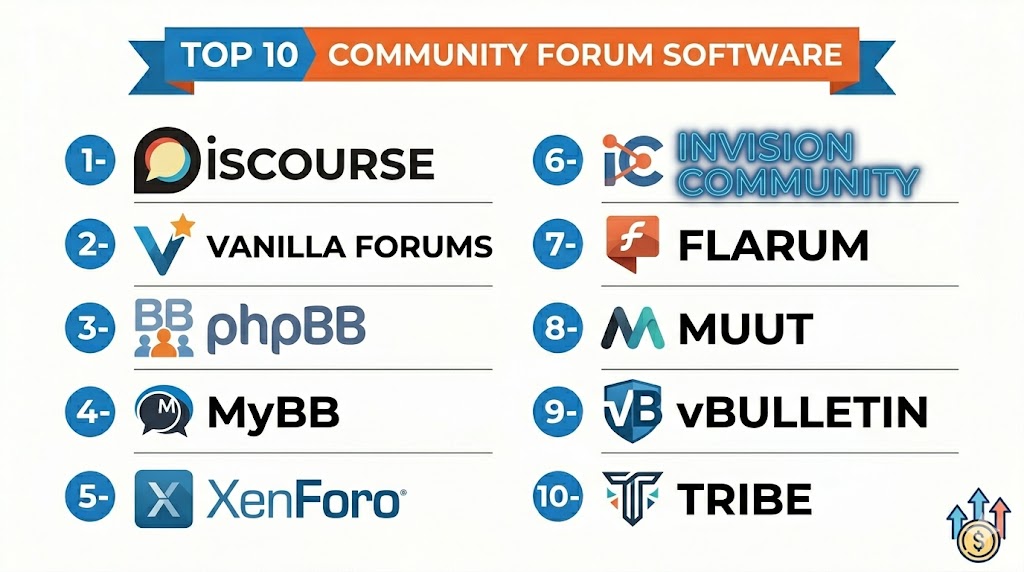
Top 10 Community Forum Software Tools
#1 — Discourse
Short description (4–5 lines): Discourse is an open‑source, modern forum platform designed for deep conversational threads, mobile‑friendly UI, and strong moderation tools. It suits communities of all sizes looking for structured, searchable discussion spaces.
Key Features
- Threaded discussions and real‑time updates
- Trust levels, badges, and reputation systems
- Robust moderation and spam controls
- Rich text, media embeds, polls
- SSO, API, and plugin ecosystem
Pros
- Highly customizable and scalable
- Strong engagement features
Cons
- Self‑hosted setup requires technical skills
- Hosted plans can be costly
Platforms / Deployment
- Web; Cloud / Self‑hosted
Security & Compliance
- Not publicly stated
Integrations & Ecosystem
- SSO (SSO providers)
- CRM and support tools
- Custom plugins and themes
Support & Community
Active open‑source community, documentation, hosted support plans.
#2 — Vanilla Forums
Short description (4–5 lines): Vanilla Forums is a cloud‑based community platform focusing on simplicity, engagement, and support integration. Ideal for brands seeking a polished community hub with extensive customization.
Key Features
- Custom roles & badges
- Gamification and reputation tools
- Social login and SSO
- Analytics dashboards
- API and integrations
Pros
- Enterprise‑ready without heavy setup
- Powerful reputation features
Cons
- Premium pricing for advanced features
- Some customization requires expertise
Platforms / Deployment
- Web; Cloud
Security & Compliance
- Not publicly stated
Integrations & Ecosystem
- CRM, support systems
- Single sign‑on
- Plugins and extensions
Support & Community
Managed support, documentation, and onboarding help.
#3 — phpBB
Short description (4–5 lines): phpBB is a classic open‑source forum platform known for flexibility and extensive plugin availability. Suitable for organizations needing full control over forum experience.
Key Features
- Modular plugins and themes
- Robust permissions system
- User ranks and profiles
- Search and categorization
- Spam controls
Pros
- Free and highly extensible
- Strong permissions tools
Cons
- Interface feels dated
- Requires technical management
Platforms / Deployment
- Web; Cloud / Self‑hosted
Security & Compliance
- Not publicly stated
Integrations & Ecosystem
- Plugins/themes
- Single sign‑on (with extensions)
- Moderation tools
Support & Community
Community forums, documentation, and tutorials.
#4 — Flarum
Short description (4–5 lines): Flarum is a lightweight, modern open‑source forum platform offering fast performance and mobile‑friendly experience. Ideal for small to medium communities desiring simplicity and speed.
Key Features
- Elegant UI and mobile‑first layout
- Extensions ecosystem
- Tagging and moderation
- Real‑time updates
- Lightweight performance
Pros
- Simple and engaging UI
- Fast and lightweight
Cons
- Plugin ecosystem still maturing
- Requires technical setup
Platforms / Deployment
- Web; Cloud / Self‑hosted
Security & Compliance
- Not publicly stated
Integrations & Ecosystem
- Extensions for SSO, roles, badges
- APIs for embedding
Support & Community
Open‑source community and documentation.
#5 — Invision Community
Short description (4–5 lines): Invision Community is a robust platform combining forums with communities, knowledge bases, and commerce tools. Strong for larger communities needing multi‑section engagement.
Key Features
- Forums, blogs, calendars, commerce
- Roles, badges, and achievements
- Advanced analytics and search
- Mobile app support
- API and extensions
Pros
- Feature‑rich and extensible
- All‑in‑one community suite
Cons
- Higher cost
- Can be complex to configure
Platforms / Deployment
- Web; Cloud / Self‑hosted
Security & Compliance
- Not publicly stated
Integrations & Ecosystem
- CRM, SSO, commerce
- Plugins and themes
Support & Community
Official support, onboarding, documentation.
#6 — Muut
Short description (4–5 lines): Muut provides embedded, real‑time forums and commenting for websites, combining chat, discussions, and knowledge bases. Suitable for blogs, SaaS apps, and integrated community flows.
Key Features
- Embedded forum/commenting
- Real‑time chat
- Knowledge base and docs
- Roles and moderation
- Search and analytics
Pros
- Seamless site integration
- Clean modern design
Cons
- Less full‑featured than traditional forums
- Subscription pricing
Platforms / Deployment
- Web; Cloud
Security & Compliance
- Not publicly stated
Integrations & Ecosystem
- APIs and embeds
- SSO and CRM integrations
Support & Community
Managed support, docs, and tutorials.
#7 — XenForo
Short description (4–5 lines): XenForo is a commercially supported forum platform with rich engagement tools, social features, and content syndication. Ideal for gaming communities and passionate user bases.
Key Features
- Conversations, threads, and profiles
- Alerts, reputation, badges
- Search and SEO optimization
- Add‑ons ecosystem
- Mobile‑friendly UI
Pros
- Mature platform with polish
- Strong add‑on marketplace
Cons
- Licensing cost
- Requires technical hosting
Platforms / Deployment
- Web; Self‑hosted / Cloud options via partners
Security & Compliance
- Not publicly stated
Integrations & Ecosystem
- Add‑ons for SSO, CRM
- Integrations with CMS
Support & Community
Official support, documentation, and add‑on marketplace.
#8 — Tribe
Short description (4–5 lines): Tribe is a modern community platform focused on modular components, gamification, and deep integration with apps and services. Great for product communities and customer networks.
Key Features
- Modular community widgets
- Gamification, badges, reputation
- Third‑party integrations
- Search and analytics tools
- Customizable UI
Pros
- Highly modern UI
- Strong integration ecosystem
Cons
- Subscription pricing
- Some features require add‑ons
Platforms / Deployment
- Web; Cloud
Security & Compliance
- Not publicly stated
Integrations & Ecosystem
- CRM, SSO
- Marketing tools
Support & Community
Support docs, onboarding assistance, community resources.
#9 — phpBB Studio / Simple Machines Forum (SMF)
Short description (4–5 lines): SMF is another classic open‑source forum platform built for flexibility and a complete permissions system. Good for organizations needing control without subscription costs.
Key Features
- Threaded discussions
- Permissions and roles
- Plugin ecosystem
- Search features
- Profile and group settings
Pros
- Free and extensible
- Strong permission controls
Cons
- UI feels dated
- Smaller extension ecosystem
Platforms / Deployment
- Web; Cloud / Self‑hosted
Security & Compliance
- Not publicly stated
Integrations & Ecosystem
- Plugins and add‑ons
- Optional SSO extensions
Support & Community
Community forums and documentation.
#10 — Disqus (Community + Comments)
Short description (4–5 lines): Disqus provides hosted commenting and lightweight community features, ideal for blogs, news sites, and embedded discussion threads.
Key Features
- Comment threads and moderation
- Community profiles
- Upvotes and notifications
- Spam filtering
- Analytics
Pros
- Easy to embed
- Familiar interface for users
Cons
- Limited full‑forum capabilities
- Ads in free tier
Platforms / Deployment
- Web; Cloud
Security & Compliance
- Not publicly stated
Integrations & Ecosystem
- CMS plugins
- Social login options
Support & Community
Hosted support and documentation.
Comparison Table (Top 10)
| Tool Name | Best For | Platforms Supported | Deployment | Standout Feature | Public Rating |
|---|---|---|---|---|---|
| Discourse | Structured engagement | Web | Cloud / Self‑hosted | Modern discussions & moderation | N/A |
| Vanilla Forums | Brand communities | Web | Cloud | Reputation & gamification | N/A |
| phpBB | Tech‑friendly classic forums | Web | Cloud / Self‑hosted | Free and extensible | N/A |
| Flarum | Lightweight modern forums | Web | Cloud / Self‑hosted | Fast, mobile‑first UI | N/A |
| Invision Community | All‑in‑one community suite | Web | Cloud / Self‑hosted | Commerce + forums + events | N/A |
| Muut | Embedded discussions | Web | Cloud | Embedded real‑time comments | N/A |
| XenForo | Passion communities | Web | Self‑hosted / Cloud | Add‑ons & social features | N/A |
| Tribe | Product & customer networks | Web | Cloud | Modular components & integrations | N/A |
| SMF | Free community forums | Web | Cloud / Self‑hosted | Permissions & roles | N/A |
| Disqus | Embedded blog discussions | Web | Cloud | Comment threads | N/A |
Evaluation & Scoring of Community Forum Software
| Tool Name | Core (25%) | Ease (15%) | Integrations (15%) | Security (10%) | Performance (10%) | Support (10%) | Value (15%) | Weighted Total |
|---|---|---|---|---|---|---|---|---|
| Discourse | 9 | 7 | 8 | 7 | 8 | 7 | 7 | 7.80 |
| Vanilla Forums | 8 | 8 | 8 | 7 | 8 | 7 | 7 | 7.75 |
| phpBB | 7 | 6 | 7 | 7 | 7 | 7 | 7 | 7.00 |
| Flarum | 7 | 8 | 6 | 7 | 8 | 7 | 7 | 7.15 |
| Invision Community | 9 | 7 | 8 | 7 | 8 | 7 | 7 | 7.85 |
| Muut | 7 | 8 | 7 | 7 | 7 | 7 | 7 | 7.30 |
| XenForo | 8 | 6 | 8 | 7 | 8 | 7 | 7 | 7.45 |
| Tribe | 8 | 8 | 8 | 7 | 8 | 7 | 7 | 7.70 |
| SMF | 7 | 6 | 6 | 7 | 7 | 7 | 7 | 6.90 |
| Disqus | 7 | 9 | 6 | 7 | 6 | 7 | 7 | 7.10 |
Which Community Forum Software Is Right for You?
Solo / Freelancer
Embed discussions with Disqus or use lightweight platforms like Flarum for personal communities or niche discussions.
SMB / Small Community
Discourse, Vanilla Forums, and Muut provide strong discussion tools with modern UI and engagement features.
Mid‑Market
Platforms like XenForo, Tribe, and Invision Community serve mid‑sized brands needing rich features and integrations.
Enterprise
Invision Community and Vanilla Forums support large communities with advanced reputation systems, analytics, and extensibility.
Budget vs Premium
Open‑source options like Discourse, Flarum, phpBB, and SMF provide cost‑effective community platforms, while premium SaaS solutions offer managed services and support.
Feature Depth vs Ease of Use
Invision Community and Vanilla Forums provide deep feature sets but require setup, whereas Disqus and Muut focus on ease of deployment and embedded discussions.
Integrations & Scalability
Discourse and Tribe integrate with SSO, CRM, and marketing tools for scalable community workflows.
Security & Compliance Needs
Ensure community tools support roles, permissions, spam moderation, and privacy compliance for member data.
Frequently Asked Questions (FAQs)
1. What is community forum software?
Community forum software provides structured online discussion spaces where users can post topics, reply to threads, and build member engagement.
2. Is forum software still relevant?
Yes, well‑moderated forums serve as long‑term knowledge bases and engagement hubs beyond transient social media content.
3. Can I integrate forum software with my website?
Yes, many forum platforms support SSO, APIs, and embedded solutions to integrate with CMS, CRM, or membership platforms.
4. Do these tools support moderation workflows?
Yes, modern forum software includes roles, permissions, spam controls, and automated moderation features.
5. Are forums mobile‑friendly?
Most platforms emphasize responsive design and mobile‑friendly interfaces for today’s users.
6. Do these platforms offer analytics?
Many include dashboards for thread activity, engagement, and member sentiment.
7. Can I gamify community engagement?
Yes — badges, reputation points, and levels are common features to increase participation.
8. Is hosting expensive?
Cloud‑hosted SaaS simplifies deployment but may be subscription‑based; self‑hosting can reduce costs but requires technical resources.
9. Can forums integrate with support systems?
Yes, integrations with CRM, help desks, and knowledge systems allow unified user experiences.
10. How do forums impact SEO?
Public forums generate evergreen content that can improve search visibility and organic traffic.
Conclusion
Community forum software continues to be a foundational platform for building meaningful, structured online discussion spaces. Small communities may start with lightweight or embedded solutions like Disqus or Flarum to quickly launch discussion hubs, while mid‑sized groups benefit from Discourse, Vanilla Forums, or Tribe for deeper engagement and integration potential. Large brands and enterprises will appreciate Invision Community’s extensible ecosystem and robust analytics. Evaluate your community’s needs for moderation, gamification, integration, and scalability before choosing a solution. Start by shortlisting 2–3 platforms, testing their moderation workflows and mobile experiences, and confirming integration with existing systems to ensure a thriving online community.

This article provides a useful comparison of community forum software and highlights the features that matter most for building active online communities. The clear pros-and-cons breakdown makes it easy to evaluate different platforms and their strengths.