Introduction
Medical Device Quality Systems (MDQS) are software platforms designed to help medical device manufacturers manage quality, regulatory compliance, risk, change control, corrective and preventive actions (CAPA), document control, audit management, supplier quality, and product lifecycle quality workflows. They support adherence to global regulations and standards such as ISO 13485, FDA 21 CFR Part 820, MDSAP, EU MDR, and other quality frameworks specific to the medical device industry.
Unlike generic quality management tools, MDQS solutions are tailored to the medical device ecosystem, handling complex documentation, audit readiness, traceability, electronic batch records, risk management, supplier oversight, and structured quality processes. These systems help organizations reduce compliance risk, improve product quality, and maintain audit readiness across development, manufacturing, and post‑market surveillance.
Real‑world use cases include:
- Managing CAPA and nonconformance tracking
- Document control and revision management
- Risk management (FMEA, hazard analysis)
- Supplier quality and audit workflows
- Complaint handling and MDR reporting
Key evaluation criteria buyers should consider:
- Compliance with ISO 13485, FDA and global standards
- CAPA workflows and issue tracking depth
- Document control and electronic audit trails
- Risk management and traceability
- Complaint handling and reporting capability
- Supplier quality and audit management
- Integration with ERP, MES, PLM, and manufacturing systems
- Usability and workflow flexibility
- Reporting, dashboards, and analytics
- Security and audit governance
Best for: medical device manufacturers, quality assurance and regulatory teams, suppliers within the medical device ecosystem, and product development organizations requiring rigorous quality control.
Not ideal for: organizations that only need basic QMS features or operate outside regulated medical device environments.
Key Trends in Medical Device Quality Systems
- Cloud‑native QMS platforms for global deployment and multi‑site coordination
- AI‑assisted risk scoring and anomaly detection to improve CAPA quality
- Integrated risk and compliance workflows linking design, manufacturing, and quality
- Mobile workflows for field personnel and supplier interactions
- Automated audit readiness and electronic audit trails
- Integration with ERP, PLM, and MES systems for unified quality data
- Real‑time dashboards and analytics for quality metrics
- Supplier qualification and performance scoring
- Document workflow orchestration and version control automation
- Enhanced complaint handling with structured reporting
How We Selected These Tools
- Evaluated adoption in regulated medical device manufacturing
- Reviewed compliance support for ISO 13485, FDA, MDSAP, and EU MDR
- Assessed CAPA, risk, and nonconformance process depth
- Reviewed document control, audit trails, and training management
- Analyzed supplier quality and complaint handling workflows
- Evaluated integration with ERP, PLM, MES, and other systems
- Considered analytics, dashboards, and reporting capabilities
- Assessed cloud, hybrid, and on‑premise deployment flexibility
- Reviewed security and governance features
- Considered vendor maturity and life sciences compliance expertise
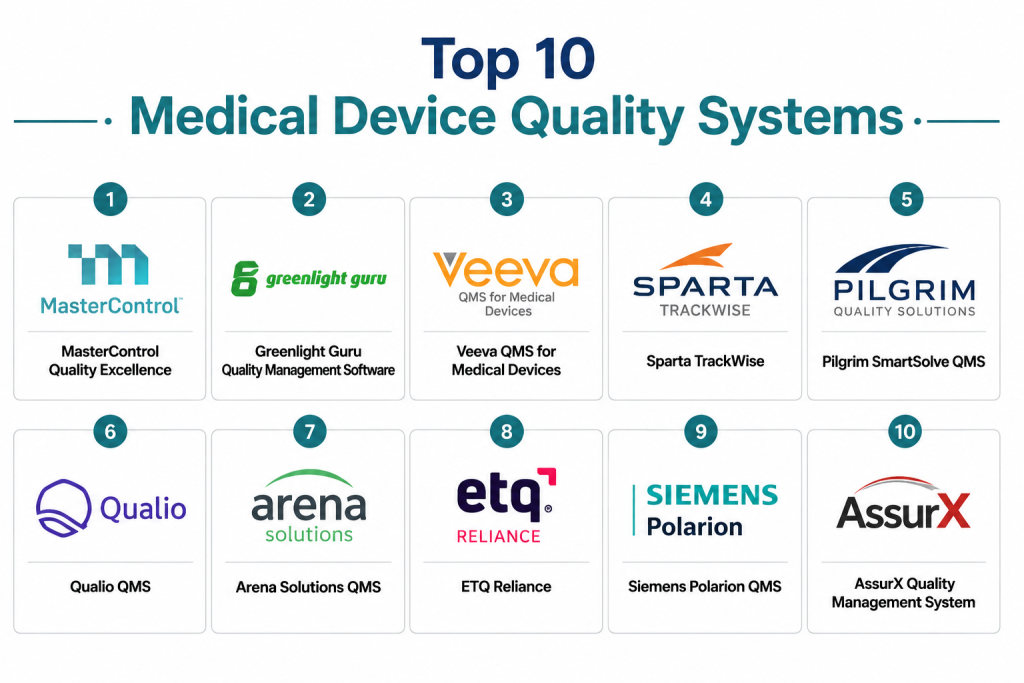
Top 10 Medical Device Quality Systems
#1 — Veeva Vault QMS
Short description: Veeva Vault QMS is a cloud‑native quality management system tailored for life sciences and medical device companies. It provides document control, CAPA, change control, training, audit management, risk, supplier quality, and compliance reporting within a centralized platform. It leverages modern cloud architecture for scalability and secure global deployment.
Key Features
- Document control and revisions
- CAPA and nonconformance workflows
- Change control
- Training and competency tracking
- Audit and inspection readiness
- Supplier quality management
- Risk management and analysis
Pros
- Cloud‑native with strong lifecycle support
- Unified quality and compliance workflows
- Excellent audit trail and version control
- Strong analytics and dashboards
Cons
- Higher subscription cost
- Integration with legacy ERP requires effort
- Best for life sciences and medical device environments
- Requires formal onboarding
Platforms / Deployment
- Web
- Cloud
Security & Compliance
- RBAC
- MFA
- Encryption
- Audit logging
Integrations & Ecosystem
Veeva integrates with PLM, ERP, LIMS, and MES tools.
- ERP systems
- PLM and design tools
- LIMS quality systems
- Analytics platforms
- API integration
Support & Community
Strong vendor support and life sciences compliance expertise.
#2 — MasterControl Quality Excellence
Short description: MasterControl is a widely adopted quality management platform used across medical devices, pharmaceuticals, and regulated industries. It provides document control, CAPA, change control, audit trails, training, and risk management. The system is known for configurability and support for compliance frameworks such as ISO 13485, FDA 21 CFR, and EU MDR.
Key Features
- Document and change control
- CAPA and deviation management
- Training and competency tracking
- Audit management
- Risk assessment tools
- Supplier quality workflows
- Reporting and dashboards
Pros
- Strong compliance support
- Configurable workflows
- Robust audit trails
- Established vendor and community
Cons
- Implementation can be lengthy
- Enterprise cost structure
- Requires configuration expertise
- Interface may feel dated to some users
Platforms / Deployment
- Web
- Cloud
Security & Compliance
- RBAC
- MFA
- Audit logging
- Encryption
Integrations & Ecosystem
MasterControl integrates with ERP, MES, PLM, and analytics systems.
- ERP platforms
- PLM and design modules
- MES systems
- Analytics tools
- APIs
Support & Community
Strong global support and partner ecosystem.
#3 — Sparta TrackWise Digital
Short description: TrackWise Digital is a quality and compliance platform known for structured CAPA, risk, audit, and supplier management workflows. It supports medical device quality teams with configurable processes, audit readiness, and regulatory compliance tracking. It is scalable for mid‑enterprise and enterprise use.
Key Features
- CAPA and deviation workflows
- Document and change control
- Supplier quality management
- Risk and audit workflows
- Reporting and analytics
- Training and competency management
- Integration options
Pros
- Excellent quality process depth
- Highly configurable
- Good audit readiness workflows
- Scalable for complex environments
Cons
- Configuration and deployment effort
- Less cloud‑native than some competitors
- Requires training for optimal use
- Interface complexity
Platforms / Deployment
- Web
- Cloud
Security & Compliance
- RBAC
- MFA
- Audit logs
- Encryption
Integrations & Ecosystem
TrackWise integrates with ERP, PLM, and compliance systems.
- ERP platforms
- PLM tools
- Analytics suites
- API connectivity
- Supplier systems
Support & Community
Strong vendor and partner support with regulated industry expertise.
#4 — IQVIA Quality Management (formerly Dassault Systèmes)
Short description: IQVIA Quality Management, part of a broader life sciences ecosystem, provides quality, compliance, and document management targeted at medical device and pharmaceutical companies. It supports CAPA, document control, risk, change control, and audit readiness, with integration to broader product lifecycle systems.
Key Features
- Document and revision control
- CAPA and nonconformance workflows
- Risk management
- Audit and training management
- Supplier quality tracking
- Analytics and dashboards
- Integration frameworks
Pros
- Strong life sciences focus
- Reliable compliance workflows
- Good audit tools
- Integrated product lifecycle support
Cons
- Best for organizations already in broader IQVIA or PLM ecosystem
- Enterprise cost
- Integration planning needed
- Learning curve
Platforms / Deployment
- Web
- Cloud
Security & Compliance
- RBAC
- MFA
- Audit logging
- Encryption
Integrations & Ecosystem
Integrates with ERP, PLM, and lifecycle systems.
- PLM platforms
- ERP systems
- Analytics tools
- Compliance engines
- API support
Support & Community
Enterprise‑grade support with life sciences expertise.
#5 — Arena QMS (PTC)
Short description: Arena QMS by PTC provides cloud‑based quality management including document control, CAPA, change control, supplier quality, and audit readiness workflows. It is suitable for medical device organizations seeking modern, integrated quality systems with product lifecycle connectivity.
Key Features
- Document and change control
- CAPA and corrective workflows
- Supplier quality management
- Risk and audit workflows
- Training tracking
- Analytics and dashboards
- Integration tools
Pros
- Cloud‑native and modern interface
- Unified PLM/QMS workflows
- Good for mid‑market device makers
- Clear audit support
Cons
- Best with broader PLM adoption
- Integration with legacy ERP may vary
- Enterprise features require configuration
- Subscription cost
Platforms / Deployment
- Web
- Cloud
Security & Compliance
- RBAC
- Encryption
- Audit logging
Integrations & Ecosystem
Arena integrates with ERP, PLM, and lifecycle systems.
- PLM and CAD tools
- ERP platforms
- Analytics suites
- API integration
- Compliance tools
Support & Community
Strong vendor support with cloud‑oriented onboarding.
#6 — Greenlight Guru
Short description: Greenlight Guru is a quality management system built specifically for medical device companies. It provides structured compliance workflows for ISO 13485, FDA, EU MDR, and other standards with a focus on usability, digital audit readiness, and ease of deployment. It covers CAPA, document control, risk, supplier quality, and learning.
Key Features
- CAPA and nonconformance
- Document and change control
- Risk management (FMEA, etc.)
- Supplier quality workflows
- Audit readiness workflows
- Analytics and dashboards
- Training and learning modules
Pros
- Built specifically for medical devices
- Modern interface and usability
- Rapid deployment
- Strong compliance coverage
Cons
- Mid‑market focus
- Integration with ERP/MES systems requires effort
- Less enterprise scaling than large suites
- Subscription pricing
Platforms / Deployment
- Web
- Cloud
Security & Compliance
- RBAC
- MFA
- Encryption
- Audit logs
Integrations & Ecosystem
Greenlight Guru integrates with compliance and PLM systems.
- PLM tools
- Analytics platforms
- Compliance engines
- API integration
- ERP connectivity
Support & Community
Strong medical device‑focused support and community resources.
#7 — ComplianceQuest Quality Management
Short description: ComplianceQuest provides a cloud QMS platform with robust CAPA, audit, document control, supplier quality, risk, and compliance workflows. It suits mid‑market and enterprise medical device organizations looking for flexible, cloud‑native quality systems.
Key Features
- CAPA and nonconformance
- Document control
- Supplier quality
- Risk management
- Audit and inspection readiness
- Training tracking
- Dashboards and analytics
Pros
- Flexible cloud platform
- Good compliance workflow coverage
- User‑friendly
- Strong audit features
Cons
- Integration effort with ERP/PLM may vary
- Mid‑market feature set
- Customization may require effort
- Subscription price
Platforms / Deployment
- Web
- Cloud
Security & Compliance
- RBAC
- MFA
- Encryption
- Audit logging
Integrations & Ecosystem
ComplianceQuest integrates with enterprise tools.
- ERP platforms
- MES systems
- PLM tools
- Analytics suites
- API frameworks
Support & Community
Active support and documentation communities.
#8 — AssurX Medical Device Quality
Short description: AssurX provides compliance and quality management with CAPA, document control, risk, supplier management, audit, and change workflows tailored for regulated industries including medical devices. It supports both cloud and on‑premise deployment.
Key Features
- CAPA and corrective workflows
- Document and revision control
- Risk and audit workflows
- Supplier quality management
- Compliance reporting
- Workflow automation
- Analytics dashboards
Pros
- Flexible deployment models
- Strong CAPA and compliance tools
- Good audit readiness
- Cloud or on‑premise options
Cons
- Implementation effort required
- Enterprise pricing
- Integration with external systems requires planning
- Interface may vary
Platforms / Deployment
- Web
- Cloud / On‑premise
Security & Compliance
- RBAC
- MFA
- Encryption
- Audit logs
Integrations & Ecosystem
AssurX integrates with enterprise compliance systems.
- ERP connections
- PLM tools
- Analytics platforms
- QMS systems
- API integrations
Support & Community
Vendor support with compliance expertise.
#9 — Sparta Systems eQMS (Expanded)
Short description: Sparta Systems eQMS provides comprehensive enterprise quality management covering CAPA, audit, document control, supplier quality, risk, and compliance workflows. It supports regulated industries including medical devices with strong compliance governance.
Key Features
- CAPA and nonconformance
- Document control
- Supplier quality
- Risk and audit management
- Compliance dashboards
- Training and learning modules
- Reporting tools
Pros
- Enterprise governance tools
- Strong CAPA and audit workflows
- Scalable for large operations
- Well‑established in regulated industries
Cons
- Implementation complexity
- Enterprise costs
- Configuration effort
- Training required
Platforms / Deployment
- Web
- Cloud
Security & Compliance
- RBAC
- MFA
- Audit logging
- Encryption
Integrations & Ecosystem
Sparta eQMS integrates with ERP and enterprise systems.
- ERP platforms
- PLM tools
- Analytics systems
- Compliance engines
- Supplier systems
Support & Community
Strong enterprise support and compliance community.
#10 — Arvato Systems Quality & Compliance
Short description: Arvato Systems provides cloud‑hosted quality and compliance workflows tailored for regulated industries including medical devices. It supports document control, CAPA, risk, audit readiness, supplier workflows, and regulatory compliance reporting.
Key Features
- Document and change control
- CAPA workflows
- Risk and audit tools
- Supplier quality management
- Compliance reporting
- Dashboard analytics
- Integration options
Pros
- Cloud‑native and flexible
- Good compliance coverage
- Scalable for global operations
- Easier interface
Cons
- Smaller market presence
- Requires integration planning
- Less enterprise ecosystem depth
- Customization effort
Platforms / Deployment
- Web
- Cloud
Security & Compliance
- RBAC
- MFA
- Encryption
- Audit logging
Integrations & Ecosystem
Arvato integrates with enterprise systems.
- ERP platforms
- PLM tools
- Analytics tools
- API connectivity
- Compliance systems
Support & Community
Vendor support with compliance expertise.
Comparison Table
| Tool Name | Best For | Platform(s) Supported | Deployment | Standout Feature | Public Rating |
|---|---|---|---|---|---|
| Veeva Vault QMS | Medical device cloud governance | Web | Cloud | Cloud‑native quality workflows | N/A |
| MasterControl Quality | Regulated quality systems | Web | Cloud | Configurable compliance workflows | N/A |
| Sparta TrackWise Digital | Enterprise quality governance | Web | Cloud | Structured CAPA and risk | N/A |
| IQVIA Quality Management | Life sciences quality | Web | Cloud | Integrated lifecycle compliance | N/A |
| Arena QMS (PTC) | Mid‑market device makers | Web | Cloud | PLM + QMS integration | N/A |
| Greenlight Guru | Medical device focus | Web | Cloud | Device‑specific compliance | N/A |
| ComplianceQuest | Cloud quality & compliance | Web | Cloud | Flexible quality workflows | N/A |
| AssurX Medical Device Quality | Flexible deployment | Web | Cloud / On‑prem | CAPA and audit workflows | N/A |
| Sparta eQMS Expanded | Enterprise regulated ops | Web | Cloud | Enterprise quality governance | N/A |
| Arvato Systems Quality & Compliance | Global regulated ops | Web | Cloud | Cloud‑native flexibility | N/A |
Evaluation & Scoring of Medical Device Quality Systems
| Tool Name | Core 25% | Ease 15% | Integrations 15% | Security 10% | Performance 10% | Support 10% | Value 15% | Weighted Total |
|---|---|---|---|---|---|---|---|---|
| Veeva Vault QMS | 9 | 8 | 8 | 9 | 8 | 8 | 7 | 8.2 |
| MasterControl Quality | 9 | 7 | 9 | 9 | 8 | 8 | 7 | 8.1 |
| Sparta TrackWise Digital | 8 | 7 | 8 | 9 | 8 | 8 | 7 | 7.9 |
| IQVIA Quality Management | 8 | 7 | 8 | 9 | 8 | 8 | 7 | 7.9 |
| Arena QMS | 8 | 8 | 8 | 8 | 8 | 8 | 7 | 8.0 |
| Greenlight Guru | 8 | 9 | 7 | 9 | 8 | 8 | 7 | 8.0 |
| ComplianceQuest | 8 | 8 | 8 | 9 | 8 | 8 | 7 | 8.0 |
| AssurX | 7 | 7 | 7 | 8 | 8 | 8 | 7 | 7.5 |
| Sparta eQMS Expanded | 8 | 7 | 8 | 9 | 8 | 8 | 7 | 7.9 |
| Arvato Systems Quality & Compliance | 7 | 8 | 7 | 8 | 8 | 8 | 7 | 7.5 |
These scores reflect compliance depth, integration capability, ease of use, and enterprise readiness. Cloud‑native and life sciences‑focused systems tend to score higher in usability and rapid deployment, while enterprise platforms offer deep governance, integration, and compliance depth.
Which Medical Device Quality System Is Right for You?
Solo / Freelancer
Individual consultants or small quality teams may not need full MDQS platforms. Productivity tools and lighter QA solutions may suffice for small projects.
SMB
Small and mid‑market medical device firms should prioritize ease of deployment, usability, and regulatory coverage. Greenlight Guru, Arena QMS, and ComplianceQuest offer strong mid‑market value.
Mid‑Market
Mid‑market organizations with moderately complex compliance needs benefit from systems with structured CAPA, risk, and audit workflows. MasterControl Quality and Veeva Vault QMS are strong options.
Enterprise
Large regulated companies with global operations require deep compliance, structured workflows, and integration with ERP, PLM, and MES systems. Veeva Vault QMS, TrackWise Digital, and IQVIA Quality Management are excellent choices.
Budget vs Premium
Budget tools deliver core compliance workflows with rapid deployment, while premium systems provide deeper integration, automation, and global compliance governance.
Feature Depth vs Ease of Use
Advanced platforms deliver deep compliance workflows but require structured data and onboarding, whereas simpler systems prioritize usability and rapid adoption.
Integrations & Scalability
Organizations should validate integrations with ERP, PLM, MES, analytics, and manufacturing systems for unified compliance data flows.
Security & Compliance Needs
Ensure strong RBAC, MFA, encryption, audit trails, and compliance features aligned with regulatory requirements.
Frequently Asked Questions
1- What is a Medical Device Quality System?
A Medical Device Quality System is a software platform that manages quality workflows such as CAPA, document control, risk, supplier quality, audit readiness, and compliance with regulations like ISO 13485 and FDA guidelines.
2- Why is quality management critical for medical devices?
Quality management ensures device safety, regulatory compliance, reduces defects, improves traceability, and prepares organizations for audits and inspections.
3- What standards do these systems support?
Most MDQS platforms support ISO 13485, FDA 21 CFR Part 820, EU MDR, MDSAP, and other international quality frameworks.
4- Do these tools integrate with ERP systems?
Yes, most modern platforms integrate with ERP, PLM, MES, and analytics systems to unify quality and operational data.
5- Are cloud‑based MDQS platforms secure?
Yes, cloud platforms typically include RBAC, MFA, encryption, audit trails, and governance controls to ensure security and regulatory compliance.
6- Can these tools manage supplier quality?
Yes, many include supplier qualification, audit workflows, performance tracking, and corrective action management.
7- Do they support audit readiness?
Yes, they provide electronic audit trails, revision histories, dashboards, and documentation required for inspections.
8- What is CAPA?
CAPA stands for Corrective and Preventive Action, a structured process for identifying, investigating, and addressing quality issues.
9- How do these platforms help with risk management?
They often include risk assessment workflows such as FMEAs, hazard analysis, risk scoring, and mitigation tracking.
10- How should companies choose an MDQS tool?
Evaluate regulatory obligations, integration needs, scale of operations, usability, and long‑term support before selecting a platform.
Conclusion
Medical Device Quality Systems are essential for ensuring regulatory compliance, quality governance, and operational excellence in regulated medical device manufacturing. Cloud‑native platforms deliver rapid deployment, usability, and global scalability, while enterprise suites provide deep workflows, audit readiness, and integration with complex enterprise systems. The right system depends on regulatory exposure, operational complexity, and integration needs. A practical next step is to shortlist two or three tools, pilot them with real quality workflows, evaluate integration options, and validate compliance readiness before full deployment.

Very informative and well-structured blog on medical device quality systems. The comparison of features, pros, and cons is clear and practical, making complex quality management solutions easier to understand.
Excellent breakdown of medical device quality systems—very helpful for understanding how these tools support compliance, product quality, and efficient quality management processes.