Introduction
Customs Brokerage Software helps importers, exporters, freight forwarders, and customs brokers manage the complex process of cross-border trade compliance. These platforms automate customs declarations, tariff classification, duty calculations, regulatory filings, and shipment documentation, reducing manual errors and speeding up clearance at borders.
In global trade environments where regulations are constantly evolving, these systems play a critical role in ensuring compliance, minimizing delays, and avoiding penalties. They also integrate with logistics systems like WMS, TMS, and ERP to provide end-to-end visibility of shipments across borders.
Real-world use cases include:
- Import/export customs filing automation
- Duty and tax calculation for shipments
- Compliance validation and risk screening
- Electronic customs declaration submission
- Cross-border shipment tracking and auditing
Key evaluation criteria buyers should consider:
- Automation of customs filing and documentation
- Regulatory compliance coverage across regions
- Integration with ERP, WMS, and TMS systems
- Tariff classification and duty accuracy
- Workflow automation and exception handling
- Real-time shipment visibility
- Scalability for global trade operations
- Security, audit trails, and governance
- Ease of integration with government customs systems
- Analytics and reporting capabilities
Best for: customs brokers, logistics providers, import/export companies, freight forwarders, global manufacturers, and trade compliance teams.
Not ideal for: small businesses with minimal international shipping or companies that do not deal with customs regulations or cross-border logistics.
Key Trends in Customs Brokerage Software
- AI-powered tariff classification improving accuracy and reducing manual coding errors
- Automated customs filing workflows reducing human intervention in declarations
- Real-time customs visibility dashboards for shipment clearance tracking
- Integration with government systems (ACE, CDS, etc.) for direct e-filing
- Global trade compliance automation covering multi-country regulations
- Risk-based compliance screening for sanctioned or restricted parties
- Cloud-native customs platforms enabling global accessibility
- API-first architectures improving ERP and logistics integration
- Electronic documentation and paperless workflows becoming standard
- AI-driven audit and anomaly detection for customs compliance issues
How We Selected These Tools
- Evaluated global adoption across customs brokers and logistics providers
- Assessed compliance automation capabilities and regulatory coverage
- Reviewed integration support with ERP, WMS, and TMS systems
- Considered customs filing accuracy and automation depth
- Evaluated multi-country trade support and scalability
- Reviewed AI and analytics capabilities for compliance optimization
- Assessed real-time visibility and reporting features
- Considered vendor maturity in global trade ecosystems
- Reviewed workflow automation and exception handling capabilities
- Evaluated security, audit trails, and governance controls
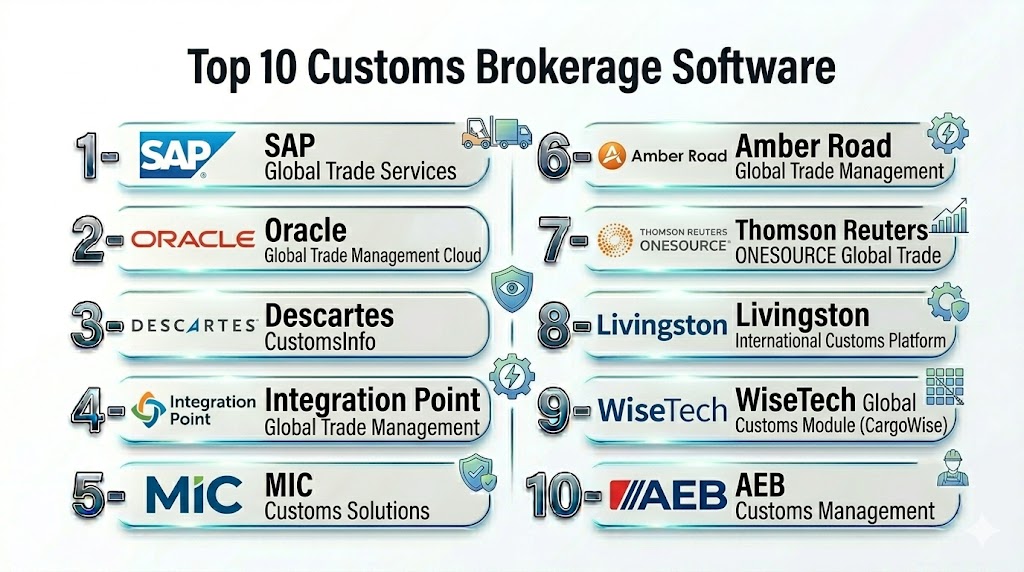
Top 10 Customs Brokerage Software Tools
#1 — Descartes Customs Compliance
Short description: Descartes Customs Compliance is a widely used enterprise platform that streamlines customs declarations, security filings, and trade compliance workflows. It helps logistics providers and customs brokers automate cross-border trade operations while maintaining regulatory compliance. The platform is known for its strong global trade content and integration capabilities. It is widely adopted by freight forwarders and logistics enterprises managing high-volume international shipments.
Key Features
- Customs declaration automation
- Duty and tax calculation support
- Denied party screening
- Trade compliance validation
- Electronic filing workflows
- Audit and reporting tools
- Real-time shipment visibility
Pros
- Strong global trade coverage
- Reliable compliance automation
- Excellent reporting and audit tools
- Good enterprise scalability
Cons
- Complex enterprise setup
- Higher implementation effort
- Best suited for large organizations
- Requires training for full utilization
Platforms / Deployment
- Web
- Cloud / Hybrid
Security & Compliance
- SSO
- RBAC
- MFA
- Audit logging
- Encryption
Integrations & Ecosystem
Descartes integrates deeply with logistics, customs systems, and enterprise trade platforms.
- ERP systems
- WMS and TMS platforms
- Government customs systems
- API-based integrations
- Freight management tools
Support & Community
Strong enterprise logistics support with global implementation expertise and compliance consulting.
#2 — MIC Customs Solutions
Short description: MIC Customs Solutions is a global trade and customs compliance platform designed for large multinational organizations. It supports end-to-end customs processing, compliance automation, and regulatory alignment across multiple jurisdictions. The platform is widely used in highly regulated industries requiring strong governance. It is known for its advanced trade compliance and duty management capabilities.
Key Features
- Global customs filing automation
- Trade compliance management
- Duty optimization tools
- Regulatory validation workflows
- Multi-country customs support
- Audit and compliance reporting
- ERP integration support
Pros
- Strong global compliance coverage
- Excellent for multinational enterprises
- Advanced duty optimization features
- High regulatory accuracy
Cons
- Complex implementation
- Requires expert configuration
- Enterprise-level cost structure
- Not ideal for small businesses
Platforms / Deployment
- Web
- Cloud / Hybrid
Security & Compliance
- RBAC
- MFA
- Audit logging
- Encryption
Integrations & Ecosystem
MIC integrates with enterprise ERP and global trade systems.
- SAP ERP
- Oracle systems
- Customs authorities
- Logistics platforms
- API-based workflows
Support & Community
Enterprise-grade support with strong global trade compliance expertise.
#3 — WiseTech CargoWise Customs
Short description: CargoWise Customs is part of the CargoWise logistics platform and provides customs filing, brokerage automation, and trade compliance tools. It is widely used by global freight forwarders and logistics service providers. The platform is known for its strong integration with logistics execution systems. It helps streamline cross-border shipment processing and customs declarations.
Key Features
- Customs declaration processing
- Integrated freight forwarding workflows
- Compliance validation
- Duty and tax calculations
- Shipment tracking integration
- Automated document management
- Multi-country support
Pros
- Strong logistics ecosystem integration
- Good global freight support
- Scalable enterprise platform
- Efficient workflow automation
Cons
- Complex system learning curve
- Best value within CargoWise ecosystem
- Enterprise-focused pricing
- Requires onboarding time
Platforms / Deployment
- Web
- Cloud
Security & Compliance
- RBAC
- MFA
- Encryption
- Audit logs
Integrations & Ecosystem
CargoWise integrates with global logistics and customs systems.
- Freight forwarding systems
- ERP platforms
- Customs authorities
- Transport systems
- API integrations
Support & Community
Strong global logistics support and training ecosystem.
#4 — SAP Global Trade Services
Short description: SAP Global Trade Services supports customs compliance, trade automation, and international shipment management within SAP ecosystems. It helps enterprises manage import/export operations, compliance checks, and customs filings. The platform is widely used by large manufacturing and global trade organizations. It integrates deeply with SAP ERP systems for end-to-end visibility.
Key Features
- Customs declaration management
- Trade compliance validation
- Automated regulatory checks
- Duty and tax management
- Global trade workflows
- Risk screening
- ERP integration
Pros
- Strong SAP ecosystem integration
- Reliable enterprise compliance tools
- Good global trade support
- Scalable architecture
Cons
- Best suited for SAP users
- Complex implementation
- Requires technical expertise
- High enterprise cost
Platforms / Deployment
- Web
- Cloud / Hybrid
Security & Compliance
- SSO
- MFA
- RBAC
- Audit logging
Integrations & Ecosystem
SAP integrates deeply with enterprise logistics and trade systems.
- SAP ERP
- Supply chain systems
- Customs authorities
- Logistics platforms
- API frameworks
Support & Community
Strong global enterprise support ecosystem with SAP partner network.
#5 — Oracle Global Trade Management
Short description: Oracle Global Trade Management provides customs brokerage, trade compliance, and international logistics management capabilities. It helps enterprises manage global shipments, regulatory compliance, and customs documentation. The platform is widely used in complex supply chain environments. It integrates with Oracle ERP for end-to-end trade visibility.
Key Features
- Customs compliance automation
- Global trade execution
- Shipment tracking
- Duty and tax calculation
- Trade analytics dashboards
- Risk management tools
- ERP integration
Pros
- Strong ERP integration
- Good global trade capabilities
- Scalable enterprise system
- Reliable analytics tools
Cons
- Best for Oracle ecosystem users
- Complex setup process
- High implementation cost
- Requires configuration expertise
Platforms / Deployment
- Web
- Cloud
Security & Compliance
- SSO
- MFA
- RBAC
- Encryption
Integrations & Ecosystem
Oracle integrates with enterprise trade and logistics systems.
- Oracle ERP
- WMS systems
- TMS platforms
- Customs authorities
- API integrations
Support & Community
Strong enterprise support with global trade consulting capabilities.
#6 — Amber Road Global Trade Management
Short description: Amber Road provides global trade management and customs compliance solutions for international businesses. It focuses on trade automation, compliance validation, and cross-border shipment management. The platform is widely used by manufacturers and import/export companies. It helps streamline global trade workflows and reduce compliance risk.
Key Features
- Trade compliance automation
- Customs filing support
- Duty management tools
- Regulatory screening
- Shipment tracking
- Document automation
- Analytics dashboards
Pros
- Strong trade compliance focus
- Good global shipping support
- Useful automation features
- Scalable enterprise tool
Cons
- Enterprise-focused deployment
- Requires configuration effort
- Integration complexity possible
- Pricing may be high
Platforms / Deployment
- Web
- Cloud
Security & Compliance
- RBAC
- MFA
- Audit logging
- Encryption
Integrations & Ecosystem
Amber Road integrates with ERP and supply chain systems.
- ERP systems
- Logistics platforms
- Customs systems
- API integrations
- Trade data services
Support & Community
Enterprise-level support with global trade expertise.
#7 — Integration Point Global Trade Management
Short description: Integration Point provides customs brokerage and trade compliance automation tools for global logistics and supply chain operations. It supports regulatory compliance, customs filing, and trade data management. The platform is widely used in international trade operations requiring compliance accuracy. It helps reduce manual effort in customs processing.
Key Features
- Customs compliance automation
- Trade data management
- Filing and documentation support
- Regulatory validation
- Shipment tracking
- Risk screening
- Reporting tools
Pros
- Strong compliance focus
- Good trade automation tools
- Reliable global coverage
- Useful reporting features
Cons
- Smaller ecosystem than top vendors
- Enterprise configuration required
- Limited modern UX compared to newer tools
- Integration planning needed
Platforms / Deployment
- Web
- Cloud
Security & Compliance
- RBAC
- MFA
- Encryption
- Audit logging
Integrations & Ecosystem
Integration Point connects with enterprise logistics and trade systems.
- ERP platforms
- WMS systems
- Customs authorities
- API integrations
- Logistics tools
Support & Community
Strong enterprise compliance support with trade expertise.
#8 — BluJay Solutions Customs Management
Short description: BluJay Customs Management provides customs brokerage and trade compliance tools as part of its supply chain platform. It supports customs filings, documentation automation, and global trade workflows. The platform is widely used in logistics and transportation operations. It helps improve cross-border shipment efficiency.
Key Features
- Customs filing automation
- Trade documentation management
- Shipment tracking
- Compliance validation
- Duty calculation tools
- Workflow automation
- Reporting dashboards
Pros
- Good supply chain integration
- Reliable compliance features
- Strong logistics focus
- Useful automation tools
Cons
- Now part of larger ecosystem changes
- Enterprise onboarding required
- Advanced features may vary
- Integration complexity possible
Platforms / Deployment
- Web
- Cloud
Security & Compliance
- RBAC
- MFA
- Encryption
- Audit logs
Integrations & Ecosystem
BluJay integrates with logistics and supply chain systems.
- Transportation systems
- ERP platforms
- Customs authorities
- API integrations
- Warehouse systems
Support & Community
Strong logistics support with enterprise implementation services.
#9 — Oracle GTM Cloud Customs Module
Short description: Oracle GTM Cloud provides customs compliance and trade automation capabilities for global enterprises. It focuses on regulatory compliance, shipment tracking, and trade workflow automation. The platform is designed for large-scale global supply chain operations. It integrates closely with Oracle enterprise systems.
Key Features
- Customs compliance automation
- Trade execution workflows
- Shipment tracking
- Risk management
- Duty calculation
- Analytics dashboards
- ERP integration
Pros
- Strong enterprise integration
- Good global trade support
- Reliable analytics tools
- Scalable platform
Cons
- Best for Oracle ecosystem users
- Complex configuration
- High enterprise cost
- Requires expertise
Platforms / Deployment
- Web
- Cloud
Security & Compliance
- SSO
- MFA
- RBAC
- Encryption
Integrations & Ecosystem
Oracle GTM integrates with enterprise logistics systems.
- Oracle ERP
- Supply chain platforms
- Customs authorities
- API frameworks
- Logistics tools
Support & Community
Enterprise-grade global support ecosystem.
#10 — CustomsNow
Short description: CustomsNow provides cloud-based customs brokerage software designed for import/export businesses and freight forwarders. It supports customs filing, documentation, compliance tracking, and shipment visibility. The platform is suitable for mid-market logistics providers and customs brokers. It helps simplify cross-border trade operations.
Key Features
- Customs filing automation
- Shipment tracking
- Compliance validation
- Document management
- Duty calculation tools
- Workflow automation
- Reporting dashboards
Pros
- Easy to deploy
- Good mid-market fit
- Useful automation tools
- Simplified interface
Cons
- Smaller global ecosystem
- Limited enterprise depth
- Advanced analytics may vary
- Integration scope limited
Platforms / Deployment
- Web
- Cloud
Security & Compliance
- RBAC
- Authentication controls
- Encryption
Integrations & Ecosystem
CustomsNow integrates with logistics and trade systems.
- ERP systems
- WMS platforms
- Logistics tools
- API integrations
- Customs authorities
Support & Community
Moderate support with onboarding assistance for logistics teams.
Comparison Table
| Tool Name | Best For | Platform(s) Supported | Deployment | Standout Feature | Public Rating |
|---|---|---|---|---|---|
| Descartes Customs | Enterprise logistics | Web | Cloud | Global compliance automation | N/A |
| MIC Customs Solutions | Multinational trade | Web | Cloud / Hybrid | Advanced duty optimization | N/A |
| CargoWise Customs | Freight forwarders | Web | Cloud | Integrated logistics workflows | N/A |
| SAP GTS | SAP enterprises | Web | Cloud / Hybrid | ERP-native compliance | N/A |
| Oracle GTM | Global enterprises | Web | Cloud | Trade management integration | N/A |
| Amber Road | Manufacturing & trade | Web | Cloud | Trade automation workflows | N/A |
| Integration Point | Compliance-focused orgs | Web | Cloud | Customs filing automation | N/A |
| BluJay Customs | Logistics networks | Web | Cloud | Supply chain integration | N/A |
| Oracle GTM Cloud | Enterprise ERP users | Web | Cloud | Global trade execution | N/A |
| CustomsNow | Mid-market brokers | Web | Cloud | Simple customs automation | N/A |
Evaluation & Scoring of Customs Brokerage Software
| Tool Name | Core 25% | Ease 15% | Integrations 15% | Security 10% | Performance 10% | Support 10% | Value 15% | Weighted Total |
|---|---|---|---|---|---|---|---|---|
| Descartes | 9 | 7 | 9 | 9 | 9 | 9 | 7 | 8.4 |
| MIC Customs | 9 | 7 | 9 | 9 | 9 | 9 | 7 | 8.4 |
| CargoWise | 9 | 7 | 9 | 9 | 9 | 8 | 7 | 8.3 |
| SAP GTS | 8 | 7 | 10 | 9 | 8 | 9 | 7 | 8.2 |
| Oracle GTM | 8 | 7 | 9 | 9 | 8 | 8 | 7 | 8.0 |
| Amber Road | 8 | 7 | 8 | 8 | 8 | 8 | 7 | 7.8 |
| Integration Point | 7 | 7 | 8 | 8 | 8 | 8 | 7 | 7.6 |
| BluJay | 7 | 8 | 8 | 8 | 8 | 8 | 7 | 7.7 |
| Oracle GTM Cloud | 8 | 7 | 9 | 9 | 8 | 8 | 7 | 8.0 |
| CustomsNow | 7 | 8 | 7 | 7 | 7 | 7 | 8 | 7.3 |
These scores reflect how customs brokerage platforms perform across compliance depth, integration strength, automation capability, and enterprise readiness. Large enterprise platforms typically score higher in regulatory coverage and scalability, while mid-market tools prioritize ease of use and faster deployment. The right selection depends on trade volume, regulatory complexity, and system ecosystem alignment.
Which Customs Brokerage Software Is Right for You?
Solo / Freelancer
Independent customs consultants or small logistics advisors may not need full enterprise systems. Lightweight tools like CustomsNow can support basic customs workflows and documentation.
SMB
Small and mid-sized import/export businesses should prioritize ease of use, automation, and affordability. CustomsNow and BluJay Solutions offer practical solutions for simplified customs operations.
Mid-Market
Mid-market logistics and manufacturing companies benefit from balanced compliance automation and integration capability. Amber Road, Integration Point, and CargoWise provide strong mid-level trade compliance functionality.
Enterprise
Large multinational organizations require deep regulatory coverage, automation, and integration with ERP systems. Descartes, SAP GTS, MIC, and Oracle GTM are best suited for global trade complexity.
Budget vs Premium
Budget tools focus on documentation automation and basic filing, while premium platforms provide global compliance, AI-driven trade intelligence, and deep ERP integration.
Feature Depth vs Ease of Use
Advanced systems offer powerful compliance and analytics but require structured data and onboarding. Simpler systems prioritize usability and faster implementation.
Integrations & Scalability
Customs brokerage systems should integrate with ERP, WMS, TMS, and government customs systems for full trade visibility and compliance automation.
Security & Compliance Needs
Enterprise buyers must prioritize SSO, MFA, RBAC, encryption, audit logging, and regulatory compliance capabilities for secure cross-border operations.
Frequently Asked Questions
1- What is Customs Brokerage Software?
Customs Brokerage Software is a system that automates customs declarations, trade compliance, tariff classification, and regulatory filings for import and export operations.
2- Who uses customs brokerage software?
Customs brokers, freight forwarders, import/export companies, manufacturers, logistics providers, and global trade compliance teams use these platforms.
3- What problems does it solve?
It reduces manual paperwork, automates customs filings, ensures regulatory compliance, improves shipment visibility, and reduces delays at borders.
4- Does it integrate with ERP systems?
Yes, most modern platforms integrate with ERP systems to align customs data with financial, procurement, and logistics workflows.
5- Is AI used in customs brokerage software?
Yes, AI is increasingly used for tariff classification, compliance validation, risk detection, and automation of customs workflows.
6- How does it improve compliance?
It ensures accurate documentation, validates regulations, screens restricted parties, and maintains audit trails for regulatory review.
7- What is the biggest implementation challenge?
The biggest challenges include data integration, regulatory complexity, system configuration, and aligning workflows with customs authorities.
8- Can small businesses use customs software?
Yes, but smaller businesses typically use simplified tools rather than full enterprise-grade customs brokerage platforms.
9- How long does implementation take?
Implementation can range from a few weeks for mid-market tools to several months for large enterprise deployments depending on integration complexity.
10- What should buyers prioritize?
Buyers should prioritize compliance coverage, integration capabilities, automation depth, regulatory accuracy, and scalability across trade regions.
Conclusion
Customs Brokerage Software is essential for organizations involved in international trade, helping them automate compliance, streamline customs filings, and reduce border delays. These platforms ensure regulatory accuracy while improving operational efficiency across global supply chains. Enterprise systems provide deep compliance automation and integration capabilities, while mid-market solutions offer faster deployment and usability. The best choice depends on trade complexity, regulatory exposure, and system integration needs. Organizations should begin by evaluating current customs workflows, identifying compliance gaps, and piloting shortlisted platforms before scaling across global operations.

Very informative and well-structured blog on customs brokerage software. The comparison of features, pros, and cons is clear and practical, making it easier to understand different trade compliance and customs management solutions.
Great breakdown of customs brokerage software—really helpful for understanding how these platforms simplify customs documentation, compliance, and shipment management.