Introduction
Hospital Bed Management Systems are healthcare software platforms designed to track, allocate, and optimize the use of hospital beds in real time. These systems manage patient flow from admission to discharge while coordinating departments like emergency, wards, ICU, and housekeeping. In modern hospitals, bed availability is one of the most critical operational constraints, directly impacting patient wait times, emergency response efficiency, and hospital revenue.
These platforms provide real-time visibility into bed status such as occupied, vacant, reserved, under cleaning, or isolation-ready. They also automate patient assignments, reduce bottlenecks, and improve coordination across clinical and non-clinical teams. Many systems now integrate with EHR, HIS, and IoT-based tracking systems for smarter hospital operations.
Real-world use cases:
- Emergency room bed allocation and triage management
- ICU and isolation bed tracking
- Patient admission, transfer, and discharge coordination
- Housekeeping and bed cleaning workflow automation
- Hospital capacity planning during peak demand
- Multi-hospital network bed visibility
Key evaluation criteria:
- Real-time bed tracking accuracy
- Patient flow automation and optimization
- Integration with HIS/EHR systems
- Dashboard and analytics capabilities
- Workflow automation (cleaning, transfer, discharge)
- Scalability across multi-site hospitals
- AI-based predictive bed demand
- Security, audit logs, and compliance
- Mobile accessibility for staff
- Ease of deployment and usability
Best for: hospitals, multi-specialty healthcare networks, emergency care units, ICU management teams, and large healthcare providers.
Not ideal for: small clinics with limited inpatient facilities or organizations without structured inpatient bed workflows.
Key Trends in Hospital Bed Management Systems
- AI-powered patient flow prediction for reducing congestion
- Real-time IoT bed tracking using sensors and RTLS systems
- Automated bed cleaning and EVS task allocation workflows
- Integrated hospital command centers (bed + staffing + operations)
- Mobile-first dashboards for nurses and administrators
- Cloud-based hospital operations platforms for multi-facility visibility
- EHR-integrated bed assignment systems
- Predictive capacity planning for emergency surges
- Digital twins of hospital operations for simulation and planning
- Automation of admission-discharge-transfer (ADT) workflows
How We Selected These Tools
- Evaluated adoption in real hospital environments
- Reviewed real-time bed tracking and allocation capabilities
- Assessed integration with HIS, EHR, and EMR systems
- Considered patient flow automation and workflow depth
- Analyzed analytics and predictive capacity planning features
- Reviewed scalability for large hospital networks
- Evaluated IoT and RTLS support for bed tracking
- Assessed usability for clinical and operational staff
- Considered security, compliance, and audit capabilities
- Reviewed vendor maturity in healthcare IT operations
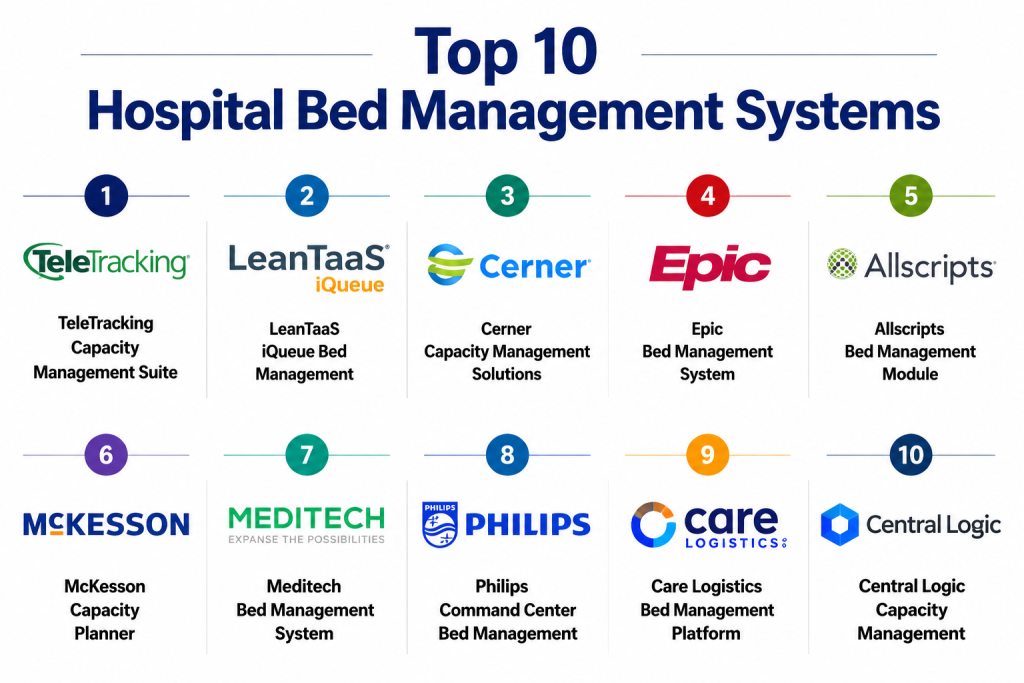
Top 10 Hospital Bed Management Systems
#1 — TeleTracking Patient Flow System
Short description: TeleTracking is a leading hospital operations and bed management platform that provides real-time patient flow visibility, bed tracking, and operational coordination. It helps hospitals manage admissions, transfers, and discharges efficiently while optimizing bed utilization across departments. The platform is widely used in large hospital networks to improve throughput and reduce emergency room congestion.
Key Features
- Real-time bed availability tracking
- Patient flow optimization
- Admission, transfer, discharge automation
- Command center dashboards
- EVS and housekeeping coordination
- Predictive capacity planning
- Integration with hospital systems
Pros
- Strong enterprise adoption
- Excellent real-time visibility
- Powerful workflow automation
- Proven in large hospitals
Cons
- Complex implementation
- High cost structure
- Requires training
- Best for large hospitals
Platforms / Deployment
- Web
- Cloud / Hybrid
Security & Compliance
- RBAC
- MFA
- Encryption
- Audit logging
Integrations & Ecosystem
Integrates with hospital systems and operational tools.
- EHR systems
- HIS platforms
- RTLS systems
- Staffing systems
- Analytics tools
Support & Community
Strong enterprise healthcare support and consulting services.
#2 — Cerner Bed Management (Oracle Health)
Short description: Cerner Bed Management provides real-time visibility into hospital bed status and patient flow. It helps healthcare providers manage admissions, transfers, and discharges while improving operational efficiency. The system integrates deeply with electronic health records and hospital workflows to ensure seamless patient movement across departments.
Key Features
- Real-time bed occupancy tracking
- Patient admission/discharge workflows
- EHR integration
- Capacity management dashboards
- Alerts and notifications
- Resource optimization tools
- Analytics reporting
Pros
- Strong EHR integration
- Reliable enterprise platform
- Good workflow automation
- Scalable hospital network support
Cons
- Complex configuration
- Enterprise pricing
- Requires Oracle ecosystem alignment
- Training required
Platforms / Deployment
- Web
- Cloud
Security & Compliance
- RBAC
- MFA
- Encryption
- Audit logs
Integrations & Ecosystem
Integrates with Oracle healthcare systems.
- EHR platforms
- HIS systems
- Clinical systems
- Analytics platforms
- APIs
Support & Community
Strong enterprise healthcare support ecosystem.
#3 — Epic Bed Management
Short description: Epic Bed Management is part of the Epic healthcare ecosystem and provides real-time hospital bed tracking, patient placement, and flow optimization. It enables hospitals to coordinate admissions, transfers, and discharges with high accuracy while integrating seamlessly with patient records.
Key Features
- Bed availability tracking
- Patient placement automation
- EHR integration
- Transfer coordination tools
- Real-time dashboards
- Admission/discharge workflows
- Capacity planning tools
Pros
- Deep EHR integration
- Strong hospital adoption
- Reliable real-time data
- Comprehensive ecosystem
Cons
- High implementation cost
- Complex configuration
- Best within Epic ecosystem
- Requires training
Platforms / Deployment
- Web
- Cloud
Security & Compliance
- RBAC
- MFA
- Encryption
- Audit logging
Integrations & Ecosystem
Integrated within Epic healthcare ecosystem.
- Epic EHR
- Clinical systems
- Lab systems
- Analytics platforms
- Hospital workflows
Support & Community
Strong enterprise healthcare support.
#4 — MEDITECH Bed Management System
Short description: MEDITECH Bed Management provides tools for tracking bed occupancy, patient flow, and hospital capacity. It helps hospitals streamline admissions and optimize resource allocation. The platform integrates with MEDITECH’s hospital information systems for unified operations.
Key Features
- Bed status tracking
- Patient flow management
- Admission/discharge automation
- Hospital dashboards
- Capacity analytics
- Workflow coordination
- Integration with HIS
Pros
- Strong HIS integration
- Reliable hospital workflows
- Good usability
- Cost-effective for MEDITECH users
Cons
- Best within MEDITECH ecosystem
- Limited external integrations
- Moderate customization
- Requires onboarding
Platforms / Deployment
- Web
- Cloud
Security & Compliance
- RBAC
- MFA
- Encryption
Integrations & Ecosystem
Works within MEDITECH ecosystem.
- HIS platforms
- EHR systems
- Clinical workflows
- Analytics tools
- APIs
Support & Community
Strong healthcare IT support.
#5 — Siemens Healthineers Bed Management
Short description: Siemens Healthineers Bed Management system supports hospital capacity optimization through real-time bed tracking and patient flow management. It helps improve operational efficiency by integrating clinical and administrative workflows. The platform is widely used in advanced healthcare environments.
Key Features
- Real-time bed tracking
- Patient flow optimization
- Hospital dashboards
- Capacity planning
- Workflow automation
- Clinical integration
- Analytics tools
Pros
- Strong enterprise reliability
- Good clinical integration
- Advanced analytics support
- Scalable architecture
Cons
- Complex implementation
- Enterprise-focused
- High cost
- Requires technical expertise
Platforms / Deployment
- Web
- Cloud / Hybrid
Security & Compliance
- RBAC
- MFA
- Encryption
- Audit logs
Integrations & Ecosystem
Integrates with Siemens healthcare ecosystem.
- EHR systems
- HIS platforms
- Imaging systems
- Analytics tools
- APIs
Support & Community
Enterprise-grade healthcare support.
#6 — GE Healthcare AgileTrac
Short description: GE AgileTrac provides hospital bed tracking and asset management capabilities to improve patient flow and operational efficiency. It integrates RTLS technology to provide real-time visibility into bed status and hospital resources. The system is widely used in large hospital networks.
Key Features
- RTLS-based bed tracking
- Patient flow management
- Asset tracking integration
- Workflow automation
- Real-time dashboards
- Capacity optimization
- Hospital analytics
Pros
- Strong RTLS integration
- High accuracy tracking
- Good enterprise scalability
- Reliable performance
Cons
- Hardware dependency
- Complex deployment
- High cost
- Integration effort required
Platforms / Deployment
- Web
- Hybrid
Security & Compliance
- RBAC
- Encryption
- Audit logging
Integrations & Ecosystem
Works with GE healthcare systems.
- RTLS hardware
- Hospital systems
- EHR platforms
- Analytics tools
- APIs
Support & Community
Strong enterprise healthcare support.
#7 — McKesson Patient Flow Manager
Short description: McKesson Patient Flow Manager helps hospitals manage bed allocation, patient admission, and discharge workflows. It improves hospital efficiency by optimizing bed utilization and reducing patient wait times. The platform is widely used in healthcare operational environments.
Key Features
- Bed allocation management
- Patient flow tracking
- Admission/discharge automation
- Capacity dashboards
- Workflow coordination
- Reporting tools
- Integration support
Pros
- Strong workflow management
- Good hospital adoption
- Reliable operational tools
- Scalable solution
Cons
- Enterprise setup required
- Integration complexity
- Limited modern UI
- Requires training
Platforms / Deployment
- Web
- Cloud
Security & Compliance
- RBAC
- MFA
- Encryption
Integrations & Ecosystem
Integrates with McKesson healthcare systems.
- EHR systems
- Hospital platforms
- Clinical tools
- Analytics systems
- APIs
Support & Community
Strong healthcare IT support.
#8 — Allscripts Bed Management
Short description: Allscripts Bed Management provides real-time visibility into hospital bed availability and patient flow. It helps optimize resource allocation and improve patient throughput. The platform integrates with Allscripts EHR and hospital systems.
Key Features
- Real-time bed tracking
- Patient placement tools
- EHR integration
- Workflow automation
- Capacity dashboards
- Alerts and notifications
- Analytics tools
Pros
- Strong EHR integration
- Good usability
- Reliable hospital workflows
- Scalable platform
Cons
- Best within Allscripts ecosystem
- Limited customization
- Integration effort required
- Enterprise pricing
Platforms / Deployment
- Web
- Cloud
Security & Compliance
- RBAC
- MFA
- Encryption
Integrations & Ecosystem
Integrates with healthcare systems.
- EHR platforms
- Hospital systems
- Clinical tools
- Analytics systems
- APIs
Support & Community
Strong healthcare vendor support.
#9 — Central Logic Bed Management
Short description: Central Logic provides patient transfer and bed management solutions designed to optimize hospital capacity and improve patient flow. It supports centralized coordination of admissions, transfers, and discharges across hospital networks.
Key Features
- Patient transfer coordination
- Bed tracking
- Capacity management
- Workflow automation
- Communication tools
- Dashboards
- Analytics
Pros
- Strong transfer management
- Good hospital coordination
- Improves throughput
- Scalable platform
Cons
- Limited advanced analytics
- Requires configuration
- Integration effort needed
- Best for networks
Platforms / Deployment
- Web
- Cloud
Security & Compliance
- RBAC
- MFA
- Encryption
Integrations & Ecosystem
Integrates with hospital systems.
- EHR platforms
- HIS systems
- Transfer networks
- APIs
- Analytics tools
Support & Community
Healthcare-focused support services.
#10 — Health Catalyst Bed Management Analytics
Short description: Health Catalyst provides analytics-driven bed management solutions that help hospitals optimize capacity and patient flow. It focuses on data-driven insights for improving operational efficiency and reducing bottlenecks.
Key Features
- Bed utilization analytics
- Patient flow dashboards
- Predictive modeling
- Capacity optimization
- Reporting tools
- Data integration
- Performance tracking
Pros
- Strong analytics capabilities
- Data-driven insights
- Good predictive tools
- Scalable platform
Cons
- Not a full workflow system
- Requires data maturity
- Integration needed
- Enterprise focus
Platforms / Deployment
- Web
- Cloud
Security & Compliance
- RBAC
- MFA
- Encryption
Integrations & Ecosystem
Integrates with healthcare data systems.
- EHR platforms
- Data warehouses
- Analytics systems
- APIs
- Hospital systems
Support & Community
Strong healthcare analytics support.
Comparison Table
| Tool Name | Best For | Platform(s) Supported | Deployment | Standout Feature | Public Rating |
|---|---|---|---|---|---|
| TeleTracking | Large hospital networks | Web | Cloud | Patient flow command center | N/A |
| Cerner | EHR-integrated hospitals | Web | Cloud | Deep EHR integration | N/A |
| Epic | Large healthcare systems | Web | Cloud | Unified hospital ecosystem | N/A |
| MEDITECH | MEDITECH hospitals | Web | Cloud | HIS integration | N/A |
| Siemens Healthineers | Enterprise hospitals | Web | Cloud | Clinical integration | N/A |
| GE AgileTrac | RTLS hospitals | Web | Hybrid | RTLS bed tracking | N/A |
| McKesson | Hospital operations | Web | Cloud | Workflow automation | N/A |
| Allscripts | EHR-based hospitals | Web | Cloud | EHR integration | N/A |
| Central Logic | Hospital networks | Web | Cloud | Transfer coordination | N/A |
| Health Catalyst | Data-driven hospitals | Web | Cloud | Predictive analytics | N/A |
Evaluation & Scoring of Hospital Bed Management Systems
| Tool Name | Core 25% | Ease 15% | Integrations 15% | Security 10% | Performance 10% | Support 10% | Value 15% | Weighted Total |
|---|---|---|---|---|---|---|---|---|
| TeleTracking | 9 | 7 | 9 | 9 | 9 | 9 | 7 | 8.4 |
| Cerner | 9 | 7 | 10 | 9 | 9 | 9 | 7 | 8.5 |
| Epic | 9 | 7 | 10 | 9 | 9 | 9 | 7 | 8.5 |
| MEDITECH | 8 | 8 | 9 | 9 | 8 | 8 | 8 | 8.2 |
| Siemens | 8 | 7 | 9 | 9 | 8 | 8 | 7 | 8.0 |
| GE AgileTrac | 8 | 7 | 8 | 9 | 9 | 8 | 7 | 7.9 |
| McKesson | 8 | 7 | 8 | 8 | 8 | 8 | 7 | 7.8 |
| Allscripts | 8 | 8 | 8 | 8 | 8 | 8 | 7 | 7.9 |
| Central Logic | 8 | 8 | 8 | 8 | 8 | 8 | 7 | 7.9 |
| Health Catalyst | 8 | 7 | 9 | 8 | 9 | 8 | 7 | 7.9 |
These scores reflect real-time capability, integration depth, hospital-scale adoption, and analytics strength. Enterprise EHR-integrated systems rank highest in integration and governance, while analytics-first platforms excel in decision intelligence.
Which Hospital Bed Management System Is Right for You?
Solo / Freelancer
Not typically applicable unless working in healthcare consulting or system design.
SMB Hospitals
Smaller hospitals benefit from simpler systems with faster deployment such as MEDITECH or Allscripts.
Mid-Market Hospitals
Mid-sized healthcare networks need balanced operational and integration capabilities. McKesson, Central Logic, and GE AgileTrac are strong options.
Enterprise Hospitals
Large hospital systems require advanced command centers and deep EHR integration. TeleTracking, Epic, and Cerner are best suited.
Budget vs Premium
Budget systems focus on basic bed tracking, while premium platforms offer AI-driven forecasting and enterprise-wide coordination.
Feature Depth vs Ease of Use
Advanced platforms provide deep workflow automation but require training, while simpler tools prioritize usability.
Integrations & Scalability
Integration with EHR, HIS, RTLS, and analytics systems is critical for hospital-wide efficiency.
Security & Compliance Needs
Ensure RBAC, MFA, encryption, audit trails, and healthcare compliance alignment.
Frequently Asked Questions
1- What is a hospital bed management system?
It is software that tracks and manages hospital bed availability, patient flow, and resource allocation in real time.
2- Why is bed management important?
It reduces patient wait times, improves hospital efficiency, and ensures optimal use of limited hospital resources.
3- What data do these systems track?
They track bed status, patient admission, discharge, transfers, cleaning status, and occupancy rates.
4- Do these systems integrate with EHR?
Yes, most systems integrate with electronic health records for seamless patient data flow.
5- What is real-time bed tracking?
It is continuous monitoring of bed availability and status across hospital departments.
6- Can AI be used in bed management?
Yes, AI is used for predicting patient flow, occupancy demand, and optimizing capacity planning.
7- Are mobile apps available?
Many modern systems provide mobile dashboards for nurses and hospital administrators.
8- What is a hospital command center?
It is a centralized system that manages patient flow, beds, staffing, and hospital operations in real time.
9- What is the biggest implementation challenge?
Integration with existing hospital systems and staff adoption are the main challenges.
10- How do hospitals measure ROI?
ROI is measured through reduced wait times, improved bed utilization, and increased patient throughput.
Conclusion
Hospital Bed Management Systems are critical for improving patient flow, reducing congestion, and optimizing hospital operations. They connect admissions, emergency care, wards, and housekeeping into a unified system that ensures efficient use of hospital beds. Enterprise platforms like TeleTracking, Epic, and Cerner provide deep integration and command center capabilities, while mid-market tools offer faster deployment and usability. The right choice depends on hospital size, digital maturity, and integration needs. Hospitals should begin with workflow mapping, pilot deployments, and integration testing before scaling system-wide.

Very informative and well-structured blog on hospital bed management systems. The comparison of features, pros, and cons is clear and practical, making it easier to understand different patient flow and hospital resource management solutions.
This article gives a very practical overview of hospital bed management systems and explains how these tools help improve patient flow, resource planning, and operational efficiency.
Hospital bed management is closely connected to the entire patient journey, not just room allocation. Delays in diagnostics, discharge planning, or housekeeping can prevent beds from becoming available even when demand is high. Exploring how bed management platforms integrate with clinical, transport, and environmental services to coordinate patient flow would provide readers with a more complete understanding of improving hospital capacity and reducing admission delays.