Introduction
Agency Management Systems (AMS) are software platforms that help insurance agencies manage their operations, policy and client data, workflows, commissions, document storage, and reporting—all from a central system. These systems replace spreadsheets, fragmented tools, and manual processes with structured data, automated workflows, and integrated dashboards.
In 2026’s competitive insurance landscape, agencies are streamlining operations, improving customer experience, and meeting compliance while managing digital distribution channels. Modern AMS platforms now include automation, AI, analytics, multi‑channel engagement, and ecosystem integrations.
Real‑world use cases include:
- Managing client and policy lifecycles
- Automating renewals, workflows, and task reminders
- Tracking commissions and agent production
- Centralizing documents and correspondence
- Reporting and regulatory compliance
Key evaluation criteria for buyers:
- Policy and client data management
- Workflow and task automation
- Integration with carriers and rating tools
- Commission tracking and accounting
- Reporting, analytics, and dashboards
- User experience and configurability
- Security and compliance controls
- APIs & ecosystem connectivity
- Mobile access and notifications
- Scalability for multi‑agency growth
Best for: Insurance agencies, brokerages, MGA/MGU operations, financial advisors, and firms managing multi‑line portfolios.
Not ideal for: Very small agencies with minimal automation needs or organizations that only use carrier portals without internal data workflows.
Key Trends in Agency Management Systems
- AI‑driven automation for task recommendations, data entry, and workflows
- Low‑code/no‑code configuration and self‑service reporting
- Integrated customer portals and CRM functionality
- Real‑time data exchange with carriers and rating engines
- Mobile access for agents and field staff
- API‑first platforms enabling ecosystem integrations
- Cloud‑native deployment with BYOD capabilities
- Embedded analytics and predictive dashboards
- Automated compliance and audit trails
- Cross‑agency collaboration features (teams, tasks, notifications)
How We Selected These Tools
The systems below were selected based on:
- Adoption in the insurance agency market
- Feature coverage (policy, client, commissions, workflows)
- API and ecosystem integration support
- Security, governance, and compliance controls
- Scalability across agency sizes
- Reporting and analytics depth
- Mobile and remote access support
- Ease of configuration and user experience
- Vendor support and success programs
- AI/automation capabilities
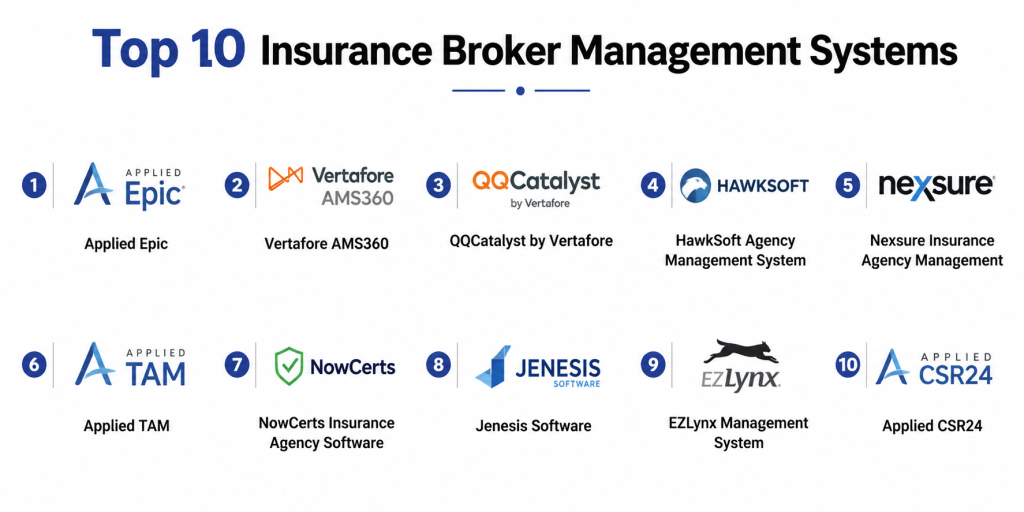
Top 10 Agency Management Systems (Insurance)
1 — Applied Epic
Short description: Applied Epic is one of the most widely used AMS platforms globally, designed for mid‑to‑large insurance agencies, with robust policy and client management, workflows, reporting, and integrations.
Key Features
- Centralized client and policy database
- Automated workflows and reminders
- Commission tracking
- Reporting and dashboards
- Document management
- Carrier integrations
- Task and calendar management
Pros
- Industry‑leading adoption
- Strong scalability
- Deep policy & client data model
- Good carrier/connectivity ecosystem
Cons
- Premium pricing
- Implementation effort
- Learning curve for new users
- Customization required for advanced uses
Platforms / Deployment
- Web / Desktop
- Cloud / Hosted
Security & Compliance
- RBAC
- Encryption
- Audit logs
- Compliance controls
Integrations & Ecosystem
Epic integrates with rating engines, CRM, accounting, and carrier networks.
- Rating tools
- CRM platforms
- Accounting systems
- Carrier feeds
- APIs
Support & Community
Large user community and robust vendor support.
2 — Vertafore AMS360
Short description: AMS360 is a popular cloud‑ready AMS platform that supports policy management, accounting integration, reporting, and workflows for agencies of various sizes.
Key Features
- Client and policy management
- Action tracking and tasks
- Accounting integration
- Document storage
- Reporting tools
- Renewals & expirations management
- Carrier connectivity
Pros
- Mature insurance features
- Widely adopted
- Cloud‑ready interface
- Strong reporting
Cons
- Complexity for small agencies
- Training required
- Upgrade cycles managed by vendor
- Customization limitations
Platforms / Deployment
- Web / Desktop
- Cloud / Hosted
Security & Compliance
- RBAC
- Encryption
- Audit controls
Integrations & Ecosystem
AMS360 connects with accounting, CRM, rating, and carrier systems.
- Accounting tools
- CRM platforms
- Rating engines
- Carrier feeds
- APIs
Support & Community
Large user base and comprehensive support options.
3 — HawkSoft
Short description: HawkSoft is an AMS designed for independent agencies that need client/policy management, task automation, and workflows without enterprise complexity.
Key Features
- Policy & client database
- Document management
- Task and workflow automation
- Commissions tracking
- Reporting tools
- Integration with carrier portals
Pros
- User‑friendly
- Affordable for mid‑market
- Strong independent agency focus
- Flexible workflows
Cons
- Less depth in enterprise reporting
- Smaller integration ecosystem
- On‑premise option may require infrastructure
- Not ideal for multi‑location enterprises
Platforms / Deployment
- Web / Desktop
- Cloud / Hosted
Security & Compliance
- RBAC
- Encryption
- Audit logs
Integrations & Ecosystem
Integrates with rating and carrier connectivity tools.
- CRM systems
- Rating engines
- Accounting tools
- Carrier portals
Support & Community
Dedicated mid‑market support and active user community.
4 — NowCerts
Short description: NowCerts is a cloud‑native AMS with modern user experience, automated workflows, policy tracking, and carrier e‑docs support targeted at small to mid‑sized agencies.
Key Features
- Policy and client management
- Automatic E‑Docs retrieval
- Workflow automation
- Renewal tracking
- Commission reporting
- Dashboard analytics
Pros
- Easy onboarding
- Modern interface
- Cloud‑native
- Automated carrier e‑docs
Cons
- Less deep enterprise features
- Smaller integration ecosystem
- Basic accounting support
- Limited advanced AI features
Platforms / Deployment
- Web / Mobile
- Cloud
Security & Compliance
- RBAC
- Encryption
- Audit logs
Integrations & Ecosystem
Integrates with rating, email, and workflow tools.
- Rating engines
- Email platforms
- Accounting tools
- APIs
Support & Community
Responsive support and community forums.
5 — Jenesis
Short description: Jenesis AMS is a user‑friendly system built for small and independent agencies, offering policy management, accounting, commissions, and document handling.
Key Features
- Client & policy tracking
- Commissions management
- Accounting integration
- Document storage
- Renewals & expirations
- Reporting
Pros
- Easy to use
- Strong small agency fit
- Integrated accounting
- Affordable
Cons
- Less enterprise scale
- Smaller ecosystem
- Fewer advanced workflows
- Limited API platform
Platforms / Deployment
- Web / Desktop
- Hosted / Cloud
Security & Compliance
- Encryption
- RBAC
- Audit logs
Integrations & Ecosystem
Integrates with common accounting and CRM systems.
- Accounting tools
- CRM platforms
- Carrier feeds
Support & Community
Good small agency support and training.
6 — Zoho Insurance Management (Zoho CRM + ecosystem)
Short description: Zoho’s CRM ecosystem with insurance templates and modules can act as a lightweight AMS for agencies that want flexible CRM‑centric workflows.
Key Features
- Client relationship management
- Policy tracking modules
- Automation workflows
- Email integration
- Reporting dashboards
- Mobile apps
Pros
- Highly configurable
- Low‑cost entry
- Strong CRM base
- Modular ecosystem
Cons
- Not insurance‑specific out of the box
- Requires customization
- Limited carrier connectivity
- Workflows manual setup
Platforms / Deployment
- Web / Mobile
- Cloud
Security & Compliance
- RBAC
- Encryption
- Audit logs
Integrations & Ecosystem
Connects with Zoho apps, accounting, marketing, and custom APIs.
- Zoho apps
- Accounting integrations
- Custom APIs
- Email and marketing tools
Support & Community
Large ecosystem support and documentation.
7 — NextAgency (Vertafore)
Short description: NextAgency is a lightweight AMS from Vertafore that focuses on simplicity, mobile access, and cloud delivery for smaller agencies.
Key Features
- Policy & client management
- Task automation
- Renewal alerts
- Reporting widgets
- Mobile access
Pros
- Modern cloud UX
- Easy to onboard
- Best for small agencies
- Affordable
Cons
- Less advanced features
- Smaller integration set
- Limited enterprise workflow
- Basic reporting
Platforms / Deployment
- Web / Mobile
- Cloud
Security & Compliance
- RBAC
- Encryption
- Audit logs
Integrations & Ecosystem
Integrates with core carrier feeds and basic systems.
- Carrier feeds
- Email workflows
- CRM connectors
Support & Community
Vertafore support with product guides.
8 — RadiusBob (Empower Brokerage Solutions)
Short description: RadiusBob combines AMS features with CRM, task management, and pipeline tracking for agencies seeking sales‑aligned operational tools.
Key Features
- CRM & AMS combined
- Client & policy workflow
- Pipeline tracking
- Automated tasks
- Reporting dashboards
- Email integration
Pros
- Sales and operations alignment
- Modern UX
- Unified CRM and AMS
- Good automation
Cons
- Smaller insurance feature set
- Integration effort needed
- Less carrier connectivity
- Mid‑market focus
Platforms / Deployment
- Web / Mobile
- Cloud
Security & Compliance
- RBAC
- Encryption
- Audit logs
Integrations & Ecosystem
Connects CRM, email, and analytics tools.
- CRM/Email platforms
- Analytics tools
- Custom APIs
Support & Community
Focused support from mid‑market team.
9 — AgencyZoom
Short description: AgencyZoom is a CRM + productivity platform built for insurance agencies with pipeline management, task automation, and basic policy tracking.
Key Features
- CRM & sales workflows
- Automated tasks
- Renewal reminders
- Reporting dashboards
- Mobile access
Pros
- Excellent sales productivity focus
- Easy to adopt
- Strong task automation
- Modern mobile UI
Cons
- Policy management is basic
- Not full AMS feature set
- Limited carrier integrations
- Best with CRM workflows
Platforms / Deployment
- Web / Mobile
- Cloud
Security & Compliance
- RBAC
- Encryption
- Audit logs
Integrations & Ecosystem
Integrates with CRM, email, and basic rating tools.
- CRM/Email tools
- Marketing integrations
- Mobile apps
Support & Community
Small agency focused support.
10 — QQCatalyst
Short description: QQCatalyst is an AMS from Vertafore tailored for small agencies with core policy, client, task, and commission productivity tools.
Key Features
- Client & policy database
- Task automation
- Commission tracking
- Reporting tools
- Renewal alerts
- Mobile dashboard
Pros
- Easy for small agencies
- Cloud delivery
- Affordable
- Simpler UI
Cons
- Limited advanced features
- Smaller integration ecosystem
- Basic workflows
- Scale limitations
Platforms / Deployment
- Web / Mobile
- Cloud
Security & Compliance
- RBAC
- Encryption
- Audit logs
Integrations & Ecosystem
Basic carrier feeds and CRM connectors.
- Carrier feeds
- Email integration
- CRM connectors
Support & Community
Vertafore small agency support.
Comparison Table
| Tool | Best For | Platform | Deployment | Standout Feature | Public Rating |
|---|---|---|---|---|---|
| Applied Epic | Enterprise agencies | Web/Desk | Cloud/Hosted | Comprehensive AMS | N/A |
| Vertafore AMS360 | Mid‑large agencies | Web/Desk | Cloud/Hosted | Mature insurance features | N/A |
| HawkSoft | Mid‑market | Web/Desk | Cloud/Hosted | Independent agency fit | N/A |
| NowCerts | Small‑mid agencies | Web/Mobile | Cloud | Cloud native | N/A |
| Jenesis | Small agencies | Web/Desk | Cloud/Hosted | Small agency fit | N/A |
| Zoho Insurance | CRM‑centric | Web/Mobile | Cloud | Flexible ecosystem | N/A |
| NextAgency | Small agencies | Web/Mobile | Cloud | Modern UX | N/A |
| RadiusBob | Sales‑aligned | Web/Mobile | Cloud | CRM + AMS | N/A |
| AgencyZoom | CRM focus | Web/Mobile | Cloud | Sales workflows | N/A |
| QQCatalyst | Entry AMS | Web/Mobile | Cloud | Simple core AMS | N/A |
Evaluation & Scoring of Agency Management Systems
| Tool | Core | Ease | Integrations | Security | Performance | Support | Value | Weighted Total |
|---|---|---|---|---|---|---|---|---|
| Applied Epic | 9.5 | 7.6 | 9.4 | 9.3 | 9.2 | 9.1 | 7.8 | 8.86 |
| Vertafore AMS360 | 9.3 | 7.5 | 9.2 | 9.1 | 9.0 | 9.0 | 7.6 | 8.77 |
| HawkSoft | 8.8 | 8.2 | 8.5 | 8.7 | 8.6 | 8.7 | 8.3 | 8.26 |
| NowCerts | 8.5 | 8.4 | 8.3 | 8.6 | 8.4 | 8.5 | 8.2 | 8.30 |
| Jenesis | 8.0 | 8.6 | 8.0 | 8.4 | 8.2 | 8.5 | 8.5 | 8.24 |
| Zoho Insurance | 7.8 | 8.8 | 8.4 | 8.3 | 8.0 | 8.6 | 8.8 | 8.23 |
| NextAgency | 8.1 | 8.7 | 8.2 | 8.4 | 8.1 | 8.5 | 8.3 | 8.30 |
| RadiusBob | 8.2 | 8.5 | 8.1 | 8.3 | 8.0 | 8.4 | 8.1 | 8.15 |
| AgencyZoom | 8.0 | 8.7 | 8.0 | 8.3 | 8.0 | 8.3 | 8.2 | 8.13 |
| QQCatalyst | 8.3 | 8.6 | 8.2 | 8.4 | 8.2 | 8.5 | 8.3 | 8.31 |
Which Agency Management System Is Right for You?
Solo / Freelancer Agent
Systems like NextAgency, NowCerts, QQCatalyst, or Jenesis provide simple AMS features without complexity.
Small Agencies
Products like NowCerts and HawkSoft offer a strong blend of usability, automation, and value without the enterprise overhead.
Mid‑Market Agencies
HawkSoft, Vertafore AMS360, and RadiusBob provide broader features and integrations for growing agencies.
Large Agencies / Brokerages
Enterprise‑grade platforms like Applied Epic and AMS360 deliver deep policy, workflow, and reporting capabilities with carrier and ecosystem integrations.
Budget vs Premium
- Budget: NextAgency, Zoho Insurance, QQCatalyst
- Premium: Applied Epic, Vertafore AMS360
Feature Depth vs Ease of Use
- Ease of use: NowCerts, Jenesis, NextAgency
- Feature depth: Applied Epic, AMS360
Integrations & Scalability
Enterprise platforms lead in carrier exchange, rating, accounting, CRM, and analytics integration.
Security & Compliance Needs
All systems provide RBAC, encryption, and audit logs; enterprise suites offer more advanced governance features.
Frequently Asked Questions
1. What is an Agency Management System (AMS)?
An AMS helps insurance agencies manage client and policy data, workflows, commissions, tasks, reporting, and integrations with carriers and accounting.
2. Do AMS platforms replace CRM?
Many have built‑in CRM features; some extend CRM capabilities into policy and workflow management, but dedicated CRMs may still be integrated for deeper engagement tracking.
3. Are AMS tools cloud‑based?
Modern systems are cloud‑native or cloud‑ready; some still offer hosted/desktop options for specific use cases.
4. Can AMS integrate with carriers?
Yes, most enterprise platforms support automated carrier feeds and connectivity for policy updates and e‑docs.
5. How do AMS platforms handle compliance?
They provide audit trails, role‑based access, secure data storage, and reporting for regulatory needs.
6. Do AMS tools support mobile access?
Yes; modern AMS platforms include mobile views and agent access for tasks and updates on the go.
7. What is commission tracking?
Commission tracking is the ability to calculate, report, and manage agent and agency commission payments across policies.
8. Is training required?
Most enterprise AMS solutions require structured training, while simpler platforms have shorter onboarding.
9. How long does implementation take?
Depending on complexity, from a few weeks for small platforms to months for enterprise deployments.
10. What is the ROI of an AMS?
ROI comes from improved operational efficiency, fewer errors, automated workflows, better reporting, and faster client service.
Conclusion
Agency Management Systems are essential for modern insurance agencies looking to streamline operations, improve data accuracy, automate workflows, and integrate with carrier and ecosystem partners. Enterprise platforms such as Applied Epic and AMS360 offer deep capabilities for complex multi‑line operations, while mid‑market and small agency tools like HawkSoft, NowCerts, and QQCatalyst provide strong functionality without enterprise overhead. Agencies should evaluate their scale, integration needs, security posture, and workflow complexity when selecting a platform, and consider pilots to validate real‑world performance before full adoption.

Agency Management Systems are often compared based on policy administration and CRM capabilities, but their long-term value also depends on how effectively they support business growth. As agencies expand through acquisitions or add new insurance lines, maintaining consistent workflows, customer records, and operational standards becomes increasingly challenging. Exploring scalability strategies, multi-branch management, and standardized operating practices would provide readers with valuable insight into selecting a platform that can support sustainable agency growth.