Introduction
Municipal tax collection systems help local governments manage property taxes, utility billing, business taxes, assessments, payments, delinquencies, reporting, and citizen account services in a centralized platform. These systems improve revenue collection efficiency, reduce manual processing, support compliance, and provide better financial transparency for municipalities and public sector agencies.
Modern municipal tax systems now include citizen self-service portals, automated billing, online payments, GIS integrations, escrow management, delinquency tracking, analytics dashboards, and integrations with ERP, permitting, and financial systems. As governments continue modernizing citizen services, digital tax collection platforms have become essential for improving operational efficiency and public accessibility.
Real-world use cases:
- Property tax billing and collection
- Delinquency and penalty management
- Utility and municipal fee billing
- Online payment processing and citizen portals
- Assessment and parcel-based tax reporting
Evaluation Criteria for Buyers:
- Property tax billing and payment workflows
- Citizen self-service and online payments
- Delinquency and collections management
- GIS and parcel integration
- Reporting and audit capabilities
- Integration with ERP and financial systems
- Security, encryption, and audit logs
- Mobile and remote staff access
- Scalability for municipalities of different sizes
- Vendor support and implementation services
Best for: Cities, municipalities, counties, tax offices, finance departments, utility authorities, and local government agencies managing tax and fee collection operations.
Not ideal for: Very small jurisdictions with low transaction volume that can operate through basic accounting systems.
Key Trends in Municipal Tax Collection Systems
- Citizen self-service tax payment portals
- Automated billing and delinquency workflows
- GIS-integrated parcel and property mapping
- Cloud-based municipal finance modernization
- Mobile access for finance and field staff
- Online escrow and installment payment management
- Real-time analytics and revenue dashboards
- AI-assisted payment and fraud monitoring
- Integrated utility billing and tax systems
- Digital document storage and audit trails
How We Selected These Tools
- Adoption across municipalities and county governments
- Depth of tax billing and collections functionality
- Citizen portal usability and payment capabilities
- Integration with finance, ERP, GIS, and assessment systems
- Security and public sector compliance readiness
- Reporting, analytics, and audit support
- Scalability for local and regional government operations
- Workflow automation and configurability
- Vendor maturity and municipal experience
- Support, onboarding, and implementation quality
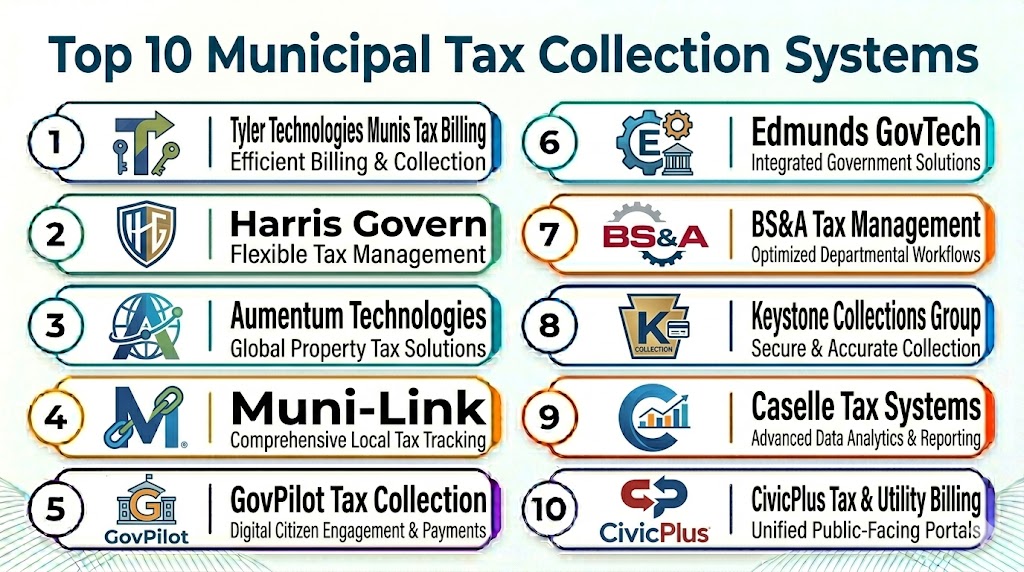
Top 10 Municipal Tax Collection Systems
#1 — Tyler Technologies Munis
Short description: Tyler Technologies Munis is a widely adopted ERP and municipal finance platform that includes tax collection, billing, treasury, utility billing, and citizen service workflows for local governments.
Key Features
- Property tax billing and collections
- Utility billing integration
- Citizen self-service payment portal
- Delinquency and escrow tracking
- Financial reporting and analytics
- GIS and parcel integrations
Pros
- Strong municipal finance ecosystem
- Broad ERP and government integrations
- Scalable for large municipalities
Cons
- Complex implementation for large deployments
- Premium enterprise pricing
- Training required for advanced modules
Platforms / Deployment
- Web / Mobile
- Cloud / Hybrid
Security & Compliance
- Encryption and role-based access
- Audit logging and secure authentication
Integrations & Ecosystem
Munis integrates with finance, ERP, GIS, permitting, utility billing, and citizen service systems to support connected government operations.
- GIS platforms
- Payment processors
- Utility billing systems
- ERP and finance platforms
Support & Community
- Public sector implementation support
- Extensive documentation and training
- Customer support and user community
#2 — Harris Govern
Short description: Harris Govern provides property tax administration and municipal revenue management tools for counties, cities, and appraisal districts needing tax billing, collections, and assessment workflows.
Key Features
- Tax billing and payment processing
- Property assessment workflows
- Delinquency tracking
- GIS parcel integration
- Citizen account management
- Revenue reporting dashboards
Pros
- Strong tax-focused workflows
- Good GIS and parcel capabilities
- Widely used in local governments
Cons
- Interface can feel traditional
- Advanced reporting may require setup
- Integration complexity varies
Platforms / Deployment
- Web / Mobile
- Cloud / Hybrid
Security & Compliance
- Encryption and secure access controls
- Audit trail support
Integrations & Ecosystem
- GIS systems
- Appraisal district systems
- Financial and ERP platforms
- Payment gateways
Support & Community
- Public sector support services
- Onboarding and implementation assistance
#3 — BS&A Tax Management
Short description: BS&A Tax Management helps municipalities manage tax billing, collections, receivables, escrow processing, and citizen payment services through a practical municipal finance platform.
Key Features
- Tax billing and collections
- Delinquency management
- Escrow tracking
- Online citizen payments
- Reporting and audit support
- Parcel and property records
Pros
- Practical for local governments
- Strong citizen payment workflows
- Easier deployment for smaller municipalities
Cons
- Enterprise scalability may be limited
- Advanced analytics are basic
- Integration depth varies by deployment
Platforms / Deployment
- Web / Mobile
- Cloud
Security & Compliance
- Secure authentication and access controls
- Audit logging support
Integrations & Ecosystem
- BS&A municipal platforms
- Payment systems
- Property and tax records
Support & Community
- Vendor onboarding and support resources
- Documentation and training materials
#4 — Aumentum Technologies
Short description: Aumentum Technologies provides tax administration and revenue collection systems for local governments and property tax agencies requiring scalable assessment and billing operations.
Key Features
- Property tax administration
- Assessment and valuation workflows
- Billing and payment processing
- Delinquency management
- GIS integration
- Revenue analytics dashboards
Pros
- Strong property assessment support
- Enterprise-grade tax workflows
- Good analytics capabilities
Cons
- Complex deployment process
- Premium enterprise pricing
- Requires implementation planning
Platforms / Deployment
- Web / Mobile
- Cloud / Hybrid
Security & Compliance
- Encryption and audit logging
- Role-based access controls
Integrations & Ecosystem
- GIS and parcel systems
- Financial platforms
- Appraisal and assessment tools
Support & Community
- Enterprise implementation support
- Government-focused onboarding resources
#5 — Oracle Utilities Customer Cloud Service
Short description: Oracle Utilities Customer Cloud Service supports municipal billing, tax collection, payments, and citizen account management through scalable cloud infrastructure.
Key Features
- Utility and municipal billing
- Payment and receivables management
- Customer account portals
- Revenue analytics
- Workflow automation
- Mobile service access
Pros
- Enterprise-grade scalability
- Strong analytics and automation
- Broad Oracle ecosystem integration
Cons
- Complex implementation
- Higher licensing costs
- Best suited for larger governments
Platforms / Deployment
- Web / Mobile
- Cloud
Security & Compliance
- Encryption, RBAC, and audit logging
- Enterprise-grade cloud security
Integrations & Ecosystem
- Oracle ERP systems
- Utility billing platforms
- Payment processors
- Analytics tools
Support & Community
- Enterprise support and documentation
- Oracle training resources
#6 — Civic Systems Revenue Management
Short description: Civic Systems Revenue Management helps municipalities manage tax billing, collections, utility accounts, and payment processing in a unified finance environment.
Key Features
- Tax and utility billing
- Payment and receivables workflows
- Delinquency tracking
- Reporting and audit tools
- Citizen account management
- Financial dashboards
Pros
- Practical municipal finance workflows
- Good billing and payment support
- Useful for mid-sized municipalities
Cons
- Smaller ecosystem than large ERP vendors
- Interface modernization may vary
- Advanced integrations may require services
Platforms / Deployment
- Web / Mobile
- Cloud / Hybrid
Security & Compliance
- Encryption and secure authentication
- Audit logging support
Integrations & Ecosystem
- Financial systems
- Utility billing platforms
- Citizen portals
Support & Community
- Customer support and implementation services
- Training resources available
#7 — GovPilot Revenue & Tax Management
Short description: GovPilot provides cloud-based municipal management workflows, including tax collection, billing, permits, inspections, and citizen payment services.
Key Features
- Tax billing and payment management
- Citizen online payment portal
- Revenue reporting dashboards
- Workflow automation
- Property tracking
- Digital forms and records
Pros
- Cloud-based and modular
- Good digital workflow support
- Suitable for smaller municipalities
Cons
- Enterprise functionality may be limited
- Advanced tax workflows less comprehensive
- Integration depth varies
Platforms / Deployment
- Web / Mobile
- Cloud
Security & Compliance
- Encryption and role-based access
- Audit logging support
Integrations & Ecosystem
- GIS systems
- Payment gateways
- Document workflows
Support & Community
- Support center and onboarding resources
- Product documentation available
#8 — Edmunds GovTech Tax & Revenue
Short description: Edmunds GovTech supports local governments with tax collection, billing, finance, and citizen service workflows for municipal operations.
Key Features
- Property tax billing
- Citizen payment processing
- Revenue and finance reporting
- Delinquency tracking
- Online account access
- Workflow management
Pros
- Good fit for local governments
- Citizen-friendly workflows
- Useful municipal finance integrations
Cons
- Enterprise customization may be limited
- Analytics less advanced than premium suites
- Some modules require add-ons
Platforms / Deployment
- Web / Mobile
- Cloud
Security & Compliance
- Secure access controls
- Audit trail support
Integrations & Ecosystem
- Finance systems
- Citizen portals
- Municipal reporting platforms
Support & Community
- Support and onboarding resources
- Training documentation available
#9 — MCSJ Tax Collection System
Short description: MCSJ Tax Collection System provides municipal tax collection workflows focused on billing, payment tracking, escrow handling, and delinquency management.
Key Features
- Tax billing and collections
- Escrow account management
- Delinquency tracking
- Payment processing
- Property account records
- Financial reporting
Pros
- Focused tax collection workflows
- Practical for municipalities
- Reliable billing management
Cons
- Smaller ecosystem than large vendors
- Limited advanced analytics
- Mobile functionality may vary
Platforms / Deployment
- Web / Windows
- Cloud / On-premise
Security & Compliance
- Secure authentication and access controls
- Audit logging support
Integrations & Ecosystem
- Payment gateways
- Finance systems
- Property records platforms
Support & Community
- Vendor support and onboarding assistance
#10 — Caselle Government Revenue Management
Short description: Caselle Government Revenue Management helps municipalities manage tax billing, utility payments, receivables, and citizen account services in one municipal finance platform.
Key Features
- Tax and utility billing
- Online payment processing
- Citizen account management
- Delinquency and penalties
- Reporting and dashboards
- Financial integrations
Pros
- Strong municipal finance focus
- Good citizen payment tools
- Practical implementation approach
Cons
- Enterprise scalability may be limited
- Advanced analytics less comprehensive
- Interface modernization varies
Platforms / Deployment
- Web / Mobile
- Cloud / Hybrid
Security & Compliance
- Encryption and secure access controls
- Audit logging support
Integrations & Ecosystem
- Financial systems
- Utility billing workflows
- Citizen payment portals
Support & Community
- Vendor support and training resources
- Implementation guidance available
Comparison Table
| Tool Name | Best For | Platform(s) Supported | Deployment | Standout Feature | Public Rating |
|---|---|---|---|---|---|
| Tyler Technologies Munis | Large municipalities | Web / Mobile | Cloud / Hybrid | Integrated municipal ERP | N/A |
| Harris Govern | Tax-focused governments | Web / Mobile | Cloud / Hybrid | GIS and parcel workflows | N/A |
| BS&A Tax Management | Small municipalities | Web / Mobile | Cloud | Practical tax workflows | N/A |
| Aumentum Technologies | Enterprise tax administration | Web / Mobile | Cloud / Hybrid | Property assessment management | N/A |
| Oracle Utilities Customer Cloud | Large utility and tax agencies | Web / Mobile | Cloud | Enterprise billing automation | N/A |
| Civic Systems Revenue Management | Mid-sized municipalities | Web / Mobile | Cloud / Hybrid | Unified municipal billing | N/A |
| GovPilot Revenue & Tax Management | Cloud-first governments | Web / Mobile | Cloud | Modular digital workflows | N/A |
| Edmunds GovTech Tax & Revenue | Local governments | Web / Mobile | Cloud | Citizen-friendly billing workflows | N/A |
| MCSJ Tax Collection System | Tax collection offices | Web / Windows | Cloud / On-premise | Escrow management | N/A |
| Caselle Government Revenue Management | Municipal finance teams | Web / Mobile | Cloud / Hybrid | Utility and tax billing integration | N/A |
Evaluation & Scoring of Municipal Tax Collection Systems
| Tool Name | Core (25%) | Ease (15%) | Integrations (15%) | Security (10%) | Performance (10%) | Support (10%) | Value (15%) | Weighted Total (0–10) |
|---|---|---|---|---|---|---|---|---|
| Tyler Technologies Munis | 9 | 7 | 9 | 8 | 8 | 8 | 7 | 8.1 |
| Harris Govern | 8 | 7 | 8 | 8 | 8 | 8 | 7 | 7.8 |
| BS&A Tax Management | 7 | 8 | 7 | 7 | 7 | 8 | 8 | 7.5 |
| Aumentum Technologies | 9 | 6 | 8 | 8 | 8 | 8 | 7 | 7.9 |
| Oracle Utilities Customer Cloud | 9 | 6 | 9 | 9 | 9 | 8 | 6 | 8.1 |
| Civic Systems Revenue Management | 8 | 7 | 7 | 8 | 7 | 7 | 8 | 7.5 |
| GovPilot Revenue & Tax Management | 7 | 8 | 7 | 8 | 7 | 7 | 8 | 7.5 |
| Edmunds GovTech Tax & Revenue | 7 | 8 | 7 | 7 | 7 | 7 | 8 | 7.4 |
| MCSJ Tax Collection System | 7 | 7 | 6 | 7 | 7 | 7 | 7 | 6.9 |
| Caselle Government Revenue Management | 7 | 8 | 7 | 7 | 7 | 7 | 8 | 7.4 |
Weighted scores compare billing functionality, usability, integrations, security, performance, support, and overall value across municipal tax collection environments. Larger agencies often prioritize scalability and integration depth, while smaller municipalities may prioritize simplicity, implementation speed, and citizen payment accessibility.
Which Municipal Tax Collection System Is Right for You?
Solo / Small Municipality
- BS&A Tax Management, GovPilot, or Caselle for practical billing and payment workflows with easier deployment.
SMB
- Edmunds GovTech, Civic Systems, or Harris Govern for balanced tax administration and municipal finance workflows.
Mid-Market
- Tyler Munis, Aumentum Technologies, or Harris Govern for stronger integrations and broader finance operations.
Enterprise
- Tyler Munis, Oracle Utilities Customer Cloud, or Aumentum Technologies for scalable revenue management and complex municipal operations.
Budget vs Premium
- Budget: BS&A, GovPilot, Caselle
- Premium: Oracle Utilities, Tyler Munis, Aumentum
Feature Depth vs Ease of Use
- High feature depth: Oracle Utilities, Tyler Munis, Aumentum
- High ease of use: BS&A, GovPilot, Edmunds GovTech
Integrations & Scalability
- Extensive: Tyler Munis, Oracle Utilities, Harris Govern
- Limited: MCSJ, Caselle
Security & Compliance Needs
- Enterprise-grade: Oracle Utilities, Tyler Munis, Aumentum
- Small government-ready: BS&A, GovPilot, Caselle
Frequently Asked Questions
1. What is a municipal tax collection system?
A municipal tax collection system helps governments manage billing, payments, delinquency tracking, receivables, escrow workflows, and citizen tax accounts in one platform. These systems reduce manual processing and improve financial visibility. They also help agencies modernize citizen payment services.
2. What types of taxes can these systems manage?
Most systems support property taxes, municipal fees, utility billing, assessments, business taxes, and special district charges. Some also support installment payments and escrow workflows. Capabilities vary depending on the platform and deployment configuration.
3. Can citizens pay taxes online?
Yes, most modern systems include online citizen portals where residents can pay taxes, review balances, download statements, and track payment history. Online payment support improves convenience and reduces in-office workload. Payment gateways and processing rules vary by vendor.
4. Do municipal tax systems integrate with GIS platforms?
Many platforms integrate with GIS and parcel mapping systems to connect tax records with property locations, zoning, and assessment data. GIS integration improves visibility and accuracy for tax administration. Agencies should confirm parcel synchronization and mapping support during evaluation.
5. Can these systems handle delinquent tax collection?
Yes, most systems support delinquency tracking, penalties, notices, payment plans, and collections workflows. Some also support automated reminders and legal process documentation. Delinquency management is a core capability in municipal tax operations.
6. Are cloud-based tax collection systems secure?
Cloud systems can be secure when they provide encryption, audit logging, secure authentication, and role-based access controls. Governments should review data residency, backup policies, and compliance requirements before deployment. Hybrid deployments may also be available for agencies needing more local control.
7. What are common implementation challenges?
Common challenges include migrating historical tax records, configuring billing rules, integrating payment systems, and training staff on new workflows. Agencies should map billing and collections processes before deployment. Pilot testing with real tax scenarios can reduce rollout issues.
8. Can these systems integrate with ERP and finance software?
Yes, many municipal tax systems integrate with ERP, accounting, utility billing, and financial management platforms. These integrations help maintain accurate ledgers and improve reporting consistency. Integration depth varies by vendor ecosystem and agency requirements.
9. Which systems are best for smaller municipalities?
BS&A Tax Management, GovPilot, Caselle, and Edmunds GovTech are often practical choices for smaller municipalities because they provide simpler workflows and easier implementation. The right fit depends on tax complexity, utility billing requirements, and integration needs.
10. Which systems are best for enterprise governments?
Tyler Munis, Oracle Utilities Customer Cloud, and Aumentum Technologies are strong options for larger governments needing advanced integrations, scalability, analytics, and enterprise-grade finance workflows. Large agencies should validate long-term scalability, reporting, and citizen service capabilities before selection.
Conclusion
Municipal tax collection systems help governments modernize billing, payments, delinquency tracking, citizen portals, and revenue operations while improving financial visibility and public service delivery. Smaller municipalities may benefit from practical solutions like BS&A, GovPilot, Caselle, or Edmunds GovTech for manageable tax workflows and citizen payment access, while mid-sized governments can evaluate Harris Govern or Civic Systems for broader revenue management capabilities. Larger agencies should consider Tyler Munis, Oracle Utilities Customer Cloud, or Aumentum Technologies for enterprise scalability, ERP integration, analytics, and complex tax administration workflows. Start by mapping current billing and collections processes, shortlist 2–3 platforms, test payment and reporting workflows, validate GIS and finance integrations, then scale after staff training and operational review.
