Introduction
Prison and corrections management software helps correctional facilities manage inmate records, booking, housing, movements, incidents, healthcare notes, visitation, commissary, sentence tracking, release workflows, and staff operations in one secure platform. These systems reduce paperwork, improve facility visibility, support compliance, and help staff maintain accurate records across the full offender lifecycle.
Modern corrections platforms are increasingly focused on mobile access, barcode or RFID tracking, digital logs, automated alerts, healthcare coordination, and integrations with courts, RMS, CAD, and offender supervision systems.
Real-world use cases:
- Booking and inmate intake management
- Housing, classification, and movement tracking
- Incident reporting and disciplinary workflows
- Visitation, commissary, and inmate services
- Sentence calculation, release, and reentry coordination
Evaluation Criteria for Buyers:
- Inmate lifecycle management
- Booking and release automation
- Housing and classification workflows
- Movement, count, and activity tracking
- Incident and disciplinary reporting
- Integration with court, RMS, and CAD systems
- Security, audit logs, and access controls
- Mobile officer access
- Reporting and compliance support
- Scalability for single-site or multi-facility operations
Best for: Jails, prisons, detention centers, sheriff offices, correctional agencies, state correction departments, and public safety organizations.
Not ideal for: Small holding facilities with very low inmate volume or agencies that only need basic spreadsheet-based custody logs.
Key Trends in Prison & Corrections Management Software
- Mobile-first inmate tracking and officer workflows
- RFID, barcode, and NFC-based movement verification
- Automated booking, housing, and release workflows
- Integration with court, RMS, CAD, and offender supervision systems
- Cloud and hybrid deployment for correctional agencies
- Stronger audit trails and role-based access controls
- Healthcare, medication, and suicide-watch documentation tools
- Real-time dashboards for population, incidents, and staff activity
- Automated compliance reporting for jail standards
- Data-driven reentry and rehabilitation workflow support
How We Selected These Tools
- Adoption across jails, prisons, and correctional agencies
- Depth of inmate lifecycle management features
- Booking, housing, release, and sentence workflow support
- Security controls and audit-readiness
- Integration with public safety and justice systems
- Mobile, barcode, RFID, and facility-tracking capabilities
- Reporting and compliance management strength
- Scalability for county, state, and enterprise deployments
- Vendor maturity and corrections-specific experience
- Support, training, and implementation resources
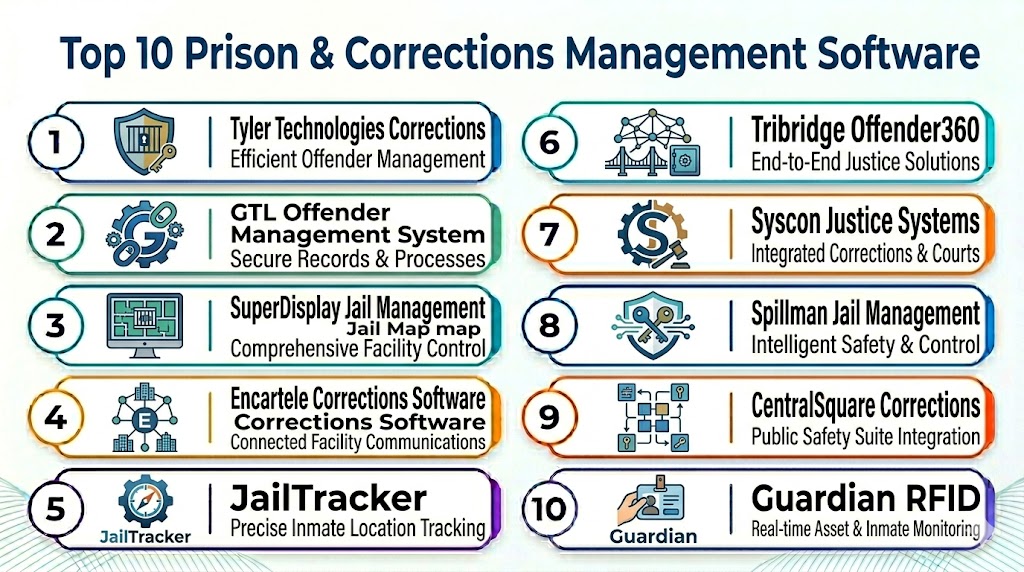
Top 10 Prison & Corrections Management Software
#1 — Tyler Technologies Enterprise Corrections
Short description: Tyler Technologies Enterprise Corrections supports correctional agencies with offender management, records, housing, sentence tracking, and justice workflow integration. It is well suited for public sector agencies that need strong connections between courts, law enforcement, and correctional operations.
Key Features
- Offender and inmate record management
- Booking and release workflows
- Housing and classification tracking
- Sentence and case information management
- Justice system integrations
- Reporting and audit support
Pros
- Strong public sector ecosystem
- Useful for multi-agency workflows
- Scalable for larger government operations
Cons
- Implementation can be complex
- Premium pricing for advanced modules
- Training is important for full adoption
Platforms / Deployment
- Web / Mobile
- Cloud / Hybrid
Security & Compliance
- Encryption and role-based access
- Audit logging support
Integrations & Ecosystem
Tyler integrates with courts, public safety, records, financial, and justice systems to support connected correctional workflows.
- Court management systems
- RMS and public safety tools
- Financial systems
- Reporting platforms
Support & Community
- Public sector implementation support
- Training resources and documentation
- Customer support services
#2 — CentralSquare Jail Management
Short description: CentralSquare Jail Management helps correctional facilities manage booking, inmate records, housing, movements, incidents, and operational reporting. It is suitable for municipal and county agencies that need integrated public safety workflows.
Key Features
- Booking and inmate intake
- Housing and movement tracking
- Incident and disciplinary reporting
- RMS and CAD integration
- Reporting dashboards
- Mobile officer workflows
Pros
- Strong public safety ecosystem
- Good fit for county and municipal agencies
- Integrated dispatch and records workflows
Cons
- User experience can vary by deployment
- Training may be required
- Legacy environments may require modernization
Platforms / Deployment
- Web / Windows / Mobile
- Cloud / Hybrid
Security & Compliance
- Encryption and access controls
- Audit logging support
Integrations & Ecosystem
- CAD systems
- RMS platforms
- GIS and reporting tools
- Public safety suites
Support & Community
- Support center and onboarding services
- Implementation assistance
#3 — Motorola Solutions CommandCentral Jail
Short description: Motorola Solutions CommandCentral Jail helps correctional staff track inmate activity, location, status, daily events, and operational workflows. It is especially useful for agencies already using Motorola public safety systems.
Key Features
- Inmate activity tracking
- Location and status monitoring
- Daily event views
- Barcode-based workflows
- Integration with public safety systems
- Officer awareness tools
Pros
- Strong integration with Motorola ecosystem
- Good inmate activity visibility
- Useful for operational safety
Cons
- Best value inside Motorola ecosystem
- Enterprise pricing may be high
- Custom setup may be required
Platforms / Deployment
- Web / Mobile
- Cloud / Hybrid
Security & Compliance
- Encryption and role-based access
- Audit logging support
Integrations & Ecosystem
- Motorola public safety tools
- CAD and RMS systems
- Barcode scanning workflows
- Reporting systems
Support & Community
- Enterprise support and onboarding
- Public safety training resources
#4 — JailTracker
Short description: JailTracker is a jail management system focused on inmate records, booking, movement, facility operations, and staff workflows. It is commonly positioned for county jails and detention centers seeking practical corrections operations management.
Key Features
- Booking and inmate records
- Housing and classification tools
- Movement and activity tracking
- Incident reporting
- Mobile access support
- Operational reporting
Pros
- Corrections-focused workflows
- Practical for mid-sized facilities
- Good operational visibility
Cons
- Advanced enterprise analytics may be limited
- Integration depth depends on deployment
- Interface may vary by configuration
Platforms / Deployment
- Web / Mobile
- Cloud
Security & Compliance
- Encryption and access controls
- Audit trail support
Integrations & Ecosystem
- Public safety systems
- Court and records workflows
- Reporting tools
Support & Community
- Vendor support and implementation assistance
- Training resources available
#5 — Marquis Software eOMIS
Short description: Marquis eOMIS is an offender management system designed for larger correctional agencies that need complex offender records, sentence tracking, facility operations, and statewide corrections workflows.
Key Features
- Offender lifecycle management
- Sentence and classification management
- Facility and movement tracking
- Case and program records
- Reporting and compliance tools
- Multi-facility support
Pros
- Strong for large corrections agencies
- Supports complex offender workflows
- Scalable across multiple facilities
Cons
- Complex implementation
- Learning curve for users
- Premium enterprise deployment
Platforms / Deployment
- Web / Windows / Mobile
- Cloud / Hybrid
Security & Compliance
- Encryption and access controls
- Audit logging support
Integrations & Ecosystem
- Justice systems
- Court workflows
- Public safety platforms
- Reporting and analytics systems
Support & Community
- Professional services and onboarding
- Corrections-focused implementation support
#6 — Syscon Justice Systems
Short description: Syscon Justice Systems provides offender management solutions for correctional agencies that need inmate lifecycle tracking, facility operations, classification, programs, and release management.
Key Features
- Offender record management
- Housing and facility operations
- Classification and sentence tracking
- Program participation records
- Release and reentry workflows
- Reporting dashboards
Pros
- Strong offender lifecycle coverage
- Good for enterprise corrections
- Supports complex agency workflows
Cons
- Implementation may be lengthy
- Best suited for larger agencies
- Advanced customization requires services
Platforms / Deployment
- Web / Mobile
- Cloud / Hybrid
Security & Compliance
- Encryption and role-based access
- Audit logging support
Integrations & Ecosystem
- Justice platforms
- Court systems
- Public safety records
- Reporting systems
Support & Community
- Enterprise onboarding
- Documentation and training resources
#7 — Omnigo Jail Management System
Short description: Omnigo Jail Management System helps detention centers manage inmate tracking, compliance, commissary, medication records, facility logs, and operational reporting.
Key Features
- Inmate tracking and records
- Compliance documentation
- Commissary management
- Medication tracking
- Incident and activity logs
- Reporting tools
Pros
- Strong facility operations focus
- Useful medication and commissary features
- Good fit for safety and compliance workflows
Cons
- Less broad than full state offender systems
- Advanced integrations may require setup
- Enterprise analytics may be limited
Platforms / Deployment
- Web / Mobile
- Cloud
Security & Compliance
- Encryption and access controls
- Audit trail support
Integrations & Ecosystem
- Public safety systems
- Facility operations tools
- Reporting platforms
Support & Community
- Support documentation
- Onboarding and customer support
#8 — eFORCE Jail Management
Short description: eFORCE Jail Management supports correctional facilities with booking, inmate tracking, logs, incident records, and law enforcement workflow integration. It is a practical option for small and mid-sized agencies.
Key Features
- Booking and inmate intake
- Cell and housing management
- Incident and log tracking
- Mugshot and inmate records
- Reporting tools
- Public safety integration
Pros
- Practical for smaller agencies
- Easier deployment than large suites
- Useful law enforcement integration
Cons
- Limited enterprise functionality
- Advanced analytics may be basic
- Integration depth varies
Platforms / Deployment
- Web / Windows / Mobile
- Cloud / Hybrid
Security & Compliance
- Secure access controls
- Audit logging support
Integrations & Ecosystem
- RMS systems
- CAD workflows
- Reporting tools
- Law enforcement platforms
Support & Community
- Vendor support and training resources
#9 — SmartCOP Jail Management
Short description: SmartCOP Jail Management provides corrections workflows for inmate booking, records, movement tracking, reporting, and integration with law enforcement systems.
Key Features
- Jail booking workflows
- Inmate records management
- Housing and activity tracking
- Incident reporting
- NCIC-related workflows
- Mobile support
Pros
- Strong public safety orientation
- Useful for small and mid-sized agencies
- Practical records and reporting tools
Cons
- Smaller vendor ecosystem
- Advanced automation limited
- Interface may feel traditional
Platforms / Deployment
- Web / Windows / Mobile
- Cloud / Hybrid
Security & Compliance
- Secure authentication
- Role-based access and audit logs
Integrations & Ecosystem
- CAD systems
- RMS tools
- NCIC workflows
- Public safety reporting
Support & Community
- Vendor support and documentation
- Implementation assistance
#10 — Guardian RFID
Short description: Guardian RFID focuses on inmate tracking, security rounds, activity logging, and officer accountability using RFID-enabled correctional workflows. It is especially useful for facilities prioritizing proof-of-presence and compliance documentation.
Key Features
- RFID-based inmate tracking
- Security rounds verification
- Activity and observation logs
- Mobile officer workflows
- Compliance reporting
- Real-time dashboards
Pros
- Strong proof-of-presence capabilities
- Useful for officer accountability
- Mobile-first tracking workflows
Cons
- More focused than full JMS platforms
- May require integration with existing jail systems
- Hardware dependency for RFID workflows
Platforms / Deployment
- Web / Mobile / RFID devices
- Cloud / Hybrid
Security & Compliance
- Encryption and access controls
- Audit trail support
Integrations & Ecosystem
- Jail management systems
- RFID hardware
- Reporting dashboards
- Facility operations tools
Support & Community
- Implementation support
- Training and documentation resources
Comparison Table
| Tool Name | Best For | Platform(s) Supported | Deployment | Standout Feature | Public Rating |
|---|---|---|---|---|---|
| Tyler Technologies Enterprise Corrections | Public sector agencies | Web / Mobile | Cloud / Hybrid | Justice system integration | N/A |
| CentralSquare Jail Management | County and municipal jails | Web / Mobile | Cloud / Hybrid | Integrated public safety workflows | N/A |
| Motorola CommandCentral Jail | Motorola public safety users | Web / Mobile | Cloud / Hybrid | Inmate activity and status tracking | N/A |
| JailTracker | Mid-sized detention centers | Web / Mobile | Cloud | Practical jail operations | N/A |
| Marquis eOMIS | Large correctional agencies | Web / Mobile | Cloud / Hybrid | Statewide offender management | N/A |
| Syscon Justice Systems | Enterprise corrections | Web / Mobile | Cloud / Hybrid | Offender lifecycle coverage | N/A |
| Omnigo Jail Management | Detention operations | Web / Mobile | Cloud | Commissary and medication tracking | N/A |
| eFORCE Jail Management | Small and mid-sized agencies | Web / Mobile | Cloud / Hybrid | Practical booking workflows | N/A |
| SmartCOP Jail Management | Law enforcement-linked jails | Web / Mobile | Cloud / Hybrid | Public safety integration | N/A |
| Guardian RFID | Compliance and officer rounds | Web / Mobile / RFID | Cloud / Hybrid | RFID-based inmate tracking | N/A |
Evaluation & Scoring of Prison & Corrections Management Software
| Tool Name | Core (25%) | Ease (15%) | Integrations (15%) | Security (10%) | Performance (10%) | Support (10%) | Value (15%) | Weighted Total (0–10) |
|---|---|---|---|---|---|---|---|---|
| Tyler Technologies Enterprise Corrections | 9 | 7 | 9 | 8 | 8 | 8 | 7 | 8.1 |
| CentralSquare Jail Management | 8 | 7 | 8 | 8 | 8 | 7 | 8 | 7.8 |
| Motorola CommandCentral Jail | 8 | 8 | 8 | 8 | 8 | 8 | 7 | 7.9 |
| JailTracker | 8 | 8 | 7 | 8 | 8 | 8 | 8 | 7.9 |
| Marquis eOMIS | 9 | 6 | 8 | 9 | 8 | 8 | 6 | 7.8 |
| Syscon Justice Systems | 9 | 6 | 8 | 9 | 8 | 8 | 6 | 7.8 |
| Omnigo Jail Management | 8 | 8 | 7 | 8 | 8 | 7 | 8 | 7.8 |
| eFORCE Jail Management | 7 | 8 | 7 | 7 | 7 | 7 | 8 | 7.3 |
| SmartCOP Jail Management | 7 | 8 | 7 | 8 | 7 | 7 | 8 | 7.5 |
| Guardian RFID | 7 | 8 | 7 | 8 | 8 | 8 | 7 | 7.6 |
Weighted scores compare inmate lifecycle depth, usability, integration strength, security, operational performance, support, and value. Higher scores generally indicate stronger enterprise readiness, but smaller facilities may prioritize ease of use, deployment speed, and affordability. The best platform depends on facility size, public safety ecosystem, compliance requirements, and integration needs.
Which Prison & Corrections Management Software Is Right for You?
Solo / Small Facility
- eFORCE Jail Management, SmartCOP Jail Management, or Guardian RFID for practical custody workflows, logging, and inmate tracking.
SMB
- JailTracker, Omnigo Jail Management, or CentralSquare Jail Management for booking, housing, movement, and reporting workflows.
Mid-Market
- Motorola CommandCentral Jail, CentralSquare, or Tyler Technologies for integrated corrections and public safety operations.
Enterprise
- Tyler Technologies Enterprise Corrections, Marquis eOMIS, or Syscon Justice Systems for multi-facility offender lifecycle management and justice integration.
Budget vs Premium
- Budget: eFORCE, SmartCOP, Guardian RFID
- Premium: Tyler Technologies, Marquis eOMIS, Syscon Justice Systems
Feature Depth vs Ease of Use
- High feature depth: Tyler Technologies, Marquis eOMIS, Syscon Justice Systems
- High ease of use: JailTracker, Omnigo, eFORCE
Integrations & Scalability
- Extensive: Tyler Technologies, CentralSquare, Motorola Solutions
- Limited: Guardian RFID, eFORCE
Security & Compliance Needs
- Enterprise-grade: Tyler Technologies, Marquis eOMIS, Syscon Justice Systems
- Facility operations-focused: Omnigo, Guardian RFID, JailTracker
Frequently Asked Questions
1. What is prison and corrections management software?
Prison and corrections management software helps facilities manage inmates, booking, housing, movements, incidents, sentence details, staff logs, and release workflows. It centralizes operational records and reduces manual paperwork. It also improves visibility, accountability, and compliance reporting across correctional environments.
2. How is jail management software different from offender management software?
Jail management software usually focuses on daily custody operations such as booking, housing, counts, movement, and release. Offender management software often covers a broader lifecycle, including sentence management, programs, reentry, and multi-facility records. Some platforms combine both capabilities in one system.
3. Can these tools track inmate movement?
Yes, many platforms support movement tracking through logs, barcode scanning, RFID, NFC, or mobile officer workflows. These tools help facilities document inmate location changes and staff activity. Movement tracking also improves safety, compliance, and accountability.
4. Do these systems integrate with courts and public safety tools?
Many corrections systems integrate with court management, CAD, RMS, and justice platforms. This helps reduce duplicate entry and keeps case, custody, and release information aligned. Integration depth depends on the vendor, deployment model, and agency technology environment.
5. Are cloud-based corrections systems secure?
Cloud systems can be secure when they include encryption, role-based access, audit logging, strong authentication, and data governance controls. Agencies should verify vendor security documentation before deployment. Hybrid options may be preferred where local hosting or strict data control is required.
6. Can corrections software manage healthcare or medication records?
Some platforms include medication tracking, healthcare notes, suicide-watch documentation, and wellness checks. These features are important for inmate safety and compliance. Facilities should confirm whether healthcare workflows are native, integrated, or require a separate medical system.
7. What are common implementation mistakes?
Common mistakes include poor data migration planning, weak role-permission setup, limited staff training, and unclear workflows. Agencies should map booking, housing, release, and incident processes before implementation. Pilot testing helps identify gaps before full deployment.
8. How should agencies evaluate pricing?
Pricing may depend on facility size, users, modules, integrations, storage, hardware, implementation, and support. Agencies should evaluate total cost of ownership rather than subscription cost alone. Training, data migration, RFID hardware, and integrations can significantly affect long-term value.
9. Which tools are best for large correctional agencies?
Tyler Technologies Enterprise Corrections, Marquis eOMIS, and Syscon Justice Systems are strong options for large or multi-facility agencies. They support complex offender records, classification, sentence tracking, and enterprise reporting. The best choice depends on agency workflows and integration needs.
10. Which tools are best for smaller jails?
JailTracker, eFORCE, SmartCOP, and Omnigo can be suitable for smaller or mid-sized jails. These platforms focus on practical booking, inmate records, movement, and reporting workflows. Smaller facilities should prioritize ease of use, support, implementation speed, and compliance documentation.
Conclusion
Prison and corrections management software helps correctional agencies manage inmate records, booking, housing, incidents, movement tracking, healthcare documentation, release workflows, and compliance reporting with greater accuracy and visibility. Smaller facilities may benefit from practical systems like JailTracker, eFORCE, SmartCOP, or Omnigo, while mid-sized agencies can evaluate CentralSquare or Motorola CommandCentral Jail for integrated public safety workflows. Large correctional departments should consider Tyler Technologies, Marquis eOMIS, or Syscon Justice Systems for offender lifecycle management, multi-facility scalability, and justice integration. Start by mapping your current booking, housing, incident, and release workflows, shortlist 2–3 vendors, pilot the system with real custody scenarios, validate integrations and security controls, then scale after staff training and operational acceptance.

Great comparison of prison corrections management software—this article clearly explains how these systems help improve inmate management, reporting, and operational efficiency within correctional facilities.
This was an insightful read on corrections management software. The comparisons are easy to follow and provide a helpful understanding of how different platforms support operational efficiency.