Introduction
Treasury ALM (Asset Liability Management) Software is a specialized financial risk management system used by banks, financial institutions, insurers, and large enterprises to manage the relationship between assets (loans, investments) and liabilities (deposits, borrowings). Its primary goal is to ensure liquidity stability, interest rate risk control, and balance sheet optimization under normal and stressed market conditions.
In modern treasury operations, ALM platforms are essential because financial institutions face increasing volatility in interest rates, regulatory pressure, and liquidity constraints. These systems help treasurers simulate scenarios, forecast cash flows, and ensure compliance with global regulatory frameworks while optimizing profitability and capital usage.
Real-world use cases:
- Interest rate risk (IRRBB) management in banking books
- Liquidity risk forecasting and gap analysis
- Stress testing under regulatory scenarios
- Balance sheet optimization and capital planning
- Funds transfer pricing (FTP) analysis
- Scenario-based financial forecasting
- Regulatory reporting (Basel III / IFRS 9 support)
Key evaluation criteria:
- Interest rate and liquidity risk modeling capability
- Scenario simulation and stress testing depth
- Regulatory compliance support (Basel, IRRBB, LCR, NSFR)
- Data integration with core banking systems
- Cash flow modeling accuracy
- Real-time analytics and reporting dashboards
- Scalability for large banking portfolios
- Automation of treasury workflows
- Risk aggregation and visualization
- Deployment flexibility (cloud / on-prem / hybrid)
Best for: banks, credit unions, insurance firms, asset managers, and large enterprises managing complex balance sheets.
Not ideal for: small businesses or organizations without structured treasury, liquidity, or regulatory reporting requirements.
Key Trends in Treasury ALM Software
- AI-driven interest rate risk forecasting models for predictive treasury planning
- Real-time balance sheet simulation engines for dynamic decision-making
- Cloud-native ALM platforms replacing legacy on-prem systems
- Integration with funds transfer pricing (FTP) and profitability systems
- Advanced stress testing automation aligned with regulatory frameworks
- Scenario-based modeling using macroeconomic and behavioral inputs
- Embedded regulatory reporting automation (Basel III / IRRBB / LCR / NSFR)
- Increased adoption of data lakes and API-driven treasury ecosystems
- Machine learning for liquidity behavior prediction and deposit modeling
- Unified treasury platforms combining ALM, liquidity, and capital management
How We Selected These Tools
- Evaluated global adoption in banking and treasury domains
- Reviewed ALM and treasury risk modeling depth
- Assessed liquidity and interest rate risk capabilities
- Considered regulatory compliance support (Basel, IRRBB, IFRS)
- Analyzed scenario modeling and stress testing capabilities
- Reviewed integration with core banking and ERP systems
- Considered scalability for large financial institutions
- Evaluated reporting, dashboards, and analytics capabilities
- Assessed automation and workflow efficiency
- Reviewed vendor maturity in treasury and risk management
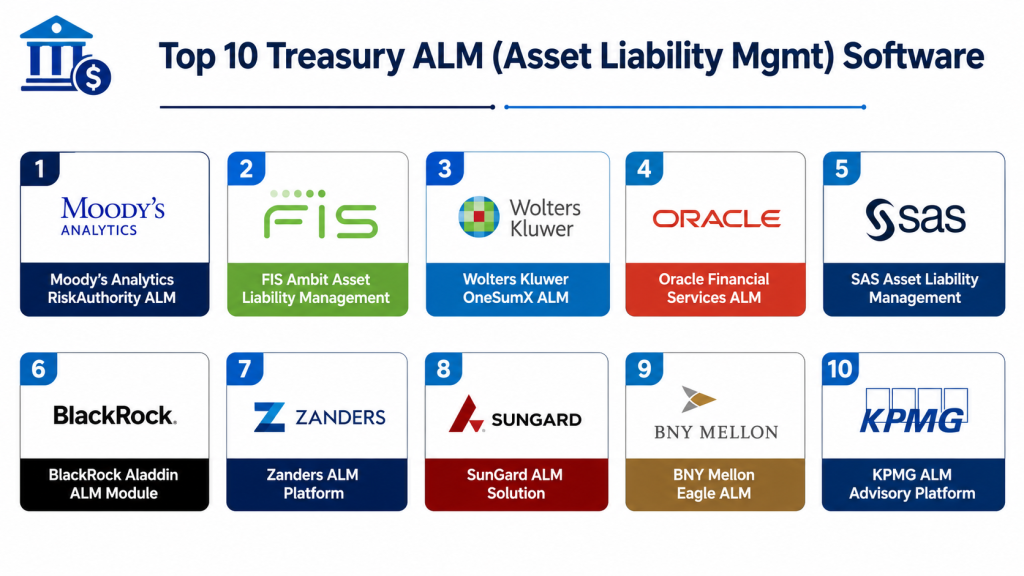
Top 10 Treasury ALM (Asset Liability Management) Software
#1 — Oracle OFSAA Asset Liability Management
Short description: Oracle OFSAA ALM is a widely used enterprise treasury solution that provides advanced balance sheet management, liquidity risk modeling, and interest rate risk analytics. It is designed for large financial institutions requiring deep regulatory compliance and high-scale scenario modeling.
Key Features
- Interest rate risk modeling (IRRBB)
- Liquidity gap analysis
- Scenario simulation engine
- Cash flow forecasting
- Funds transfer pricing (FTP)
- Regulatory reporting support
- Balance sheet optimization
Pros
- Extremely powerful enterprise capability
- Strong regulatory alignment
- Highly scalable architecture
- Deep integration with Oracle ecosystem
Cons
- Complex implementation
- High cost structure
- Requires technical expertise
- Long onboarding cycle
Platforms / Deployment
- Web
- Cloud / On-prem
Security & Compliance
- RBAC
- MFA
- Encryption
- Audit logs
- Regulatory reporting support
Integrations & Ecosystem
Strong integration with enterprise financial systems.
- Core banking systems
- ERP platforms
- Data warehouses
- Risk engines
- APIs
Support & Community
Strong enterprise banking support ecosystem.
#2 — Moody’s Analytics Asset Liability Management
Short description: Moody’s ALM provides advanced balance sheet modeling, liquidity risk analysis, and stress testing tools. It is widely used for regulatory ALM, capital planning, and interest rate risk management.
Key Features
- IRRBB modeling
- Scenario-based stress testing
- Liquidity risk analytics
- Behavioral cash flow modeling
- Capital planning tools
- Regulatory compliance reporting
- Risk aggregation dashboards
Pros
- Strong regulatory credibility
- Advanced analytics models
- High-quality risk forecasting
- Trusted financial vendor
Cons
- High enterprise cost
- Complex configuration
- Requires financial modeling expertise
- Long implementation time
Platforms / Deployment
- Web
- Cloud
Security & Compliance
- RBAC
- MFA
- Encryption
- Audit logging
Integrations & Ecosystem
Integrates with banking and risk ecosystems.
- Core banking systems
- Data lakes
- BI platforms
- Risk engines
- APIs
Support & Community
Strong global financial services support.
#3 — FIS Balance Sheet Manager
Short description: FIS Balance Sheet Manager is a leading treasury ALM platform used by global banks for liquidity risk, interest rate risk, and capital management. It supports advanced scenario modeling and regulatory reporting.
Key Features
- Balance sheet simulation
- Interest rate risk analysis
- Liquidity forecasting
- Regulatory reporting
- Capital planning tools
- Stress testing engine
- FTP modeling
Pros
- Strong global banking adoption
- High-performance simulation engine
- Comprehensive treasury suite
- Excellent scalability
Cons
- Complex deployment
- Enterprise pricing
- Requires training
- Heavy infrastructure needs
Platforms / Deployment
- Web
- Cloud
Security & Compliance
- RBAC
- MFA
- Encryption
- Audit logs
Integrations & Ecosystem
Integrates with banking ecosystems.
- Core banking systems
- ERP platforms
- Risk systems
- Data lakes
- APIs
Support & Community
Strong enterprise financial services support.
#4 — MORS Treasury & ALM System
Short description: MORS provides an integrated ALM and treasury management platform for banks, combining liquidity risk, balance sheet management, and regulatory reporting in one system.
Key Features
- ALM risk modeling
- Liquidity gap analysis
- Treasury management system (TMS)
- Regulatory reporting
- Cash flow forecasting
- FTP analysis
- Risk dashboards
Pros
- Unified ALM + treasury system
- Fast implementation model
- Cost-efficient for mid-sized banks
- Strong usability
Cons
- Less advanced than Tier-1 platforms
- Limited ecosystem integrations
- Smaller global footprint
- Fewer customization options
Platforms / Deployment
- Web
- Cloud
Security & Compliance
- RBAC
- Encryption
- Audit logs
Integrations & Ecosystem
Integrates with banking systems.
- Core banking platforms
- ERP systems
- Risk tools
- APIs
Support & Community
Strong vendor support for mid-tier institutions.
#5 — Finastra Fusion ALM
Short description: Finastra Fusion ALM provides balance sheet management and liquidity risk analytics with a focus on cloud-based treasury operations and regulatory compliance.
Key Features
- IRRBB modeling
- Liquidity risk management
- Scenario simulation
- FTP analysis
- Cash flow forecasting
- Regulatory reporting
- Risk dashboards
Pros
- Cloud-native architecture
- Strong treasury focus
- Flexible modular design
- Good regulatory alignment
Cons
- Requires integration effort
- Moderate complexity
- Enterprise pricing
- Limited out-of-box templates
Platforms / Deployment
- Web
- Cloud
Security & Compliance
- RBAC
- MFA
- Encryption
Integrations & Ecosystem
Integrates with financial ecosystems.
- Core banking systems
- Data platforms
- BI tools
- Risk systems
- APIs
Support & Community
Strong global financial support ecosystem.
#6 — ALMIS ALM & Treasury Platform
Short description: ALMIS provides integrated ALM, treasury, and regulatory reporting solutions designed for banks needing unified risk and liquidity management.
Key Features
- Balance sheet management
- Liquidity risk tracking
- Regulatory reporting
- Cash flow modeling
- Risk dashboards
- FTP analysis
- Data lineage tracking
Pros
- Unified treasury + ALM platform
- Strong regulatory reporting
- Good data transparency
- Scalable design
Cons
- Less global adoption than Tier-1 vendors
- Requires onboarding effort
- Moderate customization
- Limited ecosystem depth
Platforms / Deployment
- Web
- Cloud
Security & Compliance
- RBAC
- MFA
- Encryption
- Audit logs
Integrations & Ecosystem
- Core banking systems
- Data warehouses
- BI tools
- APIs
Support & Community
Strong regional banking support.
#7 — SAS Asset Liability Management
Short description: SAS ALM provides advanced analytics for interest rate risk, liquidity risk, and balance sheet simulation. It is widely used in financial institutions for risk modeling and forecasting.
Key Features
- Interest rate risk modeling
- Liquidity forecasting
- Scenario analysis
- Stress testing tools
- Cash flow modeling
- Risk dashboards
- Regulatory compliance support
Pros
- Strong analytics engine
- Highly flexible modeling
- Reliable forecasting
- Strong enterprise adoption
Cons
- Complex setup
- Requires data science expertise
- High cost
- Longer implementation cycles
Platforms / Deployment
- Web
- Cloud / On-prem
Security & Compliance
- RBAC
- MFA
- Encryption
- Audit logs
Integrations & Ecosystem
Integrates with enterprise analytics systems.
- Data warehouses
- BI tools
- Core banking systems
- Risk engines
- APIs
Support & Community
Strong enterprise analytics support.
#8 — SAP Treasury and Risk Management
Short description: SAP Treasury and Risk Management provides integrated ALM-like capabilities for liquidity, market risk, and balance sheet analysis within the SAP ecosystem.
Key Features
- Cash and liquidity management
- Risk analytics
- Financial position tracking
- Market risk modeling
- Hedge accounting support
- Scenario analysis
- Reporting dashboards
Pros
- Strong ERP integration
- Reliable enterprise architecture
- Good financial control
- Scalable globally
Cons
- Not pure ALM platform
- Complex configuration
- SAP dependency
- High implementation cost
Platforms / Deployment
- Web
- Cloud / On-prem
Security & Compliance
- RBAC
- MFA
- Encryption
- Audit logs
Integrations & Ecosystem
Deep SAP ecosystem integration.
- SAP ERP
- SAP S/4HANA
- BI tools
- Data warehouses
- APIs
Support & Community
Strong enterprise ERP support.
#9 — Protecht ALM Platform
Short description: Protecht ALM provides integrated asset-liability and treasury risk management with focus on stress testing, liquidity analysis, and earnings-at-risk modeling.
Key Features
- ALM modeling
- Liquidity risk analysis
- Earnings-at-risk forecasting
- Stress testing engine
- Market risk analytics
- Treasury dashboards
- Scenario modeling
Pros
- Strong risk modeling tools
- Flexible deployment
- Good usability
- Integrated treasury functions
Cons
- Smaller vendor ecosystem
- Limited global banking footprint
- Requires customization
- Moderate scalability
Platforms / Deployment
- Web
- Cloud
Security & Compliance
- RBAC
- Encryption
- Audit logs
Integrations & Ecosystem
- Core banking systems
- Data platforms
- BI tools
- APIs
Support & Community
Good enterprise risk support.
#10 — Regnology ALM (RRIH ALM)
Short description: Regnology ALM is a contract-centric ALM platform focused on cash flow modeling, regulatory compliance, and liquidity risk management for financial institutions.
Key Features
- Contract-level cash flow modeling
- Interest rate risk analysis
- Liquidity forecasting
- Regulatory reporting tools
- Scenario simulation
- Risk aggregation
- Data lineage tracking
Pros
- Strong regulatory focus
- Detailed cash flow modeling
- High transparency
- Good compliance alignment
Cons
- Complex system setup
- Requires expertise
- Limited global adoption
- Integration-heavy
Platforms / Deployment
- Web
- Cloud
Security & Compliance
- RBAC
- MFA
- Encryption
- Audit logs
Integrations & Ecosystem
- Banking systems
- Data warehouses
- Risk engines
- BI tools
- APIs
Support & Community
Enterprise regulatory support ecosystem.
Comparison Table
| Tool Name | Best For | Platform(s) Supported | Deployment | Standout Feature | Public Rating |
|---|---|---|---|---|---|
| Oracle OFSAA | Tier-1 banks | Web | Cloud | Full ALM suite | N/A |
| Moody’s ALM | Risk analytics | Web | Cloud | Stress testing models | N/A |
| FIS BSM | Global banks | Web | Cloud | Balance sheet simulation | N/A |
| MORS | Mid-tier banks | Web | Cloud | Unified ALM + TMS | N/A |
| Finastra | Cloud treasury | Web | Cloud | Modular ALM suite | N/A |
| ALMIS | Regulatory ALM | Web | Cloud | Reporting + ALM integration | N/A |
| SAS ALM | Analytics-heavy banks | Web | Cloud | Advanced modeling | N/A |
| SAP TRM | ERP banks | Web | Cloud | ERP integration | N/A |
| Protecht ALM | Risk-focused banks | Web | Cloud | Earnings-at-risk modeling | N/A |
| Regnology ALM | Compliance banks | Web | Cloud | Contract-level modeling | N/A |
Evaluation & Scoring of Treasury ALM Software
| Tool Name | Core (25%) | Ease (15%) | Integrations (15%) | Security (10%) | Performance (10%) | Support (10%) | Value (15%) | Weighted Total |
|---|---|---|---|---|---|---|---|---|
| Oracle OFSAA | 10 | 7 | 10 | 10 | 10 | 9 | 7 | 8.8 |
| Moody’s ALM | 9 | 7 | 9 | 10 | 9 | 9 | 7 | 8.4 |
| FIS BSM | 9 | 7 | 9 | 10 | 10 | 9 | 7 | 8.5 |
| MORS | 8 | 8 | 8 | 9 | 8 | 8 | 8 | 8.1 |
| Finastra | 8 | 8 | 9 | 9 | 8 | 8 | 7 | 8.0 |
| ALMIS | 8 | 7 | 8 | 9 | 8 | 8 | 7 | 7.9 |
| SAS ALM | 9 | 7 | 9 | 9 | 9 | 8 | 7 | 8.3 |
| SAP TRM | 8 | 7 | 9 | 9 | 8 | 8 | 7 | 8.0 |
| Protecht ALM | 8 | 8 | 8 | 8 | 8 | 8 | 7 | 7.9 |
| Regnology ALM | 8 | 7 | 8 | 9 | 8 | 8 | 7 | 7.8 |
Which Treasury ALM Software Is Right for You?
Small / Regional Banks
MORS, Protecht ALM, and ALMIS are suitable due to simpler deployment and lower complexity.
Mid-Market Financial Institutions
Finastra, SAS ALM, and SAP TRM offer balanced functionality and scalability.
Large Global Banks
Oracle OFSAA, FIS Balance Sheet Manager, and Moody’s ALM are best for enterprise-scale modeling.
Risk & Analytics-Focused Institutions
SAS ALM and Moody’s ALM are strong for advanced modeling and forecasting.
ERP-Integrated Organizations
SAP TRM is ideal for organizations already using SAP ecosystems.
Budget vs Premium
Budget solutions focus on reporting and basic ALM, while premium systems offer advanced simulation and regulatory compliance.
Feature Depth vs Ease of Use
Enterprise tools provide deep modeling but require expertise; mid-tier tools prioritize usability.
Integration & Scalability
Critical integrations include core banking systems, ERP, data lakes, and risk engines.
Security & Compliance Needs
All platforms must support RBAC, MFA, encryption, audit logs, and regulatory reporting alignment.
Frequently Asked Questions
1- What is Treasury ALM software?
It is software used to manage assets and liabilities, liquidity, and interest rate risk in financial institutions.
2- Who uses ALM software?
Banks, insurance companies, credit unions, and large enterprises use it for risk management.
3- What risks does ALM manage?
Interest rate risk, liquidity risk, funding risk, and balance sheet risk.
4- Is ALM only for banks?
No, it is also used by insurers and large corporate treasuries.
5- Does ALM include stress testing?
Yes, most platforms support scenario-based stress testing.
6- Can ALM software predict risk?
Yes, many platforms use predictive analytics and modeling.
7- Is ALM cloud-based?
Most modern ALM systems are cloud-native or hybrid.
8- What is FTP in ALM?
Funds Transfer Pricing helps allocate profitability across business units.
9- What is the biggest challenge?
Integration complexity and model calibration across data sources.
10- Why is ALM important?
It ensures financial stability, regulatory compliance, and balance sheet optimization.
Conclusion
Treasury ALM Software is essential for modern financial institutions managing complex balance sheets and regulatory environments. These platforms enable banks to model liquidity risk, forecast interest rate impacts, and optimize capital allocation using advanced analytics and scenario simulation. Enterprise solutions like Oracle OFSAA, FIS, and Moody’s provide deep regulatory and modeling capabilities, while mid-tier tools like Finastra and MORS offer balanced usability and deployment speed. The right solution depends on institutional scale, regulatory needs, and risk complexity. A structured pilot approach is recommended before full deployment.

This article provides a clear overview of treasury and asset-liability management software and explains how these tools help organizations manage liquidity, financial risk, and cash flow more effectively. It also gives useful insights into the strengths and limitations of different platforms for financial planning and stability.
What often gets underestimated in Treasury ALM implementations is the dependency on high-quality, granular cash-flow data across multiple systems. In real banking environments, even small inconsistencies between trading, core banking, and risk systems can significantly distort scenario outcomes and liquidity projections. Strengthening data lineage, real-time reconciliation, and model assumption governance is just as important as advanced stress-testing capabilities, especially when ALM outputs are used for regulatory reporting and board-level decision-making.
Treasury ALM platforms are typically assessed for their risk modeling and regulatory capabilities, but model governance is equally important for long-term reliability. Assumptions around interest rates, customer behavior, and market conditions can become outdated, leading to less accurate forecasts over time. Discussing model validation practices, assumption reviews, and governance frameworks for maintaining analytical accuracy would provide readers with a deeper understanding of how to sustain effective ALM programs in changing financial environments.