Introduction
Fraud Prevention for E-commerce tools help online businesses detect, block, investigate, and reduce fraudulent activity across digital transactions. These platforms use machine learning, behavioral analytics, identity intelligence, device fingerprinting, bot detection, and real-time risk scoring to identify suspicious behavior while minimizing friction for legitimate customers.
Modern e-commerce fraud is no longer limited to stolen credit cards. Businesses increasingly face account takeover attacks, refund abuse, promotional abuse, fake account creation, card testing attacks, bot-driven checkout abuse, friendly fraud, reseller abuse, and sophisticated payment fraud networks. As online businesses scale, manual fraud review becomes expensive, inconsistent, and difficult to manage. This is where dedicated fraud prevention software becomes essential.
The right fraud prevention platform can help businesses reduce chargebacks, improve order approval rates, protect customer accounts, automate fraud operations, and strengthen customer trust while supporting business growth.
Common Use Cases
- Payment fraud prevention
- Account takeover detection
- Chargeback reduction
- Identity verification
- Bot mitigation
- Promo abuse prevention
- Refund fraud prevention
- Marketplace fraud screening
- Transaction risk scoring
- Customer trust and verification workflows
What Buyers Should Evaluate
When evaluating fraud prevention software, buyers should compare:
- Fraud detection accuracy
- False positive rate
- Real-time decision speed
- Device fingerprinting quality
- Identity network intelligence
- Bot protection capabilities
- Rule customization flexibility
- Chargeback guarantee availability
- Reporting and analytics
- Integration ecosystem
- Scalability for high transaction volume
- Security controls
- Customer support quality
Best for: Online retailers, digital-first brands, marketplaces, subscription businesses, fintech platforms, and large commerce operations handling significant transaction volume.
Not ideal for: Offline-only businesses, merchants with very low transaction volume, or businesses that only need simple payment gateway fraud filters.
Key Trends in Fraud Prevention for E-commerce
- AI-based fraud scoring is becoming the industry standard
- Identity graph technology is improving fraud detection accuracy
- Behavioral biometrics is helping detect account takeover attacks
- Bot management is increasingly merging with fraud prevention stacks
- Chargeback guarantee business models are growing rapidly
- Adaptive authentication is reducing customer friction
- Fraud orchestration platforms are replacing fragmented tool stacks
- Real-time API-first fraud engines are becoming standard
- Marketplace fraud prevention is becoming a dedicated category
- Refund abuse and promo abuse detection are growing priorities
How We Selected These Tools
Our selection methodology included:
- Market adoption and platform reputation
- Breadth of fraud prevention coverage
- AI and machine learning maturity
- Identity intelligence depth
- Chargeback management capabilities
- Integration ecosystem strength
- Customer scalability across business sizes
- Reporting and operational visibility
- Ease of implementation
- Support quality and platform reliability
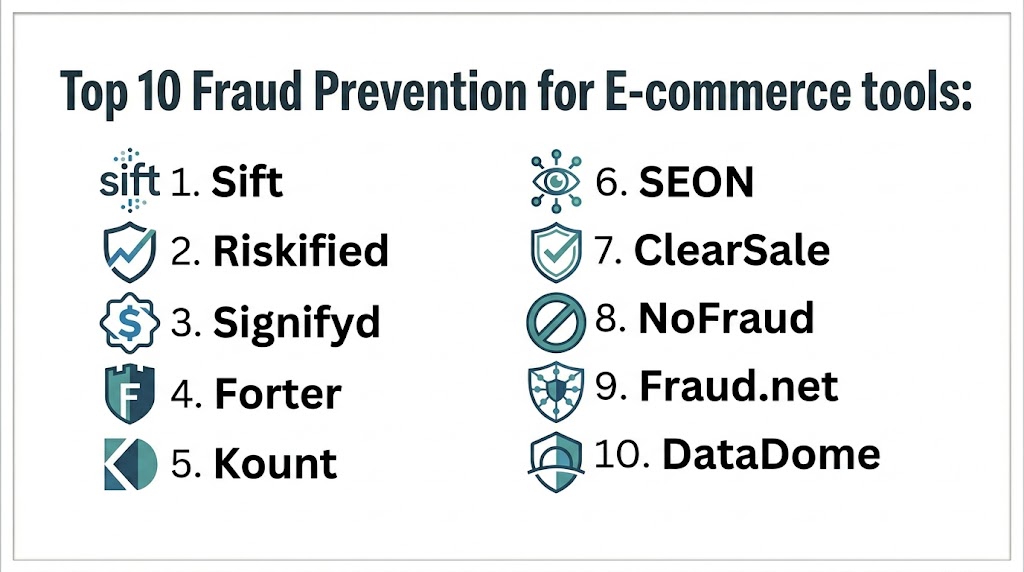
Top 10 Fraud Prevention for E-commerce Tools
#1 — Sift
Short description:
Sift is a leading digital trust and fraud prevention platform that helps businesses stop payment fraud, account abuse, and marketplace fraud using machine learning and network intelligence.
Key Features
- AI fraud scoring
- Account takeover protection
- Payment fraud prevention
- Device fingerprinting
- Content abuse detection
- Marketplace risk monitoring
- Global fraud network intelligence
Pros
- Strong machine learning models
- Excellent enterprise scalability
- Advanced account protection capabilities
Cons
- Premium pricing
- Complex implementation for smaller teams
- Best suited for growing businesses or enterprise use
Platforms / Deployment
Cloud
Security & Compliance
Not publicly stated
Integrations & Ecosystem
Sift offers broad commerce ecosystem support.
- Shopify integrations
- Payment gateways
- APIs
- Marketplace integrations
- Identity workflows
Support & Community
Strong enterprise support with mature documentation.
#2 — Riskified
Short description:
Riskified specializes in AI-driven fraud prevention and chargeback guarantees, helping merchants approve more legitimate transactions safely.
Key Features
- Chargeback guarantee
- Fraud detection AI
- Order approval optimization
- Refund abuse prevention
- Policy abuse monitoring
- Real-time risk engine
- Revenue optimization tools
Pros
- Strong financial protection model
- Improves conversion rates
- Excellent for large merchants
Cons
- Premium pricing
- Better for mid-market and enterprise
- Less suited for small stores
Platforms / Deployment
Cloud
Security & Compliance
Not publicly stated
Integrations & Ecosystem
Strong commerce stack connectivity.
- Commerce platforms
- APIs
- Payment gateways
- OMS integrations
- CRM workflows
Support & Community
Excellent merchant success support.
#3 — Signifyd
Short description:
Signifyd provides fraud protection, chargeback coverage, and commerce abuse prevention for online merchants.
Key Features
- Guaranteed fraud protection
- Instant order decisions
- Account abuse prevention
- Refund abuse protection
- Commerce intelligence network
- Risk analytics
- Automated workflows
Pros
- Fast deployment
- Low operational overhead
- Strong fraud guarantee model
Cons
- Premium pricing
- Enterprise-focused
- Limited deep customization
Platforms / Deployment
Cloud
Security & Compliance
Not publicly stated
Integrations & Ecosystem
Broad e-commerce integrations.
- APIs
- Commerce systems
- Payment providers
- OMS tools
- CRM platforms
Support & Community
Strong enterprise onboarding support.
#4 — Forter
Short description:
Forter uses identity-based fraud prevention to reduce checkout friction while preventing fraud and abuse.
Key Features
- Identity intelligence
- Fraud detection engine
- Bot mitigation
- Account takeover prevention
- Marketplace protection
- Payment fraud prevention
- Real-time decisioning
Pros
- Low false positives
- Excellent customer experience optimization
- Strong enterprise scale
Cons
- Premium cost
- Complex implementation
- Best for larger operations
Platforms / Deployment
Cloud
Security & Compliance
Not publicly stated
Integrations & Ecosystem
Broad platform compatibility.
- APIs
- Payment tools
- Commerce systems
- Identity systems
- CRM integrations
Support & Community
Strong enterprise support quality.
#5 — Kount
Short description:
Kount combines device intelligence, identity trust, and machine learning for fraud prevention.
Key Features
- Device fingerprinting
- AI fraud scoring
- Identity trust network
- Rules engine
- Transaction analytics
- Chargeback reduction workflows
- Account monitoring
Pros
- Flexible rules engine
- Strong identity data
- Good operational visibility
Cons
- Learning curve
- Setup complexity
- Enterprise-style UI
Platforms / Deployment
Cloud
Security & Compliance
Not publicly stated
Integrations & Ecosystem
Flexible API ecosystem.
- Payment integrations
- APIs
- Commerce stacks
- Identity systems
- Analytics tools
Support & Community
Reliable enterprise-grade support.
#6 — SEON
Short description:
SEON focuses on digital footprint analysis and fraud intelligence for modern online businesses.
Key Features
- Email intelligence
- Phone intelligence
- IP risk analysis
- Device fingerprinting
- Fraud scoring
- Custom rule builder
- API-first architecture
Pros
- Fast deployment
- Transparent fraud signals
- Good value for SMBs
Cons
- Smaller ecosystem
- Some enterprise gaps
- Limited chargeback guarantee models
Platforms / Deployment
Cloud
Security & Compliance
Not publicly stated
Integrations & Ecosystem
Flexible modern integrations.
- APIs
- Payment tools
- CRM systems
- Identity tools
- Fraud workflows
Support & Community
Growing customer community.
#7 — ClearSale
Short description:
ClearSale blends machine learning with human review for fraud prevention and chargeback protection.
Key Features
- Fraud scoring
- Manual review workflows
- Chargeback protection
- AI detection models
- Transaction monitoring
- Risk dashboards
- Global fraud analysis
Pros
- Human + AI approach
- Strong fraud accuracy
- Reliable merchant protection
Cons
- Manual review can slow approvals
- Operational dependency on review workflows
- Less automation than AI-first platforms
Platforms / Deployment
Cloud
Security & Compliance
Not publicly stated
Integrations & Ecosystem
Commerce-friendly integrations.
- APIs
- Payment systems
- Commerce platforms
- CRM tools
- Analytics workflows
Support & Community
Strong service-focused support.
#8 — NoFraud
Short description:
NoFraud offers simplified fraud prevention and chargeback coverage for e-commerce merchants.
Key Features
- Fraud screening
- Real-time transaction review
- Chargeback guarantee
- Risk alerts
- Approval workflows
- Analytics dashboard
- Merchant support tools
Pros
- Easy deployment
- Good SMB fit
- Financial fraud protection
Cons
- Less customization
- Smaller ecosystem
- Fewer advanced enterprise workflows
Platforms / Deployment
Cloud
Security & Compliance
Not publicly stated
Integrations & Ecosystem
Simple and practical integrations.
- APIs
- Payment providers
- Commerce systems
- CRM support
Support & Community
Strong SMB customer support.
#9 — Fraud.net
Short description:
Fraud.net is an AI-driven fraud intelligence and transaction risk platform for complex digital commerce environments.
Key Features
- Fraud scoring
- Risk intelligence
- Network analytics
- Workflow automation
- Custom rules engine
- Transaction monitoring
- Real-time decisions
Pros
- Strong analytics depth
- Highly customizable
- Flexible for enterprise risk teams
Cons
- Complex implementation
- Learning curve
- Requires internal expertise
Platforms / Deployment
Cloud
Security & Compliance
Not publicly stated
Integrations & Ecosystem
Designed for flexible enterprise integration.
- APIs
- Payment systems
- Data platforms
- CRM integrations
- Workflow automation tools
Support & Community
Strong enterprise support.
#10 — DataDome
Short description:
DataDome specializes in bot protection and automated abuse prevention, helping e-commerce businesses stop malicious automation.
Key Features
- Bot detection
- Real-time mitigation
- API protection
- Checkout abuse prevention
- Traffic filtering
- AI behavior analysis
- Threat intelligence
Pros
- Excellent bot defense
- Very fast detection
- Strong operational performance
Cons
- More specialized than broad fraud suites
- Limited chargeback coverage
- May need complementary fraud stack tools
Platforms / Deployment
Cloud
Security & Compliance
Not publicly stated
Integrations & Ecosystem
Strong security-focused integrations.
- CDN integrations
- APIs
- Commerce platforms
- Security stacks
- Application protection tools
Support & Community
Well-regarded support model.
Comparison Table
| Tool | Best For | Deployment | Standout Feature | Public Rating |
|---|---|---|---|---|
| Sift | Enterprise fraud prevention | Cloud | Machine learning intelligence | N/A |
| Riskified | Chargeback protection | Cloud | Fraud guarantee | N/A |
| Signifyd | Commerce protection | Cloud | Guaranteed approvals | N/A |
| Forter | Identity fraud prevention | Cloud | Low-friction checkout security | N/A |
| Kount | Device intelligence | Cloud | Identity trust network | N/A |
| SEON | SMB fraud detection | Cloud | Digital footprint intelligence | N/A |
| ClearSale | Human + AI review | Cloud | Manual review expertise | N/A |
| NoFraud | SMB merchants | Cloud | Easy fraud protection | N/A |
| Fraud.net | Enterprise analytics | Cloud | Custom fraud intelligence | N/A |
| DataDome | Bot abuse prevention | Cloud | Automated bot mitigation | N/A |
Evaluation & Scoring
| Tool | Core | Ease | Integrations | Security | Performance | Support | Value | Weighted Total |
|---|---|---|---|---|---|---|---|---|
| Sift | 9.5 | 8.0 | 9.0 | 8.0 | 9.0 | 8.5 | 7.5 | 8.6 |
| Riskified | 9.0 | 8.5 | 8.5 | 8.0 | 9.0 | 8.5 | 7.5 | 8.5 |
| Signifyd | 8.8 | 8.5 | 8.2 | 8.0 | 8.8 | 8.3 | 7.6 | 8.3 |
| Forter | 9.2 | 8.0 | 8.5 | 8.0 | 9.0 | 8.5 | 7.2 | 8.4 |
| Kount | 8.5 | 7.5 | 8.0 | 7.8 | 8.5 | 8.0 | 7.8 | 8.0 |
| SEON | 8.0 | 8.8 | 7.8 | 7.5 | 8.2 | 7.8 | 8.8 | 8.2 |
| ClearSale | 8.0 | 7.5 | 7.8 | 7.5 | 7.8 | 8.2 | 7.8 | 7.8 |
| NoFraud | 7.8 | 9.0 | 7.2 | 7.0 | 7.5 | 8.0 | 8.8 | 8.0 |
| Fraud.net | 8.5 | 6.8 | 8.5 | 7.8 | 8.5 | 7.8 | 7.2 | 7.9 |
| DataDome | 8.2 | 8.5 | 8.0 | 8.0 | 9.0 | 8.0 | 7.5 | 8.1 |
How to interpret:
Higher scores indicate stronger overall platform capability. Enterprise-focused tools usually score higher in core capability, while SMB-friendly platforms often score better in usability and value.
Which Tool Is Right for You?
Solo / Small Store
Best choices:
- NoFraud
- SEON
SMB
Best choices:
- SEON
- ClearSale
- NoFraud
Mid-Market
Best choices:
- Sift
- Kount
- Signifyd
Enterprise
Best choices:
- Forter
- Riskified
- Sift
Budget vs Premium
Budget:
- NoFraud
- SEON
Premium:
- Forter
- Riskified
- Sift
Feature Depth vs Ease of Use
Feature depth:
- Sift
- Forter
- Fraud.net
Ease of use:
- NoFraud
- SEON
Integrations & Scalability
Best:
- Sift
- Forter
- Riskified
Security & Compliance Needs
Validate vendor compliance documentation directly during procurement.
Frequently Asked Questions
1. What is e-commerce fraud prevention software?
Software that detects and blocks fraudulent transactions and suspicious account activity.
2. How does fraud scoring work?
Platforms analyze behavior, identity, device, and transaction signals to calculate fraud risk.
3. What is chargeback protection?
Some vendors financially cover fraudulent chargebacks.
4. Are these tools AI-powered?
Most modern fraud prevention platforms heavily use machine learning.
5. Can small businesses use fraud prevention software?
Yes, several platforms serve SMB merchants well.
6. Will fraud prevention reduce conversion?
Good platforms reduce fraud while keeping friction low.
7. Can fraud prevention tools stop bots?
Many modern platforms now include bot mitigation.
8. Are integrations difficult?
Most leading vendors provide APIs and platform integrations.
9. Can these tools prevent account takeover?
Yes, many specialize in account protection.
10. Should businesses combine multiple tools?
Large businesses often combine fraud, bot, and identity tools.
Conclusion
Fraud prevention is now a core part of e-commerce infrastructure—not an optional add-on. The best platform depends on transaction volume, fraud exposure, operational complexity, and customer experience priorities.

A key challenge with fraud prevention is finding the right balance between security and customer experience. Strong protection is important, but overly strict checks can sometimes create friction for legitimate customers and affect conversions.