Introduction
Restaurant Management Systems help food businesses streamline daily operations across front-of-house, kitchen workflows, billing, inventory, staff scheduling, customer engagement, and reporting. Instead of managing multiple disconnected tools, restaurants can run core business functions from a unified platform—improving operational efficiency, reducing waste, and delivering better customer experiences.
Modern restaurant operations have become increasingly complex. Businesses now manage dine-in service, online ordering, delivery apps, loyalty programs, cloud kitchens, digital payments, kitchen coordination, and customer data simultaneously. Manual systems create inefficiencies, while fragmented software stacks increase operational overhead. Restaurant Management Systems solve these challenges by centralizing operations into one connected workflow.
These platforms help businesses increase speed of service, improve inventory accuracy, reduce food costs, manage staff better, and gain clearer operational insights.
Common Use Cases
- Point-of-sale management
- Inventory and ingredient tracking
- Table reservation management
- Kitchen order coordination
- Staff scheduling and payroll workflows
- Multi-location restaurant management
- Customer loyalty programs
- Online ordering and delivery integrations
- Business reporting and analytics
- Franchise operational standardization
What Buyers Should Evaluate
When comparing Restaurant Management Systems, buyers should evaluate:
- POS functionality
- Ease of staff onboarding
- Inventory management depth
- Kitchen display system support
- Online ordering integrations
- Delivery aggregator integrations
- CRM and loyalty tools
- Multi-location management
- Reporting and analytics quality
- Mobile management capabilities
- Payment processing flexibility
- Security controls
- Support quality
- Scalability
Best for: Restaurants, cafes, quick-service chains, fine dining businesses, cloud kitchens, food franchises, and hospitality operators seeking operational efficiency.
Not ideal for: Very small cash-only food stalls or businesses needing only basic billing software.
Key Trends in Restaurant Management Systems
- Cloud-native restaurant software is becoming standard
- Mobile-first management dashboards are growing rapidly
- Self-order kiosks and QR ordering are expanding
- AI-driven demand forecasting is improving inventory planning
- Kitchen automation workflows are becoming smarter
- Delivery ecosystem integrations are now essential
- Unified customer profiles are improving loyalty programs
- Subscription software pricing is replacing legacy licensing
- Multi-location operational dashboards are becoming more advanced
- Contactless dining experiences remain a major software focus
How We Selected These Tools
Our evaluation included:
- Market adoption
- Product maturity
- Restaurant workflow coverage
- POS capability depth
- Inventory and operational tools
- Multi-location support
- Reporting and analytics quality
- Integration ecosystem
- Ease of use
- Customer support reputation
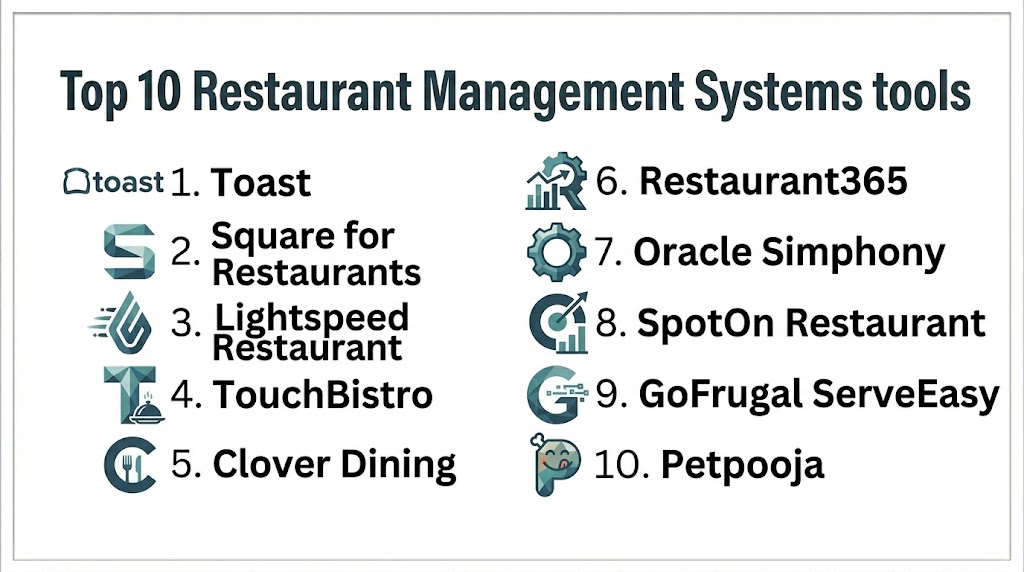
Top 10 Restaurant Management Systems
#1 — Toast
Short description:
Toast is one of the most widely adopted restaurant platforms, offering POS, payments, online ordering, payroll, inventory, loyalty, and restaurant operations management in one ecosystem.
Key Features
- Restaurant POS
- Online ordering
- Loyalty programs
- Inventory tools
- Employee scheduling
- Payroll support
- Reporting dashboards
Pros
- Built specifically for restaurants
- Strong all-in-one ecosystem
- Excellent operational depth
Cons
- Premium pricing for full stack
- Hardware dependency
- Best suited for scaling operations
Platforms / Deployment
Cloud / iOS / Android
Security & Compliance
Not publicly stated
Integrations & Ecosystem
Strong ecosystem for restaurant operations.
- Delivery integrations
- Payroll systems
- CRM tools
- Accounting integrations
- APIs
Support & Community
Strong onboarding and customer support.
#2 — Square for Restaurants
Short description:
Square for Restaurants provides an easy-to-use restaurant POS and operations platform designed for small to mid-sized food businesses.
Key Features
- POS system
- Digital ordering
- Staff management
- Inventory basics
- Customer engagement tools
- Payment processing
- Reporting dashboard
Pros
- Easy setup
- User-friendly interface
- Good for SMB restaurants
Cons
- Limited enterprise depth
- Advanced modules may cost extra
- Some operational limitations for chains
Platforms / Deployment
Cloud / iOS / Android
Security & Compliance
Not publicly stated
Integrations & Ecosystem
Broad small-business ecosystem.
- Delivery apps
- CRM tools
- APIs
- Accounting tools
- Marketing integrations
Support & Community
Good SMB support.
#3 — Lightspeed Restaurant
Short description:
Lightspeed offers modern restaurant management software focused on operational control, POS flexibility, and analytics.
Key Features
- POS
- Inventory management
- Table management
- Reporting analytics
- Staff controls
- Loyalty workflows
- Multi-location support
Pros
- Strong operational visibility
- Good multi-location capabilities
- Flexible deployment
Cons
- Learning curve
- Premium features cost more
- Some complexity for smaller teams
Platforms / Deployment
Cloud / iOS
Security & Compliance
Not publicly stated
Integrations & Ecosystem
Flexible restaurant integrations.
- APIs
- Delivery apps
- CRM systems
- Accounting tools
- Loyalty platforms
Support & Community
Strong professional support.
#4 — TouchBistro
Short description:
TouchBistro is a restaurant-first POS and management platform built for service efficiency.
Key Features
- Restaurant POS
- Table management
- Reservations
- Inventory controls
- Staff management
- CRM tools
- Reporting
Pros
- Restaurant-specific workflows
- Easy staff onboarding
- Good service speed optimization
Cons
- Hardware ecosystem dependency
- Add-on pricing complexity
- Some advanced integrations limited
Platforms / Deployment
Cloud / iPad
Security & Compliance
Not publicly stated
Integrations & Ecosystem
Restaurant-friendly ecosystem.
- Payment integrations
- Reservation tools
- Delivery apps
- CRM tools
- APIs
Support & Community
Reliable onboarding support.
#5 — Clover Dining
Short description:
Clover Dining provides flexible POS and restaurant operations tools for independent restaurants and small chains.
Key Features
- POS
- Table service workflows
- Payments
- Inventory basics
- CRM features
- Reporting
- Mobile ordering
Pros
- Easy to deploy
- Flexible hardware options
- Strong payment ecosystem
Cons
- Limited enterprise depth
- Some features require add-ons
- Reporting depth varies
Platforms / Deployment
Cloud / Mobile / POS hardware
Security & Compliance
Not publicly stated
Integrations & Ecosystem
Broad commerce ecosystem.
- Payment systems
- APIs
- CRM tools
- Marketing apps
- Ordering integrations
Support & Community
Strong support network.
#6 — Restaurant365
Short description:
Restaurant365 combines accounting, operations, inventory, workforce, and reporting for multi-location restaurant businesses.
Key Features
- Accounting
- Inventory management
- Workforce scheduling
- Payroll workflows
- Operational reporting
- Purchasing management
- Multi-unit visibility
Pros
- Strong enterprise operational depth
- Excellent financial visibility
- Ideal for restaurant groups
Cons
- Complex implementation
- Higher pricing
- Best for larger operators
Platforms / Deployment
Cloud
Security & Compliance
Not publicly stated
Integrations & Ecosystem
Built for operational integration.
- Payroll systems
- Accounting workflows
- POS integrations
- Vendor workflows
- APIs
Support & Community
Strong enterprise customer support.
#7 — Oracle Simphony
Short description:
Oracle Simphony is an enterprise-grade restaurant management platform designed for global chains and hospitality groups.
Key Features
- Enterprise POS
- Multi-location operations
- Inventory controls
- CRM and loyalty
- Workforce management
- Reporting analytics
- Hospitality integrations
Pros
- Massive enterprise scalability
- Global operational control
- Deep feature set
Cons
- Complex setup
- Expensive
- Heavy implementation requirements
Platforms / Deployment
Cloud / Hybrid
Security & Compliance
Not publicly stated
Integrations & Ecosystem
Extensive enterprise ecosystem.
- Hospitality systems
- APIs
- CRM platforms
- Accounting tools
- Delivery integrations
Support & Community
Enterprise-grade support.
#8 — SpotOn Restaurant
Short description:
SpotOn provides restaurant POS, marketing, loyalty, and operational management tools in a unified platform.
Key Features
- POS
- Online ordering
- Loyalty tools
- Inventory workflows
- Staff tools
- Analytics
- Payment processing
Pros
- Strong value proposition
- Modern UI
- Good restaurant workflow coverage
Cons
- Smaller ecosystem than leaders
- Regional availability differences
- Enterprise depth varies
Platforms / Deployment
Cloud / Mobile
Security & Compliance
Not publicly stated
Integrations & Ecosystem
Growing restaurant ecosystem.
- APIs
- CRM tools
- Delivery apps
- Marketing platforms
- Payment systems
Support & Community
Good support reputation.
#9 — GoFrugal ServeEasy
Short description:
GoFrugal ServeEasy helps restaurants manage POS, inventory, kitchen workflows, and business reporting.
Key Features
- POS
- Inventory management
- Kitchen workflow support
- CRM basics
- Billing automation
- Staff workflows
- Reporting dashboards
Pros
- Good operational control
- Strong regional market fit
- Affordable for growing restaurants
Cons
- UI may feel dated
- Advanced ecosystem smaller
- Enterprise flexibility limited
Platforms / Deployment
Cloud / Windows / Mobile
Security & Compliance
Not publicly stated
Integrations & Ecosystem
Practical restaurant integrations.
- Accounting tools
- CRM systems
- APIs
- Delivery support
- Reporting tools
Support & Community
Strong regional support.
#10 — Petpooja
Short description:
Petpooja is a restaurant operating platform widely used for POS, billing, inventory, and food business automation.
Key Features
- POS billing
- Inventory management
- Kitchen display workflows
- CRM tools
- Delivery integrations
- Multi-location dashboards
- Reporting analytics
Pros
- Strong SMB fit
- Easy onboarding
- Good operational coverage
Cons
- Enterprise depth limited
- Some advanced customization limits
- Ecosystem depth varies by region
Platforms / Deployment
Cloud / Mobile / POS hardware
Security & Compliance
Not publicly stated
Integrations & Ecosystem
Well-connected food business ecosystem.
- Delivery apps
- Payment tools
- CRM integrations
- APIs
- Accounting workflows
Support & Community
Good support for SMB operators.
Comparison Table
| Tool | Best For | Deployment | Standout Feature | Public Rating |
|---|---|---|---|---|
| Toast | Scaling restaurants | Cloud | Full restaurant ecosystem | N/A |
| Square for Restaurants | SMB restaurants | Cloud | Ease of use | N/A |
| Lightspeed Restaurant | Multi-location SMB | Cloud | Operational analytics | N/A |
| TouchBistro | Service restaurants | Cloud | Restaurant-first POS | N/A |
| Clover Dining | Independent restaurants | Cloud | Flexible POS ecosystem | N/A |
| Restaurant365 | Restaurant groups | Cloud | Financial operations depth | N/A |
| Oracle Simphony | Enterprise chains | Hybrid | Enterprise scale | N/A |
| SpotOn Restaurant | Mid-market operators | Cloud | Unified operations | N/A |
| GoFrugal ServeEasy | Regional restaurant chains | Cloud | Operational affordability | N/A |
| Petpooja | SMB food businesses | Cloud | Ease of restaurant operations | N/A |
Evaluation & Scoring
| Tool | Core | Ease | Integrations | Security | Performance | Support | Value | Weighted Total |
|---|---|---|---|---|---|---|---|---|
| Toast | 9.5 | 8.8 | 9.0 | 7.8 | 9.0 | 8.8 | 8.0 | 8.8 |
| Square for Restaurants | 8.5 | 9.5 | 8.5 | 7.5 | 8.5 | 8.5 | 9.0 | 8.7 |
| Lightspeed Restaurant | 8.8 | 8.2 | 8.8 | 7.5 | 8.7 | 8.3 | 8.0 | 8.4 |
| TouchBistro | 8.5 | 8.8 | 8.0 | 7.2 | 8.2 | 8.2 | 8.2 | 8.3 |
| Clover Dining | 8.0 | 8.8 | 8.2 | 7.2 | 8.0 | 8.0 | 8.5 | 8.1 |
| Restaurant365 | 9.2 | 7.2 | 8.8 | 7.5 | 8.8 | 8.5 | 7.5 | 8.3 |
| Oracle Simphony | 9.5 | 6.8 | 9.2 | 7.8 | 9.2 | 8.5 | 6.8 | 8.2 |
| SpotOn Restaurant | 8.2 | 8.5 | 7.8 | 7.2 | 8.2 | 8.0 | 8.5 | 8.1 |
| GoFrugal ServeEasy | 7.8 | 8.0 | 7.2 | 7.0 | 7.8 | 7.8 | 8.8 | 7.9 |
| Petpooja | 8.0 | 8.8 | 7.5 | 7.0 | 8.0 | 8.0 | 9.0 | 8.1 |
Which Restaurant Management System Is Right for You?
Solo / Small Restaurant
Best:
- Square for Restaurants
- Petpooja
- Clover Dining
SMB
Best:
- Toast
- TouchBistro
- Lightspeed Restaurant
Mid-Market
Best:
- SpotOn Restaurant
- Restaurant365
Enterprise
Best:
- Oracle Simphony
- Toast
- Restaurant365
Budget vs Premium
Budget:
- Petpooja
- Square
Premium:
- Toast
- Oracle Simphony
Feature Depth vs Ease of Use
Feature depth:
- Oracle Simphony
- Restaurant365
Ease:
- Square
- Petpooja
Integrations & Scalability
Best:
- Toast
- Oracle Simphony
- Lightspeed Restaurant
Security & Compliance Needs
Validate vendor security documentation during procurement.
Frequently Asked Questions
1. What is a Restaurant Management System?
Software that helps restaurants manage operations, sales, inventory, staff, and customer workflows.
2. Is POS included?
Most platforms include POS as a core feature.
3. Can these tools manage inventory?
Yes, many offer ingredient and stock tracking.
4. Do they support online ordering?
Most modern systems support online ordering workflows.
5. Can they manage multiple locations?
Yes, many platforms support multi-location operations.
6. Are loyalty programs included?
Many systems include CRM and loyalty modules.
7. Do they integrate with delivery apps?
Many platforms connect with food delivery ecosystems.
8. Are they cloud-based?
Most modern restaurant systems are cloud-first.
9. Which is best for small restaurants?
Square, Petpooja, and Clover are strong options.
10. Which is best for chains?
Oracle Simphony, Toast, and Restaurant365 are strong enterprise choices.
Conclusion
Restaurant Management Systems are now central to running modern food businesses efficiently. The right platform can improve service speed, reduce operational waste, streamline staffing, strengthen customer retention, and increase profitability.
The best choice depends on restaurant size, operational complexity, customer channels, and budget.

One factor that often has a bigger impact than individual features is how well the system connects different parts of the operation. When inventory, staff, orders, and reporting work together seamlessly, day-to-day management becomes much more efficient.