Introduction
Retail Point of Sale POS Systems are platforms that combine hardware and software to process sales transactions, manage inventory, track customers, and run day-to-day retail operations. In simple terms, they are the digital backbone of modern retail stores, connecting checkout, inventory, and business insights into one system.
Today’s retail environment demands speed, accuracy, and omnichannel experiences. POS systems help retailers manage both in-store and online sales, inventory synchronization, and customer engagement, making them essential for competitive businesses.
Real-world use cases
- Processing in-store and online payments
- Managing inventory and stock levels
- Tracking customer purchase history
- Running loyalty programs and promotions
- Generating sales reports and analytics
What buyers should evaluate
- Payment processing flexibility
- Inventory and stock management
- Omnichannel capabilities
- Reporting and analytics
- Ease of use and setup
- Integration with eCommerce and accounting tools
- Scalability for multi-store operations
- Pricing including transaction fees and hardware
Best for: Retail store owners, SMB retailers, franchises, and omnichannel businesses.
Not ideal for: Very small businesses with minimal transactions or no need for digital inventory management.
Key Trends in Retail POS Systems
- Cloud-based POS platforms replacing legacy systems
- AI-driven analytics and sales forecasting
- Omnichannel retail integration across online and offline
- Mobile POS for on-the-go selling
- Contactless and digital wallet payments
- Integration with CRM and marketing tools
- Self-checkout and automation features
- Subscription-based pricing models
- Real-time inventory tracking across locations
- API-first ecosystems for customization
How We Selected These Tools
- Evaluated global adoption across retail businesses
- Assessed inventory, payment, and reporting capabilities
- Considered ease of use and onboarding
- Reviewed integration with eCommerce and accounting tools
- Analyzed scalability for multi-location retailers
- Evaluated hardware flexibility and support
- Considered pricing models and transaction fees
- Assessed vendor support and ecosystem strength
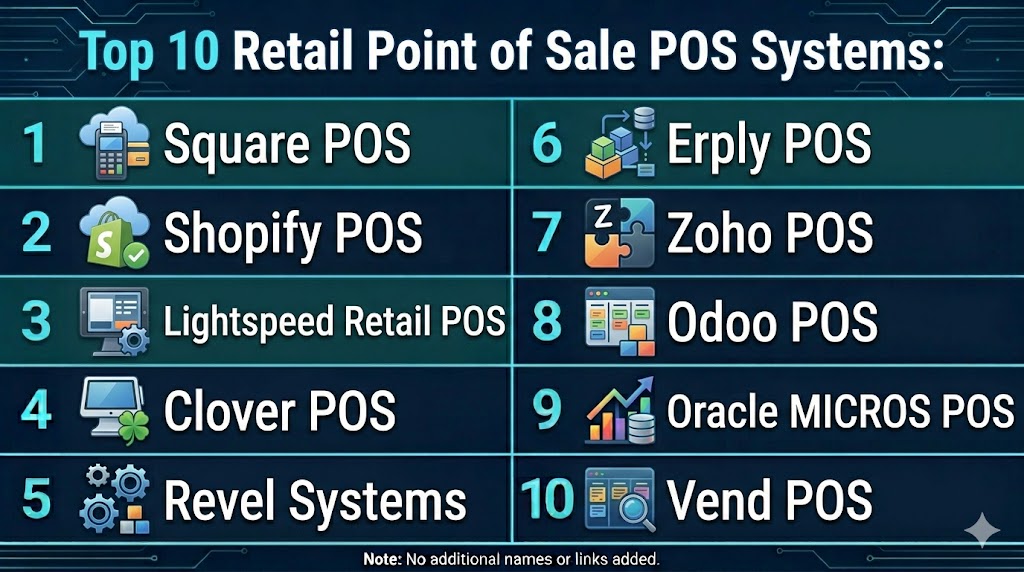
Top 10 Retail Point of Sale POS Systems
#1 — Square POS
Short description: Square POS is a widely used cloud-based system designed for small to medium retailers with strong inventory, payment, and customer management features.
Key Features
- Payment processing
- Inventory management
- Sales analytics
- Customer profiles
- Mobile POS support
Pros
- Easy to use
- No monthly fees for basic plan
- Strong mobile support
Cons
- Higher transaction fees
- Limited customization
- Less suitable for large enterprises
Platforms / Deployment
- Web Mobile
- Cloud
Security & Compliance
- Payment encryption and access controls
- Not publicly stated
Integrations & Ecosystem
Integrates with eCommerce, accounting, and CRM tools.
- APIs
- Accounting tools
- eCommerce platforms
Support & Community
Large user community and support resources
#2 — Lightspeed Retail
Short description: Lightspeed is a powerful POS platform for growing retailers with advanced inventory and multi-location capabilities.
Key Features
- Advanced inventory management
- Multi-store support
- Reporting and analytics
- Customer management
- Omnichannel sales
Pros
- Strong inventory tools
- Scalable
- Customizable
Cons
- Expensive
- Learning curve
- Setup complexity
Platforms / Deployment
- Web iOS
- Cloud
Security & Compliance
- Not publicly stated
Integrations & Ecosystem
Supports integrations with retail and supplier tools.
- APIs
- eCommerce tools
Support & Community
Enterprise-level support
#3 — Clover POS
Short description: Clover offers flexible POS hardware and software solutions tailored for retail and service businesses.
Key Features
- Payment processing
- Inventory tracking
- Employee management
- Reporting
- App marketplace
Pros
- Flexible hardware
- Customizable
- Supports multiple payment types
Cons
- Hardware cost
- Pricing complexity
- Vendor dependency
Platforms / Deployment
- Web Android
- Cloud
Security & Compliance
- Not publicly stated
Integrations & Ecosystem
Offers a large app marketplace for customization.
- APIs
- Apps
Support & Community
Strong vendor support
#4 — Shopify POS
Short description: Shopify POS connects online and offline retail operations, making it ideal for omnichannel businesses.
Key Features
- Omnichannel selling
- Inventory sync
- Customer profiles
- Reporting
- Payment processing
Pros
- Strong eCommerce integration
- Easy to use
- Scalable
Cons
- Requires Shopify ecosystem
- Transaction fees
- Limited offline features
Platforms / Deployment
- Web Mobile
- Cloud
Security & Compliance
- Not publicly stated
Integrations & Ecosystem
Integrates deeply with Shopify ecosystem.
- eCommerce
- APIs
Support & Community
Large ecosystem
#5 — Toast POS
Short description: Toast POS is a cloud-based system primarily designed for restaurants but also supports retail environments.
Key Features
- Payment processing
- Inventory tracking
- Reporting
- Employee management
- Analytics
Pros
- Strong reporting
- Easy to use
- Scalable
Cons
- Industry-specific
- Hardware dependency
- Pricing
Platforms / Deployment
- Android
- Cloud
Security & Compliance
- Not publicly stated
Integrations & Ecosystem
Supports integrations with business tools.
- APIs
- Payment tools
Support & Community
Strong support
#6 — Vend POS
Short description: Vend is a cloud-based POS system designed for retail stores with strong inventory and customer management.
Key Features
- Inventory management
- Customer tracking
- Reporting
- Multi-store support
- Loyalty programs
Pros
- Easy to use
- Strong inventory tools
- Cloud-based
Cons
- Pricing
- Limited offline features
- Smaller ecosystem
Platforms / Deployment
- Web iPad
- Cloud
Security & Compliance
- Not publicly stated
Integrations & Ecosystem
Supports integrations with retail tools.
- APIs
- Accounting tools
Support & Community
Good support
#7 — NCR Silver
Short description: NCR Silver provides POS solutions for small to mid-sized retailers with strong reporting and payment features.
Key Features
- Payment processing
- Reporting
- Inventory tracking
- Customer management
- Mobile POS
Pros
- Reliable
- Easy to use
- Good reporting
Cons
- Limited advanced features
- Pricing
- Smaller ecosystem
Platforms / Deployment
- Web Mobile
- Cloud
Security & Compliance
- Not publicly stated
Integrations & Ecosystem
Supports integrations via APIs.
- APIs
- Payment tools
Support & Community
Good support
#8 — Helcim POS
Short description: Helcim is a POS system focused on affordability with transparent pricing and payment processing.
Key Features
- Payment processing
- Inventory tracking
- Reporting
- Customer management
- Online integration
Pros
- No monthly fees
- Transparent pricing
- Easy setup
Cons
- Limited advanced features
- Smaller ecosystem
- Less customization
Platforms / Deployment
- Web Mobile
- Cloud
Security & Compliance
- Not publicly stated
Integrations & Ecosystem
Supports integration with business tools.
- APIs
- Payment tools
Support & Community
Good support
#9 — Epos Now
Short description: Epos Now is a retail POS solution offering hardware and software for managing sales and inventory.
Key Features
- Inventory management
- Payment processing
- Reporting
- Employee management
- Analytics
Pros
- Affordable
- Easy setup
- Scalable
Cons
- Limited advanced features
- Hardware dependency
- Smaller ecosystem
Platforms / Deployment
- Web Windows
- Cloud
Security & Compliance
- Not publicly stated
Integrations & Ecosystem
Supports integrations with retail tools.
- APIs
- Accounting tools
Support & Community
Good support
#10 — ShopKeep
Short description: ShopKeep is a cloud-based POS system designed for small retail businesses with easy setup and management tools.
Key Features
- Sales tracking
- Inventory management
- Customer data
- Reporting
- Mobile dashboard
Pros
- Easy to use
- Good analytics
- Cloud-based
Cons
- Limited enterprise features
- Pricing
- Smaller ecosystem
Platforms / Deployment
- Web iPad Android
- Cloud
Security & Compliance
- Not publicly stated
Integrations & Ecosystem
Supports integration with retail systems.
- APIs
- Tools
Support & Community
Good support
Comparison Table
| Tool Name | Best For | Platform Supported | Deployment | Standout Feature | Public Rating |
|---|---|---|---|---|---|
| Square POS | SMB retail | Web Mobile | Cloud | Easy setup | N/A |
| Lightspeed | Growing retail | Web iOS | Cloud | Advanced inventory | N/A |
| Clover POS | Flexible retail | Web Android | Cloud | Custom hardware | N/A |
| Shopify POS | Omnichannel | Web Mobile | Cloud | Online integration | N/A |
| Toast POS | Retail + food | Android | Cloud | Reporting | N/A |
| Vend POS | Retail stores | Web iPad | Cloud | Inventory tools | N/A |
| NCR Silver | SMB retail | Web Mobile | Cloud | Reporting | N/A |
| Helcim POS | Budget | Web Mobile | Cloud | No monthly fee | N/A |
| Epos Now | Small retail | Web Windows | Cloud | Easy setup | N/A |
| ShopKeep | Small business | Web iPad Android | Cloud | Analytics | N/A |
Evaluation & Scoring of Retail POS Systems
| Tool Name | Core | Ease | Integrations | Security | Performance | Support | Value | Weighted Total |
|---|---|---|---|---|---|---|---|---|
| Square POS | 9 | 9 | 8 | 8 | 8 | 8 | 9 | 8.6 |
| Lightspeed | 9 | 7 | 9 | 8 | 9 | 8 | 7 | 8.2 |
| Clover POS | 8 | 8 | 8 | 8 | 8 | 8 | 7 | 8.0 |
| Shopify POS | 8 | 9 | 9 | 8 | 8 | 8 | 8 | 8.3 |
| Toast POS | 8 | 8 | 7 | 8 | 8 | 7 | 7 | 7.8 |
| Vend POS | 8 | 9 | 7 | 7 | 8 | 7 | 8 | 7.9 |
| NCR Silver | 7 | 8 | 7 | 7 | 7 | 7 | 8 | 7.5 |
| Helcim POS | 7 | 9 | 6 | 7 | 7 | 7 | 9 | 7.6 |
| Epos Now | 7 | 8 | 7 | 7 | 7 | 7 | 8 | 7.5 |
| ShopKeep | 7 | 9 | 6 | 7 | 7 | 7 | 8 | 7.6 |
Scores are comparative and reflect usability, scalability, and feature depth across retail needs.
Which Retail POS System Is Right for You
Solo / Small Retailers
Square POS and Helcim are simple and affordable.
SMB
Shopify POS and Vend provide strong value.
Mid-Market
Lightspeed and Clover offer advanced features.
Enterprise
IBM-level or advanced POS solutions like Lightspeed are ideal.
Budget vs Premium
Helcim is budget-friendly, Lightspeed is premium.
Feature Depth vs Ease of Use
Lightspeed for depth, Square for simplicity.
Integrations & Scalability
Shopify and Lightspeed are strong choices.
Security & Compliance Needs
Enterprise solutions provide stronger controls.
Frequently Asked Questions
1. What is a POS system
A POS system is software and hardware used to process sales and manage retail operations. It connects checkout, inventory, and customer data.
2. Why are POS systems important
They improve efficiency and accuracy in sales and inventory. They also provide insights into business performance.
3. How do POS systems work
They record transactions, update inventory, and generate reports. They connect with payment systems and backend tools.
4. Are POS systems suitable for small businesses
Yes, many POS systems are designed for small businesses. They offer affordable and easy-to-use solutions.
5. How much do POS systems cost
Costs vary based on software, hardware, and transaction fees. Some tools offer free plans with processing fees.
6. Do POS systems support online sales
Yes, modern systems support omnichannel selling. They sync online and offline inventory.
7. How long does implementation take
Implementation can take a few hours to a few days. It depends on system complexity.
8. What are common mistakes
Choosing the wrong system size or ignoring integration needs are common mistakes.
9. Are POS systems secure
Most systems include encryption and access controls. Security varies by provider.
10. Are there alternatives
Manual systems or basic tools can be used. However, they lack automation and scalability.
Conclusion
Retail POS systems have become essential for modern businesses by combining sales processing, inventory management, and customer insights into a single platform. They enable retailers to streamline operations, improve customer experiences, and make data-driven decisions in real time. From simple solutions like Square POS to advanced platforms like Lightspeed and Shopify POS, each system offers different strengths depending on business size and complexity. The best choice depends on your operational needs, budget, and scalability requirements rather than a single universal solution. Retailers should focus on usability, integration capabilities, and total cost when selecting a POS system. A practical next step is to shortlist a few options, test them in real store environments, and evaluate how well they align with your workflows and growth plans.
