Introduction
Restaurant Delivery Dispatch Tools are software platforms that help restaurants manage delivery operations by automating order assignment, driver tracking, and route optimization. Instead of manually assigning deliveries, these systems intelligently match orders with drivers and ensure timely fulfillment.
With the rapid growth of food delivery and cloud kitchens, dispatch systems have become essential. Modern tools integrate with POS, online ordering platforms, and third-party delivery services to create a unified delivery workflow. They improve delivery speed, reduce operational costs, and enhance customer satisfaction.
Common use cases include:
- Assigning orders to delivery drivers automatically
- Optimizing delivery routes for faster service
- Tracking drivers in real time
- Managing in-house and third-party delivery fleets
- Providing accurate delivery ETAs to customers
Key evaluation criteria:
- Dispatch automation and driver assignment
- Route optimization capabilities
- Real-time tracking and visibility
- POS and delivery platform integrations
- Ease of use for dispatchers
- Scalability across locations
- Automation and AI capabilities
- Reporting and analytics
- Reliability under high order volume
- Security and access control
Best for: Restaurants, cloud kitchens, delivery-first brands, and multi-location chains handling high delivery volumes.
Not ideal for: Small restaurants with minimal delivery operations or those relying entirely on third-party delivery platforms.
Key Trends in Restaurant Delivery Dispatch Tools
- AI-driven driver assignment and route optimization
- Real-time tracking with GPS and live updates
- Integration with third-party delivery aggregators
- Automated order batching for efficiency
- Cloud-based dispatch systems replacing manual processes
- Predictive analytics for demand forecasting
- Multi-channel order consolidation
- Contactless delivery tracking
- Centralized dashboards for fleet management
- Increased focus on delivery cost optimization
How We Selected These Tools
- Strong market presence and adoption
- Robust dispatch and routing capabilities
- Performance during peak delivery volumes
- Integration ecosystem with POS and delivery apps
- Ease of use for dispatch teams
- Scalability for multi-location restaurants
- Innovation in automation and AI routing
- Reliability and uptime
- Support quality and onboarding experience
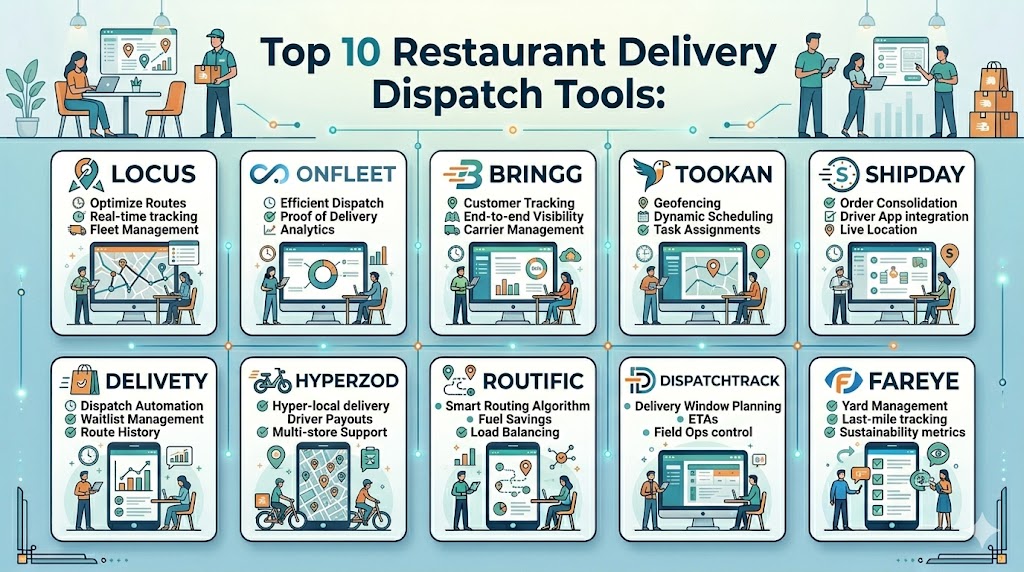
Top 10 Restaurant Delivery Dispatch Tools
#1 — Locus
Short description: An AI-powered logistics and dispatch platform that helps restaurants optimize delivery operations with advanced routing and real-time tracking. It is ideal for large-scale delivery operations and enterprise use cases.
Key Features
- AI-based route optimization
- Real-time delivery tracking
- Automated dispatch
- Analytics dashboard
- Multi-location support
Pros
- Advanced AI capabilities
- Highly scalable
- Strong analytics
Cons
- Enterprise-focused
- Higher cost
- Complex setup
Platforms / Deployment
Web
Cloud
Security & Compliance
Not publicly stated
Integrations & Ecosystem
Integrates with POS systems, delivery platforms, and enterprise tools.
- POS systems
- Delivery aggregators
- APIs
Support & Community
Enterprise-grade support with onboarding.
#2 — Onfleet
Short description: A popular delivery management platform that provides real-time tracking, route optimization, and driver communication tools for restaurants.
Key Features
- Dispatch and routing
- Real-time GPS tracking
- Customer notifications
- Analytics and reporting
- Driver management
Pros
- Easy to use
- Strong tracking features
- Reliable performance
Cons
- Pricing scales with usage
- Limited customization
- Requires integration setup
Platforms / Deployment
Web, iOS, Android
Cloud
Security & Compliance
Not publicly stated
Integrations & Ecosystem
Supports integrations with POS and delivery tools.
- POS systems
- APIs
Support & Community
Good documentation and support resources.
#3 — Bringg
Short description: An enterprise delivery orchestration platform designed for complex delivery operations with automation and scalability.
Key Features
- Delivery orchestration
- Driver assignment
- Route optimization
- Real-time tracking
- Analytics
Pros
- Enterprise-ready
- Highly customizable
- Scalable
Cons
- Complex implementation
- Higher pricing
- Requires training
Platforms / Deployment
Web
Cloud
Security & Compliance
Not publicly stated
Integrations & Ecosystem
Integrates with enterprise systems and delivery platforms.
- POS systems
- ERP tools
- APIs
Support & Community
Dedicated enterprise support.
#4 — Tookan
Short description: A flexible delivery management solution suitable for small to mid-sized restaurants needing dispatch and tracking capabilities.
Key Features
- Task management
- Route optimization
- Driver tracking
- Order assignment
- Analytics
Pros
- Flexible workflows
- Affordable
- Easy to use
Cons
- Limited enterprise features
- UI can feel basic
- Customization limits
Platforms / Deployment
Web, iOS, Android
Cloud
Security & Compliance
Not publicly stated
Integrations & Ecosystem
Supports integration with POS and CRM systems.
- POS systems
- CRM tools
Support & Community
Responsive support with onboarding.
#5 — Shipday
Short description: A delivery management platform designed for small businesses with real-time tracking and automated dispatch capabilities.
Key Features
- Real-time tracking
- Driver management
- Dispatch automation
- Customer notifications
- Integration support
Pros
- Easy setup
- Free tier available
- Simple interface
Cons
- Limited advanced features
- Not ideal for large operations
- Basic analytics
Platforms / Deployment
Web, iOS, Android
Cloud
Security & Compliance
Not publicly stated
Integrations & Ecosystem
Supports integrations with POS and online ordering tools.
- POS systems
- Delivery platforms
Support & Community
Good support for small businesses.
#6 — Delivety
Short description: A delivery management system focused on route optimization, driver tracking, and multi-location delivery operations.
Key Features
- Route optimization
- Real-time tracking
- Order management
- Delivery automation
- Reporting
Pros
- Strong routing capabilities
- Multi-location support
- Good integrations
Cons
- Learning curve
- Pricing varies
- Setup required
Platforms / Deployment
Web
Cloud
Security & Compliance
Not publicly stated
Integrations & Ecosystem
Integrates with POS, CRM, and ERP systems.
- POS systems
- CRM tools
- APIs
Support & Community
Reliable onboarding and support.
#7 — Routific
Short description: A route optimization tool that helps restaurants plan efficient delivery routes and reduce delivery times.
Key Features
- Route planning
- Delivery scheduling
- Real-time tracking
- Driver management
- Analytics
Pros
- Strong route optimization
- Easy to use
- Cost-effective
Cons
- Limited dispatch automation
- Not fully restaurant-focused
- Basic integrations
Platforms / Deployment
Web
Cloud
Security & Compliance
Not publicly stated
Integrations & Ecosystem
Supports integrations with delivery and logistics tools.
- APIs
- Delivery tools
Support & Community
Good documentation and support.
#8 — DispatchTrack
Short description: A delivery management platform offering real-time tracking, route optimization, and analytics for large-scale operations.
Key Features
- Real-time tracking
- Route optimization
- Driver management
- Analytics
- Reporting
Pros
- Scalable
- Strong analytics
- Reliable
Cons
- Complex setup
- Higher cost
- Enterprise focus
Platforms / Deployment
Web
Cloud
Security & Compliance
Not publicly stated
Integrations & Ecosystem
Integrates with enterprise systems and delivery platforms.
- POS systems
- APIs
Support & Community
Enterprise-level support.
#9 — FarEye
Short description: A logistics platform designed for last-mile delivery management with automation and analytics capabilities.
Key Features
- Delivery orchestration
- Route optimization
- Real-time tracking
- Analytics
- Automation
Pros
- Advanced analytics
- Scalable
- Automation features
Cons
- Complex implementation
- Higher pricing
- Requires training
Platforms / Deployment
Web
Cloud
Security & Compliance
Not publicly stated
Integrations & Ecosystem
Supports integrations with enterprise and logistics systems.
- APIs
- Delivery tools
Support & Community
Strong enterprise support.
#10 — Olo Dispatch
Short description: A delivery dispatch solution that connects restaurants with third-party delivery providers, eliminating the need for in-house fleets.
Key Features
- Third-party delivery integration
- Automated dispatch
- Order management
- Real-time tracking
- Analytics
Pros
- No need for own drivers
- Strong integrations
- Easy scaling
Cons
- Dependency on third-party couriers
- Limited customization
- Pricing varies
Platforms / Deployment
Web
Cloud
Security & Compliance
Not publicly stated
Integrations & Ecosystem
Integrates with delivery service providers and POS systems.
- Delivery aggregators
- POS systems
Support & Community
Reliable support with onboarding.
Comparison Table
| Tool Name | Best For | Platform Supported | Deployment | Standout Feature | Public Rating |
|---|---|---|---|---|---|
| Locus | Enterprise logistics | Web | Cloud | AI routing | N/A |
| Onfleet | Mid-size delivery ops | Web, iOS, Android | Cloud | Real-time tracking | N/A |
| Bringg | Enterprise orchestration | Web | Cloud | Delivery automation | N/A |
| Tookan | SMB delivery | Web, iOS, Android | Cloud | Flexibility | N/A |
| Shipday | Small restaurants | Web, iOS, Android | Cloud | Simplicity | N/A |
| Delivety | Multi-location ops | Web | Cloud | Route optimization | N/A |
| Routific | Route planning | Web | Cloud | Scheduling | N/A |
| DispatchTrack | Enterprise | Web | Cloud | Analytics | N/A |
| FarEye | Logistics platforms | Web | Cloud | Automation | N/A |
| Olo Dispatch | Third-party delivery | Web | Cloud | Courier integration | N/A |
Evaluation & Scoring
| Tool Name | Core | Ease | Integrations | Security | Performance | Support | Value | Weighted Total |
|---|---|---|---|---|---|---|---|---|
| Locus | 9 | 7 | 9 | 7 | 9 | 8 | 7 | 8.3 |
| Onfleet | 8 | 9 | 8 | 6 | 8 | 8 | 7 | 8.0 |
| Bringg | 9 | 6 | 9 | 7 | 9 | 8 | 6 | 8.1 |
| Tookan | 8 | 8 | 7 | 6 | 8 | 7 | 8 | 7.7 |
| Shipday | 7 | 9 | 6 | 6 | 7 | 7 | 9 | 7.6 |
| Delivety | 8 | 7 | 8 | 6 | 8 | 7 | 7 | 7.6 |
| Routific | 7 | 8 | 6 | 6 | 7 | 7 | 8 | 7.3 |
| DispatchTrack | 9 | 6 | 8 | 7 | 9 | 8 | 6 | 8.0 |
| FarEye | 9 | 6 | 9 | 7 | 9 | 8 | 6 | 8.1 |
| Olo Dispatch | 8 | 8 | 9 | 6 | 8 | 7 | 7 | 7.9 |
These scores are comparative and reflect general capabilities across the category. The best tool depends on your delivery scale, operational complexity, and integration requirements.
Which Restaurant Delivery Dispatch Tool Is Right for You
Solo / Freelancer
Shipday and Tookan are simple and affordable options.
SMB
Onfleet and Delivety provide a balance of features and usability.
Mid-Market
Routific and Olo Dispatch offer scalability and integrations.
Enterprise
Locus, Bringg, and FarEye are ideal for complex delivery operations.
Budget vs Premium
Budget users should consider Shipday, while premium users can choose Locus or Bringg.
Feature Depth vs Ease of Use
Advanced platforms provide deeper automation but require training, while simpler tools are easier to adopt.
Integrations & Scalability
Choose tools with strong POS and delivery platform integrations for long-term growth.
Security & Compliance Needs
Enterprise users should prioritize tools with strong data protection and access control.
Frequently Asked Questions
1. What is a restaurant delivery dispatch tool
It is software that automates delivery operations by assigning orders to drivers and tracking deliveries. It improves efficiency and reduces manual effort. It also ensures timely deliveries and better customer experience.
2. How does dispatch software improve delivery efficiency
It uses automation and route optimization to assign the best driver and fastest route. This reduces delivery time and cost. It also improves driver productivity and customer satisfaction.
3. Can it work with third-party delivery services
Yes, many tools integrate with third-party delivery platforms. This allows restaurants to manage both in-house and external drivers. It simplifies operations and reduces complexity.
4. Is it suitable for small restaurants
Yes, especially for those handling frequent deliveries. Simple tools provide basic dispatch and tracking features. However, very small restaurants may not need advanced systems.
5. Does it support real-time tracking
Most modern tools offer real-time GPS tracking and delivery updates. This improves visibility for both restaurants and customers. It also enhances operational control.
6. How much does it cost
Pricing varies based on features, number of drivers, and usage. Some tools offer subscription models, while others charge per delivery. Free tiers may be available for small businesses.
7. Can it handle multiple locations
Yes, many platforms support multi-location management. They provide centralized dashboards and reporting. This is useful for restaurant chains.
8. What are common mistakes when choosing
Ignoring integration with POS and delivery apps is a common mistake. Not considering scalability can also cause issues. Always evaluate long-term needs.
9. Is it difficult to implement
Most cloud-based systems are easy to deploy. However, advanced setups may require training. Vendors usually provide onboarding support.
10. Can it reduce delivery costs
Yes, by optimizing routes and driver assignments. It reduces fuel usage and delivery time. This leads to better cost efficiency.
Conclusion
Restaurant Delivery Dispatch Tools have become a critical component of modern food delivery operations, enabling restaurants to handle increasing demand efficiently. By automating driver assignment, optimizing routes, and providing real-time tracking, these platforms significantly improve delivery speed and accuracy. From simple tools designed for small businesses to enterprise-grade solutions built for complex logistics, there is a wide range of options available.The right choice depends on your delivery volume, operational complexity, and integration needs. Instead of selecting a tool based solely on features, evaluate how well it fits into your workflow and existing systems. Testing a few shortlisted tools in real-world scenarios can help identify the best fit. A well-implemented dispatch system can reduce costs, improve efficiency, and enhance customer satisfaction in the long run.

One aspect that can make a real difference is how accurately the system estimates delivery times. Reliable timing helps restaurants manage expectations better and can significantly improve the customer experience during busy periods.