Introduction
Claims Fraud Detection Tools are advanced analytics and AI-driven platforms used by insurance companies to identify, prevent, and investigate fraudulent insurance claims. These systems analyze large volumes of claims data, customer behavior, documents, images, payment patterns, and external signals to detect suspicious activity in real time or near real time.
Modern insurance fraud has become highly sophisticated, involving fake documents, identity manipulation, staged accidents, and even AI-generated evidence. To counter this, insurers now rely on machine learning, predictive analytics, graph networks, and anomaly detection systems that continuously learn from evolving fraud patterns.
Real-world use cases include:
- Detecting fake or inflated health insurance claims
- Identifying duplicate or repeated claims across networks
- Flagging suspicious billing patterns from providers
- Detecting staged accidents in motor insurance
- Preventing identity-based and synthetic fraud
- Automating SIU (Special Investigation Unit) workflows
Key evaluation criteria:
- AI/ML fraud detection accuracy
- Real-time or near real-time detection capability
- Claims + document + image analysis support
- Integration with core insurance systems (policy & claims admin)
- Graph/network analysis for fraud rings
- False positive reduction mechanisms
- Case management and SIU workflow tools
- Scalability across claim volumes
- Regulatory compliance and audit tracking
- Explainability of fraud decisions
Best for: insurance carriers, health insurers, P&C insurers, reinsurers, TPAs, and fraud investigation units.
Not ideal for: small insurance agencies without claims volume or organizations without digital claims processing systems.
Key Trends in Claims Fraud Detection Tools
- AI-powered fraud scoring models for real-time claim evaluation
- Graph analytics to detect fraud networks and collusion rings
- Generative AI detection for fake documents and medical records
- Behavioral analytics for policyholder profiling
- Automated claims triage and SIU routing
- Computer vision for image-based fraud detection (accidents, damage, medical proof)
- Cloud-native fraud analytics platforms
- Explainable AI for regulatory compliance and audit transparency
- Integration with claims processing systems (FNOL to settlement)
- Predictive fraud scoring before claim approval
How We Selected These Tools
- Evaluated adoption across global insurance carriers
- Reviewed AI/ML fraud detection capabilities
- Assessed claims lifecycle integration (FNOL to settlement)
- Considered graph/network analytics and anomaly detection strength
- Reviewed document, image, and identity fraud detection features
- Evaluated case management and SIU workflows
- Assessed scalability for enterprise claim volumes
- Considered regulatory compliance and audit readiness
- Reviewed real-time processing capabilities
- Analyzed ecosystem maturity in insurance technology
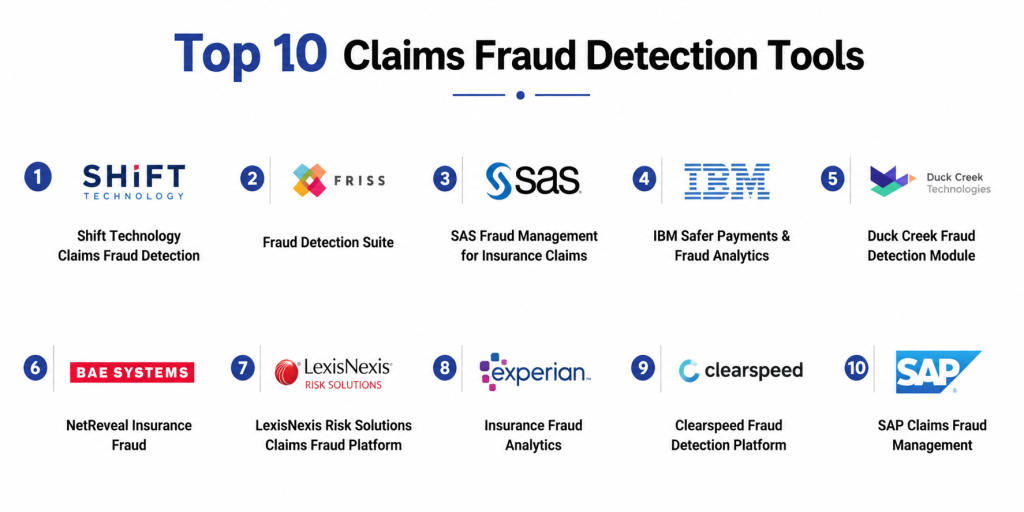
Top 10 Claims Fraud Detection Tools
#1 — Shift Technology Claims Fraud Platform
Short description: Shift Technology is a leading AI-powered fraud detection platform designed specifically for insurance claims. It uses machine learning and advanced analytics to identify fraudulent patterns across claims, documents, and behavioral signals. It is widely used by global insurers to reduce fraud losses and speed up legitimate claims processing.
Key Features
- AI-based fraud scoring for claims
- Document and image fraud detection
- Behavioral analytics
- Claims automation workflows
- Case management for SIU teams
- Real-time fraud alerts
- Predictive fraud detection
Pros
- Strong insurance industry adoption
- High AI accuracy for fraud detection
- Reduces investigation time significantly
- Scales across global insurers
Cons
- Enterprise-focused pricing
- Requires integration with claims systems
- Complex implementation
- Training required for SIU teams
Platforms / Deployment
- Web
- Cloud
Security & Compliance
- RBAC
- MFA
- Encryption
- Audit logs
Integrations & Ecosystem
Integrates with core insurance systems and analytics platforms.
- Claims management systems
- Policy administration systems
- Data lakes
- SIU tools
- APIs
Support & Community
Strong enterprise insurance support and global deployments.
#2 — SAS Fraud Management for Insurance
Short description: SAS provides advanced analytics-based fraud detection for insurance claims using machine learning, predictive modeling, and real-time analytics. It helps insurers identify fraudulent behavior patterns and reduce false claims payouts.
Key Features
- Predictive fraud modeling
- Real-time claims monitoring
- Behavioral analytics
- Data visualization dashboards
- Case management tools
- Risk scoring engine
- Rule-based + AI hybrid detection
Pros
- Strong analytics capabilities
- Highly customizable models
- Scalable enterprise system
- Trusted global vendor
Cons
- Complex setup and configuration
- Requires data science expertise
- Higher cost structure
- Implementation time is long
Platforms / Deployment
- Web
- Cloud / On-prem
Security & Compliance
- RBAC
- Encryption
- Audit logging
Integrations & Ecosystem
Works with enterprise insurance systems.
- Claims systems
- Data warehouses
- Risk engines
- BI tools
- APIs
Support & Community
Strong enterprise analytics support.
#3 — Verisk Claims Fraud Detection (Risk Analytics)
Short description: Verisk provides insurance analytics and fraud detection tools that help insurers evaluate claims, detect anomalies, and prevent fraud using predictive analytics and industry data models. It is widely used in property and casualty insurance markets.
Key Features
- Claims risk scoring
- Fraud pattern detection
- Predictive analytics
- Industry benchmarking data
- Automated alerts
- Claims optimization tools
- Data-driven decision support
Pros
- Strong insurance dataset advantage
- High-quality predictive models
- Trusted industry vendor
- Good fraud prevention accuracy
Cons
- Less flexible customization
- Enterprise pricing
- Requires integration setup
- Limited transparency in models
Platforms / Deployment
- Web
- Cloud
Security & Compliance
- RBAC
- Encryption
- Audit logs
Integrations & Ecosystem
Integrates with insurance systems and data platforms.
- Claims platforms
- Data warehouses
- Risk scoring engines
- Analytics tools
- APIs
Support & Community
Strong insurance analytics ecosystem.
#4 — FRISS Fraud Detection Platform
Short description: FRISS is a dedicated insurance fraud detection platform that uses AI and rules-based engines to identify suspicious claims and underwriting risks. It supports fraud detection across claims lifecycle and underwriting processes.
Key Features
- Claims fraud scoring
- Underwriting fraud detection
- Real-time alerts
- Case management system
- Network fraud detection
- Data enrichment tools
- Automated workflows
Pros
- Insurance-specific design
- Strong fraud detection coverage
- Good SIU workflow support
- Flexible rules engine
Cons
- Complex enterprise setup
- Requires data integration
- Limited small business fit
- Learning curve for teams
Platforms / Deployment
- Web
- Cloud
Security & Compliance
- RBAC
- MFA
- Encryption
Integrations & Ecosystem
Integrates with insurance systems and SIU tools.
- Claims platforms
- Policy systems
- Data warehouses
- BI tools
- APIs
Support & Community
Strong insurance fraud prevention ecosystem.
#5 — IBM Safer Payments / Fraud Analytics
Short description: IBM provides fraud analytics solutions that help insurers detect suspicious claims using AI, behavioral analytics, and anomaly detection systems. It supports real-time fraud scoring and risk monitoring across claims systems.
Key Features
- Real-time fraud detection
- Machine learning models
- Behavioral analytics
- Risk scoring engine
- Data visualization tools
- Case management workflows
- Integration APIs
Pros
- Strong enterprise AI capabilities
- Scalable architecture
- Reliable analytics engine
- Flexible deployment options
Cons
- Requires technical expertise
- Complex configuration
- High enterprise cost
- Implementation time is long
Platforms / Deployment
- Web
- Cloud / On-prem
Security & Compliance
- RBAC
- MFA
- Encryption
- Audit logging
Integrations & Ecosystem
Integrates with enterprise insurance systems.
- Claims platforms
- Data lakes
- Risk engines
- BI systems
- APIs
Support & Community
Strong enterprise IT support ecosystem.
#6 — FICO Insurance Fraud Manager
Short description: FICO provides fraud detection solutions for insurance claims using predictive analytics and decision rules. It helps insurers detect suspicious claims, reduce false positives, and improve investigation efficiency.
Key Features
- Predictive fraud scoring
- Decision engine
- Claims monitoring
- Case management
- Risk segmentation
- Behavioral analytics
- Reporting dashboards
Pros
- Strong predictive modeling
- Good decision automation
- Scalable enterprise platform
- Proven fraud reduction
Cons
- Requires data science expertise
- Complex deployment
- Enterprise pricing
- Integration required
Platforms / Deployment
- Web
- Cloud
Security & Compliance
- RBAC
- Encryption
- Audit logs
Integrations & Ecosystem
Works with insurance and analytics systems.
- Claims systems
- Data warehouses
- Risk platforms
- BI tools
- APIs
Support & Community
Strong enterprise analytics support.
#7 — LexisNexis Risk Solutions
Short description: LexisNexis provides fraud detection and identity verification tools for insurance claims. It helps insurers detect fraud through identity analysis, data aggregation, and behavioral insights.
Key Features
- Identity fraud detection
- Claims risk scoring
- Data aggregation
- Behavioral analytics
- Fraud alerts
- Network risk analysis
- Investigation tools
Pros
- Strong identity intelligence
- High-quality data sources
- Good fraud detection accuracy
- Widely trusted vendor
Cons
- Data dependency heavy
- Enterprise pricing
- Requires integration
- Limited workflow automation
Platforms / Deployment
- Web
- Cloud
Security & Compliance
- RBAC
- Encryption
- Audit logging
Integrations & Ecosystem
Integrates with insurance systems and data platforms.
- Claims systems
- Identity databases
- Risk platforms
- Analytics tools
- APIs
Support & Community
Strong enterprise support network.
#8 — Duck Creek Fraud Management
Short description: Duck Creek provides fraud detection as part of its insurance platform suite, enabling insurers to detect suspicious claims using rules, analytics, and AI models.
Key Features
- Claims fraud detection
- Rules-based engine
- Predictive analytics
- Case management
- Workflow automation
- Reporting dashboards
- Integration tools
Pros
- Strong insurance platform integration
- Good workflow automation
- Scalable solution
- Flexible configuration
Cons
- Best within Duck Creek ecosystem
- Requires setup effort
- Limited standalone usage
- Enterprise focus
Platforms / Deployment
- Web
- Cloud
Security & Compliance
- RBAC
- MFA
- Encryption
Integrations & Ecosystem
Integrates with Duck Creek insurance suite.
- Policy systems
- Claims systems
- Data platforms
- BI tools
- APIs
Support & Community
Strong enterprise insurance support.
#9 — IBM SPSS Fraud Analytics
Short description: IBM SPSS provides statistical and machine learning tools for fraud detection in insurance claims. It enables predictive modeling and anomaly detection to identify fraudulent behavior.
Key Features
- Predictive analytics models
- Fraud scoring systems
- Data mining tools
- Statistical analysis
- Risk classification
- Reporting dashboards
- Integration APIs
Pros
- Strong analytics capabilities
- Flexible modeling
- Good predictive accuracy
- Widely used platform
Cons
- Requires analytics expertise
- Not insurance-specific
- Complex setup
- Limited automation
Platforms / Deployment
- Web
- Cloud / On-prem
Security & Compliance
- RBAC
- Encryption
- Audit logs
Integrations & Ecosystem
Integrates with enterprise analytics systems.
- Data warehouses
- BI tools
- Claims systems
- APIs
- Risk engines
Support & Community
Strong analytics community support.
#10 — OpenText Magellan Risk Guard
Short description: OpenText Magellan Risk Guard provides AI-powered fraud detection and risk analytics for insurance claims. It uses machine learning and anomaly detection to identify suspicious claims and reduce fraud exposure.
Key Features
- AI-based fraud detection
- Risk scoring engine
- Claims monitoring
- Behavioral analytics
- Case management tools
- Real-time alerts
- Data visualization
Pros
- Strong AI capabilities
- Good scalability
- Effective anomaly detection
- Flexible deployment
Cons
- Requires integration setup
- Enterprise pricing
- Learning curve
- Limited insurance specialization
Platforms / Deployment
- Web
- Cloud
Security & Compliance
- RBAC
- MFA
- Encryption
- Audit logs
Integrations & Ecosystem
Integrates with enterprise systems.
- Claims platforms
- Data lakes
- BI tools
- APIs
- Risk engines
Support & Community
Enterprise IT and analytics support.
Comparison Table
| Tool Name | Best For | Platform(s) Supported | Deployment | Standout Feature | Public Rating |
|---|---|---|---|---|---|
| Shift Technology | Insurance fraud AI | Web | Cloud | AI claims fraud detection | N/A |
| SAS | Advanced analytics | Web | Cloud | Predictive modeling | N/A |
| Verisk | Insurance data analytics | Web | Cloud | Industry data models | N/A |
| FRISS | Insurance fraud suites | Web | Cloud | End-to-end fraud detection | N/A |
| IBM Fraud Analytics | Enterprise AI fraud | Web | Cloud | Real-time risk scoring | N/A |
| FICO | Predictive fraud scoring | Web | Cloud | Decision engine | N/A |
| LexisNexis | Identity fraud detection | Web | Cloud | Identity intelligence | N/A |
| Duck Creek | Insurance platform users | Web | Cloud | Integrated fraud module | N/A |
| IBM SPSS | Statistical modeling | Web | Cloud | Predictive analytics | N/A |
| OpenText | Risk analytics | Web | Cloud | AI anomaly detection | N/A |
Evaluation & Scoring of Claims Fraud Detection Tools
| Tool Name | Core 25% | Ease 15% | Integrations 15% | Security 10% | Performance 10% | Support 10% | Value 15% | Weighted Total |
|---|---|---|---|---|---|---|---|---|
| Shift Technology | 9 | 8 | 9 | 9 | 9 | 9 | 7 | 8.5 |
| SAS | 9 | 7 | 9 | 9 | 9 | 8 | 7 | 8.3 |
| Verisk | 9 | 8 | 9 | 9 | 9 | 9 | 7 | 8.5 |
| FRISS | 8 | 7 | 8 | 9 | 8 | 8 | 7 | 7.9 |
| IBM Fraud Analytics | 9 | 7 | 9 | 9 | 9 | 8 | 7 | 8.2 |
| FICO | 8 | 7 | 8 | 9 | 8 | 8 | 7 | 7.8 |
| LexisNexis | 8 | 8 | 9 | 9 | 8 | 8 | 7 | 8.0 |
| Duck Creek | 8 | 8 | 8 | 8 | 8 | 8 | 7 | 7.9 |
| IBM SPSS | 8 | 7 | 8 | 8 | 8 | 8 | 7 | 7.7 |
| OpenText | 8 | 7 | 8 | 8 | 9 | 8 | 7 | 7.8 |
These scores reflect fraud detection accuracy, AI capability, integration depth, and scalability. Insurance-native platforms typically perform better in workflow automation, while analytics-first tools excel in predictive modeling.
Which Claims Fraud Detection Tool Is Right for You?
Small Insurance Firms
Smaller insurers should prioritize ease of use and affordability—LexisNexis, Duck Creek, and FRISS are suitable options.
Mid-Market Insurers
Mid-sized insurers benefit from balanced AI and workflow tools such as FICO, SAS, and IBM SPSS.
Enterprise Insurers
Large insurance companies require advanced AI, real-time analytics, and global scalability. Shift Technology, Verisk, and IBM Fraud Analytics are top choices.
Budget vs Premium
Budget solutions focus on basic fraud scoring, while premium tools offer AI-driven detection and enterprise integration.
Feature Depth vs Ease of Use
Advanced platforms offer deep fraud intelligence but require technical expertise; simpler tools prioritize usability.
Integrations & Scalability
Ensure integration with claims systems, policy administration systems, and SIU tools.
Security & Compliance Needs
Ensure RBAC, encryption, audit logs, and regulatory compliance support.
Frequently Asked Questions
1- What are claims fraud detection tools?
They are software systems that detect and prevent fraudulent insurance claims using AI, analytics, and rule-based engines.
2- How do they detect fraud?
They analyze claims data, documents, behavior patterns, and historical trends to identify anomalies.
3- Do they use AI?
Yes, most modern tools use machine learning and predictive analytics.
4- Can they detect fake documents?
Yes, many tools use image and document analysis to detect tampering or forgery.
5- Are they real-time?
Some tools offer real-time or near real-time fraud detection during claims processing.
6- What insurance types use them?
Health, life, auto, and property insurance companies use these tools.
7- Do they reduce false positives?
Yes, advanced systems are designed to minimize false fraud flags.
8- Can they detect fraud networks?
Yes, graph analytics can identify fraud rings and collusion patterns.
9- Are they cloud-based?
Most modern solutions are cloud-native or hybrid.
10- What is the main benefit?
Reduced fraud losses, faster claims processing, and improved operational efficiency.
Conclusion
Claims Fraud Detection Tools are essential for modern insurers to combat increasingly sophisticated fraud patterns. AI, predictive analytics, and graph-based systems now enable insurers to detect fraudulent claims faster and more accurately than traditional rule-based systems. Enterprise platforms like Shift Technology, Verisk, and SAS lead in advanced detection, while tools like FRISS and LexisNexis offer strong insurance-specific capabilities. The right solution depends on insurer size, claims volume, and integration needs. A phased adopti

Very informative and well-structured blog on claims fraud detection tools. The comparison of features, pros, and cons is clear and practical, making it easier to understand different fraud prevention and claims analysis solutions.
Fraud detection models are only one part of an effective claims investigation process. Equally important is how well these platforms help investigators understand why a claim was flagged and what evidence supports the decision. Discussing explainable AI, investigator workflow integration, and mechanisms for reducing false positives would provide readers with a more practical understanding of how fraud detection tools improve both efficiency and fairness in real-world claims operations.
Claims fraud rarely occurs in isolation—it often involves networks of related entities such as service providers, intermediaries, vehicles, or claimants. Platforms that can identify hidden relationships across these interconnected data points provide a significant advantage over rule-based detection alone. Including a discussion on network analytics, entity resolution, and graph-based fraud investigation would give readers a deeper understanding of how modern fraud detection tools uncover sophisticated fraud schemes.