Introduction
Clinical Terminology Management Tools are healthcare software platforms designed to create, manage, map, validate, and govern standardized medical vocabularies used in electronic health records (EHRs), clinical analytics, and interoperability systems. These tools handle major clinical code systems such as SNOMED CT, ICD, LOINC, RxNorm, and custom hospital terminologies to ensure consistent and structured healthcare data across systems.
In modern healthcare ecosystems, terminology management is essential because different systems often use different coding standards, making data exchange difficult. These platforms solve that by acting as a “single source of truth” for clinical language and enabling semantic interoperability across hospitals, labs, and life sciences systems.
Real-world use cases include:
- Mapping clinical notes to standardized codes (SNOMED, ICD, LOINC)
- Maintaining enterprise-wide terminology servers
- Supporting EHR interoperability and FHIR-based integration
- Normalizing lab and diagnostic data
- Enabling clinical analytics and AI/ML datasets
- Managing value sets for regulatory reporting
Key evaluation criteria buyers should consider:
- Coverage of clinical vocabularies (SNOMED, ICD, LOINC, RxNorm)
- Mapping and cross-terminology capabilities
- FHIR and API integration support
- Version control and terminology updates
- Scalability and performance of terminology server
- Data governance and audit capabilities
- Clinical analytics and decision support integration
- Security, RBAC, and compliance controls
- Cloud vs on-prem deployment flexibility
- Ease of integration with EHR/EMR systems
Best for: hospitals, healthcare IT vendors, EHR companies, life sciences organizations, health information exchanges (HIEs), and clinical analytics teams.
Not ideal for: non-clinical businesses or organizations not dealing with healthcare data interoperability or regulatory coding systems.
Key Trends in Clinical Terminology Management Tools
- FHIR-based terminology services becoming the interoperability standard
- AI-powered clinical code mapping for unstructured clinical notes
- Cloud-native terminology servers for global scalability
- Real-time terminology updates from standards bodies (SNOMED, ICD, LOINC)
- Semantic interoperability frameworks across EHR systems
- Embedding terminology into AI/ML clinical models
- Automated value set management for regulatory reporting
- Graph-based terminology modeling for relationships and hierarchy
- API-first terminology platforms for EHR integration
- Zero-trust security models for clinical data governance
How We Selected These Tools
- Evaluated global adoption in healthcare and life sciences ecosystems
- Reviewed support for SNOMED CT, ICD, LOINC, RxNorm standards
- Assessed terminology mapping and normalization capabilities
- Considered FHIR, HL7, and API integration support
- Evaluated scalability of terminology servers
- Reviewed versioning, governance, and audit capabilities
- Assessed AI-assisted mapping and semantic capabilities
- Considered enterprise deployment flexibility
- Reviewed interoperability across EHR systems
- Evaluated vendor maturity in healthcare IT infrastructure
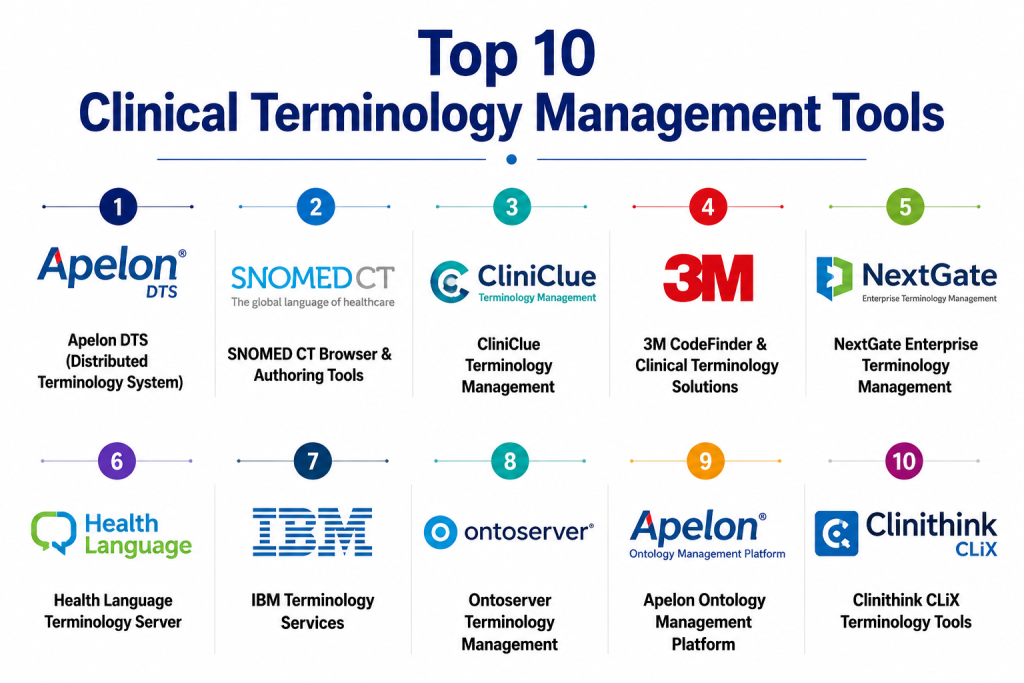
Top 10 Clinical Terminology Management Tools
#1 — Wolters Kluwer Health Language Platform
Short description: Wolters Kluwer Health Language Platform provides enterprise-grade clinical terminology management, data normalization, and interoperability services for healthcare organizations. It supports large-scale clinical coding, mapping, and governance workflows. The platform integrates deeply with EHR systems and analytics environments. It is widely used for clinical data standardization and population health analytics.
Key Features
- Clinical terminology normalization
- SNOMED, ICD, LOINC support
- Data quality governance
- Clinical code mapping tools
- API-based integration
- EHR interoperability support
- Analytics-ready data models
Pros
- Strong healthcare industry adoption
- Deep EHR integration capabilities
- High-quality data governance
- Scalable enterprise architecture
Cons
- Enterprise-focused complexity
- Requires technical onboarding
- Integration planning needed
- Higher implementation cost
Platforms / Deployment
- Web
- Cloud
Security & Compliance
- RBAC
- MFA
- Encryption
- Audit logging
Integrations & Ecosystem
Integrates with healthcare systems and data platforms.
- EHR systems
- Data warehouses
- FHIR-based APIs
- Analytics platforms
- Clinical applications
Support & Community
Strong enterprise healthcare support and implementation services.
#2 — Intelligent Medical Objects (IMO)
Short description: IMO is a widely used clinical terminology system embedded in EHR workflows to improve clinical documentation and coding accuracy. It connects clinical language with billing and administrative codes. The platform ensures consistent terminology usage across healthcare systems. It is highly adopted in hospitals and clinical environments.
Key Features
- Clinical terminology mapping
- EHR embedded workflows
- ICD and SNOMED mapping
- Clinical documentation support
- Billing code alignment
- Data normalization tools
- API integration
Pros
- Strong EHR integration
- High clinical adoption
- Improves documentation accuracy
- Reduces coding errors
Cons
- Limited standalone functionality
- EHR dependency
- Requires integration setup
- Enterprise licensing model
Platforms / Deployment
- Web
- Cloud / Embedded EHR
Security & Compliance
- RBAC
- Encryption
- Audit logs
Integrations & Ecosystem
Embedded into healthcare and EHR systems.
- Major EHR platforms
- Billing systems
- Clinical workflows
- Data analytics tools
- API services
Support & Community
Strong healthcare provider support ecosystem.
#3 — Clinical Architecture Symedical
Short description: Symedical is a terminology management platform that enables healthcare organizations to manage, map, and normalize clinical vocabularies. It supports SNOMED CT, ICD, LOINC, RxNorm, and custom code systems. The platform provides strong terminology governance and version control capabilities. It is widely used in healthcare interoperability projects.
Key Features
- Terminology mapping engine
- Value set management
- SNOMED, ICD, LOINC support
- FHIR integration
- Code system management
- Terminology version control
- Data normalization tools
Pros
- Strong interoperability support
- Flexible mapping capabilities
- Good governance features
- Supports multiple standards
Cons
- Requires technical expertise
- Integration complexity
- Enterprise-focused system
- Learning curve for users
Platforms / Deployment
- Web
- Cloud
Security & Compliance
- RBAC
- MFA
- Audit logging
Integrations & Ecosystem
Integrates with healthcare interoperability systems.
- EHR systems
- FHIR servers
- Data warehouses
- Analytics tools
- API frameworks
Support & Community
Strong enterprise healthcare IT support.
#4 — Rhapsody Semantic Manager
Short description: Rhapsody Semantic Manager provides terminology services and data interoperability capabilities for healthcare organizations. It supports semantic mapping, terminology transformation, and clinical data normalization. The platform is widely used in health information exchange networks. It ensures consistent data interpretation across systems.
Key Features
- Semantic data transformation
- Terminology mapping
- FHIR and HL7 support
- Value set management
- Data normalization engine
- Integration workflows
- Interoperability services
Pros
- Strong interoperability engine
- Good HL7/FHIR support
- Scalable architecture
- Reliable data transformation
Cons
- Requires configuration expertise
- Not beginner-friendly
- Integration-heavy setup
- Enterprise focus
Platforms / Deployment
- Web
- Cloud / On-prem
Security & Compliance
- RBAC
- Encryption
- Audit logs
Integrations & Ecosystem
Used in health information exchanges.
- HL7 systems
- FHIR APIs
- EHR platforms
- Clinical systems
- Data warehouses
Support & Community
Strong enterprise interoperability support.
#5 — Open Concept Lab (OCL)
Short description: Open Concept Lab is an open-source clinical terminology management platform designed for collaborative terminology creation and governance. It supports SNOMED CT, ICD, and custom vocabularies. The platform is widely used in global health and research initiatives. It enables open access to terminology resources and APIs.
Key Features
- Open-source terminology management
- SNOMED and ICD support
- Collaborative vocabulary editing
- API-based access
- Value set management
- Cloud terminology hosting
- Interoperability support
Pros
- Open-source flexibility
- Strong community usage
- Cost-effective solution
- Highly extensible
Cons
- Requires technical setup
- Limited enterprise support
- Not fully packaged solution
- Performance tuning required
Platforms / Deployment
- Web
- Cloud / Self-hosted
Security & Compliance
- RBAC
- API authentication
- Encryption
Integrations & Ecosystem
Integrates with research and healthcare systems.
- FHIR servers
- EHR systems
- Research platforms
- Health data systems
- APIs
Support & Community
Strong global open-source healthcare community.
#6 — SNOMED International Browser & Tools
Short description: SNOMED International provides official tools and services for managing SNOMED CT clinical terminology. It supports browsing, searching, and implementing SNOMED concepts across healthcare systems. It is the global standard for clinical terminology governance. It is widely used in EHR and interoperability projects.
Key Features
- SNOMED CT browsing tools
- Clinical concept management
- Terminology updates
- Mapping services
- Hierarchical navigation
- API access
- Standardized coding support
Pros
- Global standard authority
- High clinical accuracy
- Widely adopted
- Strong semantic structure
Cons
- Limited beyond SNOMED
- Requires integration tools
- Not full enterprise platform
- Learning curve for users
Platforms / Deployment
- Web
- Cloud
Security & Compliance
- Controlled access
- Authentication
- Audit logging
Integrations & Ecosystem
Used across healthcare ecosystems.
- EHR systems
- FHIR platforms
- Clinical applications
- Data tools
- Government health systems
Support & Community
Global healthcare terminology governance support.
#7 — Apelon DTS (Distributed Terminology System)
Short description: Apelon DTS is a clinical terminology server designed for managing and integrating multiple healthcare vocabularies. It supports SNOMED, ICD, LOINC, and custom terminologies. The platform enables semantic interoperability across healthcare systems. It is widely used in enterprise healthcare IT environments.
Key Features
- Terminology server
- Multi-code system support
- Mapping and normalization tools
- API services
- Value set management
- Version control
- Integration workflows
Pros
- Strong terminology server capabilities
- Flexible integration options
- Supports multiple standards
- Enterprise scalability
Cons
- Requires technical expertise
- Complex deployment
- UI may feel dated
- Integration effort needed
Platforms / Deployment
- Web
- Cloud / On-prem
Security & Compliance
- RBAC
- Encryption
- Audit logs
Integrations & Ecosystem
Integrates with healthcare systems.
- EHR platforms
- FHIR systems
- Data warehouses
- Clinical applications
- APIs
Support & Community
Enterprise healthcare IT support ecosystem.
#8 — Snowray Terminology Server
Short description: Snowray is a terminology management system designed for SNOMED CT and clinical data management workflows. It provides tools for concept management, mapping, and value set creation. The platform is used in healthcare interoperability projects. It helps simplify terminology management workflows.
Key Features
- SNOMED CT management
- Value set creation
- Concept mapping tools
- Terminology browsing
- API access
- Data normalization
- Interoperability support
Pros
- Strong SNOMED focus
- Easy terminology management
- Good interoperability support
- Efficient workflow design
Cons
- Limited multi-terminology scope
- Requires setup effort
- Enterprise dependency
- Not widely standardized
Platforms / Deployment
- Web
- Cloud
Security & Compliance
- RBAC
- Encryption
- Audit logs
Integrations & Ecosystem
Integrates with healthcare interoperability tools.
- EHR systems
- FHIR servers
- Clinical applications
- Data platforms
- APIs
Support & Community
Moderate healthcare IT support ecosystem.
#9 — R3 Terminology Services Platform
Short description: R3 Terminology Services provides clinical terminology management and interoperability solutions for healthcare systems. It supports mapping, standardization, and integration of multiple clinical vocabularies. The platform is used in enterprise healthcare environments. It focuses on semantic interoperability and data consistency.
Key Features
- Terminology mapping
- Clinical code standardization
- FHIR support
- Value set management
- Integration services
- Data normalization
- API access
Pros
- Strong interoperability focus
- Flexible integration
- Good FHIR support
- Scalable architecture
Cons
- Limited market visibility
- Requires technical expertise
- Enterprise focus
- Integration complexity
Platforms / Deployment
- Web
- Cloud
Security & Compliance
- RBAC
- MFA
- Encryption
Integrations & Ecosystem
Integrates with healthcare systems.
- EHR systems
- FHIR platforms
- Data warehouses
- Clinical applications
- APIs
Support & Community
Enterprise healthcare IT support.
#10 — MedCAT Terminology Annotation Platform
Short description: MedCAT is an AI-powered clinical terminology annotation tool that maps unstructured clinical text to standardized medical concepts. It supports SNOMED CT and other healthcare vocabularies. The platform is widely used in research and clinical NLP applications. It helps convert free-text medical records into structured data.
Key Features
- NLP-based concept extraction
- SNOMED CT mapping
- Clinical text annotation
- Entity recognition
- Machine learning models
- Data normalization
- API integration
Pros
- Strong AI/NLP capabilities
- Converts unstructured data effectively
- Useful for research applications
- Flexible integration
Cons
- Requires ML expertise
- Not full enterprise terminology suite
- Setup complexity
- Research-heavy usage
Platforms / Deployment
- Web
- Cloud / Self-hosted
Security & Compliance
- RBAC
- Encryption
- Audit logging
Integrations & Ecosystem
Integrates with clinical NLP and EHR systems.
- EHR platforms
- Research systems
- Data lakes
- FHIR APIs
- Analytics tools
Support & Community
Active research and developer community support.
Comparison Table
| Tool Name | Best For | Platform(s) Supported | Deployment | Standout Feature | Public Rating |
|---|---|---|---|---|---|
| Wolters Kluwer | Enterprise healthcare data | Web | Cloud | Clinical data normalization | N/A |
| IMO | EHR documentation | Web | Embedded | Clinical coding accuracy | N/A |
| Clinical Architecture | Interoperability | Web | Cloud | Terminology mapping engine | N/A |
| Rhapsody | Health data exchange | Web | Cloud / On-prem | Semantic transformation | N/A |
| Open Concept Lab | Open-source systems | Web | Cloud / Self-hosted | Collaborative terminology | N/A |
| SNOMED Intl Tools | Global standard | Web | Cloud | SNOMED CT governance | N/A |
| Apelon DTS | Terminology server | Web | Cloud / On-prem | Multi-terminology support | N/A |
| Snowray | SNOMED management | Web | Cloud | SNOMED-focused tools | N/A |
| R3 Terminology | Enterprise interoperability | Web | Cloud | FHIR-based integration | N/A |
| MedCAT | AI clinical NLP | Web | Cloud / Self-hosted | AI text-to-code mapping | N/A |
Evaluation & Scoring of Clinical Terminology Management Tools
| Tool Name | Core 25% | Ease 15% | Integrations 15% | Security 10% | Performance 10% | Support 10% | Value 15% | Weighted Total |
|---|---|---|---|---|---|---|---|---|
| Wolters Kluwer | 9 | 8 | 9 | 9 | 8 | 8 | 7 | 8.3 |
| IMO | 9 | 8 | 9 | 9 | 8 | 8 | 7 | 8.3 |
| Clinical Architecture | 9 | 7 | 9 | 9 | 8 | 8 | 7 | 8.2 |
| Rhapsody | 8 | 7 | 9 | 9 | 8 | 8 | 7 | 8.0 |
| Open Concept Lab | 8 | 8 | 8 | 8 | 7 | 8 | 9 | 8.1 |
| SNOMED Intl Tools | 9 | 7 | 8 | 9 | 8 | 9 | 7 | 8.2 |
| Apelon DTS | 8 | 7 | 9 | 9 | 8 | 8 | 7 | 8.0 |
| Snowray | 7 | 8 | 7 | 8 | 7 | 7 | 8 | 7.5 |
| R3 Terminology | 7 | 7 | 8 | 8 | 8 | 8 | 7 | 7.7 |
| MedCAT | 8 | 7 | 8 | 8 | 9 | 7 | 8 | 7.9 |
These scores reflect interoperability strength, terminology coverage, integration capability, and scalability in healthcare environments. Enterprise-grade systems perform best in governance and compliance, while AI-driven tools excel in clinical text understanding and research use cases.
Which Clinical Terminology Management Tool Is Right for You?
Solo / Researcher
Researchers and developers may prefer Open Concept Lab or MedCAT due to flexibility and open-source capabilities.
SMB Healthcare Providers
Small healthcare providers should prioritize ease of integration and usability. IMO and Snowray are practical options for structured terminology use.
Mid-Market Organizations
Mid-sized hospitals and health systems benefit from balanced interoperability and governance tools like Clinical Architecture, Rhapsody, and Apelon DTS.
Enterprise Healthcare Systems
Large hospitals, EHR vendors, and national health systems require deep governance, scalability, and compliance. Wolters Kluwer, SNOMED tools, and Rhapsody are strong choices.
Budget vs Premium
Budget tools focus on open-source flexibility and basic mapping, while premium platforms provide enterprise-grade governance, compliance, and interoperability.
Feature Depth vs Ease of Use
Advanced systems provide powerful terminology mapping but require technical expertise. Simpler tools prioritize usability and quick adoption.
Integrations & Scalability
Ensure compatibility with FHIR, HL7, EHR systems, and clinical data platforms for full interoperability across healthcare environments.
Security & Compliance Needs
Healthcare buyers must ensure RBAC, MFA, encryption, audit logging, and regulatory compliance alignment.
Frequently Asked Questions
1- What is a clinical terminology management tool?
It is a system that manages standardized medical vocabularies like SNOMED CT, ICD, and LOINC to ensure consistent clinical data representation across healthcare systems.
2- Why are these tools important in healthcare?
They ensure interoperability, reduce coding errors, improve clinical decision-making, and support regulatory reporting.
3- What standards do they support?
Most tools support SNOMED CT, ICD-10/11, LOINC, RxNorm, and FHIR-based terminologies.
4- Do they integrate with EHR systems?
Yes, they are widely integrated with EHR, EMR, and clinical information systems.
5- What is a terminology server?
A terminology server is a backend system that stores, manages, and provides access to clinical terminologies and mappings.
6- Are these tools cloud-based?
Many modern systems are cloud-native, while some also support on-premise deployment for security-sensitive environments.
7- What is semantic interoperability?
It is the ability of different systems to understand and exchange clinical data using standardized meanings and codes.
8- Can AI be used in terminology management?
Yes, AI is increasingly used for mapping clinical text to standardized codes and improving data normalization.
9- Who uses these tools?
Hospitals, EHR vendors, research institutions, healthcare analytics teams, and life sciences companies use them.
10- What is the biggest implementation challenge?
The biggest challenge is integrating multiple terminology systems and aligning them with clinical workflows.
Conclusion
Clinical Terminology Management Tools are foundational to modern healthcare interoperability, enabling consistent, standardized, and structured clinical data across systems. They support everything from EHR documentation to AI-driven clinical analytics and regulatory reporting. Enterprise platforms provide deep governance and integration capabilities, while open-source and AI-driven tools enable flexibility and innovation. The best solution depends on organizational scale, regulatory requirements, and interoperability needs. A practical approach is to evaluate integration requirements, test terminology mapping accuracy, and validate FHIR compatibility before full deployment.

Very informative and well-structured blog on clinical terminology management tools. The comparison of features, pros, and cons is clear and practical, making complex healthcare terminology solutions easier to understand.
A well-structured and informative article that clearly explains how clinical terminology management tools help maintain accurate healthcare data and improve interoperability across systems.