Introduction
Insurance Claims Management Systems are software platforms designed to manage the entire lifecycle of insurance claims—from the first notice of loss to final settlement. These systems help insurers capture claim data, automate workflows, validate information, detect fraud, and process payments efficiently.
In simple terms, they ensure that claims move smoothly through the system without delays, errors, or manual bottlenecks. Modern claims systems are essential because insurers must handle high claim volumes, meet compliance requirements, and deliver fast customer service.
Common use cases include:
- Processing claims from submission to settlement
- Automating claim assignment and workflows
- Detecting fraud and anomalies
- Managing documents and evidence
- Providing real-time claim tracking
Key evaluation criteria:
- Automation and workflow capabilities
- Claims processing speed and accuracy
- Integration with policy, billing, and CRM systems
- Fraud detection and analytics
- Scalability and performance
- Security and compliance
- Ease of use for adjusters
- Customer self-service features
Claims management systems improve efficiency, reduce errors, and enhance customer satisfaction by streamlining the claims process and enabling automation.
Best for: Insurance carriers, TPAs, brokers, and enterprises handling high claim volumes.
Not ideal for: Small businesses or agencies with very low claim volumes and simple workflows.
Key Trends in Insurance Claims Management Systems
- AI-driven fraud detection and claim validation
- Automation of claim intake, triage, and settlement
- Cloud-native claims platforms replacing legacy systems
- Real-time dashboards and analytics
- API-first integration with policy and billing systems
- Omnichannel claims submission including mobile and portals
- Straight-through processing for simple claims
- Embedded payments and digital payouts
- Advanced document processing and OCR
- Customer self-service portals improving experience
How We Selected These Tools
- Strong adoption across insurance companies
- Full claims lifecycle coverage
- Proven performance and reliability
- Modern architecture and cloud readiness
- Security and compliance capabilities
- Integration ecosystem and API support
- AI and automation features
- Flexibility across insurance lines
- Vendor reputation and innovation
- Usability for claims teams
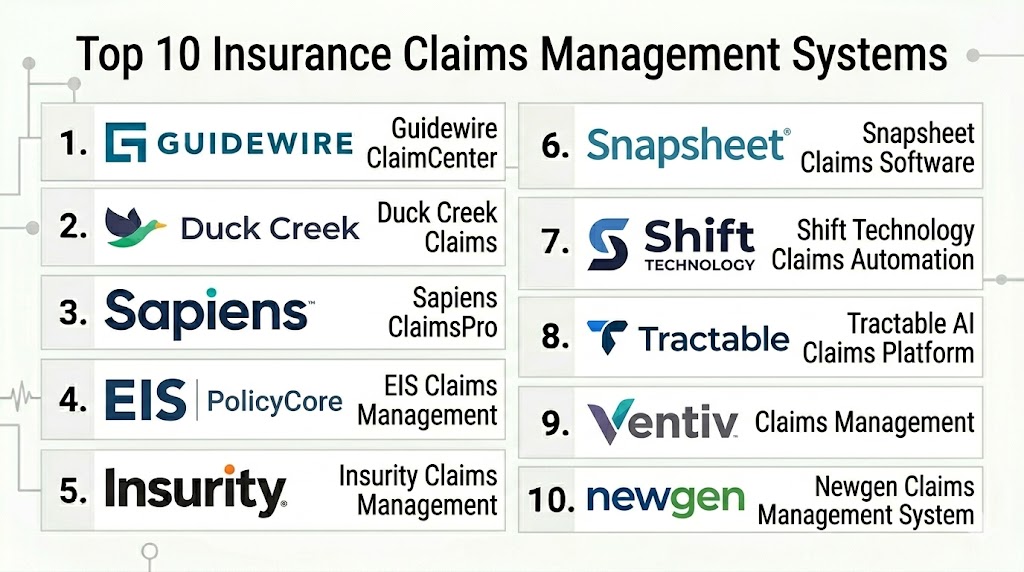
Top 10 Insurance Claims Management Systems Tools
#1 — Guidewire ClaimCenter
Short description:
An industry-leading enterprise claims platform designed for property and casualty insurers. It supports the full claims lifecycle and enables automation, analytics, and efficient claims handling. Widely adopted by large insurers, it offers strong scalability and reliability.
Key Features
- End-to-end claims lifecycle management
- Rules-based claim assignment
- Fraud detection and analytics
- Workflow automation
- Payment and settlement management
- Reporting and dashboards
Pros
- Enterprise-grade scalability
- Strong industry adoption
- Deep functionality
- Reliable performance
Cons
- Complex implementation
- High cost
- Requires skilled teams
- Long deployment timelines
Platforms / Deployment
Cloud / Hybrid
Security & Compliance
SSO, RBAC, encryption, audit logs. Compliance not publicly stated.
Integrations & Ecosystem
Strong ecosystem and integration capabilities.
- Policy systems
- Billing platforms
- CRM tools
- Data analytics systems
Support & Community
Extensive enterprise support and partner network.
#2 — Duck Creek Claims
Short description:
A cloud-based claims platform designed to automate and accelerate claims processing. It supports intelligent workflows and real-time visibility across the claims lifecycle.
Key Features
- Automated claims workflows
- AI-driven decision support
- Real-time analytics
- Integrated payments
- Omnichannel communication
Pros
- Modern cloud architecture
- Faster claims processing
- Strong automation
- Good integration support
Cons
- Customization complexity
- Pricing not transparent
- Requires configuration
- Learning curve
Platforms / Deployment
Cloud
Security & Compliance
Encryption, RBAC, MFA. Compliance not publicly stated.
Integrations & Ecosystem
API-driven integration capabilities.
- Policy systems
- Billing platforms
- CRM tools
- External partners
Support & Community
Reliable enterprise support.
#3 — Sapiens ClaimsPro
Short description:
A comprehensive claims management solution designed for life, health, and property insurers. It provides flexibility and supports digital transformation initiatives.
Key Features
- Multi-line claims support
- Workflow automation
- Fraud detection tools
- Reporting and analytics
- Customer portals
Pros
- Flexible platform
- Strong digital capabilities
- Scalable
- Good analytics
Cons
- Implementation effort
- Cost considerations
- Learning curve
- Customization complexity
Platforms / Deployment
Cloud / Hybrid
Security & Compliance
Encryption, RBAC. Compliance not publicly stated.
Integrations & Ecosystem
Supports enterprise integrations.
- CRM systems
- Data platforms
- Policy systems
- Financial tools
Support & Community
Enterprise support with global presence.
#4 — Insurity Claims Management
Short description:
A cloud-based claims platform focused on property and casualty insurers. It offers automation and flexibility for faster claims processing.
Key Features
- Claims automation
- Workflow management
- Reporting tools
- Integration capabilities
- Fraud detection
Pros
- Fast implementation
- Industry specialization
- Flexible workflows
- Cloud-ready
Cons
- Limited outside P and C
- Customization limits
- Integration effort
- Pricing not clear
Platforms / Deployment
Cloud
Security & Compliance
Encryption, RBAC. Compliance not publicly stated.
Integrations & Ecosystem
API-based integration support.
- Billing systems
- CRM tools
- Data platforms
- External services
Support & Community
Strong industry-focused support.
#5 — EIS Claims Management
Short description:
A digital-first claims platform designed for modern insurers. It focuses on API-driven architecture and real-time processing.
Key Features
- API-first design
- Real-time processing
- Workflow automation
- Customer experience tools
- Analytics
Pros
- Modern architecture
- Strong integrations
- Scalable
- Flexible
Cons
- Implementation complexity
- Cost considerations
- Requires expertise
- Limited SMB fit
Platforms / Deployment
Cloud
Security & Compliance
Encryption, RBAC. Compliance not publicly stated.
Integrations & Ecosystem
Strong API ecosystem.
- CRM tools
- Data platforms
- Policy systems
- External integrations
Support & Community
Enterprise-level support.
#6 — Riskonnect Claims Management
Short description:
A platform focused on risk and claims management, providing analytics and workflow automation for insurers and enterprises.
Key Features
- Claims tracking and reporting
- Workflow automation
- Risk analytics
- Data management
- Compliance support
Pros
- Strong analytics
- Good reporting
- Flexible workflows
- Scalable
Cons
- UI complexity
- Learning curve
- Customization effort
- Pricing not transparent
Platforms / Deployment
Cloud
Security & Compliance
Encryption, RBAC. Compliance not publicly stated.
Integrations & Ecosystem
Integrates with enterprise systems.
- ERP systems
- CRM platforms
- Data tools
- External services
Support & Community
Enterprise support available.
#7 — Verisk ClaimXperience
Short description:
A collaborative claims platform focused on improving customer experience and claims efficiency. It enables digital communication between adjusters and policyholders.
Key Features
- Collaborative claims processing
- Customer engagement tools
- Fraud detection
- Analytics
- Digital workflows
Pros
- Improved customer experience
- Strong collaboration features
- Efficient processing
- Analytics support
Cons
- Limited enterprise features
- Integration effort
- Customization limits
- Pricing not clear
Platforms / Deployment
Cloud
Security & Compliance
Encryption, RBAC. Compliance not publicly stated.
Integrations & Ecosystem
Supports integrations with claims systems.
- Policy systems
- CRM tools
- Data platforms
- External services
Support & Community
Vendor support available.
#8 — Snapsheet
Short description:
A cloud-based claims management platform focused on digital claims processing and automation. It is widely used for property and auto insurance claims.
Key Features
- Digital claims processing
- Automation tools
- Customer communication
- Analytics
- Mobile support
Pros
- Easy to use
- Strong automation
- Good customer experience
- Fast processing
Cons
- Limited enterprise features
- Customization constraints
- Integration effort
- Pricing not transparent
Platforms / Deployment
Cloud
Security & Compliance
Encryption, RBAC. Compliance not publicly stated.
Integrations & Ecosystem
Supports API integrations.
- CRM tools
- Data systems
- Claims platforms
- External services
Support & Community
Good vendor support.
#9 — Shift Technology
Short description:
An AI-driven claims platform focused on fraud detection and automation. It enhances decision-making and reduces fraudulent claims.
Key Features
- AI fraud detection
- Claims automation
- Analytics tools
- Decision support
- Workflow automation
Pros
- Strong AI capabilities
- Fraud detection accuracy
- Scalable
- Modern platform
Cons
- Requires integration with core systems
- Limited standalone functionality
- Cost considerations
- Learning curve
Platforms / Deployment
Cloud
Security & Compliance
Encryption, RBAC. Compliance not publicly stated.
Integrations & Ecosystem
Works with existing claims systems.
- Policy platforms
- Data systems
- Fraud tools
- APIs
Support & Community
Enterprise-level support.
#10 — Newgen Claims Management
Short description:
A comprehensive platform that automates the entire claims lifecycle. It offers workflow automation, document management, and analytics for improved efficiency.
Key Features
- End-to-end claims automation
- Document management
- Workflow engine
- Analytics
- Omnichannel support
Pros
- Strong automation
- Flexible workflows
- Good analytics
- Scalable
Cons
- Implementation effort
- Customization complexity
- Learning curve
- Pricing not transparent
Platforms / Deployment
Cloud / Hybrid
Security & Compliance
Encryption, RBAC. Compliance not publicly stated.
Integrations & Ecosystem
Supports integration with enterprise systems.
- CRM tools
- Billing systems
- Data platforms
- APIs
Support & Community
Reliable vendor support.
Comparison Table
| Tool Name | Best For | Platforms | Deployment | Standout Feature | Public Rating |
|---|---|---|---|---|---|
| Guidewire ClaimCenter | Enterprise insurers | Web | Cloud Hybrid | Full lifecycle automation | N/A |
| Duck Creek Claims | Modern insurers | Web | Cloud | AI-driven workflows | N/A |
| Sapiens ClaimsPro | Multi-line insurers | Web | Cloud Hybrid | Digital flexibility | N/A |
| Insurity | P and C insurers | Web | Cloud | Fast deployment | N/A |
| EIS | Digital insurers | Web | Cloud | API-first design | N/A |
| Riskonnect | Risk and claims | Web | Cloud | Analytics focus | N/A |
| Verisk | Customer experience | Web | Cloud | Collaboration tools | N/A |
| Snapsheet | Auto and property | Web | Cloud | Digital claims | N/A |
| Shift Technology | Fraud detection | Web | Cloud | AI fraud detection | N/A |
| Newgen | Automation | Web | Cloud Hybrid | Workflow automation | N/A |
Evaluation and Scoring
| Tool Name | Core | Ease | Integrations | Security | Performance | Support | Value | Weighted Total |
|---|---|---|---|---|---|---|---|---|
| Guidewire | 9 | 6 | 9 | 8 | 9 | 9 | 6 | 8.2 |
| Duck Creek | 8 | 7 | 8 | 8 | 8 | 8 | 7 | 7.8 |
| Sapiens | 8 | 7 | 8 | 8 | 8 | 8 | 7 | 7.8 |
| Insurity | 7 | 8 | 7 | 7 | 7 | 7 | 8 | 7.4 |
| EIS | 8 | 7 | 9 | 8 | 8 | 8 | 7 | 7.9 |
| Riskonnect | 7 | 7 | 7 | 7 | 7 | 7 | 7 | 7.0 |
| Verisk | 7 | 8 | 7 | 7 | 7 | 7 | 7 | 7.1 |
| Snapsheet | 7 | 8 | 6 | 7 | 7 | 7 | 8 | 7.2 |
| Shift | 8 | 6 | 8 | 8 | 8 | 8 | 7 | 7.7 |
| Newgen | 8 | 7 | 8 | 8 | 8 | 8 | 7 | 7.8 |
Scores are comparative and help evaluate strengths across platforms. Higher scores indicate stronger capabilities, but the best choice depends on specific needs.
Which Insurance Claims Management System Is Right for You
Solo / Freelancer
Not required in most cases. Basic tools are sufficient.
SMB
Snapsheet and Insurity offer ease of use and faster deployment.
Mid-Market
Duck Creek, Sapiens, and Newgen provide a balance of features and scalability.
Enterprise
Guidewire, Oracle, and EIS are best suited for complex operations.
Budget vs Premium
Budget tools offer simplicity, while premium tools provide advanced capabilities.
Feature Depth vs Ease of Use
Enterprise tools offer deeper features, while smaller tools are easier to use.
Integrations and Scalability
Enterprise tools provide better integration and scalability.
Security and Compliance Needs
Larger platforms offer stronger security frameworks.
Frequently Asked Questions
1. What is an insurance claims management system
It is a software platform that manages the entire claims lifecycle from submission to settlement.
It helps insurers organize data, automate workflows, and track claim progress.
It also ensures faster processing and better customer experience.
2. How does claims management software work
It captures claim data, validates information, assigns tasks, and tracks progress through workflows.
Automation helps reduce manual effort and errors.
The system also provides reporting and analytics for decision-making.
3. What are the key features of claims systems
Core features include claims intake, document management, workflow automation, analytics, and fraud detection.
Some systems also include customer portals and real-time dashboards.
These features help streamline the entire claims process.
4. Why is automation important in claims management
Automation reduces manual work, speeds up processing, and improves accuracy.
It also helps detect fraud and ensures compliance with regulations.
This leads to cost savings and better operational efficiency.
5. Are claims systems secure
Most platforms include encryption, access control, and audit logs.
Some also support advanced features like multi-factor authentication.
Security capabilities vary by vendor and should be validated.
6. Can these systems detect fraud
Yes, many systems use AI and analytics to identify suspicious patterns.
They flag potential fraud cases for further investigation.
This helps insurers reduce losses and improve accuracy.
7. How long does implementation take
Implementation time depends on system complexity and customization needs.
Smaller systems can be deployed faster, while enterprise systems take longer.
A phased approach is often recommended.
8. Do these systems support integrations
Yes, most systems integrate with policy, billing, CRM, and analytics platforms.
API support is important for seamless data flow.
Strong integrations improve efficiency.
9. Can small insurers use these systems
Yes, but they should choose platforms designed for smaller operations.
Enterprise systems may be too complex and costly.
Cloud-based tools are usually better for SMBs.
10. What are alternatives to claims systems
Alternatives include workflow tools, CRM platforms, or custom-built solutions.
However, these lack full claims lifecycle capabilities.
Dedicated systems provide better efficiency and control.
Conclusion
Insurance Claims Management Systems are essential for insurers aiming to improve efficiency, reduce costs, and deliver better customer experiences. These platforms streamline the entire claims lifecycle, automate workflows, and provide powerful analytics for decision-making. From enterprise solutions like Guidewire ClaimCenter and Duck Creek to modern AI-driven platforms like Shift Technology and Newgen, the market offers a wide range of options. The right choice depends on your organization’s size, complexity, and integration needs. Instead of focusing only on features, insurers should evaluate scalability, automation capabilities, and long-term value. A practical approach is to shortlist a few tools, run pilot tests, and validate integrations before final selection.

This article offers a clear comparison of insurance claims management systems and their core capabilities, making it easier to understand the strengths of different platforms and select the most suitable option.