Introduction
Resource Management Tools are platforms that help organizations plan, allocate, track, and optimize resources such as people, time, budgets, and equipment across projects. These tools ensure that resources are used efficiently, workloads are balanced, and projects stay on schedule and within budget.
In modern project environments, managing multiple teams and projects simultaneously requires clear visibility into resource availability and utilization. Resource management tools provide dashboards, forecasting, and scheduling capabilities that enable teams to maximize productivity and avoid bottlenecks.
Real-world use cases:
- Allocating team members across multiple projects
- Managing workloads and avoiding resource burnout
- Forecasting resource demand and availability
- Tracking billable hours and utilization rates
- Planning budgets and project timelines
What buyers should evaluate:
- Resource allocation and capacity planning
- Workload balancing and scheduling
- Forecasting and analytics
- Integration with project management and ERP tools
- Time tracking and reporting
- Scalability for multiple teams and projects
- Automation and alerts
- Ease of use and onboarding
- Security and access control
- Vendor support and ecosystem
Best for: Project managers, PMOs, operations teams, agencies, and enterprises managing multiple projects and shared resources.
Not ideal for: Small teams with simple workflows or single-project environments where spreadsheets may be sufficient.
Key Trends in Resource Management Tools
- AI-driven resource forecasting and capacity planning
- Real-time dashboards for utilization tracking
- Integration with project management, ERP, and HR systems
- Hybrid project management (Agile + Waterfall + resource planning)
- Automated workload balancing
- Cloud-based and hybrid deployment models
- Predictive analytics for risk and bottlenecks
- API-first platforms for extensibility
- Financial tracking tied to resource usage
- Collaboration features for distributed teams
How We Selected These Tools (Methodology)
- Market adoption and popularity
- Feature completeness for resource planning and allocation
- Performance and reliability at scale
- Security and compliance capabilities
- Integration ecosystem strength
- Suitability across team sizes and industries
- Reporting and analytics features
- Ease of use and onboarding
- Vendor support and documentation quality
- Overall value and scalability
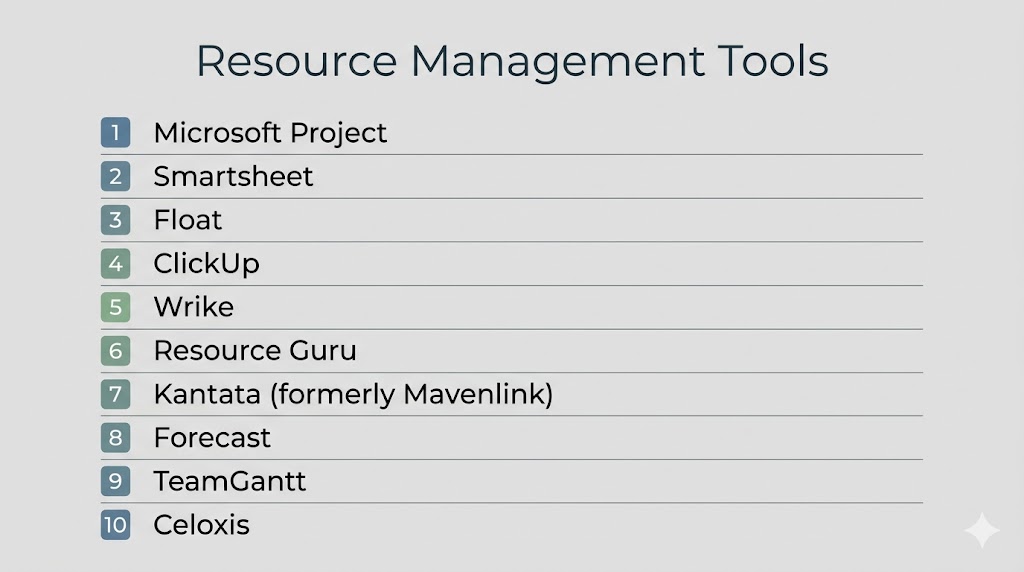
Top 10 Resource Management Tools
#1 — Microsoft Project
Short description: Enterprise-grade project and resource management platform with strong planning and forecasting capabilities.
Key Features
- Resource allocation and forecasting
- Gantt charts and scheduling
- Workload management dashboards
- Budget tracking
- Reporting and analytics
- Portfolio-level visibility
Pros
- Industry-standard tool
- Strong enterprise features
Cons
- Steep learning curve
- Higher pricing
Platforms / Deployment
Web / Windows
Cloud / Self-hosted
Security & Compliance
SSO, RBAC, audit logs
Compliance: Not publicly stated
Integrations & Ecosystem
- Microsoft 365
- Power BI
- Teams
Support & Community
Extensive documentation and global community.
#2 — Smartsheet
Short description: Spreadsheet-style platform with strong resource tracking and collaboration features.
Key Features
- Resource allocation
- Gantt charts
- Workflow automation
- Reporting dashboards
- Collaboration tools
Pros
- Easy to use
- Flexible interface
Cons
- Limited advanced analytics
- Pricing scales with usage
Platforms / Deployment
Web / Windows / macOS
Cloud
Security & Compliance
Encryption, RBAC
Compliance: Not publicly stated
Integrations & Ecosystem
- Microsoft 365
- Google Workspace
- CRM tools
Support & Community
Strong support and documentation.
#3 — Float
Short description: Dedicated resource scheduling tool focused on team capacity and planning.
Key Features
- Resource scheduling
- Capacity planning
- Time tracking
- Reporting
- Forecasting
Pros
- Clean interface
- Strong scheduling features
Cons
- Limited project management features
- Smaller ecosystem
Platforms / Deployment
Web
Cloud
Security & Compliance
Encryption
Compliance: Not publicly stated
Integrations & Ecosystem
- Project tools
- Time tracking tools
Support & Community
Good documentation and support.
#4 — ClickUp
Short description: All-in-one platform with resource management, task tracking, and automation.
Key Features
- Resource allocation
- Task management
- Automation
- Time tracking
- Reporting dashboards
Pros
- Feature-rich
- Highly customizable
Cons
- Complex interface
- Performance can vary
Platforms / Deployment
Web / Desktop / Mobile
Cloud
Security & Compliance
Encryption
Compliance: Not publicly stated
Integrations & Ecosystem
- Slack
- Google Workspace
- Dev tools
Support & Community
Active community and support.
#5 — Wrike
Short description: Work management tool with advanced resource tracking and reporting.
Key Features
- Resource management dashboards
- Task tracking
- Workflow automation
- Reporting and analytics
- Collaboration tools
Pros
- Strong reporting
- Scalable
Cons
- Complex UI
- Pricing tiers
Platforms / Deployment
Web / Desktop / Mobile
Cloud
Security & Compliance
SSO, encryption
Compliance: Not publicly stated
Integrations & Ecosystem
- CRM tools
- Enterprise apps
Support & Community
Enterprise support and documentation.
#6 — Resource Guru
Short description: Simple resource scheduling tool for teams needing clear capacity visibility.
Key Features
- Resource scheduling
- Availability tracking
- Booking system
- Reporting
- Calendar view
Pros
- Easy to use
- Focused functionality
Cons
- Limited advanced features
- Basic analytics
Platforms / Deployment
Web
Cloud
Security & Compliance
Encryption
Compliance: Not publicly stated
Integrations & Ecosystem
- Calendar tools
- Project tools
Support & Community
Responsive support.
#7 — Kantata (formerly Mavenlink)
Short description: Resource and project management platform for professional services teams.
Key Features
- Resource planning
- Financial tracking
- Project management
- Reporting
- Forecasting
Pros
- Strong financial visibility
- Good for agencies
Cons
- Complex setup
- Learning curve
Platforms / Deployment
Web
Cloud
Security & Compliance
Encryption, RBAC
Compliance: Not publicly stated
Integrations & Ecosystem
- CRM tools
- ERP systems
Support & Community
Enterprise support.
#8 — Forecast
Short description: AI-powered resource management platform with predictive planning.
Key Features
- AI-based forecasting
- Resource allocation
- Time tracking
- Reporting
- Automation
Pros
- Strong AI features
- Good forecasting
Cons
- Requires setup
- Pricing varies
Platforms / Deployment
Web
Cloud
Security & Compliance
Encryption
Compliance: Not publicly stated
Integrations & Ecosystem
- Project tools
- Collaboration tools
Support & Community
Good onboarding support.
#9 — TeamGantt
Short description: Gantt-based project tool with resource planning capabilities.
Key Features
- Resource scheduling
- Gantt charts
- Task dependencies
- Collaboration
- Reporting
Pros
- Easy visualization
- Simple to use
Cons
- Limited advanced features
- Smaller ecosystem
Platforms / Deployment
Web
Cloud
Security & Compliance
Encryption
Compliance: Not publicly stated
Integrations & Ecosystem
- Project tools
Support & Community
Documentation and support.
#10 — Celoxis
Short description: Enterprise-level PPM and resource management platform with strong analytics.
Key Features
- Resource allocation
- Financial tracking
- Portfolio management
- Risk analysis
- Reporting dashboards
Pros
- Strong enterprise capabilities
- Detailed analytics
Cons
- Learning curve
- Smaller ecosystem
Platforms / Deployment
Web
Cloud / Self-hosted
Security & Compliance
Encryption, RBAC
Compliance: Not publicly stated
Integrations & Ecosystem
- ERP systems
- CRM tools
Support & Community
Enterprise support and documentation.
Comparison Table (Top 10)
| Tool Name | Best For | Platform(s) Supported | Deployment | Standout Feature | Public Rating |
|---|---|---|---|---|---|
| Microsoft Project | Enterprise planning | Windows/Web | Hybrid | Resource forecasting | N/A |
| Smartsheet | Flexible teams | Multi-platform | Cloud | Spreadsheet UI | N/A |
| Float | Scheduling | Web | Cloud | Capacity planning | N/A |
| ClickUp | All-in-one | Multi-platform | Cloud | Custom workflows | N/A |
| Wrike | Reporting | Multi-platform | Cloud | Analytics | N/A |
| Resource Guru | Simple scheduling | Web | Cloud | Ease of use | N/A |
| Kantata | Agencies | Web | Cloud | Financial tracking | N/A |
| Forecast | AI planning | Web | Cloud | AI forecasting | N/A |
| TeamGantt | Visual planning | Web | Cloud | Gantt charts | N/A |
| Celoxis | Enterprise | Web | Hybrid | Portfolio analytics | N/A |
Evaluation & Scoring of Resource Management Tools
| Tool Name | Core | Ease | Integrations | Security | Performance | Support | Value | Weighted Total |
|---|---|---|---|---|---|---|---|---|
| MS Project | 9 | 6 | 9 | 8 | 9 | 8 | 6 | 8.0 |
| Smartsheet | 8 | 8 | 8 | 8 | 8 | 8 | 7 | 8.0 |
| Float | 7 | 9 | 6 | 7 | 8 | 7 | 8 | 7.7 |
| ClickUp | 8 | 7 | 9 | 8 | 7 | 8 | 8 | 8.0 |
| Wrike | 8 | 7 | 8 | 8 | 8 | 8 | 7 | 7.9 |
| Resource Guru | 7 | 9 | 6 | 7 | 7 | 7 | 9 | 7.8 |
| Kantata | 8 | 6 | 8 | 8 | 8 | 7 | 7 | 7.8 |
| Forecast | 8 | 7 | 8 | 8 | 8 | 7 | 7 | 7.9 |
| TeamGantt | 7 | 9 | 6 | 7 | 7 | 7 | 8 | 7.7 |
| Celoxis | 8 | 6 | 7 | 8 | 8 | 7 | 8 | 7.8 |
Scores are comparative and highlight differences in usability, features, and scalability.
Which Resource Management Tool Is Right for You?
Solo / Freelancer
- Best: Resource Guru, Float
SMB
- Best: Smartsheet, TeamGantt
Mid-Market
- Best: ClickUp, Wrike
Enterprise
- Best: Microsoft Project, Celoxis, Kantata
Budget vs Premium
- Budget: Resource Guru
- Premium: Microsoft Project
Feature Depth vs Ease of Use
- Deep features: Microsoft Project, Celoxis
- Easy tools: Float, Resource Guru
Integrations & Scalability
- Best integrations: ClickUp, Microsoft Project
Security & Compliance Needs
- High: Enterprise tools
Frequently Asked Questions (FAQs)
What is resource management software?
It is software that helps plan, allocate, and monitor resources like people, time, and budget across projects.
Why is resource management important?
It ensures efficient use of resources, prevents overload, and improves project success rates.
What features should I look for?
Look for scheduling, capacity planning, reporting, integrations, and automation.
Can resource management tools integrate with other systems?
Yes, most integrate with CRM, ERP, HR, and project management tools.
Do these tools support forecasting?
Yes, many tools provide predictive analytics and forecasting capabilities.
Are resource management tools cloud-based?
Most modern tools are cloud-based, with some offering hybrid or on-premise options.
Can these tools handle multiple projects?
Yes, they are designed to manage resources across multiple projects simultaneously.
Do resource tools include time tracking?
Many tools include built-in time tracking and reporting features.
Are these tools suitable for small teams?
Yes, but simpler tools or spreadsheets may be sufficient for smaller teams.
What is the main benefit of resource management tools?
They improve efficiency by optimizing how resources are allocated and utilized across projects.
Conclusion
Resource Management Tools are essential for organizations looking to optimize productivity, balance workloads, and ensure efficient use of resources across projects. From enterprise-grade platforms like Microsoft Project and Celoxis to lightweight tools like Float and Resource Guru, there are solutions for every team size and complexity. The right tool depends on your workflow needs, scalability requirements, and integration ecosystem. Start by shortlisting a few tools, test them in real scenarios, and choose the one that aligns best with your operational and strategic goals.
