Introduction
Travel and local mobility across Europe are changing quickly. Traditional rental agencies at major airports still serve millions of passengers every year, yet many riders, drivers, and independent businesses now look for more flexible options. Travelers often want specific motorcycles or scooters that large corporate chains do not stock, while local residents may only need a vehicle for a single weekend. At the same time, private vehicle owners and small independent operators are seeking practical ways to connect with renters without relying on complicated middlemen.
Digital marketplaces are stepping in to bridge this gap. By bringing together vehicle discovery, direct owner-to-renter connections, and operational tools under one roof, modern platforms offer an alternative way to approach mobility. MotoShare Europe, accessible at motosharego.eu, positions itself within this space as an online marketplace focused on connecting travelers, motorcycle enthusiasts, private vehicle owners, and independent rental shops across Europe. Whether someone is researching options for a motorcycle rental Europe adventure or looking for software to organize a small fleet, understanding how these platforms operate helps both sides make informed decisions.
How an Online Vehicle Rental Marketplace Works
An online vehicle rental marketplace operates differently from a conventional rental counter. Instead of owning a massive corporate fleet and operating out of standardized airport booths, a marketplace serves as a digital meeting point. It connects people who need temporary transportation with participating local providers, independent rental shops, and private owners who have vehicles available.
For a renter, the discovery process typically follows a straightforward path:
- Searching by destination and category: Users start by browsing available listings based on where they plan to travel and the type of vehicle they need, such as motorcycles, scooters, bicycles, or cars.
- Comparing available options: Rather than seeing a generic “compact car or similar” label, marketplace listings generally showcase specific makes, models, and local providers so renters know what they are requesting.
- Reviewing vehicle details and pricing: Each listing outlines daily or multi-day rates, basic specifications, and any conditions set by the provider.
- Selecting rental periods: Renters choose their preferred start and end dates to check whether a specific vehicle fits their travel schedule.
- Requesting a booking: Users submit a reservation request or contact the participating provider to confirm availability and finalize details.
- Arranging collection and return: Because vehicles come from local shops or individual owners rather than a single central terminal, pickup and drop-off locations are arranged directly according to the listing’s terms.
This peer-to-peer and independent-provider model offers distinct advantages, such as transparent pricing and direct communication. However, it also comes with natural differences compared to large international chains. Because a marketplace relies on participating local operators and individual hosts, vehicle availability depends heavily on who has listed a bike, scooter, or car in a given area. While MotoShare Europe is built with a broad European focus, travelers should always check current listings for their specific destination rather than assuming every city or vehicle category has immediate inventory.
Why Two-Wheeled Travel Appeals to European Explorers
Europe offers some of the most varied and rewarding road networks in the world. From coastal highways along the Mediterranean to winding mountain passes in the Alps and compact historic city centers, two-wheeled transport often solves problems that four-wheeled vehicles create. For many visitors and residents, choosing a motorcycle or scooter turns transit into a core part of the journey.
Independent exploration is one of the biggest draws. Trains and regional buses connect major hubs efficiently, yet they rarely reach remote villages, scenic overlooks, or quiet rural valleys on a traveler’s own schedule. Renting a motorcycle allows riders to adjust their routes spontaneously, stop wherever the scenery catches their eye, and carry on without waiting for a timetable.
In busy urban areas, scooters and light motorcycles offer practical everyday convenience. Navigating narrow streets, managing city traffic, and finding legal parking spaces are often much simpler on two wheels than in a full-sized car. For a weekend getaway or a short business trip, a nimble commuter bike or scooter saves both time and fuel.
Of course, the suitability of a motorcycle rental Europe trip depends on several practical factors. Local inventory varies by season and region, and riders must match the bike to their personal experience level. Weather conditions, mountain road gradients, licensing categories, and insurance requirements all play a role in deciding whether a two-wheeled rental is the right fit for a particular itinerary.
Connecting Vehicle Owners and Riders Directly
At the heart of modern vehicle sharing is a simple idea: many privately owned motorcycles and scooters spend most of the year parked in garages, while enthusiasts and travelers actively look for those exact models to ride. A peer-to-peer marketplace creates a structured way for owners and riders to connect directly.
When the model works well, both parties benefit from transparency and clear expectations. For someone exploring peer to peer motorcycle rental Europe opportunities, the quality of the listing makes all the difference. A reliable peer-to-peer experience rests on a few essential pillars:
- Accurate vehicle descriptions: Owners should clearly state the model year, engine displacement, transmission type, mileage, and any notable accessories like luggage racks or phone mounts.
- Clear, recent photographs: Multiple photos showing the bike from different angles, including tires, controls, and existing cosmetic marks, help renters know exactly what to expect before arriving.
- Transparent rental terms: Stating daily distance allowances, fuel policies, security deposit expectations, and late-return rules upfront prevents misunderstandings later.
- Updated availability calendars: Keeping blocked dates accurate ensures that riders do not waste time requesting a motorcycle that is already booked or undergoing maintenance.
- Practical handover arrangements: Agreeing on a safe, convenient meeting point—whether at an owner’s residence, a local shop, or a transit hub—sets a smooth tone for the rental.
- Direct communication: Messaging before the pickup date allows the owner and renter to confirm helmet sizes, verify riding experience, and coordinate arrival times.
Direct communication builds trust on both sides. Riders get advice from someone who actually knows the motorcycle’s handling and quirks, while owners gain peace of mind by interacting with the person who will be riding their machine.
Supporting Independent Rental Businesses with Digital Tools
Beyond individual owners, Europe’s vehicle rental landscape relies heavily on thousands of small, independent rental shops. A family-run scooter shop in a coastal town or a boutique motorcycle tour operator in a mountain region often delivers far better local service than a global franchise. Yet behind the scenes, many small operators still rely on paper notebooks, whiteboards, or disconnected spreadsheets to run their daily operations.
Manual tracking creates real operational headaches as soon as a business grows beyond a handful of vehicles. Double bookings happen when two staff members write down overlapping dates. Vehicles miss routine oil changes or tire inspections because maintenance logs sit in a separate folder. At the end of the month, calculating total revenue, tracking pending deposits, and organizing customer contact details can consume hours that owners would rather spend maintaining their fleet or helping customers.
To address these challenges, MotoShare Europe promotes a free vehicle rental management software offering alongside its marketplace. According to the platform’s published descriptions, this software is intended to help independent rental businesses and fleet operators organize their core workflows in one place. Advertised capabilities include vehicle listing management, reservation and booking tracking, customer records, fleet availability monitoring, payment-related tracking, revenue summaries, and basic operational reporting.
When evaluating any software platform, small business owners should carefully distinguish between advertised features and verified daily performance. While MotoShare Europe outlines these management tools as part of its ecosystem for rental partners, prospective operators should test the interface directly and confirm which specific modules are currently active and suited to their workflow before migrating their entire business onto a new system.
Choosing the Right Software for Different Rental Operations
Not every rental business operates the same way. A shop renting out 40 city bicycles by the hour faces completely different logistical pressures than an agency leasing 10 touring motorcycles by the week or a local operator managing a dozen compact cars. Understanding what each vehicle category demands helps operators pick digital tools that fit their real-world pace.
- Small car rental operators: Businesses managing passenger cars need clear visibility into multi-day reservations, fuel levels, damage check-in sheets, and customer driving license records. For startups or independent lots watching their overhead, evaluating a free car rental software option can be a practical starting point for moving away from manual spreadsheets without taking on heavy monthly subscription fees.
- Bicycle rental shops: Traditional bicycles and e-bikes often turn over rapidly, with half-day, full-day, or multi-day rentals happening simultaneously. Dedicated bike rental software needs to make availability checks fast so counter staff can see immediately which frame sizes or e-bike battery configurations are ready for walk-in tourists.
- Scooter rental providers: Urban and resort scooter fleets experience high seasonal volume and frequent short-term bookings. Reliable scooter rental software helps operators track helmet inventory alongside vehicles, monitor quick turnaround times between morning and afternoon rentals, and keep maintenance intervals on schedule.
- Motorcycle rental boutiques: Motorcycle specialists deal with higher-value assets, varied engine classes, and customers who often book months in advance for specific touring dates. Clear calendar blocking and detailed vehicle profiles are essential.
- Mixed-vehicle fleets: Many independent European operators rent out a combination of scooters, bicycles, and a few compact cars from the same storefront. Having a single dashboard that tracks different vehicle types together prevents staff from juggling multiple disconnected tools.
Regardless of fleet size, operators should look closely at core fundamentals before committing to any platform. Ease of use for front-desk staff, clear fleet availability views, reliable customer record storage, and straightforward operational reporting matter far more than flashy extras. Businesses should also verify whether features like automated payment processing, external calendar syncing, or custom contract generation are built in or require separate handling.
Making Vehicle Reservations Easier to Manage
A smooth reservation process benefits everyone involved in a rental transaction. For a traveler planning a trip across borders, uncertainty around whether a vehicle is actually available can stall itinerary planning. For a rental operator or private owner, disorganized inquiries lead to missed opportunities and administrative stress.
A structured vehicle rental booking system brings order to every stage of the reservation lifecycle:
- Vehicle selection: Renters can filter and view exact models, specifications, and terms rather than guessing what is in stock.
- Date and duration selection: Clear start and return timestamps help prevent overlapping reservations and allow operators to factor in preparation time between bookings.
- Real-time or verified availability: Checking open dates upfront reduces back-and-forth messaging over vehicles that are already committed elsewhere.
- Reservation requests: Submitting a structured request ensures the provider receives all necessary details—dates, vehicle choice, and renter contact information—in one message.
- Customer information collection: Gathering basic renter details early streamlines the paperwork required at pickup.
- Booking confirmation: A clear confirmation step gives both parties a shared record of the agreed price, dates, and conditions.
- Collection and return coordination: Documenting pickup locations, return times, and handover instructions keeps the physical exchange predictable.
In a marketplace environment like MotoShare Europe, the exact flow of booking confirmation and payment handling can depend on the participating provider and the specific platform tools enabled for that listing. Renters should always read the confirmation details carefully to verify whether a booking is instantly confirmed or awaits manual approval from the vehicle owner or local shop.
Opportunities for Motorcycle and Car Owners
Rising vehicle ownership costs have prompted many Europeans to rethink how they use their personal transport. A touring motorcycle ridden ten weekends a year or a second household car parked in the driveway during the workweek still incurs insurance, registration, and maintenance expenses. Making an underutilized vehicle available for rent can help offset some of those ongoing costs, provided the owner approaches the process responsibly.
If you are thinking, “I would like to rent out my motorcycle when I am not riding it,” preparation is the key to a positive experience. Start by giving the bike a thorough mechanical check—tires, brakes, chain tension, fluid levels, and lights should all be in top condition before another rider takes the handlebars. Take clean, well-lit photos from all sides, write an honest description of the bike’s character and features, and decide on sensible boundaries such as minimum rider experience or daily mileage limits.
The same careful preparation applies if you plan to list my car for rent on a peer-to-peer platform. Clean the interior and exterior thoroughly, remove personal belongings, and document any existing scratches or interior wear with timestamped photos. Set clear rules regarding smoking, pets, cross-border travel, and fuel levels so renters understand how to care for the vehicle.
Before publishing any listing, vehicle owners must verify their legal and insurance standing. Standard personal auto or motorcycle insurance policies often exclude commercial rental or paid peer-to-peer sharing. Owners should check with their insurer, review local regulations in their country, and confirm how liability, theft, and accidental damage are handled under the platform’s terms. Treating vehicle sharing as a structured responsibility rather than casual lending protects both your asset and your peace of mind.
Understanding Motorcycle Rental Prices Across Europe
Budgeting for a two-wheeled trip requires looking beyond the headline daily rate. Across Europe, rental pricing varies widely depending on geography, season, and the type of machine you want to ride. Understanding what drives motorcycle rental cost Europe figures helps travelers compare quotes accurately and avoid surprises at the pickup counter.
Several key factors shape the final price of a rental:
- Vehicle category and engine size: A 125cc city scooter or lightweight commuter bike generally costs significantly less per day than a 1200cc adventure tourer or a premium sport-touring motorcycle.
- Rental duration: Most providers offer tiered pricing where the daily rate drops when you book for a full week or longer compared to a single-day rental.
- Destination and local demand: High-demand tourist regions—such as the Italian Dolomites, southern Spain, or major capital cities—often carry higher rates than quieter regional areas.
- Seasonality: Peak summer months and major holiday weekends typically bring higher prices and stricter minimum rental periods than spring or autumn shoulder seasons.
- Insurance and security deposits: Basic third-party liability may be included in the base price, while collision damage waivers, lower deductible options, and refundable security deposits affect upfront and total costs.
- Included gear and accessories: Side panniers, top cases, GPS mounts, and passenger helmets may be included in the daily rate by some owners or charged as daily add-ons by others.
- Mileage allowances: Some rentals include unlimited kilometers, while others set a daily cap (for example, 200 to 300 kilometers per day) with a per-kilometer fee for extra distance.
- Collection and delivery fees: Picking up a bike directly from a shop or owner’s location is usually free, whereas airport delivery or one-way drop-offs in a different city typically add logistical charges.
Because every provider sets its own rates and conditions, there is no single standard price across the continent. For illustrative purposes only, a basic urban scooter might appear at a modest daily rate in a smaller town, while a fully equipped touring motorcycle in an Alpine hub during July could command several times that amount. Always review the complete itemized quote from the specific provider before finalizing your plans.
Safety, Insurance, and Legal Considerations
Crossing national borders or riding in an unfamiliar country adds legal and safety responsibilities that every renter and owner should take seriously. Europe has harmonized many driving standards through the European Union and European Economic Area, yet national rules, age thresholds, and equipment laws still differ from one country to another.
Before confirming any reservation, run through these essential checks:
- Driving licence validity and categories: Ensure your licence covers the exact vehicle category you plan to rent (such as AM, A1, A2, A for motorcycles/scooters, or B for cars). Travelers from outside Europe should check whether an International Driving Permit (IDP) is required alongside their national licence in their destination country.
- Minimum age and experience rules: Even when a rider holds a valid licence, individual rental shops and owners frequently enforce minimum age limits (often 21 or 25) or require at least one to two years of licensed riding experience for larger motorcycles.
- Insurance coverage and exclusions: Read the insurance terms carefully. Verify what is covered in the event of an accident, theft, or third-party property damage, and check the exact excess (deductible) amount you would owe if damage occurs.
- Security deposits and damage procedures: Confirm how much will be held as a deposit, which payment methods are accepted for holds, and how quickly the deposit is released after a damage-free return.
- Pre-ride vehicle inspection: Walk around the vehicle with the owner or shop staff before departing. Test the brakes, lights, horn, and indicators, check tire tread depth, and take photos or a short video of any existing marks so both parties have an identical record.
- Protective gear requirements: Approved helmets are mandatory across Europe for motorcycle and scooter riders. Several countries also enforce specific rules on reflective vests, gloves, or protective footwear—check local road laws for every country on your route.
- Cross-border permissions: Never assume you can ride a rented vehicle into a neighboring country without permission. Some insurance policies restrict cross-border travel or require prior written authorization from the provider.
- Cancellation and weather policies: Review how cancellations, date changes, or severe weather disruptions are handled so you know your options if travel plans shift.
Taking fifteen minutes to verify these details before handing over payment prevents costly disputes and keeps your focus where it belongs: enjoying the road safely.
How MotoShare Europe Brings Renters, Owners, and Operators Together
Finding the right vehicle or the right operational tool often means juggling multiple disconnected websites. Travelers bounce between comparison portals, local shop websites, and classified forums, while small rental operators struggle to gain online visibility without paying steep commissions to large travel aggregators.
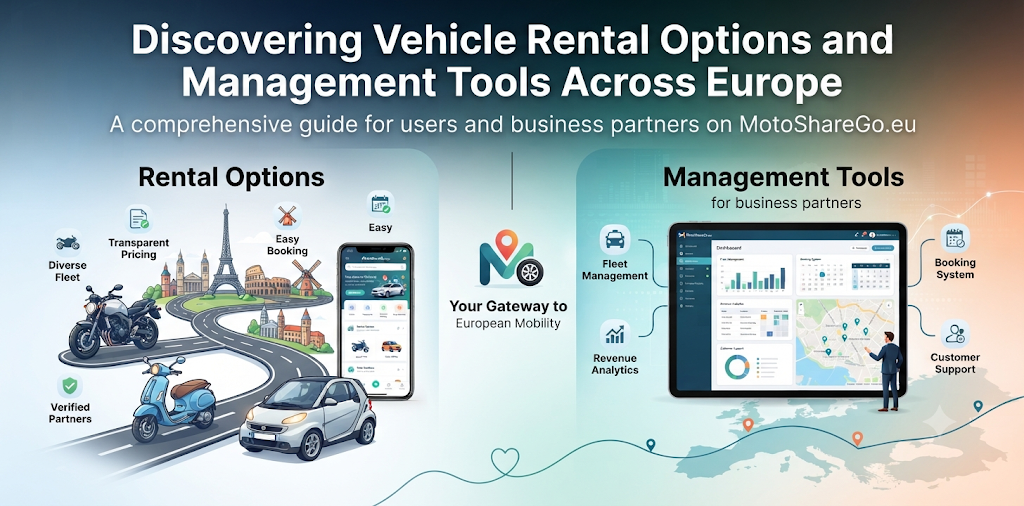
MotoShare Europe aims to simplify this ecosystem by combining a consumer-facing rental marketplace with business-focused management tools on a single platform. For travelers and local residents, the marketplace provides a structured way to search for motorcycles, scooters, bicycles, and cars, compare transparent listings, and connect directly with participating providers. For private motorcycle and car owners, it offers a dedicated channel to list available vehicles and communicate with prospective renters.
At the same time, its advertised management software gives independent rental shops and small fleet operators a way to organize listings, track reservations, manage customer records, and monitor fleet availability without investing in expensive enterprise systems. Because the platform is actively growing across Europe, vehicle availability and active software modules can vary by location and provider. Whether you are planning an upcoming trip or managing a local fleet, you can visit motosharego.eu to browse current listings in your destination or review the platform’s tools for rental partners.
Final Thoughts
Flexible vehicle discovery, responsible peer-to-peer sharing, and accessible fleet management tools are reshaping how people move across Europe. Travelers gain more freedom to explore beyond standard tourist routes, private owners find practical ways to share underutilized vehicles, and independent rental shops get digital support to run smoother daily operations.
Success on either side of a rental comes down to clear communication and careful verification. Before booking a ride or listing a vehicle, take time to confirm current availability in your target location, review insurance coverage and deposit terms, verify driving licence requirements, and read the specific rental agreement. Explore the current listings and partner resources at MotoShare Europe to see how the platform fits your next European journey or rental business workflow.
Frequently Asked Questions
How does a vehicle rental marketplace work in Europe? An online vehicle rental marketplace connects renters directly with participating local rental shops and private vehicle owners. Users search by destination and vehicle type, compare specific listings, review pricing and terms, and submit booking requests. Pickup and return details are then arranged directly with the participating provider according to the listing’s conditions.
What should travelers check before renting a motorcycle? Travelers should verify that their driving licence covers the motorcycle’s engine category and check if an International Driving Permit is needed. They should also confirm minimum age requirements, review insurance coverage and deductible limits, check mileage caps, inspect tires and brakes at pickup, and confirm whether protective gear is included.
What factors influence motorcycle rental prices across Europe? Rental prices depend on the motorcycle’s engine size and category, rental length, destination demand, and time of year. Other factors include insurance coverage levels, security deposit amounts, included luggage or helmets, daily kilometer limits, and whether you request airport delivery or one-way drop-off services.
Can private motorcycle owners make their vehicles available for rental? Yes, private owners can list their motorcycles on peer-to-peer rental platforms where supported. Before listing, owners should ensure the bike is mechanically sound, take clear photos, set transparent rental rules, and verify that their insurance policy and local regulations permit paid vehicle sharing with third-party riders.
What should a small rental business look for in management software? Small rental operators should prioritize clear fleet availability calendars, straightforward reservation tracking, organized customer records, and basic revenue reporting. The software should match their specific vehicle types—such as cars, motorcycles, scooters, or bicycles—and be simple enough for daily staff use without requiring complex technical setup.
How can renters compare different vehicle options effectively? Renters can compare listings by looking beyond the base daily rate. Check the exact make and model, year, included accessories like storage cases, daily distance allowances, fuel policies, insurance deductibles, and pickup locations. Reading the provider’s specific terms ensures you compare the true total cost of each option.
What insurance details should renters review before booking? Renters should confirm whether third-party liability, theft protection, and collision damage coverage are included in the rental price. Pay close attention to the financial excess (deductible) you must pay if damage occurs, what exclusions apply—such as off-road riding or unauthorized border crossings—and how security deposits are handled.
Can rental businesses manage multiple vehicle categories together? Many independent European shops rent out a mix of scooters, bicycles, motorcycles, and cars. Using a unified management system that supports multiple vehicle categories allows operators to monitor overall fleet availability, track customer bookings, and review operational performance from a single dashboard rather than using separate spreadsheets.
What should owners prepare before listing a personal vehicle? Owners should complete a thorough safety and maintenance check, clean the vehicle, and take detailed photos from multiple angles to document its condition. They should also draft an accurate description, establish clear mileage and fuel rules, confirm legal and insurance compliance, and prepare a simple handover checklist.
How can users check whether a vehicle is available in their destination? Because marketplace inventory depends on participating local providers and owners, availability varies by city and season. Users should visit the platform, enter their target destination and travel dates, and browse active listings to confirm whether specific motorcycles, scooters, bicycles, or cars are currently available in that area.
