Introduction
Launching a new business requires navigating countless moving parts, from product development and cash flow management to hiring and customer acquisition. Among these priorities, establishing a powerful online presence is no longer optional. For startups and small businesses, social media marketing acts as a direct lifeline to the target market. It offers an unprecedented opportunity to build brand awareness, foster direct customer relationships, and drive revenue without requiring a multi-crore advertising budget.
However, many startup founders and entrepreneurs face significant hurdles when entering the digital landscape. Limited time, tight marketing budgets, uncertainty around platform selection, and inconsistent posting schedules often lead to frustration and stalled growth. Without a clear direction, marketing efforts become reactive rather than strategic.
This is where a structured social media marketing roadmap becomes essential. By breaking down your digital growth into manageable, chronological steps, your business can build sustainable momentum. Throughout this guide, we will explore practical strategies to establish your brand, create engaging content, and measure success. We will also examine how digital marketing management platforms like WizBrand can help marketing teams organize campaigns, coordinate workflows, and monitor performance effectively. Let us dive into what it takes to build a thriving social media footprint from scratch.
What Is Social Media Marketing?
Social media marketing involves using platforms like Facebook, Instagram, LinkedIn, YouTube, and X to connect with your audience, build your brand, increase sales, and drive website traffic. It goes beyond simply publishing promotional posts. True social media marketing encompasses publishing great content, listening to your followers, analyzing your results, and running targeted social media ads.
For new businesses, it serves as a digital storefront and a community hub rolled into one. It allows you to humanize your brand, interact directly with prospective buyers, and showcase your unique value proposition in real time.
Why New Businesses Need a Social Media Marketing Strategy
A haphazard approach to social posting rarely yields results. A well-defined social media marketing plan provides several distinct advantages for new ventures:
- Cost-Effective Brand Awareness: Traditional advertising methods like television, radio, or print can drain a startup’s capital quickly. Social media allows you to reach targeted local and global audiences at a fraction of the cost.
- Direct Customer Insights: Social channels offer built-in analytics and direct feedback loops, helping you understand what your audience likes, shares, and criticizes.
- Level Playing Field: A small local bakery or a bootstrapped SaaS startup can look just as professional and engaging as an established enterprise through creative storytelling and consistent branding.
Common Social Media Marketing Challenges for Startups
Understanding what stands in your way helps you prepare effectively. Startups frequently encounter:
- Resource Constraints: Small teams or solo founders often struggle to find the time needed for content creation, community management, and analytics tracking.
- Inconsistent Posting: Without a structured social media content strategy, businesses tend to post heavily for a week and then go silent for a month.
- Low Initial Reach: Breaking through platform algorithms with zero initial followers requires patience, experimentation, and sometimes small paid boosts.
Understanding Your Target Audience
You cannot market effectively if you do not know who you are talking to. Audience research involves looking at demographics (age, location, occupation), psychographics (values, interests, pain points), and online habits.
Create buyer personas—semi-fictional representations of your ideal customers. Knowing whether your product appeals to busy working professionals in Mumbai or college students across India dictates your tone, visual style, and the platforms you choose.
Choosing the Right Social Media Platforms
Not every platform suits every business model. Spreading yourself too thin across all networks is a recipe for burnout.
- B2B Companies & Consultants: LinkedIn is essential for professional networking and thought leadership.
- Visual Products & Retail: Instagram and Pinterest excel at showcasing lifestyle, fashion, food, and e-commerce items.
- Local Businesses & Communities: Facebook remains powerful for community building, local reviews, and targeted local advertising.
- Tech, Entertainment, & Youth Brands: TikTok and YouTube Shorts drive viral organic reach through short-form video.
Building Consistent Brand Identity
Your brand identity is how your audience perceives you. Consistency builds trust. Ensure that your brand voice (casual, authoritative, witty, or empathetic) remains uniform across all channels. Your color palettes, typography, and logo usage must look cohesive, reinforcing your business brand awareness from day one.
Creating a Professional Social Media Profile
Your profile is your digital business card. Optimize every element:
- Profile Picture: Use a high-resolution version of your company logo.
- Bio: Clearly explain what you do, who you help, and include a call-to-action (CTA) with a link to your website.
- Contact Information: Make it easy for potential clients to email, call, or message you directly.
Developing a Content Marketing Strategy
Content is the fuel that powers your social media engine. A robust social media content strategy outlines what topics you will cover, how often you will publish, and which formats you will utilize. Aim for a healthy mix of educational, entertaining, and promotional posts to keep your audience engaged.
Types of Social Media Content That Attract Engagement
Variety keeps followers interested. Diversify your feed with:
- Educational Posts & Carousels: Step-by-step guides, tips, and industry insights that showcase your expertise.
- Short-Form Videos & Reels: Quick, punchy videos that demonstrate products, share behind-the-scenes moments, or address common customer questions.
- Infographics: Visual summaries of complex data or processes that users love to save and share.
- Customer Testimonials: Social proof builds instant trust with hesitant buyers.
Organic Social Media Marketing vs Paid Advertising
- Organic Marketing relies on free posts, community interaction, and algorithmic reach. It takes time to build but yields sustainable, long-term trust.
- Paid Advertising involves paying platforms to put your content in front of specific demographics instantly. It accelerates social media lead generation and yields faster, measurable results.
Building Audience Engagement and Community
Social media is a two-way street. Do not just broadcast messages—listen and converse. Reply to comments promptly, answer direct messages with genuine care, and participate in industry discussions. Building an active community turns casual followers into loyal brand advocates.
Social Media Marketing for Lead Generation
To turn social media followers into paying customers, create lead magnets such as free e-books, webinars, discount codes, or consultations. Direct users from your social profiles to optimized landing pages on your website to capture email addresses and nurture prospects down the sales funnel.
Influencer Marketing and Brand Partnerships
Partnering with micro-influencers—creators with smaller, highly engaged follower bases—can introduce your new business to targeted communities authentically. Ensure the influencer’s values align with your brand before collaborating.
Social Media Analytics and Performance Tracking
You cannot improve what you do not measure. Monitor key metrics such as reach, impressions, engagement rate, click-through rate (CTR), and conversions. Regular audits help you identify top-performing content and eliminate strategies that drain resources without delivering ROI.
Common Social Media Marketing Mistakes to Avoid
- Buying Followers: Fake followers destroy your engagement rate and offer zero purchasing power.
- Being Too Promotional: If every post is a sales pitch, users will unfollow. Follow the 80/20 rule: 80% value/entertainment, 20% promotion.
- Ignoring Negative Feedback: Deleting complaints damages trust; addressing them professionally showcases exceptional customer service.
Future Trends in Social Media Marketing for Businesses
Stay ahead of the curve by embracing emerging developments:
- Social Commerce: Buying products directly within apps like Instagram and TikTok without visiting an external website.
- AI-Assisted Content Planning: Leveraging smart tools to streamline content creation and scheduling workflows.
- Authentic Short-Form Video: Consumers increasingly favor raw, unpolished, behind-the-scenes video over overly produced studio ads.
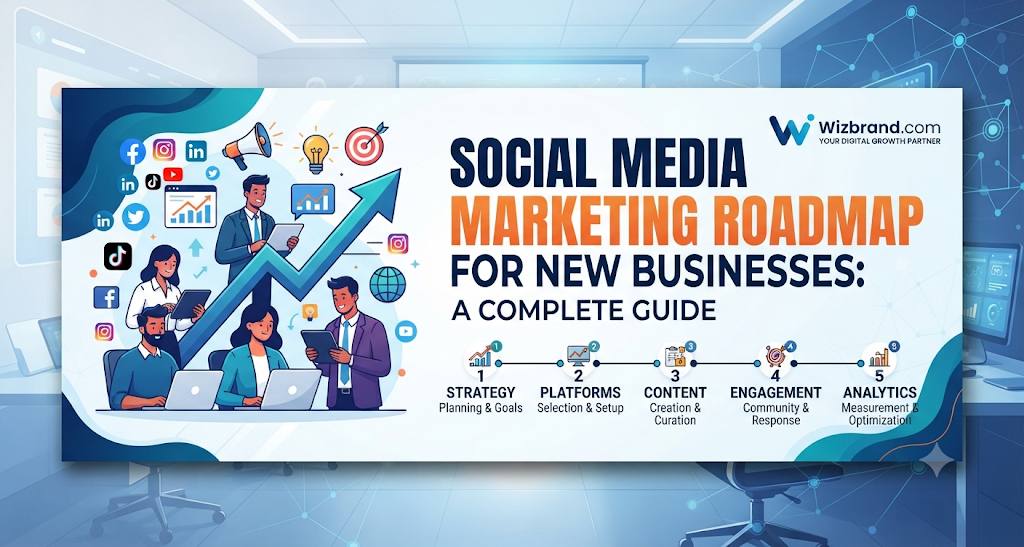
Complete Social Media Marketing Roadmap for New Businesses
Follow this step-by-step roadmap to build, execute, and scale your social media presence successfully.
Define Your Marketing Goals
- Practical Actions: Set SMART goals (Specific, Measurable, Achievable, Relevant, Time-bound) focusing on brand awareness, website traffic, or lead generation.
- Useful Recommendations: Start with two primary goals rather than ten to maintain focus.
- Common Mistakes: Setting vague goals like “get famous on social media.”
- Expected Outcomes: Clear direction for your entire marketing team.
Identify Your Target Audience
- Practical Actions: Conduct competitor analysis, review industry forums, and build detailed buyer personas.
- Useful Recommendations: Interview existing early customers to understand their real pain points.
- Common Mistakes: Assuming “everyone” is your target customer.
- Expected Outcomes: Deep clarity on who you are creating content for.
Select the Right Social Media Platforms
- Practical Actions: Choose 2 platforms where your audience spends the most time.
- Useful Recommendations: Master one platform before expanding to a second or third.
- Common Mistakes: Spreading efforts across five networks and posting infrequently on all.
- Expected Outcomes: Focused resource allocation and higher quality output.
Establish Your Brand Identity
- Practical Actions: Define your brand voice, pick a primary color palette, and design clean templates.
- Useful Recommendations: Create a simple brand style guide for consistency.
- Common Mistakes: Constantly changing fonts, colors, and tones.
- Expected Outcomes: Immediate visual and tonal recognition among followers.
Build a Content Calendar
- Practical Actions: Plan content themes for the upcoming month using a shared calendar.
- Useful Recommendations: Batch-create content in advance to save weekly hours.
- Common Mistakes: Deciding what to post on the morning of publication.
- Expected Outcomes: Consistent publishing schedule without last-minute stress.
Create Engaging Content
- Practical Actions: Produce educational carousels, short videos, and customer success stories.
- Useful Recommendations: Focus on delivering high utility value in every post.
- Common Mistakes: Focusing only on text-heavy corporate announcements.
- Expected Outcomes: Higher likes, shares, comments, and saves.
Build Audience Relationships
- Practical Actions: Dedicate 20 minutes daily to reply to comments and direct messages.
- Useful Recommendations: Use personalized responses rather than generic canned replies.
- Common Mistakes: Publishing content and ignoring incoming conversations.
- Expected Outcomes: A loyal, engaged community around your brand.
Launch Paid Social Media Campaigns
- Practical Actions: Allocate a modest test budget to promote your best-performing organic post.
- Useful Recommendations: Test small ad variations (A/B testing) before scaling spend.
- Common Mistakes: Pouring money into unvalidated ads without tracking conversions.
- Expected Outcomes: Accelerated reach and targeted lead generation.
Track Marketing Performance
- Practical Actions: Review platform analytics and campaign metrics weekly and monthly.
- Useful Recommendations: Document insights in a central dashboard for team review.
- Common Mistakes: Looking at vanity metrics (likes) while ignoring bottom-line results (sales/leads).
- Expected Outcomes: Clear understanding of what strategies deliver return on investment.
Improve and Scale Your Strategy
- Practical Actions: Double down on successful content formats and prune underperforming tactics.
- Useful Recommendations: Continuously experiment with new features (e.g., new video formats).
- Common Mistakes: Sticking to a failing strategy out of habit.
- Expected Outcomes: Sustainable, long-term business growth and brand authority.
Platform Comparison for Startups
| Platform | Primary Audience | Content Formats | Business Applications | Marketing Advantages |
| Broad, all age groups | Text, Images, Video, Stories | Community building, local biz | Massive reach, advanced ad targeting | |
| Gen Z, Millennials, Shoppers | Reels, Carousels, Stories | Visual brands, e-commerce, lifestyle | High visual engagement, shopping integration | |
| Professionals, B2B buyers | Articles, Text posts, PDF carousels | B2B services, recruiting, networking | High professional intent, thought leadership | |
| YouTube | All demographics | Long-form & Short-form video | Tutorials, product demos, education | Second largest search engine, high retention |
| TikTok | Gen Z and younger adults | Short-form vertical video | Trendy consumer products, entertainment | Exceptional organic viral reach |
| Planners, home, fashion | High-res vertical images, pins | E-commerce, design, recipes, travel | Long lifespan of pins, high purchase intent | |
| X (Twitter) | News seekers, tech, creators | Short text, threads, media | Tech startups, media, customer support | Real-time engagement, industry conversations |
Content Strategy for New Businesses
A successful content mix ensures your audience remains informed, entertained, and ready to buy. Your strategy should incorporate:
- Educational Content: Teach your audience how to solve problems related to your industry.
- Brand Storytelling: Share your startup journey, mission, and team behind the scenes.
- Product & Service Highlights: Show your offerings in action through clear demonstrations.
- Customer Testimonials: Highlight reviews and case studies from satisfied early clients.
- Short-Form Video Content: Capture attention quickly with dynamic vertical clips.
Sample Weekly Social Media Content Calendar
| Day | Content Theme | Content Format | Objective |
| Monday | Industry Tip / Education | Carousel Post | Establish expertise & saves |
| Tuesday | Behind the Scenes | Instagram Reel | Humanize the brand |
| Wednesday | Product Highlight | Single Image / Video | Drive consideration |
| Thursday | Customer Testimonial | Graphic Quote / Story | Build trust and social proof |
| Friday | Interactive Poll / Question | Text / Story | Boost community engagement |
Organic vs Paid Social Media Marketing
| Feature | Organic Social Media | Paid Social Media |
| Cost | Free (time investment) | Requires financial ad budget |
| Audience Reach | Limited to current followers & hashtag reach | Instant access to hyper-targeted non-followers |
| Targeting | Basic demographic profile settings | Precise location, interest, and behavior filters |
| Speed of Results | Slow, builds gradually over months | Fast, immediate traffic and lead generation |
| Long-term Value | High (builds lasting brand equity and SEO signals) | Stops when ad budget pauses |
| Brand Awareness | Steady, organic growth | Rapid scaling capability |
| Lead Generation | Conversational, nurturing-based | Direct conversion campaigns |
Combining Both Approaches: New businesses should use organic social media to build authentic community relationships and brand voice, while strategically utilizing paid advertising to accelerate lead generation for high-priority offers or product launches.
How WizBrand Helps Businesses Manage Social Media Marketing
Managing multiple social media channels, coordinating content calendars, and keeping marketing teams aligned can quickly become chaotic for a growing business. This is where a robust digital marketing management platform like WizBrand provides vital support.
WizBrand is designed to help businesses and marketing teams streamline their digital marketing operations from a single centralized hub. Here is how its capabilities empower growing brands:
- Centralized Digital Marketing Management: Bring all your marketing campaigns, tracking data, and project assets into one organized environment, eliminating the need to switch between dozens of disconnected tools.
- Campaign Planning and Coordination: Map out your social media marketing roadmap, assign responsibilities to team members, and ensure every campaign launches on schedule.
- Marketing Task Management: Break large marketing goals into manageable daily tasks, set deadlines, and track completion progress across your team.
- Team Collaboration: Enable copywriters, designers, and social media managers to communicate, share feedback, and review assets seamlessly in one workspace.
- Content Workflow Organization: Plan, draft, review, and approve social media posts and blog content through structured publishing pipelines.
- Marketing Performance Tracking: Monitor the performance of your marketing initiatives, track campaign milestones, and analyze overall progress toward your business goals.
By organizing workflows and improving visibility, WizBrand helps startups maintain consistency and execute their marketing strategies with greater efficiency.
Why New Businesses Need Better Marketing Management
As startups scale, manual spreadsheets and scattered communication channels lead to missed deadlines, inconsistent branding, and wasted ad spend. Implementing structured marketing management offers several key benefits:
- Organized Marketing Workflows: Streamline how content moves from ideation to publishing.
- Consistent Publishing: Avoid gaps in your social calendar by maintaining a clear view of scheduled assets.
- Team Coordination: Ensure everyone on your marketing team understands their daily priorities and long-term objectives.
- Campaign Visibility: Keep stakeholders informed about active campaigns and upcoming milestones.
- Efficient Resource Management: Maximize the output of your limited startup team and budget.
- Performance Measurement: Track what works and eliminate guesswork from your marketing efforts.
By connecting these operational needs with a platform like WizBrand, businesses can scale their marketing output without sacrificing quality or team alignment.
Social Media Marketing Budget for Startups
Allocating a budget wisely is critical for early-stage ventures. While organic marketing primarily demands a time investment, paid campaigns and professional tools require capital.
- Organic Marketing Costs: Mostly time, plus potential subscription costs for graphic design tools (like Canva) and scheduling platforms.
- Paid Advertising Budgets: Start small—such as a test budget of ₹5,000 to ₹10,000 per month—to test audience response before scaling up.
- Content Creation Expenses: Investing in good lighting, a decent microphone, or occasional freelance designers can significantly elevate your content quality.
- Budget Monitoring: Regularly review your return on ad spend (ROAS) and reallocate funds from underperforming campaigns to top-performing channels.
Social Media Marketing Checklist
Use this actionable checklist to ensure your foundation is solid before launching campaigns:
- [ ] Define clear short-term and long-term marketing goals.
- [ ] Conduct thorough audience research and build buyer personas.
- [ ] Select 1 to 2 core social media platforms aligned with your business model.
- [ ] Establish a consistent brand voice, color palette, and visual identity.
- [ ] Optimize your social media profile bios, logos, and contact links.
- [ ] Create a monthly content calendar covering diverse post types.
- [ ] Maintain a consistent publishing schedule across active channels.
- [ ] Engage actively with comments, mentions, and direct messages.
- [ ] Plan and test small, targeted paid social media campaigns.
- [ ] Review analytics weekly and optimize your strategy based on performance data.
Social Media Marketing Statistics and Trends
- Global Adoption: Over 5 billion people use social media worldwide, representing more than 60% of the global population, making it an indispensable channel for business growth.
- Short-Form Video Dominance: Short-form video continues to drive the highest engagement rates across Instagram Reels, YouTube Shorts, and TikTok.
- Social Commerce Growth: A significant percentage of consumers discover and purchase products directly through social media platforms without visiting external websites.
- Business Utilization: Over 90% of small businesses utilize social media to build brand awareness and connect with local and global customers.
Frequently Asked Questions
How should absolute beginners start with social media marketing? Beginners should focus on mastering just one or two platforms where their target audience is most active. Define clear goals, build a simple content calendar, and prioritize consistent posting and genuine audience engagement over complex ad campaigns.
What is the best social media strategy for startups with limited budgets? Startups should rely heavily on organic marketing—sharing educational content, behind-the-scenes insights, and customer stories. Use free design and scheduling tools to maintain consistency, and only invest in paid ads once you have identified which content resonates best.
Which social media platforms are best for new businesses? It depends on your business model. B2B companies thrive on LinkedIn, visual and retail brands excel on Instagram and Pinterest, local businesses benefit from Facebook, and consumer tech or youth brands do well on TikTok and YouTube Shorts.
How far in advance should I plan my social media content? Planning your content calendar two to four weeks in advance is ideal. This allows you to batch-create graphics, write captions, and schedule posts without the stress of daily scrambling.
Is organic social media marketing still effective? Yes, organic marketing remains highly effective for building brand trust, loyalty, and authentic community relationships, though it requires patience and consistent value delivery to overcome platform algorithms.
How much should a small business spend on social media advertising? There is no universal figure, but startups often begin with a modest exploratory budget to test audience targeting before committing larger funds to top-performing ads.
How can social media generate leads for my business? You can drive social media followers to optimized landing pages offering free resources, consultations, newsletter sign-ups, or exclusive discounts to capture email addresses and nurture them into paying customers.
What metrics matter most when tracking social media performance? Instead of focusing solely on vanity metrics like follower counts, track engagement rates, click-through rates (CTR), website traffic from social channels, and conversion rates.
How do social media management tools help small businesses? Tools streamline multi-channel posting, centralize content calendars, track performance analytics, and improve team collaboration, saving valuable time for busy entrepreneurs.
What is WizBrand and how does it assist digital marketing? WizBrand is a digital marketing management platform that helps businesses and marketing teams organize campaigns, manage tasks, coordinate workflows, and track performance across marketing initiatives in one centralized hub.
Conclusion
Building a successful online presence from the ground up requires patience, clarity, and consistent execution. By following a structured social media marketing roadmap, new businesses can eliminate guesswork, connect meaningfully with their target audience, and turn casual viewers into loyal brand advocates. Remember that sustainable growth comes from delivering genuine value, maintaining visual and tonal consistency, and continuously refining your approach based on performance data.
As your marketing activities expand across multiple channels and team members, keeping your campaigns organized becomes vital. Platforms like WizBrand offer the centralized digital marketing management needed to coordinate workflows, track performance, and keep your entire team aligned. Start small, stay consistent, and watch your business thrive in the digital landscape.
