Introduction
Content Delivery Networks (CDNs) are distributed networks of servers that deliver web content—such as images, videos, scripts, and web pages—to users based on their geographic location. Instead of loading content from a single origin server, CDNs cache and serve it from the nearest edge location, reducing latency and improving performance.
In simple terms, a CDN makes your website or app faster, more reliable, and scalable by bringing content closer to users.
As digital experiences become richer and more global, CDNs are no longer optional. They now play a critical role in performance optimization, security, and availability, especially for high-traffic websites, SaaS platforms, and streaming services.
Why it matters now
- Users expect fast-loading websites
- Global audiences require low-latency delivery
- Web performance impacts SEO and conversions
- Security threats like DDoS attacks are increasing
Common use cases
- Website acceleration and caching
- Video streaming and media delivery
- API and application acceleration
- DDoS protection and web security
- Ecommerce and SaaS performance optimization
What buyers should evaluate
- Global edge network coverage
- Caching and content optimization features
- Security features (WAF, DDoS protection)
- Performance and latency improvements
- Integration with cloud and DevOps tools
- Scalability and traffic handling
- Pricing model and bandwidth costs
- Analytics and monitoring
- Ease of configuration and deployment
Best for: Businesses with global users, ecommerce platforms, SaaS companies, media platforms, and high-traffic websites.
Not ideal for: Very small websites with limited traffic or local-only audiences.
Key Trends in Content Delivery Networks (CDN)
- Edge computing capabilities: Running logic closer to users
- Integrated security layers: WAF, bot protection, and DDoS mitigation
- AI-driven traffic optimization: Smart routing and caching decisions
- Serverless at the edge: Lightweight compute at CDN nodes
- Multi-CDN strategies: Improving redundancy and performance
- Real-time analytics: Monitoring traffic and performance instantly
- API and dynamic content acceleration: Beyond static caching
- Zero-trust security models: Secure content delivery
- Video and streaming optimization: Adaptive bitrate delivery
How We Selected These Tools (Methodology)
- Global adoption and market presence
- Network size and edge coverage
- Performance and latency benchmarks
- Security capabilities and reliability
- Integration with cloud and developer tools
- Ease of setup and management
- Pricing transparency and flexibility
- Support and documentation quality
- Suitability across industries and scales
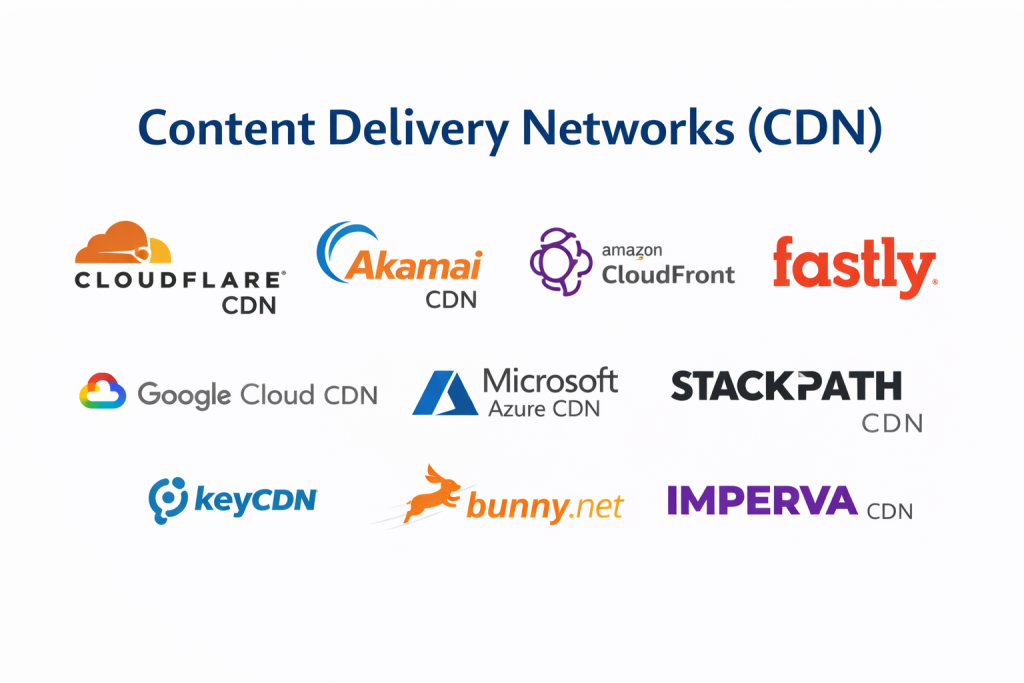
Top 10 Content Delivery Networks (CDN)
#1 — Cloudflare CDN
Short description: A widely used CDN offering performance, security, and edge computing in a unified platform.
Key Features
- Global edge network
- DDoS protection
- Web Application Firewall (WAF)
- Edge computing
- Caching and optimization
- DNS services
Pros
- Easy to use
- Strong security features
- Generous free tier
Cons
- Advanced features require higher plans
- Customization limitations at lower tiers
Platforms / Deployment
Web
Cloud
Security & Compliance
DDoS protection, WAF, SSL
Varies / Not publicly stated
Integrations & Ecosystem
Broad ecosystem for developers.
- APIs
- DevOps tools
- Cloud platforms
Support & Community
Large community and strong documentation.
#2 — Akamai CDN
Short description: One of the largest and most established CDN providers, focused on enterprise-grade performance and security.
Key Features
- Extensive global network
- Advanced caching
- Security solutions
- Media delivery
- Edge computing
- Traffic optimization
Pros
- Industry-leading performance
- Enterprise-grade reliability
- Strong security
Cons
- Complex setup
- Expensive
Platforms / Deployment
Web
Cloud
Security & Compliance
Enterprise-grade controls
Varies / Not publicly stated
Integrations & Ecosystem
- Enterprise systems
- APIs
- Security tools
Support & Community
Enterprise-level support.
#3 — Amazon CloudFront
Short description: A CDN service tightly integrated with AWS ecosystem for scalable content delivery.
Key Features
- Global edge locations
- Integration with AWS
- Real-time metrics
- Security features
- Caching controls
- Media streaming
Pros
- Strong AWS integration
- Scalable
- Reliable
Cons
- Complex pricing
- Requires AWS knowledge
Platforms / Deployment
Web
Cloud
Security & Compliance
IAM, encryption
Varies / Not publicly stated
Integrations & Ecosystem
- AWS services
- APIs
- DevOps tools
Support & Community
Strong cloud support ecosystem.
#4 — Fastly
Short description: A modern CDN focused on edge computing, real-time control, and performance optimization.
Key Features
- Real-time caching
- Edge computing
- Instant purging
- API-first design
- Security features
- Analytics
Pros
- High performance
- Developer-friendly
- Real-time control
Cons
- Pricing varies
- Requires expertise
Platforms / Deployment
Web
Cloud
Security & Compliance
Varies / Not publicly stated
Integrations & Ecosystem
- APIs
- Developer tools
- Cloud services
Support & Community
Good developer support.
#5 — Google Cloud CDN
Short description: A CDN integrated with Google Cloud infrastructure, offering performance and scalability.
Key Features
- Global edge network
- Load balancing
- Integration with Google Cloud
- Security features
- Caching
- Analytics
Pros
- Strong infrastructure
- Scalable
- Easy integration
Cons
- Limited outside Google ecosystem
- Pricing complexity
Platforms / Deployment
Web
Cloud
Security & Compliance
Varies / Not publicly stated
Integrations & Ecosystem
- Google Cloud services
- APIs
- Dev tools
Support & Community
Strong cloud documentation.
#6 — Microsoft Azure CDN
Short description: A CDN service integrated with Azure cloud services and enterprise tools.
Key Features
- Global distribution
- Integration with Azure
- Security features
- Caching
- Analytics
- Load balancing
Pros
- Enterprise integration
- Scalable
- Reliable
Cons
- Requires Azure ecosystem
- Configuration complexity
Platforms / Deployment
Web
Cloud
Security & Compliance
Varies / Not publicly stated
Integrations & Ecosystem
- Azure services
- APIs
- Enterprise tools
Support & Community
Strong enterprise support.
#7 — StackPath CDN
Short description: A performance-focused CDN offering edge services and security features.
Key Features
- Edge computing
- DDoS protection
- Caching
- Analytics
- API access
- Real-time monitoring
Pros
- Good performance
- Easy setup
- Competitive pricing
Cons
- Smaller network
- Limited enterprise features
Platforms / Deployment
Web
Cloud
Security & Compliance
DDoS protection
Varies / Not publicly stated
Integrations & Ecosystem
- APIs
- Dev tools
Support & Community
Good support resources.
#8 — KeyCDN
Short description: A simple and affordable CDN focused on performance and ease of use.
Key Features
- Global delivery
- Real-time analytics
- HTTP/2 support
- Instant purge
- API access
- Security features
Pros
- Affordable
- Easy to use
- Good performance
Cons
- Smaller network
- Limited advanced features
Platforms / Deployment
Web
Cloud
Security & Compliance
Varies / Not publicly stated
Integrations & Ecosystem
- APIs
- CMS tools
Support & Community
Good documentation.
#9 — Bunny.net
Short description: A cost-effective CDN with strong performance and simple pricing.
Key Features
- Global CDN
- Video streaming
- Edge storage
- Real-time analytics
- Security features
- API access
Pros
- Affordable pricing
- Good performance
- Easy setup
Cons
- Smaller enterprise presence
- Limited advanced tools
Platforms / Deployment
Web
Cloud
Security & Compliance
Varies / Not publicly stated
Integrations & Ecosystem
- APIs
- Developer tools
Support & Community
Growing community.
#10 — Imperva CDN
Short description: A CDN combined with strong security features like WAF and DDoS protection.
Key Features
- DDoS protection
- Web application firewall
- Caching
- Performance optimization
- Analytics
- Threat intelligence
Pros
- Strong security focus
- Enterprise-ready
- Reliable
Cons
- Higher cost
- Complex setup
Platforms / Deployment
Web
Cloud
Security & Compliance
WAF, DDoS protection
Varies / Not publicly stated
Integrations & Ecosystem
- Security tools
- APIs
- Enterprise systems
Support & Community
Enterprise support.
Comparison Table (Top 10)
| Tool Name | Best For | Platform(s) Supported | Deployment | Standout Feature | Public Rating |
|---|---|---|---|---|---|
| Cloudflare | All users | Web | Cloud | Security + CDN | N/A |
| Akamai | Enterprise | Web | Cloud | Global network | N/A |
| CloudFront | AWS users | Web | Cloud | AWS integration | N/A |
| Fastly | Developers | Web | Cloud | Real-time edge | N/A |
| Google CDN | Google users | Web | Cloud | Cloud integration | N/A |
| Azure CDN | Enterprise | Web | Cloud | Azure integration | N/A |
| StackPath | SMB | Web | Cloud | Edge services | N/A |
| KeyCDN | Budget users | Web | Cloud | Simplicity | N/A |
| Bunny.net | Affordable CDN | Web | Cloud | Pricing | N/A |
| Imperva | Security focus | Web | Cloud | WAF + CDN | N/A |
Evaluation & Scoring of Content Delivery Networks (CDN)
| Tool Name | Core (25%) | Ease (15%) | Integrations (15%) | Security (10%) | Performance (10%) | Support (10%) | Value (15%) | Weighted Total |
|---|---|---|---|---|---|---|---|---|
| Cloudflare | 10 | 9 | 9 | 9 | 9 | 9 | 9 | 9.3 |
| Akamai | 10 | 6 | 9 | 10 | 10 | 9 | 6 | 8.9 |
| CloudFront | 9 | 7 | 10 | 9 | 9 | 8 | 7 | 8.7 |
| Fastly | 9 | 7 | 9 | 8 | 9 | 8 | 7 | 8.4 |
| Google CDN | 9 | 8 | 9 | 8 | 9 | 8 | 7 | 8.5 |
| Azure CDN | 9 | 7 | 9 | 9 | 8 | 8 | 7 | 8.4 |
| StackPath | 8 | 8 | 7 | 8 | 8 | 7 | 8 | 7.9 |
| KeyCDN | 7 | 9 | 7 | 7 | 8 | 7 | 9 | 7.9 |
| Bunny.net | 8 | 9 | 7 | 7 | 8 | 7 | 10 | 8.2 |
| Imperva | 9 | 6 | 8 | 10 | 8 | 8 | 6 | 8.3 |
How to interpret scores:
- Scores are comparative across tools
- Higher scores indicate stronger overall performance
- Enterprise tools score higher in security and scalability
- Budget tools score higher in value and ease of use
Which CDN Is Right for You?
Solo / Freelancer
- Best: KeyCDN, Bunny.net
- Focus on affordability and simplicity
SMB
- Best: Cloudflare, StackPath
- Balance performance and cost
Mid-Market
- Best: Fastly, CloudFront
- Need scalability and flexibility
Enterprise
- Best: Akamai, Imperva
- Focus on performance, security, and reliability
Budget vs Premium
- Budget: Bunny.net, KeyCDN
- Premium: Akamai, Fastly
Feature Depth vs Ease of Use
- Advanced: Akamai, Fastly
- Easy: Cloudflare, Bunny.net
Integrations & Scalability
- Best: CloudFront, Azure CDN
Security & Compliance Needs
- High: Cloudflare, Imperva
- Standard: KeyCDN, Bunny.net
Frequently Asked Questions (FAQs)
What is a CDN?
A network that delivers content from servers closest to users.
How does CDN improve performance?
By reducing latency and caching content closer to users.
Is CDN necessary for small websites?
Not always, but helpful for performance and scaling.
Does CDN improve SEO?
Yes, faster loading improves search rankings.
Is CDN secure?
Yes, many include DDoS protection and WAF.
Can CDN handle video streaming?
Yes, many are optimized for media delivery.
What is edge computing?
Running code closer to users via CDN nodes.
Are CDNs expensive?
Costs vary based on usage and features.
Can CDN work with any website?
Yes, most are compatible with all websites.
What are common mistakes?
Poor configuration and not using caching effectively.
Conclusion
Content Delivery Networks are a foundational part of modern web infrastructure, enabling faster, more secure, and scalable digital experiences. From simple websites to global platforms, CDNs play a critical role in performance and reliability.
