Introduction
Obligation Tracking Tools are specialized software platforms designed to identify, manage, monitor, and enforce organizational commitments that arise from contracts, regulations, SLAs, policies, and internal governance frameworks. In simple terms, these tools ensure that every “we must do this” becomes a tracked, assigned, and verifiable action.
In 2026+, obligation tracking has become critical because organizations now operate in highly regulated, multi-vendor, and data-driven environments. Missing even a single obligation can lead to financial penalties, compliance violations, operational disruptions, or reputational damage. Modern systems move beyond manual tracking and provide AI-driven extraction, automated reminders, workflow enforcement, and audit-ready reporting.
Real-world use cases include:
- Contract obligation monitoring (payments, SLAs, renewals)
- Regulatory compliance tracking across multiple frameworks
- Vendor and third-party obligation enforcement
- ESG and sustainability obligation monitoring
- Internal policy and operational compliance tracking
- Audit preparation and evidence management
Key evaluation criteria:
- Automated obligation extraction from documents
- Workflow automation and task assignment
- Real-time monitoring and alerts
- Compliance and audit reporting
- Integration with CLM, ERP, and GRC systems
- AI-driven classification and risk scoring
- Data lineage and traceability
- Scalability for enterprise-wide obligations
- Role-based access control and governance
- Ease of deployment and usability
Best for: enterprises, legal teams, compliance departments, procurement, finance, and regulated industries like banking, insurance, healthcare, and government.
Not ideal for: small businesses with minimal contracts or organizations without formal compliance or regulatory requirements.
Key Trends in Obligation Tracking Tools
- AI-powered obligation extraction from contracts and regulations
- Shift from static tracking to real-time obligation monitoring systems
- Deep integration with CLM, ERP, and GRC ecosystems
- Automated compliance workflows with escalation logic
- Knowledge graph-based regulatory mapping and reasoning
- Continuous compliance monitoring using event-driven systems
- Increased focus on ESG and sustainability obligations
- NLP-based contract and policy analysis
- Cloud-native platforms replacing spreadsheet-based tracking
- Predictive risk scoring for obligation breaches
How We Selected These Tools (Methodology)
- Market adoption in CLM, GRC, and compliance ecosystems
- Strength of obligation extraction and tracking capabilities
- Automation of workflows and alerts
- Integration with enterprise systems (ERP, CLM, GRC)
- AI/NLP maturity in document understanding
- Regulatory compliance and audit readiness features
- Scalability across enterprise environments
- Data governance and security controls
- Workflow customization flexibility
- Vendor maturity in legal, compliance, and risk domains
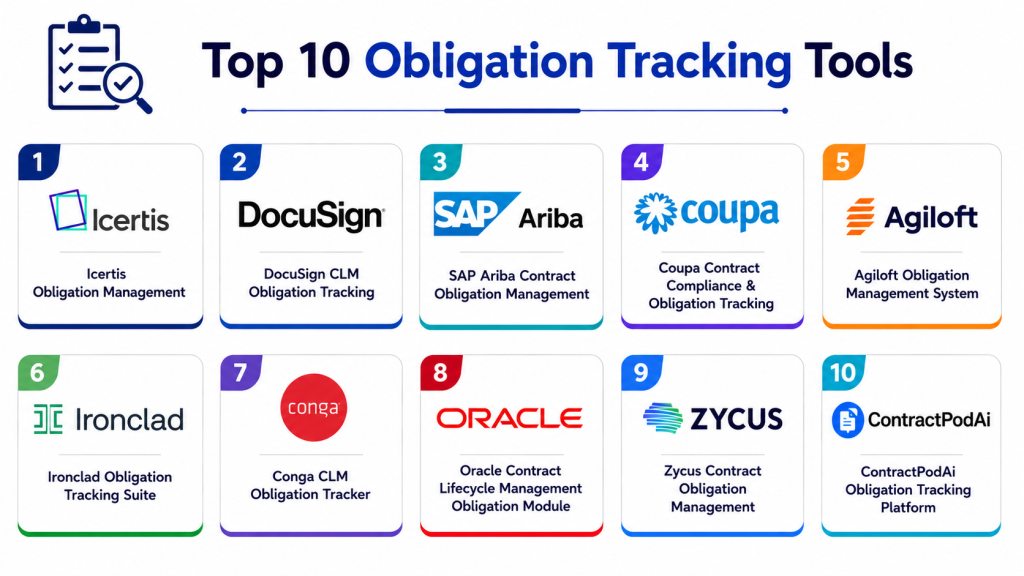
Top 10 Obligation Tracking Tools
#1 — Agiloft Contract & Obligation Management
Short description: Agiloft is a leading no-code CLM platform with advanced AI-driven obligation tracking capabilities. It automatically extracts obligations from contracts and manages their lifecycle through configurable workflows. It is widely used in legal, procurement, and compliance-heavy industries.
Key Features
- AI-based obligation extraction from contracts
- Automated workflow assignment
- Centralized obligation repository
- Contract lifecycle tracking
- Renewal and deadline management
- Compliance reporting dashboards
- Risk classification of obligations
Pros
- Highly configurable no-code system
- Strong AI-based extraction capabilities
- Excellent workflow automation
- Scalable enterprise architecture
Cons
- Requires setup and configuration effort
- Learning curve for advanced workflows
- Enterprise pricing model
- Integration complexity in large ecosystems
Platforms / Deployment
- Web
- Cloud / On-prem
Security & Compliance
- RBAC
- MFA
- Encryption
- Audit logs
- Enterprise compliance support
Integrations & Ecosystem
Strong CLM ecosystem integration.
- ERP systems
- CRM platforms
- Document management systems
- GRC tools
- APIs
Support & Community
Strong enterprise legal tech support and consulting ecosystem.
#2 — Icertis Contract Intelligence (ICI)
Short description: Icertis is one of the most widely adopted enterprise CLM platforms with powerful obligation tracking, risk visibility, and AI-driven contract intelligence capabilities.
Key Features
- AI-based obligation extraction
- Contract lifecycle automation
- Obligation tracking dashboards
- Risk scoring and alerts
- Clause-level analytics
- Renewal and milestone tracking
- Compliance reporting
Pros
- Strong enterprise adoption
- Deep AI contract intelligence
- Excellent scalability
- Strong governance features
Cons
- Complex implementation
- High cost structure
- Requires change management
- Heavy configuration effort
Platforms / Deployment
- Web
- Cloud
Security & Compliance
- RBAC
- MFA
- Encryption
- Audit trails
Integrations & Ecosystem
- ERP systems
- Procurement platforms
- CRM tools
- GRC systems
- APIs
Support & Community
Strong global enterprise support network.
#3 — SirionLabs Obligation Management
Short description: SirionLabs is a contract lifecycle and obligation management platform focused on enterprise contract performance tracking and rolling obligation monitoring.
Key Features
- Rolling obligation tracking
- SLA and contract performance monitoring
- AI-driven obligation extraction
- Vendor compliance tracking
- Contract analytics dashboards
- Risk detection alerts
- Workflow automation
Pros
- Strong SLA tracking capabilities
- Excellent contract performance insights
- AI-driven obligation updates
- Good enterprise usability
Cons
- Complex onboarding
- Premium pricing
- Requires structured data
- Integration effort required
Platforms / Deployment
- Web
- Cloud
Security & Compliance
- RBAC
- MFA
- Encryption
- Audit logs
Integrations & Ecosystem
- ERP systems
- Procurement platforms
- ITSM tools
- Data warehouses
- APIs
Support & Community
Strong enterprise contract management support.
#4 — Conga CLM Obligation Tracking
Short description: Conga provides contract lifecycle management with strong obligation tracking, workflow automation, and document intelligence for enterprise contract governance.
Key Features
- Contract obligation extraction
- Automated reminders and alerts
- Workflow-based compliance tracking
- Contract repository management
- Approval automation
- Audit trail generation
- Reporting dashboards
Pros
- Strong workflow automation
- Good contract visibility
- Easy integration with CRM ecosystems
- Reliable enterprise scalability
Cons
- Complex configuration for advanced workflows
- Limited flexibility outside CLM scope
- Requires onboarding effort
- Enterprise pricing
Platforms / Deployment
- Web
- Cloud
Security & Compliance
- RBAC
- MFA
- Encryption
- Audit logging
Integrations & Ecosystem
- Salesforce
- ERP systems
- CRM platforms
- Document systems
- APIs
Support & Community
Strong enterprise CLM support ecosystem.
#5 — DocuSign CLM (with Obligation Tracking)
Short description: DocuSign CLM extends electronic signature workflows into full contract lifecycle and obligation tracking with automated alerts and compliance monitoring.
Key Features
- Contract obligation tracking
- Automated workflow routing
- Clause and metadata extraction
- Approval management
- Renewal tracking
- Compliance monitoring
- Reporting dashboards
Pros
- Strong e-signature integration
- Easy to deploy
- Widely adopted platform
- Good usability
Cons
- Less advanced AI compared to competitors
- Limited deep analytics
- Requires integration for full capability
- Moderate customization limits
Platforms / Deployment
- Web
- Cloud
Security & Compliance
- RBAC
- MFA
- Encryption
- Audit trails
Integrations & Ecosystem
- CRM systems
- ERP platforms
- Document systems
- APIs
- Workflow tools
Support & Community
Large global enterprise user base.
#6 — SAP Ariba Contract & Obligation Tracking
Short description: SAP Ariba provides procurement-driven obligation tracking integrated with supplier contracts, procurement workflows, and ERP systems.
Key Features
- Supplier obligation tracking
- Procurement contract monitoring
- SLA compliance tracking
- Invoice and payment alignment
- Risk monitoring dashboards
- Automated alerts
- ERP integration
Pros
- Strong SAP ecosystem integration
- Excellent procurement alignment
- Global enterprise scalability
- Strong supplier network visibility
Cons
- Complex implementation
- High cost
- SAP dependency
- Requires training
Platforms / Deployment
- Web
- Cloud
Security & Compliance
- RBAC
- MFA
- Encryption
- Audit logs
Integrations & Ecosystem
- SAP ERP
- Procurement systems
- Finance tools
- Supplier networks
- APIs
Support & Community
Strong enterprise procurement support ecosystem.
#7 — Oracle Contract Lifecycle Management
Short description: Oracle CLM provides enterprise contract and obligation tracking tightly integrated with Oracle ERP and procurement systems.
Key Features
- Contract obligation tracking
- Procurement alignment
- Workflow automation
- Compliance monitoring
- Renewal management
- Risk alerts
- Reporting dashboards
Pros
- Strong ERP integration
- High scalability
- Reliable enterprise architecture
- Strong financial alignment
Cons
- Complex setup
- Oracle ecosystem dependency
- High implementation cost
- Requires training
Platforms / Deployment
- Web
- Cloud
Security & Compliance
- RBAC
- MFA
- Encryption
- Audit logs
Integrations & Ecosystem
- Oracle ERP
- Finance systems
- Procurement tools
- BI platforms
- APIs
Support & Community
Strong enterprise ERP support ecosystem.
#8 — ContractPodAi
Short description: ContractPodAi is an AI-powered CLM platform that includes obligation extraction, contract intelligence, and lifecycle automation for legal and compliance teams.
Key Features
- AI obligation extraction
- Contract repository management
- Workflow automation
- Risk detection
- Compliance dashboards
- Clause analytics
- Alerts and notifications
Pros
- Strong AI capabilities
- Modern interface
- Good automation features
- Legal-focused design
Cons
- Smaller ecosystem
- Requires integration setup
- Moderate enterprise adoption
- Learning curve
Platforms / Deployment
- Web
- Cloud
Security & Compliance
- RBAC
- MFA
- Encryption
- Audit logs
Integrations & Ecosystem
- ERP systems
- CRM platforms
- Legal tools
- APIs
- Document systems
Support & Community
Growing enterprise legal tech adoption.
#9 — Ironclad CLM
Short description: Ironclad is a modern CLM platform that includes obligation tracking, workflow automation, and contract lifecycle management for legal teams.
Key Features
- Contract obligation tracking
- Workflow automation
- Clause management
- Approval workflows
- Contract analytics
- Renewal tracking
- Audit logs
Pros
- Modern user experience
- Fast adoption
- Strong workflow engine
- Good collaboration features
Cons
- Less deep enterprise governance
- Requires integration for full value
- Limited advanced analytics
- Premium pricing
Platforms / Deployment
- Web
- Cloud
Security & Compliance
- RBAC
- MFA
- Encryption
- Audit logs
Integrations & Ecosystem
- CRM systems
- ERP platforms
- Document tools
- APIs
- Workflow tools
Support & Community
Strong legal tech adoption in enterprises.
#10 — Malbek Obligation Management
Short description: Malbek is a CLM platform with strong obligation tracking and contract intelligence capabilities designed for procurement and legal teams.
Key Features
- AI obligation extraction
- Contract lifecycle tracking
- Workflow automation
- Compliance monitoring
- Renewal management
- Risk scoring
- Contract analytics
Pros
- Strong usability
- Good AI extraction features
- Fast deployment
- Flexible workflows
Cons
- Smaller global footprint
- Limited ecosystem depth
- Requires configuration
- Moderate scalability
Platforms / Deployment
- Web
- Cloud
Security & Compliance
- RBAC
- MFA
- Encryption
- Audit logs
Integrations & Ecosystem
- ERP systems
- CRM tools
- Procurement platforms
- APIs
- Document systems
Support & Community
Growing enterprise CLM support ecosystem.
Comparison Table
| Tool Name | Best For | Platform(s) Supported | Deployment | Standout Feature | Public Rating |
|---|---|---|---|---|---|
| Agiloft | No-code CLM | Web | Cloud/On-prem | AI obligation extraction | N/A |
| Icertis | Enterprise CLM | Web | Cloud | AI contract intelligence | N/A |
| SirionLabs | SLA tracking | Web | Cloud | Rolling obligation monitoring | N/A |
| Conga | CRM-driven CLM | Web | Cloud | Workflow automation | N/A |
| DocuSign CLM | eSignature users | Web | Cloud | Integrated signing workflow | N/A |
| SAP Ariba | Procurement teams | Web | Cloud | Supplier obligation tracking | N/A |
| Oracle CLM | ERP users | Web | Cloud | ERP-native integration | N/A |
| ContractPodAi | Legal AI teams | Web | Cloud | AI extraction engine | N/A |
| Ironclad | Modern legal teams | Web | Cloud | Fast workflow adoption | N/A |
| Malbek | Mid-market CLM | Web | Cloud | Easy deployment | N/A |
Evaluation & Scoring of Obligation Tracking Tools
| Tool Name | Core (25%) | Ease (15%) | Integrations (15%) | Security (10%) | Performance (10%) | Support (10%) | Value (15%) | Weighted Total |
|---|---|---|---|---|---|---|---|---|
| Agiloft | 9 | 8 | 9 | 9 | 9 | 9 | 8 | 8.7 |
| Icertis | 10 | 7 | 10 | 10 | 10 | 9 | 7 | 8.8 |
| SirionLabs | 9 | 7 | 9 | 9 | 9 | 9 | 8 | 8.4 |
| Conga | 8 | 8 | 9 | 9 | 8 | 8 | 8 | 8.1 |
| DocuSign CLM | 8 | 9 | 9 | 9 | 8 | 8 | 8 | 8.3 |
| SAP Ariba | 9 | 7 | 10 | 10 | 9 | 9 | 7 | 8.5 |
| Oracle CLM | 9 | 7 | 10 | 10 | 9 | 9 | 7 | 8.5 |
| ContractPodAi | 9 | 8 | 8 | 9 | 8 | 8 | 8 | 8.2 |
| Ironclad | 8 | 9 | 8 | 8 | 8 | 8 | 8 | 8.1 |
| Malbek | 8 | 8 | 8 | 8 | 8 | 8 | 8 | 8.0 |
Which Obligation Tracking Tool Is Right for You?
Legal Teams
Best choices:
- Icertis
- Ironclad
- Agiloft
Focus: contract compliance and obligation enforcement.
Procurement Teams
Best choices:
- SAP Ariba
- Oracle CLM
- SirionLabs
Focus: supplier obligations and procurement SLAs.
Enterprise Organizations
Best choices:
- Icertis
- SAP Ariba
- Oracle CLM
Focus: scalability, governance, and compliance.
Mid-Market Companies
Best choices:
- Malbek
- Conga
- ContractPodAi
Focus: usability and faster deployment.
AI-Driven Legal Operations
Best choices:
- ContractPodAi
- Agiloft
- Icertis
Focus: automation and AI-based extraction.
Budget vs Premium
- Budget/Mid-tier: Malbek, Conga, Ironclad
- Premium/Enterprise: Icertis, SAP Ariba, Oracle
Integration & Scalability
Best ecosystems:
- SAP Ariba (procurement)
- Oracle CLM (ERP)
- Icertis (enterprise governance)
Security & Compliance Needs
All tools must support:
- RBAC
- MFA
- Encryption
- Audit logs
- Compliance traceability
Frequently Asked Questions
1- What are obligation tracking tools?
They are systems that track and manage contractual, regulatory, and operational commitments.
2- Why are they important?
They prevent missed deadlines, compliance failures, and financial penalties.
3- Who uses these tools?
Legal, procurement, finance, compliance, and risk teams use them.
4- Do they use AI?
Yes, many tools use AI for obligation extraction and monitoring.
5- Are they part of CLM systems?
Yes, obligation tracking is a core feature of modern CLM platforms.
6- Can they integrate with ERP systems?
Yes, most enterprise tools integrate with ERP and procurement systems.
7- What types of obligations do they track?
Contracts, SLAs, regulations, policies, and internal commitments.
8- Are they cloud-based?
Most modern tools are cloud-native.
9- What is the biggest challenge?
Data integration and contract data quality.
10- What is the future of obligation tracking?
AI-driven real-time compliance and autonomous obligation monitoring.
Conclusion
Obligation Tracking Tools are essential for organizations that need to ensure accountability across contracts, regulations, and internal commitments. These platforms transform obligations into structured, trackable, and auditable workflows, reducing risk and improving compliance. While enterprise leaders like Icertis, SAP Ariba, and Oracle dominate large-scale environments, agile platforms like Agiloft, Ironclad, and Malbek offer faster adoption and flexibility. The right choice depends on organizational complexity, regulatory exposure, and integration needs. A structured pilot approach ensures successful implementation and long-term compliance efficiency.

This article clearly explains how obligation tracking tools help businesses manage contractual and compliance responsibilities more efficiently. It also highlights how automation reduces missed deadlines and improves accountability across teams.
Obligation tracking often looks straightforward at the tool level, but the real complexity shows up when obligations are tied to cross-functional ownership across legal, procurement, finance, and operations. In many enterprises, the failure point is not detection but accountability drift—where obligations exist in the system but no one actively owns their execution. Strengthening role mapping, SLA-linked ownership, and integration with incident or workflow systems would make these platforms far more effective in preventing silent compliance gaps that only surface during audits or disputes.
Obligation tracking is most effective when it becomes part of everyday operational workflows rather than a standalone compliance activity. Missed deadlines often result from fragmented communication across legal, finance, and business teams instead of missing data. Adding insights on workflow automation, dependency tracking, and proactive risk notifications would help organizations manage contractual commitments more efficiently while reducing the likelihood of compliance and financial issues.
Organizations often focus on tracking contractual obligations after agreements are signed, but many risks originate much earlier during contract negotiation. Decisions made at the drafting stage can significantly affect future monitoring and compliance efforts. Adding insights on designing obligations for easier tracking, standardizing contractual language, and improving collaboration between legal and operational teams would provide readers with a more proactive approach to obligation management.