Introduction
Retail Merchandising Tools are software platforms designed to plan, execute, and optimize product placement, store layouts, and visual merchandising strategies across retail locations. These tools help retailers ensure that the right products are placed in the right locations to maximize visibility, sales, and customer engagement.
At the core of these tools is the concept of planograms, which are visual layouts that define how products should be arranged on shelves or displays to improve sales performance and shopper experience . Modern merchandising tools go beyond static layouts and incorporate data-driven insights, AI automation, and real-time execution tracking, making them critical for multi-store retail operations.
Real-world use cases
- Designing planograms for shelf and store layouts
- Managing visual merchandising campaigns
- Ensuring consistency across retail locations
- Optimizing product placement based on sales data
- Monitoring in-store execution and compliance
What buyers should evaluate
- Planogram design and visualization capabilities
- Execution tracking and compliance monitoring
- Integration with POS, ERP, and inventory systems
- Analytics and performance insights
- Scalability for multi-store operations
- Mobile and offline support for field teams
- AI-driven optimization features
- Ease of collaboration between HQ and stores
Best for: Retail chains, FMCG brands, visual merchandising teams, and multi-location retailers.
Not ideal for: Single-store businesses with minimal merchandising complexity.
Key Trends in Retail Merchandising Tools
- AI-driven shelf optimization and planogram automation
- Real-time store execution tracking using mobile apps
- Photo-based audits and computer vision compliance
- Cloud-based merchandising platforms
- Integration with inventory and supply chain systems
- Data-driven product placement using sales analytics
- Omnichannel merchandising strategies
- Automation of planogram updates and distribution
- Collaboration between HQ and store teams
- Increased use of 3D visualization and simulation
Retail merchandising platforms are evolving rapidly, with AI and automation helping retailers optimize layouts dynamically based on real-time data and customer behavior .
How We Selected These Tools
- Evaluated adoption across retail and FMCG industries
- Assessed planogram and visual merchandising capabilities
- Considered execution tracking and compliance features
- Reviewed integration with retail systems like POS and ERP
- Analyzed scalability for multi-location businesses
- Evaluated usability for field and HQ teams
- Considered analytics and reporting capabilities
- Assessed overall value and flexibility
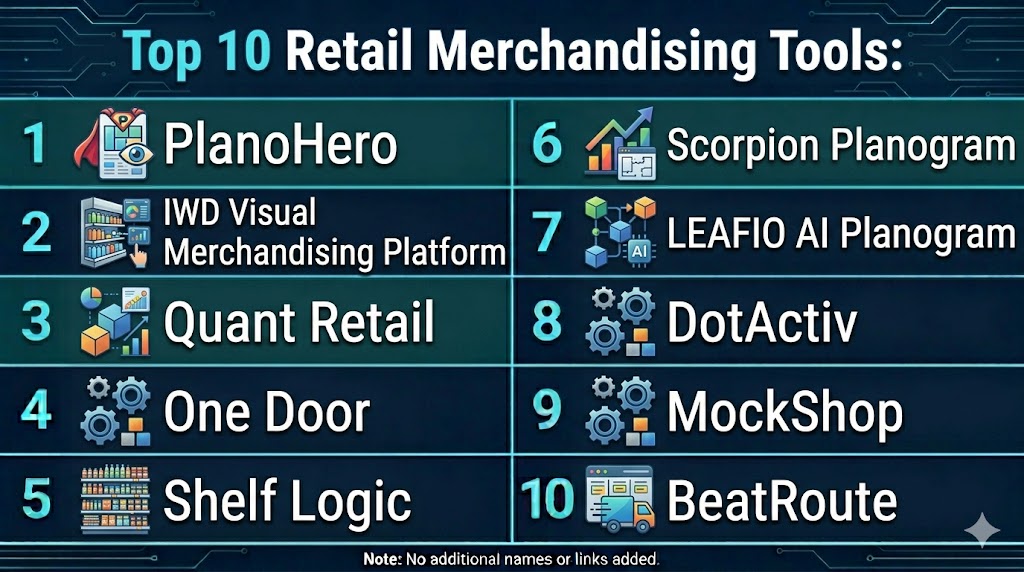
Top 10 Retail Merchandising Tools
#1 — PlanoHero
Short description: PlanoHero is a cloud-based planogram tool designed for retailers to create, distribute, and monitor shelf layouts efficiently across multiple stores.
Key Features
- Planogram creation
- Store layout visualization
- Inventory integration
- Execution tracking
- Reporting and analytics
Pros
- Easy to use
- Cloud-based
- Good for multi-store operations
Cons
- Limited advanced analytics
- Smaller ecosystem
- Basic customization
Platforms / Deployment
- Web
- Cloud
Security & Compliance
- Not publicly stated
Integrations & Ecosystem
Supports integration with retail systems.
- APIs
- Inventory tools
Support & Community
Good support
#2 — IWD Visual Merchandising Platform
Short description: IWD is an end-to-end merchandising platform that helps retailers design, deploy, and analyze visual merchandising strategies at scale.
Key Features
- 2D and 3D planograms
- Campaign management
- Performance analytics
- Collaboration tools
- Store execution tracking
Pros
- Advanced visualization
- Strong analytics
- Enterprise-ready
Cons
- Expensive
- Learning curve
- Complex setup
Platforms / Deployment
- Web
- Cloud
Security & Compliance
- Not publicly stated
Integrations & Ecosystem
Integrates with retail and analytics systems.
- APIs
- Retail tools
Support & Community
Enterprise support
#3 — Quant Retail
Short description: Quant Retail is a data-driven merchandising solution that uses sales and space data to optimize product placement.
Key Features
- AI-driven planograms
- Sales-based optimization
- Store-specific layouts
- Visual merchandising
- Reporting
Pros
- Data-driven insights
- Scalable
- Strong analytics
Cons
- Complex setup
- Expensive
- Learning curve
Platforms / Deployment
- Web
- Cloud
Security & Compliance
- Not publicly stated
Integrations & Ecosystem
Supports integration with enterprise systems.
- APIs
- ERP
Support & Community
Enterprise support
#4 — One Door
Short description: One Door provides visual merchandising and execution tools for retail chains to ensure brand consistency.
Key Features
- Planogram design
- Store execution tracking
- Task management
- Reporting
- Analytics
Pros
- Strong execution tracking
- Scalable
- Enterprise-ready
Cons
- Expensive
- Complex
- Learning curve
Platforms / Deployment
- Web
- Cloud
Security & Compliance
- Not publicly stated
Integrations & Ecosystem
Supports integration with retail tools.
- APIs
- Retail systems
Support & Community
Enterprise support
#5 — Shelf Logic
Short description: Shelf Logic focuses on planogram design and analytics for optimizing shelf space and product placement.
Key Features
- Planogram design
- Profit analysis
- Category management
- Visual reporting
- Data analytics
Pros
- Strong analytics
- Affordable
- Easy to use
Cons
- Limited enterprise features
- Smaller ecosystem
- Basic integrations
Platforms / Deployment
- Web
- Cloud
Security & Compliance
- Not publicly stated
Integrations & Ecosystem
Supports integrations via APIs.
- APIs
- Retail tools
Support & Community
Good support
#6 — Scorpion Planogram
Short description: Scorpion Planogram is a solution for designing and managing retail layouts with strong analytics capabilities.
Key Features
- Planogram design
- Inventory tracking
- Data visualization
- Reporting
- Analytics
Pros
- Data insights
- Easy to use
- Scalable
Cons
- Limited ecosystem
- Pricing
- Basic UI
Platforms / Deployment
- Web
- Cloud
Security & Compliance
- Not publicly stated
Integrations & Ecosystem
Supports integration via APIs.
- APIs
- Retail tools
Support & Community
Good support
#7 — LEAFIO AI Planogram
Short description: LEAFIO uses AI to automate planogram creation and optimize merchandising strategies.
Key Features
- AI planogram generation
- Demand forecasting
- Inventory optimization
- Analytics
- Reporting
Pros
- AI-driven
- Strong optimization
- Scalable
Cons
- Complex
- Expensive
- Learning curve
Platforms / Deployment
- Web
- Cloud
Security & Compliance
- Not publicly stated
Integrations & Ecosystem
Supports enterprise integrations.
- APIs
- ERP
Support & Community
Enterprise support
#8 — DotActiv
Short description: DotActiv is a mid-market merchandising tool combining planograms, analytics, and assortment planning.
Key Features
- Planogram creation
- Category management
- Floor planning
- Analytics
- Reporting
Pros
- Balanced features
- Affordable for mid-market
- Easy to use
Cons
- Limited advanced features
- Smaller ecosystem
- UI limitations
Platforms / Deployment
- Web
- Cloud
Security & Compliance
- Not publicly stated
Integrations & Ecosystem
Supports integration with retail systems.
- APIs
- Data tools
Support & Community
Good support
#9 — MockShop
Short description: MockShop is a visual merchandising tool that allows retailers to create 3D store layouts and product displays.
Key Features
- 3D store design
- Planogram creation
- Product visualization
- Collaboration
- Reporting
Pros
- Strong visualization
- Easy design tools
- Good for planning
Cons
- Limited analytics
- Smaller ecosystem
- Pricing
Platforms / Deployment
- Web
- Cloud
Security & Compliance
- Not publicly stated
Integrations & Ecosystem
Supports integrations via APIs.
- APIs
- Design tools
Support & Community
Growing support
#10 — BeatRoute
Short description: BeatRoute combines merchandising execution with field sales and retail operations management.
Key Features
- Field execution tracking
- Task management
- Merchandising audits
- Reporting
- Analytics
Pros
- Strong field tracking
- Mobile support
- Scalable
Cons
- Limited planogram design
- Complex
- Learning curve
Platforms / Deployment
- Web Mobile
- Cloud
Security & Compliance
- Not publicly stated
Integrations & Ecosystem
Supports integration with CRM and retail systems.
- APIs
- CRM
Support & Community
Good support
Comparison Table
| Tool Name | Best For | Platform Supported | Deployment | Standout Feature | Public Rating |
|---|---|---|---|---|---|
| PlanoHero | SMB retail | Web | Cloud | Easy planograms | N/A |
| IWD | Enterprise | Web | Cloud | 3D visualization | N/A |
| Quant Retail | Data-driven retail | Web | Cloud | AI optimization | N/A |
| One Door | Large chains | Web | Cloud | Execution tracking | N/A |
| Shelf Logic | Analytics | Web | Cloud | Profit analysis | N/A |
| Scorpion | Layout planning | Web | Cloud | Data insights | N/A |
| LEAFIO | AI retail | Web | Cloud | AI planograms | N/A |
| DotActiv | Mid-market | Web | Cloud | Category management | N/A |
| MockShop | Visualization | Web | Cloud | 3D store design | N/A |
| BeatRoute | Field teams | Web Mobile | Cloud | Execution tracking | N/A |
Evaluation & Scoring of Retail Merchandising Tools
| Tool Name | Core | Ease | Integrations | Security | Performance | Support | Value | Weighted Total |
|---|---|---|---|---|---|---|---|---|
| PlanoHero | 8 | 9 | 7 | 7 | 8 | 7 | 9 | 8.2 |
| IWD | 9 | 7 | 8 | 8 | 9 | 8 | 6 | 8.1 |
| Quant Retail | 9 | 6 | 9 | 8 | 9 | 8 | 6 | 8.2 |
| One Door | 9 | 6 | 8 | 8 | 9 | 8 | 6 | 8.0 |
| Shelf Logic | 8 | 8 | 7 | 7 | 8 | 7 | 8 | 7.9 |
| Scorpion | 8 | 8 | 7 | 7 | 8 | 7 | 8 | 7.9 |
| LEAFIO | 9 | 6 | 9 | 8 | 9 | 8 | 6 | 8.1 |
| DotActiv | 8 | 8 | 7 | 7 | 8 | 7 | 8 | 7.9 |
| MockShop | 7 | 9 | 6 | 7 | 7 | 7 | 8 | 7.6 |
| BeatRoute | 8 | 8 | 7 | 7 | 8 | 7 | 8 | 7.8 |
Scores are comparative and reflect merchandising capabilities, usability, and scalability.
Which Retail Merchandising Tool Is Right for You
Solo / Small Retailers
PlanoHero or MockShop are simple and affordable.
SMB
DotActiv and Shelf Logic provide balanced features.
Mid-Market
Quant Retail and LEAFIO offer strong analytics.
Enterprise
IWD and One Door are ideal.
Budget vs Premium
PlanoHero is budget-friendly, IWD is premium.
Feature Depth vs Ease of Use
Quant Retail for depth, MockShop for simplicity.
Integrations & Scalability
LEAFIO and One Door are strong options.
Security & Compliance Needs
Enterprise tools provide stronger controls.
Frequently Asked Questions
1. What are retail merchandising tools
These tools help retailers design and manage product placement and store layouts. They improve visibility and sales.
2. What is a planogram
A planogram is a visual guide for product placement. It defines where products should be displayed to maximize sales .
3. Why are these tools important
They help optimize store layouts and improve customer experience. They also boost sales through better product placement .
4. How do these tools work
They use data to create layouts and track execution. They also provide analytics for optimization.
5. Are these tools suitable for small retailers
Yes, some tools are designed for small businesses. Others are more suitable for large enterprises.
6. Do they integrate with POS systems
Yes, most tools integrate with POS and inventory systems. This improves accuracy.
7. How long does implementation take
Implementation can take days to weeks. It depends on complexity.
8. What are common mistakes
Not aligning planograms with real store conditions is a common issue. Execution gaps can affect results .
9. Are these tools secure
Most tools provide access control and data protection. Security varies by provider.
10. Are there alternatives
Manual layouts or spreadsheets can be used. However, they lack automation and scalability.
Conclusion
Retail Merchandising Tools are essential for modern retailers looking to optimize product placement, improve store consistency, and drive sales through data-driven strategies. These platforms transform traditional merchandising into a structured, scalable, and measurable process by combining planogram design, analytics, and execution tracking. From lightweight tools like PlanoHero to enterprise platforms like IWD and Quant Retail, each solution offers unique capabilities depending on business size and complexity. The right choice depends on your operational scale, budget, and need for analytics rather than a single universal solution. Retailers should prioritize usability, integration, and execution tracking when selecting a tool. A practical next step is to shortlist a few tools, test them in real store environments, and evaluate how well they align with merchandising goals and business growth strategies.
