Introduction
A Headless CMS is a content management system that separates the backend (content creation and storage) from the frontend (how content is displayed). Instead of managing both content and presentation together, a headless CMS delivers content via APIs, allowing developers to use any frontend technology.
In simple terms, it lets you create content once and publish it anywhere—websites, mobile apps, IoT devices, and more.
This approach is gaining strong adoption as businesses move toward omnichannel experiences and modern web architectures. It provides flexibility, scalability, and better performance compared to traditional CMS platforms.
Why it matters now
- Businesses need content across multiple platforms
- Frontend frameworks are evolving rapidly
- Faster performance and scalability are critical
- Teams want flexibility in design and development
Common use cases
- Omnichannel content delivery (web, mobile, apps)
- Ecommerce platforms with custom frontends
- Enterprise digital experience platforms
- Mobile app content management
- API-driven applications
What buyers should evaluate
- API performance and flexibility
- Content modeling capabilities
- Developer experience and SDKs
- Integration with frontend frameworks
- Scalability and performance
- Security and access controls
- Workflow and collaboration features
- Pricing and usage limits
- Multi-channel publishing support
Best for: Developers, product teams, enterprises, and businesses building modern, scalable digital experiences across multiple platforms.
Not ideal for: Beginners or non-technical users who prefer drag-and-drop website builders or all-in-one CMS solutions.
Key Trends in Headless CMS
- Composable architecture adoption: Businesses are building modular digital stacks
- API-first ecosystems: Strong focus on developer experience and integrations
- AI-powered content workflows: Automated tagging, personalization, and content generation
- Edge delivery and performance optimization: Faster global content delivery
- Integration with modern frameworks: Seamless use with React, Vue, and other frameworks
- Multi-channel content delivery: Publish once, distribute everywhere
- Cloud-native platforms: Fully managed SaaS solutions
- Enhanced collaboration tools: Better workflows for content teams
- Security-first design: Role-based access and API security
How We Selected These Tools (Methodology)
- Market adoption and popularity among developers
- API performance and flexibility
- Feature completeness (content modeling, workflows, delivery)
- Integration ecosystem and extensibility
- Scalability and reliability
- Security and access control features
- Developer experience and documentation
- Suitability across different business sizes
- Community and support strength
Top 10 Headless CMS Tools
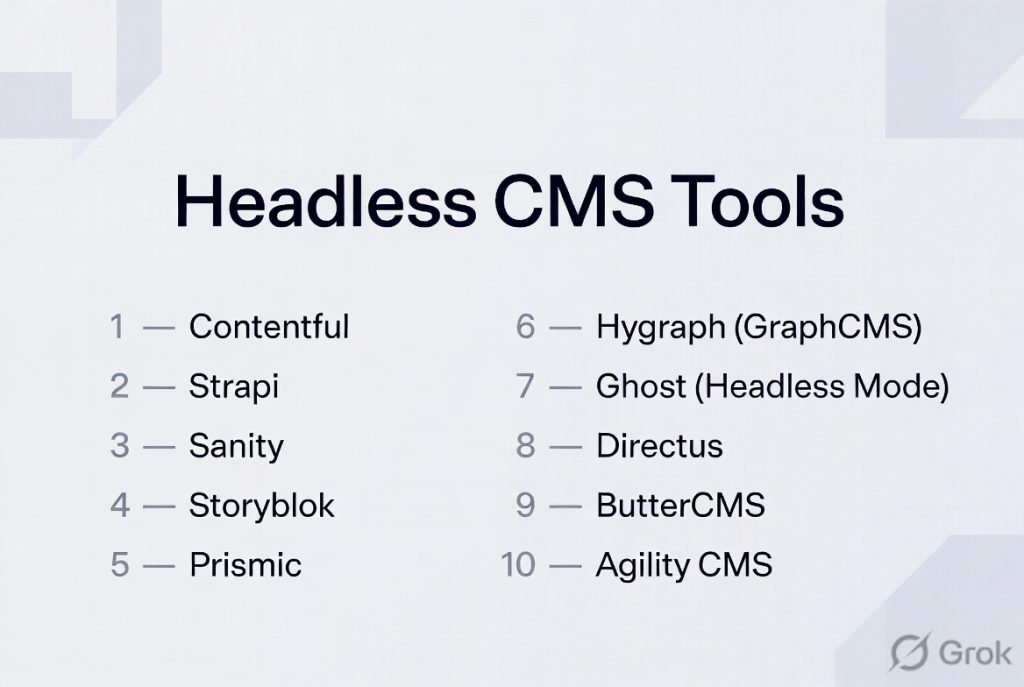
#1 — Contentful
Short description: A leading headless CMS platform known for its scalability and developer-friendly API-first architecture.
Key Features
- API-first content delivery
- Flexible content modeling
- Multi-channel publishing
- Cloud-native infrastructure
- Role-based access control
- Localization support
- Developer SDKs
Pros
- Highly scalable
- Strong developer experience
- Robust ecosystem
Cons
- Pricing can increase with usage
- Requires technical expertise
Platforms / Deployment
Web
Cloud
Security & Compliance
Encryption, RBAC
Varies / Not publicly stated
Integrations & Ecosystem
Extensive integrations for modern stacks.
- APIs
- Frontend frameworks
- Marketing tools
- Cloud services
Support & Community
Strong documentation and developer community.
#2 — Strapi
Short description: An open-source headless CMS that offers flexibility and full customization for developers.
Key Features
- Open-source platform
- Customizable APIs
- Self-hosted or cloud deployment
- Content management dashboard
- Plugin system
- Role-based permissions
Pros
- Highly customizable
- No vendor lock-in
- Active community
Cons
- Requires setup and maintenance
- Limited built-in enterprise features
Platforms / Deployment
Web
Self-hosted / Cloud
Security & Compliance
Varies / Not publicly stated
Integrations & Ecosystem
Flexible integration options.
- APIs
- Plugins
- Developer tools
Support & Community
Strong open-source community.
#3 — Sanity
Short description: A real-time headless CMS focused on structured content and collaborative workflows.
Key Features
- Real-time content editing
- Structured content model
- API-based delivery
- Customizable studio
- Image and asset pipeline
- Query-based content fetching
Pros
- Real-time collaboration
- Flexible content structure
- Developer-friendly
Cons
- Learning curve
- Pricing varies with usage
Platforms / Deployment
Web
Cloud
Security & Compliance
Varies / Not publicly stated
Integrations & Ecosystem
Modern integrations for developers.
- APIs
- Frontend frameworks
- Cloud tools
Support & Community
Strong developer support.
#4 — Storyblok
Short description: A headless CMS with a visual editor, bridging the gap between developers and content teams.
Key Features
- Visual editor
- Component-based content
- API-first delivery
- Multi-language support
- Workflow management
- Cloud hosting
Pros
- Editor-friendly
- Good balance of usability and flexibility
- Strong collaboration tools
Cons
- Pricing tiers can be limiting
- Advanced features require setup
Platforms / Deployment
Web
Cloud
Security & Compliance
Varies / Not publicly stated
Integrations & Ecosystem
- APIs
- Frontend frameworks
- Marketing tools
Support & Community
Good documentation and support.
#5 — Prismic
Short description: A developer-friendly headless CMS with a focus on simplicity and content-driven websites.
Key Features
- API-based content delivery
- Slice-based content modeling
- Content scheduling
- Multi-language support
- Media management
- Preview functionality
Pros
- Easy to implement
- Good documentation
- Strong for marketing sites
Cons
- Limited advanced workflows
- Less flexible than some competitors
Platforms / Deployment
Web
Cloud
Security & Compliance
Varies / Not publicly stated
Integrations & Ecosystem
- APIs
- Frontend frameworks
- Static site generators
Support & Community
Helpful documentation and support.
#6 — Hygraph (GraphCMS)
Short description: A GraphQL-native headless CMS designed for modern API-driven applications.
Key Features
- GraphQL API
- Content federation
- Flexible schema
- Multi-channel delivery
- Role-based access
- High performance
Pros
- Strong GraphQL support
- Scalable
- Developer-focused
Cons
- Requires GraphQL knowledge
- Learning curve
Platforms / Deployment
Web
Cloud
Security & Compliance
Varies / Not publicly stated
Integrations & Ecosystem
- APIs
- GraphQL tools
- Developer frameworks
Support & Community
Strong developer documentation.
#7 — Ghost (Headless Mode)
Short description: A publishing-focused CMS that can also operate as a headless CMS for content delivery.
Key Features
- API-based content access
- Membership and subscriptions
- Fast performance
- SEO tools
- Content editor
- Open-source
Pros
- Fast and lightweight
- Great for publishing
- Modern interface
Cons
- Limited enterprise features
- Smaller ecosystem
Platforms / Deployment
Web
Cloud / Self-hosted
Security & Compliance
Varies / Not publicly stated
Integrations & Ecosystem
- APIs
- Publishing tools
- Developer integrations
Support & Community
Growing community support.
#8 — Directus
Short description: An open-source headless CMS that turns any SQL database into a content API.
Key Features
- Database-first architecture
- API generation
- Custom dashboards
- Role-based access
- Self-hosted option
- Real-time data
Pros
- Highly flexible
- Open-source
- No vendor lock-in
Cons
- Requires database knowledge
- Setup complexity
Platforms / Deployment
Web
Self-hosted / Cloud
Security & Compliance
Varies / Not publicly stated
Integrations & Ecosystem
- APIs
- Databases
- Developer tools
Support & Community
Active open-source community.
#9 — ButterCMS
Short description: A simple headless CMS focused on marketing teams and content-driven websites.
Key Features
- API-based content
- SEO tools
- Blog engine
- Media library
- Multi-language support
- Easy setup
Pros
- Easy to use
- Quick implementation
- Good for marketing teams
Cons
- Limited advanced features
- Less flexible for complex apps
Platforms / Deployment
Web
Cloud
Security & Compliance
Varies / Not publicly stated
Integrations & Ecosystem
- APIs
- Marketing tools
- Frontend frameworks
Support & Community
Good support and onboarding.
#10 — Agility CMS
Short description: A headless CMS combining content management with flexible page management features.
Key Features
- API-first delivery
- Content modeling
- Page management
- Multi-channel publishing
- Workflow tools
- Cloud hosting
Pros
- Flexible architecture
- Good for enterprise use
- Scalable
Cons
- Smaller ecosystem
- Pricing varies
Platforms / Deployment
Web
Cloud
Security & Compliance
Varies / Not publicly stated
Integrations & Ecosystem
- APIs
- Developer tools
- Business applications
Support & Community
Good support resources.
Comparison Table (Top 10)
| Tool Name | Best For | Platform(s) Supported | Deployment | Standout Feature | Public Rating |
|---|---|---|---|---|---|
| Contentful | Enterprise | Web | Cloud | API-first CMS | N/A |
| Strapi | Developers | Web | Hybrid | Open-source | N/A |
| Sanity | Real-time content | Web | Cloud | Live editing | N/A |
| Storyblok | Teams | Web | Cloud | Visual editor | N/A |
| Prismic | Marketing | Web | Cloud | Slice-based model | N/A |
| Hygraph | Developers | Web | Cloud | GraphQL | N/A |
| Ghost | Publishing | Web | Hybrid | Speed | N/A |
| Directus | Data-driven apps | Web | Hybrid | Database-first | N/A |
| ButterCMS | SMB | Web | Cloud | Simplicity | N/A |
| Agility CMS | Enterprise | Web | Cloud | Page management | N/A |
Evaluation & Scoring of Headless CMS
| Tool Name | Core (25%) | Ease (15%) | Integrations (15%) | Security (10%) | Performance (10%) | Support (10%) | Value (15%) | Weighted Total |
|---|---|---|---|---|---|---|---|---|
| Contentful | 9 | 7 | 9 | 8 | 9 | 8 | 7 | 8.3 |
| Strapi | 8 | 6 | 8 | 7 | 8 | 8 | 9 | 8.0 |
| Sanity | 9 | 7 | 8 | 8 | 9 | 8 | 7 | 8.2 |
| Storyblok | 8 | 8 | 8 | 7 | 8 | 7 | 7 | 7.8 |
| Prismic | 7 | 8 | 7 | 7 | 8 | 7 | 8 | 7.6 |
| Hygraph | 9 | 6 | 9 | 8 | 9 | 7 | 7 | 8.1 |
| Ghost | 7 | 8 | 6 | 7 | 9 | 7 | 8 | 7.6 |
| Directus | 8 | 6 | 8 | 7 | 8 | 7 | 9 | 7.9 |
| ButterCMS | 7 | 9 | 7 | 7 | 7 | 7 | 8 | 7.6 |
| Agility CMS | 8 | 7 | 8 | 7 | 8 | 7 | 7 | 7.7 |
How to interpret scores:
- Scores are comparative across tools
- Higher scores indicate stronger overall capabilities
- Developer-focused tools score higher in integrations and flexibility
- Simpler tools score higher in ease of use
Which Headless CMS Tool Is Right for You?
Solo / Freelancer
- Best: ButterCMS, Ghost
- Focus on simplicity and fast setup
SMB
- Best: Prismic, Storyblok
- Balance usability and flexibility
Mid-Market
- Best: Sanity, Strapi
- Need scalability and customization
Enterprise
- Best: Contentful, Hygraph
- Focus on performance, integrations, and scale
Budget vs Premium
- Budget: Strapi, Directus
- Premium: Contentful, Sanity
Feature Depth vs Ease of Use
- Advanced: Contentful, Hygraph
- Easy: ButterCMS, Storyblok
Integrations & Scalability
- Best: Contentful, Hygraph
Security & Compliance Needs
- High: Contentful, Sanity
- Standard: ButterCMS, Prismic
Frequently Asked Questions (FAQs)
What is a Headless CMS?
A CMS that delivers content via APIs without managing the frontend.
How is it different from traditional CMS?
Traditional CMS handles both frontend and backend, while headless separates them.
Do I need coding skills?
Yes, most headless CMS platforms require development knowledge.
Is it good for SEO?
Yes, when combined with modern frontend frameworks.
Can it support multiple platforms?
Yes, it is designed for omnichannel delivery.
Is it scalable?
Yes, most platforms are built for high scalability.
What is API-first CMS?
A CMS designed to deliver content through APIs.
Is it suitable for small businesses?
Yes, but may require technical resources.
What are common mistakes?
Ignoring developer requirements and integration complexity.
Can I migrate from traditional CMS?
Yes, but it requires planning and development effort.
Conclusion
Headless CMS platforms are transforming how businesses manage and deliver content. By separating content from presentation, they offer unmatched flexibility, scalability, and performance for modern digital experiences.
