Introduction
Influencer marketing has evolved from an experimental tactic into a cornerstone of modern digital marketing campaigns. Businesses of every size—from early-stage direct-to-consumer (DTC) startups to global enterprises—allocate significant portions of their advertising budgets to social media creators.
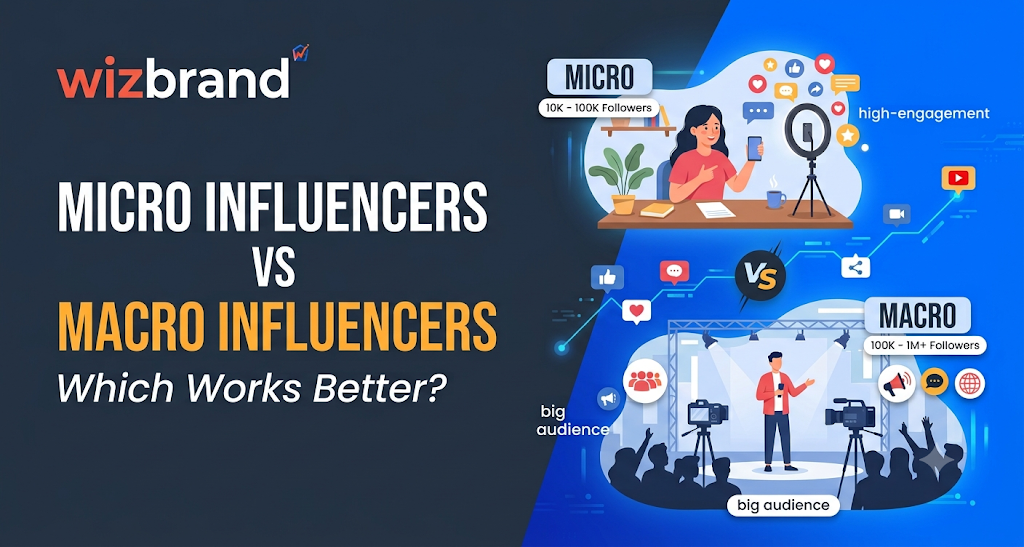
Yet, marketing teams routinely face a critical strategic fork in the road: micro influencers vs macro influencers.
Selecting the appropriate influencer tier is not simply a matter of headcount or vanity metrics. Audience reach, community trust, follower engagement rates, production overhead, and campaign budgets all intersect to dictate actual campaign outcomes. Choosing the wrong tier often leads to wasted budget, poor brand alignment, or disappointing conversion rates.
Understanding the functional trade-offs between smaller, highly concentrated creator communities and larger, widely visible figures enables marketing professionals to build an influencer marketing strategy rooted in commercial reality rather than follower counts alone.
Understanding Micro Influencers
Micro influencers are content creators who have cultivated focused, dedicated followings centered on specific topics, hobbies, lifestyle niches, or industries.
       ┌────────────────────────────────────────────────────────┐
       │               Micro Creator Ecosystem                  │
       │                                                        │
       │  [ 10,000 – 100,000 Followers ]                        │
       │  • Vertical specialisation (vegan baking, dev tools)   │
       │  • High two-way dialogue in comments & DMs             │
       │  • Peer-level product recommendations                  │
       └────────────────────────────────────────────────────────┘
Typical Audience Size
While classification thresholds vary across social platforms, marketing agencies, and research bodies, the industry standard benchmark defines micro influencers as creators with 10,000 to 100,000 followers (with some niche segments categorizing accounts from 5,000 to 50,000).
Niche Communities and Content Formats
Micro creators rarely produce generalized entertainment. Instead, they operate within tight verticals:
- Specialized home improvement and woodworking
- Sustainable textiles and zero-waste living
- High-intensity interval training (HIIT) for working parents
- Cloud architecture and developer tool reviews
Their content formats favor native, platform-specific media such as detailed Instagram carousel tutorials, informal TikTok breakdowns, unedited YouTube product demonstrations, and conversational LinkedIn posts.
Why Brands Work With Micro Creators
Businesses partner with micro influencers primarily because of perceived peer trust. When an account with 18,000 followers recommends a specific brand of non-toxic cookware, followers interpret the recommendation as advice from an experienced friend rather than a broadcast celebrity endorsement.
Realistic Example:
A regional coffee roaster seeks to expand online bean subscriptions. Partnering with a lifestyle celebrity with two million followers might yield broad awareness, but most followers live outside shipping zones or lack manual brewing gear.
Instead, partnering with three micro influencers—each with 15,000 followers dedicated strictly to pour-over brewing methods and specialty espresso—delivers the product directly to an audience that already owns grinders, scales, and drippers. The alignment between the audience’s daily habits and the product offering produces immediate relevance.
Advantages and Limitations
Advantages:
- Higher relative engagement: Community sizes permit creators to reply to individual comments and direct messages.
- Cost-effective access: Lower per-post fees enable brands to test messaging across multiple accounts.
- Authentic content style: Content frequently resembles authentic user-generated content (UGC), integrating smoothly into algorithmic feeds.
Limitations:
- Constrained total reach: Reaching a national audience requires coordinating with dozens of creators simultaneously.
- Variable professionalism: Some micro creators lack formal business operations, standard contracts, or third-party demographic reporting.
- Higher administrative overhead: Sourcing, briefing, shipping products to, and managing ten individual creators demands substantial administrative time.
Understanding Macro Influencers
Macro influencers are established digital creators, industry personalities, prominent lifestyle figures, or internet celebrities who command substantial audiences across one or more digital platforms.
       ┌────────────────────────────────────────────────────────┐
       │               Macro Creator Ecosystem                  │
       │                                                        │
       │  [ 100,000 – 1,000,000+ Followers ]                    │
       │  • Broad lifestyle, entertainment, or industry appeal  │
       │  • Professional production values & agency management  │
       │  • Fast, mass-market top-of-funnel reach               │
       └────────────────────────────────────────────────────────┘
Typical Audience Size
Macro creators generally maintain audience counts ranging between 100,000 and 1,000,000 followers. Creators exceeding one million followers are typically designated as mega influencers or celebrity-tier creators.
Brand Awareness and Broad Distribution
Macro influencers serve primarily as broadcast channels. Their content is designed to appeal across demographic lines, addressing broad lifestyle segments such as beauty, gaming, tech, personal finance, travel, and mainstream entertainment.
Their content frequently features studio-grade production values:
- 4K cinematic YouTube videos with multi-angle setups
- Professionally styled photo shoots
- High-production podcast sponsorships
- Scripted multi-part short-form video series
Advantages and Limitations
Advantages:
- Rapid brand awareness: A single collaborative post exposes a product to hundreds of thousands of active viewers within 24 to 48 hours.
- Established operational processes: Most macro creators work through talent managers, literary agencies, or formal production teams, providing clear contracts, standardized deliverables, and established usage terms.
- Strong social proof: Associating a brand with an established digital personality lends perceived institutional credibility to newer market entrants.
Limitations:
- Lower average engagement rates: As audience size scales past hundreds of thousands, direct creator-to-follower conversation diminishes, resulting in lower percentage-based engagement.
- Premium cost requirements: Flat fees for macro talent run into thousands or tens of thousands of dollars per deliverable.
- Heterogeneous audience composition: Large followings are distributed across diverse geographic regions, age brackets, and interest groups, which can dilute campaign messaging for niche products.
Micro Influencers vs Macro Influencers: Key Differences
To select the right creator tier, marketing teams must evaluate how each group functions across operational, financial, and strategic dimensions.
| Dimension | Micro Influencers | Macro Influencers |
|---|---|---|
| Typical Audience Size | 10,000 to 100,000 followers | 100,000 to 1,000,000+ followers |
| Potential Reach | Low to moderate per creator; scalable through multi-creator networks | High to very high from a single campaign placement |
| Audience Engagement | Moderate to high; frequent direct interaction in comments | Moderate to low; communication tends to be one-way |
| Niche Relevance | Deep, vertical focus on distinct subject matters | Broad lifestyle or entertainment themes |
| Perceived Trust | Viewed as peers, practitioners, or knowledgeable enthusiasts | Viewed as media personalities, aspirational figures, or industry experts |
| Typical Campaign Costs | Modest flat fees, product gifting, or performance commissions | Substantial fixed production and talent fees |
| Content Style | Informal, everyday aesthetic; platform-native UGC style | Polished, professional-grade production values |
| Audience Targeting | Highly segmented by specific interest, profession, or subculture | Broadly segmented across demographic groups |
| Brand Awareness Role | Incremental, hyper-local, or subculture-specific recognition | Immediate, mass-market top-of-funnel brand visibility |
| Conversion Potential | Strong for specific niche products needing trust and peer validation | Strong for widely accessible, mass-market consumer products |
| Management Complexity | High when running campaigns across multiple creator relationships | Low creator count, but involves formal legal and agency reviews |
| Business Suitability | Bootstrapped startups, niche DTC brands, B2B tools, local shops | Mid-market brands, funded enterprises, mass-retail consumer products |
| Reporting Needs | Aggregated tracking across multiple UTMs, codes, and creators | Comprehensive delivery tracking, content exclusivity, and brand lift |
Engagement Rate and Audience Trust
Understanding how audiences interact with creators is vital when comparing micro and macro tiers.
How Engagement Rate is Calculated
The standard formula for calculating engagement rate on a social post measures total public interactions against follower count:
Engagement Rate (%)=(Total Follower CountLikes+Comments+Shares+Saves)×100
Some analytics models substitute total impressions or actual reach for follower count to account for algorithmic distribution. Regardless of the exact formula, engagement rate tends to decline as follower count increases.
According to cross-platform industry benchmarks published by research organizations like Influencer Marketing Hub and Later, creators with fewer than 50,000 followers frequently sustain engagement rates between 2% and 5% (and occasionally higher on platforms like TikTok). Accounts exceeding 500,000 followers often see average engagement rates fall between 1% and 2%.
Engagement Rate (%)
  ▲
5%│     ● Micro Creators (10k - 50k)
4%│
3%│           ● Mid-Tier Creators (50k - 100k)
2%│
1%│                 ● Macro Creators (100k - 1M)
0%└──────────────────────────────────────────────►
  0     100k    250k    500k    750k    1M+ Followers
Why Follower Count Alone Is an Unreliable Metric
A creator with 800,000 followers may deliver 8,000 likes on an image post—representing a 1% engagement rate. A micro creator with 25,000 followers generating 1,000 likes and 150 thoughtful comments delivers a 4.6% engagement rate.
More importantly, the quality of engagement differs fundamentally:
- Passive engagement: Generic emoji reactions, brief praise, or bot comments (“Great post!”).
- Active engagement: Nuanced user questions (“Does this software integrate with Zapier?”, “Did you find the sizing ran small?”), product debates, and peer-to-peer discussions.
Micro creators spend time answering these specific questions. Their comments section operates as a community forum where purchasing decisions are actively formed.
Detecting Fake Followers and Artificial Activity
Inflated metrics threaten campaign efficiency across both tiers. Marketers should watch for key red flags:
- Sudden, unexplained follower spikes on third-party analytics trackers.
- Comment sections filled with repetitive emojis, generic comments, or accounts lacking profile photos.
- A massive audience paired with negligible view counts or zero comment interactions.
- Disproportionate follower origins (e.g., a regional German brand creator whose followers primarily originate from click farms in unrelated geographic regions).
Influencer Marketing Costs and Budget Planning
Influencer marketing pricing is rarely fixed. Rates fluctuate based on niche, platform, seasonality, deliverables, and audience location.
Core Factors Driving Campaign Pricing
- Audience Demographics: Creators with audiences concentrated in high-purchasing-power regions (such as North America, Western Europe, and parts of the Asia-Pacific) command higher rates than creators with distributed international audiences.
- Platform and Content Format: A permanent YouTube integration requiring dedicated scripting, filming, and editing demands higher investment than an ephemeral 24-hour Instagram Story frame.
- Usage Rights and Whitelisting: If a brand plans to use the creator’s video as a paid ad asset (whitelisting/creator licensing) for 90 days, expect to pay a 30% to 100% licensing surcharge above the organic posting fee.
- Exclusivity Clauses: Restricting a creator from working with competing brands for 30, 60, or 90 days requires financial compensation for their lost partnership opportunities.
- Niche Specialization: High-value B2B tech, enterprise SaaS, medical, and wealth-management creators command substantially higher rates per thousand impressions than general lifestyle or meme accounts.
Influencer Fee vs. Total Campaign Cost
Marketers often mistake the creator’s invoice for the entire campaign cost. A complete budget must account for:
- Product sample production and shipping costs
- Legal contract review and licensing agreements
- Platform or agency management fees
- Paid amplification spend (boosting creator assets)
- Internal personnel hours spent on discovery, vetting, and coordination
Cost Metrics: Evaluating Efficiency
To compare creator tiers fairly, marketing teams analyze unit economics:
- Cost Per Engagement (CPE):CPE=Total Verified EngagementsTotal Campaign Cost
- Cost Per Click (CPC):CPC=Total Tracked Link ClicksTotal Campaign Cost
- Cost Per Acquisition (CPA):CPA=Total Attributed ConversionsTotal Campaign Cost
Micro influencers frequently deliver more favorable CPE and CPA figures for targeted offerings. In contrast, macro influencers typically offer more efficient top-of-funnel CPMs (Cost Per Mille / Thousand Impressions) when evaluated strictly on raw audience reach.
Which Influencer Type Works Better for Different Marketing Goals?
Campaign goals dictate whether micro or macro influencers are the right strategic choice.
┌──────────────────────────────────────┬──────────────────────────────────────┐
│       MICRO INFLUENCER FOCUS         │        MACRO INFLUENCER FOCUS        │
├──────────────────────────────────────┼──────────────────────────────────────┤
│  • Deep Niche Audience Targeting     │  • Broad Brand Awareness             │
│  • High-Conversion E-Commerce Sales  │  • Mass-Market Product Launches      │
│  • Community Building & Dialogue     │  • Rapid Traffic Influx              │
│  • Local & Regional Promotions       │  • Mainstream Cultural Credibility   │
│  • Nuanced Product Education         │  • Multi-Channel Reach Expansion     │
└──────────────────────────────────────┴──────────────────────────────────────┘
Brand Awareness
- Best Fit: Macro Influencers
- Strategic Rationale: Macro creators expose a brand message to hundreds of thousands of people in a single moment. This broad reach is ideal for mass-market products (e.g., a national snack brand, beverage launch, or major streaming platform release) where the addressable market encompasses the general public.
Niche Audience Targeting
- Best Fit: Micro Influencers
- Strategic Rationale: When a product serves a specialized market (e.g., specialized accounting software for freelance designers), macro creators generate wasted reach. Micro creators speak directly to defined interest groups with minimal wasted impressions.
Product Launches
- Best Fit: Hybrid Approach
- Strategic Rationale: Macro influencers create immediate launch-day buzz, establishing name recognition and social proof. Simultaneously, a cohort of micro creators can provide detailed reviews, demonstrations, and community discussions that build trust over the following weeks.
Website Traffic
- Best Fit: Macro Influencers
- Strategic Rationale: Macro creators with swipe-up links or YouTube description links can drive significant traffic spikes to a web property within hours, which is ideal for time-sensitive promotions or flash sales.
Lead Generation
- Best Fit: Micro Influencers
- Strategic Rationale: Generating qualified leads requires trust and perceived authority. Micro creators in specific professional sectors (such as B2B technology, HR, or marketing) carry the peer credibility needed to convince audiences to register for webinars, download whitepapers, or sign up for free software trials.
E-Commerce Sales
- Best Fit: Micro Influencers
- Strategic Rationale: Micro creators often drive direct-response sales efficiently because their audiences trust their routine recommendations. When combined with dedicated discount codes and trackable links, a curated group of 15 micro creators often out-converts a single macro creator with an equivalent total audience size.
Community Building
- Best Fit: Micro Influencers
- Strategic Rationale: Micro creators actively interact with their followers in comments and messages. Partnering with them embeds your brand into an ongoing community dialogue rather than a one-off promotional broadcast.
Product Education
- Best Fit: Micro Influencers
- Strategic Rationale: Products requiring complex setup or lifestyle changes (such as specialty supplements, skincare routines, or developer tools) benefit from micro creators demonstrating real-world usage and answering detailed follower questions.
Local Marketing
- Best Fit: Micro Influencers
- Strategic Rationale: Macro creators have globally distributed followings. Promoting a regional boutique, fitness studio chain, or local restaurant requires working with micro creators whose followers live directly within the business’s trade area.
Long-Term Brand Relationships
- Best Fit: Micro Influencers
- Strategic Rationale: Micro creators are generally more open to ongoing brand ambassador arrangements. Securing continuous monthly coverage across several quarters is far more affordable with micro creators than with macro talent.
Micro Influencers vs Macro Influencers: Realistic Campaign Examples
The following hypothetical scenarios demonstrate how different business objectives shape creator selection.
Scenario A: Niche Direct-to-Consumer Skincare Brand
- Company Profile: An emerging skincare brand formulating gentle cleansers for customers with rosacea and severe skin sensitivity.
- Campaign Objective: Generate profitable direct-to-consumer e-commerce sales and build genuine social proof among sensitive-skin communities.
- Influencer Selection Strategy: 12 micro creators (audiences between 12,000 and 45,000 followers) who routinely post unedited skincare routines and open discussions about managing chronic skin sensitivity.
- Content Approach: Dedicated 30-day trial videos showing daily progress, unretouched texture shots, and direct engagement answering ingredient questions in comments.
- Budget Strategy: Modest upfront production fees paired with affiliate revenue-share links and product gifting.
- Measurement Plan: Unique coupon codes, UTM link tracking, and return customer rate analysis.
- Expected Outcome: High conversion efficiency, minimal wasted spend on unsuitable demographics, and authentic customer testimonials suitable for paid ad retargeting.
Scenario B: National Consumer Electronics Brand Launching Wireless Earbuds
- Company Profile: An established electronics company introducing a new mid-tier active noise-canceling earbud line across nationwide retail stores.
- Campaign Objective: Generate rapid nationwide awareness and establish market presence during the critical back-to-school shopping window.
- Influencer Selection Strategy: Two macro tech and lifestyle creators (audiences of 450,000 and 800,000 followers) with high production standards and recognized credibility in consumer tech.
- Content Approach: Professionally edited product review videos, aesthetic lifestyle placements, and dedicated feature overviews comparing noise cancellation to market benchmarks.
- Budget Strategy: High fixed talent contracts including 60-day paid digital ad usage rights.
- Measurement Plan: Brand lift surveys, total verified impressions, search volume growth, and retail store sales lift during the launch window.
- Expected Outcome: Widespread brand visibility, cultural relevance, and social proof that reinforces physical retail distribution.
Scenario C: E-Commerce Athletic Apparel Brand
- Company Profile: An athletic wear company looking to expand its reach among functional fitness enthusiasts while driving consistent monthly online sales.
- Campaign Objective: Balance top-of-funnel reach with direct performance sales.
- Influencer Selection Strategy: A balanced hybrid model. One macro fitness personality (350,000 followers) partnered alongside twenty micro creators (15,000 to 40,000 followers) consisting of local CrossFit coaches, powerlifters, and marathon runners.
- Content Approach: The macro creator provides an aspirational workout video introducing the brand’s apparel line. The micro creators post unboxing reviews, fabric squat-test demonstrations, and daily training sessions over a six-week period.
- Budget Strategy: 40% of the budget allocated to the macro creator’s talent fee; 60% divided among micro creator fees, performance incentives, and paid ad boosting.
- Measurement Plan: Blended Customer Acquisition Cost (CAC), aggregate Return on Ad Spend (ROAS), and affiliate link sales tracking.
- Expected Outcome: The macro influencer establishes broad brand credibility, while the distributed network of micro creators drives sustained, high-intent conversions.
How to Choose the Right Influencer for Your Brand
Selecting individual creators requires a structured vetting process to safeguard marketing spend.
       ┌────────────────────────────────────────────────────────┐
       │             Creator Vetting Framework                  │
       │                                                        │
       │  [Step 1] Define Goals & Target Audience               │
       │  [Step 2] Select Primary Platform & Determine Budget   │
       │  [Step 3] Analyze Audience Demographics & Quality      │
       │  [Step 4] Review Brand Fit & Engagement Quality        │
       │  [Step 5] Finalize Contracts, Rights & Reporting       │
       └────────────────────────────────────────────────────────┘
Step-by-Step Selection Process
- Define the Campaign Objective: Determine whether your primary metric is impressions, brand sentiment, website clicks, email leads, or verified checkout sales.
- Identify the Target Audience: Define your target buyer’s age, gender, geographic location, interests, and key pain points.
- Select the Relevant Social Platform: Align your choice with your audience’s habits: TikTok for short-form entertainment, Instagram for aesthetic and lifestyle products, YouTube for deep-dive tutorials, and LinkedIn for B2B services.
- Set the Available Budget: Establish your total spend, accounting for creator fees, product logistics, usage rights, and analytics software.
- Evaluate Audience Demographics and Location: Request verified back-end analytics from prospective creators. Ensure their follower demographics match your target market.
- Review Engagement Quality and Content Relevance: Read their comment sections. Are followers discussing the creator’s advice, or are the comments populated by generic bots?
- Check Audience Authenticity: Use analytics platforms to review follower growth trends and screen for sudden, inorganic spikes that point to purchased followings.
- Examine Previous Brand Collaborations: Review how the creator previously integrated sponsors. Did the integrations feel natural, or did they come across as disconnected ad reads?
- Agree on Deliverables, Usage Rights, and Disclosure Requirements: Clearly document deadlines, required content formats, licensing permissions, and regulatory compliance (e.g., proper
#ador sponsored disclosures). - Establish Campaign KPIs and Reporting Methods: Provide creators with unique tracking links, UTM parameters, and reporting deadlines before their content goes live.
Influencer Selection Checklist
Before finalizing an agreement with any creator, confirm that each of these conditions is met:
- [ ] Audience demographics align with your core customer profile by geography, age, and interests.
- [ ] Account shows consistent, steady follower growth over the past six months.
- [ ] Average engagement rate matches or exceeds platform and tier benchmarks.
- [ ] Comments reflect genuine human interaction with substantive questions and replies.
- [ ] Creator’s aesthetic, tone, and personal values match your brand guidelines.
- [ ] Creator has complied with advertising disclosure regulations in prior brand partnerships.
- [ ] Written agreement defines exact deliverables, formats, review rounds, and publication dates.
- [ ] Usage rights, paid whitelisting terms, and competitive exclusivity are explicitly defined.
- [ ] Unique UTM parameters, trackable discount codes, or landing page links have been generated and tested.
Using Both Micro and Macro Influencers in One Campaign
For mid-sized and enterprise brands, influencer marketing is rarely an “either/or” decision. Combining both tiers often produces a complete marketing funnel.
                   The Full-Funnel Influencer Strategy

      [ Top of Funnel ]       Macro Influencers
                              • Broad Awareness & Visibility
                              • Immediate Brand Credibility
                                     │
                                     ▼
      [ Mid to Low Funnel ]   Micro Influencers
                              • Community Validation
                              • Niche Use Cases & Tutorials
                              • High-Intent Direct Conversions
Structuring a Multi-Tier Strategy
In a tiered campaign, macro creators drive top-of-funnel reach, while micro creators deliver middle- and bottom-of-funnel validation:
- Top of Funnel (Macro): A prominent macro creator introduces your product to 500,000 viewers, establishing immediate awareness and social proof.
- Mid to Bottom of Funnel (Micro): Simultaneously, ten micro creators publish in-depth tutorials, unboxings, and practical demonstrations tailored to specific subcultures. Viewers who first saw the product via the macro creator now see it validated by trusted niche figures, reinforcing their purchase intent.
Operational Guidelines for Combined Campaigns
- Coordinate Launch Windows: Schedule the macro creator’s content 24 to 48 hours ahead of your micro creator wave to generate initial awareness before the focused reviews hit feeds.
- Repurpose Creator Assets: Secure paid usage rights across both tiers. High-production assets from macro creators provide compelling top-of-funnel video ads, while authentic micro creator clips often serve as high-converting middle-of-funnel social ads.
- Manage Audience Overlap: Ensure your chosen micro creators serve distinct subcultures or geographic regions to prevent audiences from seeing repetitive, uncoordinated promotions from similar accounts.
- Segment Performance Tracking: Use isolated tracking links, distinct discount codes, and dedicated landing pages for each creator tier. This prevents macro creators from taking credit for micro-driven conversions, and vice versa.
Measuring Influencer Marketing Performance
Influencer campaigns should be evaluated using clear, measurable key performance indicators (KPIs) tied directly to broader business objectives.
┌────────────────────────────────────────────────────────────────────────┐
│                        Performance KPI Stack                           │
├──────────────────────────┬─────────────────────────────────────────────┤
│ Brand Visibility         │ Reach, Impressions, Video Completion Rate   │
├──────────────────────────┼─────────────────────────────────────────────┤
│ Audience Engagement      │ Comments, Shares, Saves, Cost Per Engagement│
├──────────────────────────┼─────────────────────────────────────────────┤
│ Direct Action            │ Link Clicks, CTR, Cost Per Click            │
├──────────────────────────┼─────────────────────────────────────────────┤
│ Commercial Conversion    │ Sales, Sign-Ups, CPA, Return on Ad Spend    │
└──────────────────────────┴─────────────────────────────────────────────┘
Essential Campaign Metrics
- Reach and Impressions: Measures total unique accounts reached and aggregate content views. Useful for evaluating top-of-funnel brand visibility.
- Engagement Rate and Cost Per Engagement (CPE): Evaluates how actively the audience interacted with the content relative to the budget invested.
- Video Views and Completion Rates: Reveals how compelling long-form or short-form video assets were to the audience.
- Click-Through Rate (CTR): Measures link clicks against impressions, indicating how well the creator’s call-to-action motivated their audience.
- Cost Per Acquisition (CPA): Tracks the direct cost required to generate a customer acquisition, demo request, or sign-up.
- Return on Ad Spend (ROAS):ROAS=Total Campaign ExpenditureTotal Revenue Attributed to Influencer Campaign
Tracking Infrastructure
Accurate measurement requires dedicated tracking mechanisms:
- Custom UTM Parameters: Standardize URL tagging across every creator link to separate referral traffic inside your web analytics platform.
- Exclusive Discount Codes: Provide creators with unique promo codes to track sales that happen outside direct link clicks (e.g., when a user sees a post on Instagram and purchases later via desktop).
- Dedicated Landing Pages: Build campaign-specific landing pages tailored to the creator’s audience to improve conversion rates and simplify attribution.
Understanding Attribution Limits
Marketing teams must recognize that digital attribution is rarely 100% linear. Privacy updates, cross-device browsing, and delayed purchasing decisions mean that influencer campaigns often drive indirect value. Tracking branded search volume increases, direct website traffic, and post-purchase customer surveys provides a fuller picture of overall campaign impact alongside click-based analytics.
How WizBrand Can Fit Into an Influencer Marketing Strategy
Managing modern digital marketing campaigns requires disciplined workflow management, thorough asset organization, and consistent measurement. This is where comprehensive digital marketing and brand management software platforms become valuable.
WizBrand provides an integrated digital marketing platform and software suite designed to help businesses organize, execute, and monitor their online marketing efforts.
       ┌─────────────────────────────────────────────────────────┐
       │                WizBrand Management Suite                │
       │                                                         │
       │  • Centralized Project & Campaign Task Tracking         │
       │  • Digital Asset & Creative Content Management          │
       │  • Social Media Management & Marketing Utilities        │
       │  • Cross-Channel Performance & Campaign Reporting       │
       └─────────────────────────────────────────────────────────┘
Supporting Influencer Campaign Workflows
Running campaigns with multiple creators—particularly micro influencers—presents real logistical challenges:
- Workflow and Task Coordination: WizBrand’s project management and task assignment features help marketing teams structure influencer outreach, keep track of product sample delivery dates, and manage draft review approvals.
- Digital Asset Management (DAM): Brands running multi-creator initiatives must organize high volumes of creative assets, raw video files, contract agreements, and creative briefs. A central asset repository keeps these files accessible across marketing, legal, and design teams.
- Social Media Management and Strategy: WizBrand integrates a wide variety of digital marketing utilities, social management tools, and web optimization frameworks that help marketers evaluate how creator campaigns complement their organic search, social media, and content marketing channels.
- Consolidated Performance Tracking: Marketers can organize campaign timelines and review analytical data points across channels to ensure promotional periods align cleanly with broader corporate marketing calendars.
Evaluating Marketing Platform Needs
Before choosing software to support creator management, marketing teams should audit their operational bottlenecks:
- If coordinating deliverables across twenty micro creators is consuming team bandwidth, centralized workflow tools provide immediate leverage.
- If campaign data is siloed across disparate spreadsheets, adopting a structured management platform like WizBrand helps unify marketing operations, streamline cross-functional handoffs, and maintain strategic visibility.
Common Mistakes to Avoid
Influencer campaigns often struggle due to avoidable strategic and operational errors.
1. Choosing Creators Based Exclusively on Follower Count
- The Mistake: Partnering with an account solely because it has 500,000 followers, without checking audience demographics, geographic location, or relevance.
- The Solution: Prioritize niche relevance, comment quality, and demographic fit over raw follower headcounts.
2. Overlooking Audience Authenticity and Engagement Quality
- The Mistake: Hiring creators who have inflated their metrics using bot followings, engagement pods, or purchased interactions.
- The Solution: Audit comment sections for substantive discussions and use third-party analytics tools to identify unnatural follower growth spikes.
3. Misaligning Brand Values and Creator Tone
- The Mistake: Forcing a corporate, buttoned-up script onto an informal, satirical creator whose audience will immediately recognize the mismatch.
- The Solution: Provide creators with structured briefs that highlight key product messages while giving them creative freedom to communicate in their authentic style.
4. Overlooking Contractual Usage Rights
- The Mistake: Assuming an influencer’s organic post can automatically be repurposed as a paid video ad on Meta, TikTok, or YouTube without explicit agreement.
- The Solution: Clearly define paid usage rights, whitelisting terms, and licensing duration upfront in written contracts.
5. Prioritizing Vanity Metrics Over Business Outcomes
- The Mistake: Measuring campaign success solely on raw impressions or superficial likes while ignoring website traffic, customer leads, and sales.
- The Solution: Establish concrete commercial KPIs, use dedicated UTM tracking links, and measure revenue performance against campaign costs.
6. Expecting Instant Conversions From Single Placements
- The Mistake: Treating an influencer post like a direct-response ad and abandoning creator marketing after a single post fails to drive immediate profitability.
- The Solution: Treat influencer marketing as a compounding strategic channel. Plan multi-touch campaigns or recurring creator partnerships to build lasting audience familiarity.
Future Trends in Influencer Marketing
The creator economy continues to mature, driven by evolving consumer habits, shifting platform algorithms, and emerging tracking technologies.
┌────────────────────────────────────────────────────────────────────────┐
│                        Emerging Creator Trends                         │
├──────────────────────────┬─────────────────────────────────────────────┤
│ Creator-Led Commerce     │ Native in-app shopping & interactive carts  │
├──────────────────────────┼─────────────────────────────────────────────┤
│ Long-Term Partnerships   │ Shift from one-off ads to brand ambassadors │
├──────────────────────────┼─────────────────────────────────────────────┤
│ Performance Compensation │ Hybrid base fees tied to affiliate revenue  │
├──────────────────────────┼─────────────────────────────────────────────┤
│ Short-Form Video Focus   │ Algorithmic discovery across TikTok & Reels │
├──────────────────────────┼─────────────────────────────────────────────┤
│ AI-Assisted Operations   │ Automated vetting & predictive analytics    │
└──────────────────────────┴─────────────────────────────────────────────┘
Established Industry Trends
- The Growth of Long-Term Creator Ambassadorships: Brands are moving away from one-off sponsored posts in favor of six-to-twelve-month ambassador partnerships. Audiences recognize and trust recurring product usage far more than isolated endorsements.
- Short-Form Video Dominance: Short-form video platforms (TikTok, Instagram Reels, and YouTube Shorts) prioritize algorithmic interest graphs over static follower graphs. This shift frequently allows high-quality micro creator content to achieve viral reach that rivals macro-tier visibility.
- Performance-Driven Compensation Models: More brands are combining flat talent fees with performance-based incentives, such as affiliate commissions or bonuses tied to verified sales targets.
Forward-Looking Industry Shifts
- AI-Assisted Creator Discovery and Analytics: Machine-learning tools are becoming standard for vetting creators, identifying fake follower patterns, and predicting campaign performance based on historic engagement data.
- Direct Social Commerce Integration: As social platforms expand native in-app shopping checkouts, creator posts are transitioning into direct digital storefronts, shortening the customer journey from discovery to final sale.
Frequently Asked Questions
What is the difference between micro influencers and macro influencers?
The primary difference lies in audience size, content focus, and relationship with followers. Micro influencers typically have between 10,000 and 100,000 followers, focusing on specific niche topics with high community engagement. Macro influencers command between 100,000 and 1,000,000 followers, producing broader lifestyle content aimed at wide reach and high brand awareness.
Which influencer type is better for small businesses?
Micro influencers are usually better suited for small businesses and early-stage startups. They offer accessible entry costs, highly targeted local or niche audiences, and higher engagement rates, allowing smaller brands to run cost-effective campaigns without exhausting their marketing budgets.
Do micro influencers usually have higher engagement rates?
Yes, industry research consistently shows that micro influencers generally sustain higher percentage-based engagement rates than macro influencers. Smaller audiences allow creators to maintain direct, two-way conversations with their followers, which fosters greater community trust.
Are macro influencers more expensive?
Yes. Macro influencers command significantly higher fixed production and talent fees due to their broad reach and professional brand profiles. Campaigns with macro creators frequently run into thousands or tens of thousands of dollars per deliverable.
Which influencer type is better for brand awareness?
Macro influencers excel at brand awareness. Their massive follower counts allow businesses to expose new products, brand refreshes, or major announcements to hundreds of thousands of consumers simultaneously.
Which influencer type is better for driving sales?
Micro influencers often deliver better conversion efficiency for niche and specialized products because their followers view their recommendations as trusted, peer-level advice. However, macro influencers can drive substantial gross sales volumes for mass-market consumer products with universal appeal.
How do brands calculate influencer marketing ROI?
Influencer marketing return on investment (ROI) is calculated by comparing net profit attributed to the campaign against total campaign expenses:
ROI=(Total Campaign ExpenditureAttributed Gross Profit−Total Campaign Expenditure)×100
Attribution is tracked using dedicated UTM parameters, affiliate coupon codes, trackable landing pages, and post-purchase customer attribution surveys.
How can businesses check whether an influencer has fake followers?
Brands can audit creator authenticity by reviewing audience growth charts for sudden, unnatural spikes, checking comment sections for repetitive bot phrases, and evaluating the ratio of total followers to post engagements. Dedicated analytics platforms also provide automated audience quality scores.
Can a brand use micro and macro influencers together?
Yes, a hybrid strategy is often effective for established brands. Macro influencers generate initial top-of-funnel awareness, while a coordinated network of micro creators reinforces the message through niche communities, detailed product tutorials, and trusted recommendations.
How many influencers should a business work with?
There is no universal number; campaign scale depends entirely on available resources and goals. A brand testing creator marketing may begin with three to five vetted micro influencers. Larger enterprise campaigns often coordinate twenty to fifty micro creators alongside one or two macro creators.
Which social media platform is best for influencer marketing?
The best platform depends on your target audience and product format. Instagram remains popular for lifestyle imagery and Stories; TikTok leads short-form video discovery; YouTube is ideal for in-depth, evergreen video reviews; and LinkedIn serves as the primary channel for professional B2B software and services.
What core metrics should brands track?
Brands should evaluate a mix of reach, engagement, and conversion metrics: total impressions, engagement rate, video completion rate, click-through rate (CTR), cost per engagement (CPE), cost per acquisition (CPA), and attributed revenue.
How can businesses find influencers in a specific niche?
Marketers can find niche creators by searching vertical hashtags, monitoring industry conversations, surveying existing customers about who they follow, and using dedicated influencer discovery databases and digital marketing management platforms.
How can a company manage multiple influencer campaigns?
Managing multiple campaigns requires disciplined operations: standardized creative briefs, clear legal contracts, structured spreadsheets or centralized project management platforms, and organized digital asset management systems to track assets and performance.
How can a marketing platform support influencer campaign management?
A marketing management platform helps teams centralize campaign planning, assign tasks, organize creative deliverables, track digital assets, and integrate creator promotions into broader digital marketing and social media workflows.
Conclusion
When comparing micro influencers vs macro influencers, neither tier is inherently superior. Each serves a distinct purpose within a comprehensive digital marketing strategy.
- Micro influencers provide specialized community access, deep peer-to-peer trust, high relative engagement rates, and cost-effective conversion paths. They are the ideal choice for niche products, targeted direct-to-consumer sales, and localized marketing efforts.
- Macro influencers act as powerful broadcast engines, delivering fast top-of-funnel reach, broad cultural visibility, and strong social proof for mass-market products and major launch events.
Successful marketing teams avoid making decisions based on vanity metrics alone. The right creator partnership depends on clear campaign objectives, target audience demographics, available budget, and reliable attribution methods.
As creator campaigns grow in sophistication, marketing platforms like WizBrand.com help organizations structure their digital marketing operations, coordinate creative assets, manage team workflows, and align influencer initiatives with their overall digital strategy.
