Introduction
Telecom OSS/BSS Systems are the core software platforms used by telecom operators to manage their network operations and business processes. OSS (Operations Support Systems) handle network management, service assurance, and infrastructure monitoring, while BSS (Business Support Systems) manage customer-facing functions like billing, orders, subscriptions, and revenue management. In simple terms, OSS keeps the network running, and BSS keeps the business running.
These systems are critical in 2026 because telecom operators are transitioning to 5G, IoT, cloud-native networks, and API-driven ecosystems. Legacy monolithic systems are being replaced by modular, AI-driven, and cloud-based OSS/BSS platforms that enable real-time service delivery and automated operations. OSS/BSS modernization is also a key enabler of telecom digital transformation and new revenue models like network-as-a-service and API monetization.
Real-world use cases include subscriber billing, prepaid and postpaid management, network fault detection, service activation, roaming management, customer lifecycle management, revenue assurance, and real-time network orchestration.
When evaluating OSS/BSS platforms, buyers should consider scalability, cloud readiness, integration flexibility, 5G support, AI automation capabilities, billing accuracy, API ecosystem maturity, data consistency, compliance readiness, and operational efficiency.
Best for: telecom operators, mobile network providers, ISP companies, cable operators, MVNOs, and digital service providers.
Not ideal for: small businesses without telecom infrastructure or companies not managing large-scale subscription or network systems.
Key Trends in Telecom OSS/BSS Systems for 2026 and Beyond
- Shift from monolithic systems to cloud-native modular OSS/BSS architectures
- Rapid adoption of AI-driven automation for network operations and billing
- Expansion of 5G-driven real-time service orchestration
- Increased use of APIs for telecom service monetization
- Convergence of OSS, BSS, and customer experience platforms
- Adoption of microservices and container-based telecom stacks
- Growth of real-time charging and billing systems
- Integration of OSS/BSS with IoT and edge computing ecosystems
- Rise of autonomous network operations using AI
- Strong focus on data-driven customer experience personalization
Telecom operators are increasingly adopting composable OSS/BSS systems that allow faster service deployment and more flexible business models.
How We Selected These Tools
- Focused on globally recognized OSS/BSS vendors and platforms
- Included both enterprise legacy systems and modern cloud-native solutions
- Evaluated billing, charging, and revenue management capabilities
- Considered network orchestration and service assurance strength
- Included platforms supporting 4G, 5G, and hybrid networks
- Assessed API readiness and ecosystem integration
- Prioritized real-world telecom operator adoption
- Included platforms with strong enterprise scalability
- Considered AI and automation capabilities in operations
- Avoided generic IT tools not designed for telecom environments
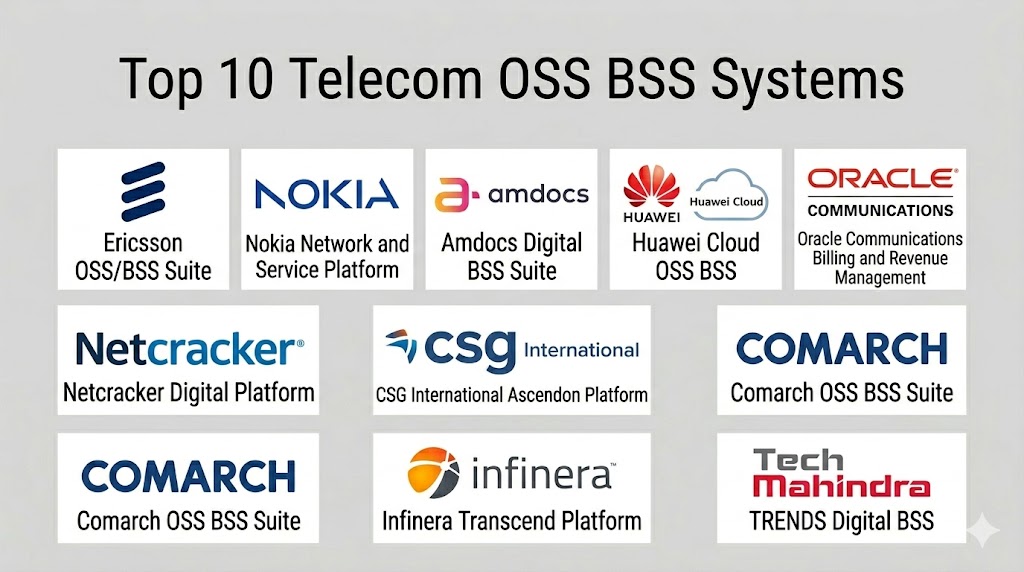
Top 10 Telecom OSS/BSS Systems
1- Amdocs Digital OSS BSS Suite
Short description: Amdocs provides one of the most widely used telecom OSS/BSS platforms, offering end-to-end customer experience, billing, and network operations management. It supports large telecom operators in managing subscriptions, charging, and digital services at scale.
Key Features
- End-to-end OSS and BSS integration
- Real-time billing and charging systems
- Customer lifecycle management
- Network service orchestration
- Revenue assurance tools
- Order management system
- AI-driven customer experience analytics
Pros
- Highly scalable for large telecom operators
- Strong billing and revenue capabilities
- Mature telecom industry solution
- Broad ecosystem integration
Cons
- Complex deployment and customization
- High operational cost
- Requires long implementation cycles
- Heavy enterprise architecture
Platforms / Deployment
Cloud. On-premise. Hybrid.
Security & Compliance
Supports RBAC, encryption, audit logs, and telecom-grade compliance frameworks depending on deployment.
Integrations & Ecosystem
- CRM systems
- Network infrastructure tools
- Billing systems
- Cloud platforms
- API-based telecom services
Support & Community
Strong enterprise support with global telecom adoption.
2- Ericsson OSS BSS Suite
Short description: Ericsson OSS/BSS provides network operations and business support capabilities for telecom operators, focusing on 5G-ready networks, automation, and service orchestration.
Key Features
- Network service orchestration
- Real-time service assurance
- AI-driven automation
- Charging and billing systems
- 5G network support
- Digital customer experience tools
- Network inventory management
Pros
- Strong 5G and network focus
- Excellent telecom infrastructure integration
- Reliable large-scale performance
- Strong automation capabilities
Cons
- Complex system architecture
- High enterprise cost
- Requires telecom expertise
- Limited flexibility outside telecom domain
Platforms / Deployment
Cloud. Hybrid. On-premise.
Security & Compliance
Telecom-grade security controls with encryption and identity management.
Integrations & Ecosystem
- Network infrastructure systems
- Cloud platforms
- Telecom APIs
- Charging systems
Support & Community
Strong global telecom vendor support.
3- Nokia Network and Service Platform
Short description: Nokia OSS/BSS solutions provide telecom operators with network management, service assurance, and digital operations capabilities optimized for 5G and IoT environments.
Key Features
- Network service orchestration
- Service assurance and monitoring
- Customer experience management
- Inventory and resource management
- 5G automation support
- Real-time analytics engine
- Fault and performance management
Pros
- Strong network management capabilities
- Excellent 5G readiness
- Reliable service assurance tools
- Scalable telecom architecture
Cons
- Complex deployment process
- Requires skilled engineering teams
- High cost for enterprise adoption
- Limited flexibility in customization
Platforms / Deployment
Cloud. On-premise. Hybrid.
Security & Compliance
Supports telecom security standards, encryption, and identity controls.
Integrations & Ecosystem
- Network infrastructure systems
- Cloud platforms
- Telecom billing systems
- API ecosystems
Support & Community
Strong enterprise telecom support.
4- Oracle Communications OSS BSS
Short description: Oracle OSS/BSS provides a comprehensive telecom operations and billing platform with strong support for revenue management, service fulfillment, and customer experience systems.
Key Features
- Revenue management and billing
- Order and service fulfillment
- Customer relationship management
- Network service orchestration
- Real-time charging systems
- Analytics and reporting
- Telecom service catalog
Pros
- Strong enterprise billing engine
- Good scalability and performance
- Deep integration with Oracle ecosystem
- Reliable revenue management
Cons
- Complex configuration
- High licensing cost
- Requires Oracle ecosystem dependency
- Long implementation cycles
Platforms / Deployment
Cloud. On-premise. Hybrid.
Security & Compliance
Enterprise-grade security with RBAC, encryption, and audit capabilities.
Integrations & Ecosystem
- Oracle Cloud
- ERP systems
- CRM platforms
- Telecom APIs
Support & Community
Strong enterprise Oracle support ecosystem.
5- Netcracker Digital OSS BSS
Short description: Netcracker provides a full-stack OSS/BSS platform for telecom operators, focusing on digital transformation, automation, and customer experience enhancement.
Key Features
- Digital service orchestration
- Customer lifecycle management
- Billing and charging systems
- Network automation tools
- Revenue management
- Product catalog management
- AI-driven analytics
Pros
- Strong digital transformation capabilities
- Good telecom automation tools
- Highly scalable architecture
- End-to-end OSS/BSS integration
Cons
- Complex deployment
- Requires long implementation time
- High enterprise cost
- Steep learning curve
Platforms / Deployment
Cloud. Hybrid. On-premise.
Security & Compliance
Supports telecom security frameworks with encryption and access control.
Integrations & Ecosystem
- Telecom infrastructure systems
- Cloud platforms
- Billing systems
- API ecosystems
Support & Community
Strong enterprise telecom support.
6- Huawei BSS OSS Suite
Short description: Huawei OSS/BSS provides telecom operators with integrated network management and billing systems designed for large-scale mobile and broadband networks.
Key Features
- Network operations management
- Billing and charging systems
- Service orchestration tools
- Customer management platform
- 5G network support
- Real-time analytics
- Fault management system
Pros
- Strong telecom infrastructure focus
- High scalability for large networks
- Good 5G integration
- Efficient performance
Cons
- Regional adoption limitations
- Complex architecture
- Requires telecom expertise
- Limited global flexibility
Platforms / Deployment
Cloud. On-premise. Hybrid.
Security & Compliance
Telecom-grade security with encryption and access control systems.
Integrations & Ecosystem
- Network infrastructure systems
- Telecom APIs
- Cloud platforms
- Billing engines
Support & Community
Strong enterprise telecom vendor support.
7- CSG International OSS BSS
Short description: CSG provides telecom billing, revenue management, and customer experience solutions for communication service providers.
Key Features
- Billing and revenue management
- Customer experience tools
- Order management systems
- Service fulfillment
- Subscription management
- Analytics dashboards
- Digital commerce tools
Pros
- Strong billing and revenue focus
- Good customer experience tools
- Scalable enterprise platform
- Reliable telecom adoption
Cons
- Limited network OSS depth
- Complex integration requirements
- Enterprise pricing model
- Requires customization
Platforms / Deployment
Cloud SaaS. Hybrid.
Security & Compliance
Supports enterprise compliance, encryption, and identity management.
Integrations & Ecosystem
- CRM systems
- Billing platforms
- Telecom APIs
- Cloud systems
Support & Community
Strong enterprise support.
8- SAP BRIM Telecom Solution
Short description: SAP BRIM provides billing and revenue innovation management for telecom operators, focusing on subscription management and monetization.
Key Features
- Subscription billing management
- Revenue recognition systems
- Order-to-cash automation
- Customer subscription lifecycle
- Pricing and charging engine
- Financial integration tools
- Analytics and reporting
Pros
- Strong enterprise financial integration
- Excellent billing accuracy
- Good scalability
- Reliable revenue management
Cons
- Complex deployment
- High cost
- Requires SAP ecosystem dependency
- Limited OSS network focus
Platforms / Deployment
Cloud. On-premise. Hybrid.
Security & Compliance
Supports enterprise-grade security, financial compliance, and audit logging.
Integrations & Ecosystem
- SAP ERP systems
- CRM platforms
- Telecom billing systems
- Cloud ecosystems
Support & Community
Strong SAP enterprise support.
9- Telefonica Open Digital BSS
Short description: Telefonica Open Digital BSS is a modern cloud-native telecom platform designed for flexible, API-driven digital services and customer experience management.
Key Features
- API-driven service architecture
- Digital customer experience tools
- Real-time billing systems
- Service orchestration
- Cloud-native design
- Product catalog management
- Agile telecom service delivery
Pros
- Modern cloud-native architecture
- Strong API ecosystem
- Flexible service deployment
- Good digital transformation support
Cons
- Less mature than legacy vendors
- Limited global adoption
- Requires modernization strategy
- Ecosystem still evolving
Platforms / Deployment
Cloud SaaS.
Security & Compliance
Supports modern cloud security controls and identity management.
Integrations & Ecosystem
- Cloud platforms
- API ecosystems
- Telecom billing systems
- Digital services
Support & Community
Growing telecom ecosystem support.
10- IBM Telecom OSS BSS Solutions
Short description: IBM provides OSS/BSS solutions focused on telecom service management, analytics, and automation using AI-driven operational intelligence.
Key Features
- Telecom service management tools
- AI-driven network analytics
- Billing and revenue systems
- Service orchestration
- Predictive operations management
- Customer experience analytics
- Hybrid cloud support
Pros
- Strong AI and analytics capabilities
- Good enterprise integration
- Reliable hybrid cloud support
- Strong automation potential
Cons
- Complex implementation
- High cost
- Requires IBM ecosystem alignment
- Learning curve
Platforms / Deployment
Cloud. Hybrid. On-premise.
Security & Compliance
Enterprise-grade security with compliance frameworks and audit logging.
Integrations & Ecosystem
- IBM Cloud
- Telecom systems
- AI analytics tools
- Enterprise IT systems
Support & Community
Strong IBM enterprise support ecosystem.
Comparison Table
| Tool Name | Best For | Platforms Supported | Deployment | Standout Feature | Public Rating |
|—|—|—|—|—|
| Amdocs | End-to-end telecom OSS/BSS | Multi-platform | Hybrid | Full lifecycle billing | N/A |
| Ericsson | 5G telecom networks | Multi-platform | Hybrid | Network orchestration | N/A |
| Nokia | Network service assurance | Multi-platform | Hybrid | 5G network management | N/A |
| Oracle | Enterprise billing | Multi-platform | Hybrid | Revenue management | N/A |
| Netcracker | Digital transformation | Multi-platform | Hybrid | Service orchestration | N/A |
| Huawei | Large-scale networks | Multi-platform | Hybrid | Network operations | N/A |
| CSG | Billing and CX | Cloud hybrid | SaaS | Revenue systems | N/A |
| SAP BRIM | Financial telecom billing | Multi-platform | Hybrid | Subscription billing | N/A |
| Telefonica Open Digital | API-driven telecom | Cloud | SaaS | Cloud-native OSS/BSS | N/A |
| IBM Telecom OSS/BSS | AI telecom analytics | Multi-platform | Hybrid | AI-driven operations | N/A |
Evaluation and Scoring of OSS/BSS Systems
| Tool Name | Core 25% | Ease 15% | Integrations 15% | Security 10% | Performance 10% | Support 10% | Value 15% | Weighted Total |
|---|---|---|---|---|---|---|---|---|
| Amdocs | 10 | 8 | 10 | 10 | 9 | 10 | 8 | 9.25 |
| Ericsson | 10 | 7 | 10 | 10 | 10 | 9 | 8 | 9.10 |
| Nokia | 9 | 7 | 9 | 10 | 10 | 9 | 8 | 8.90 |
| Oracle | 9 | 7 | 10 | 10 | 9 | 9 | 8 | 8.85 |
| Netcracker | 9 | 7 | 9 | 9 | 9 | 9 | 8 | 8.70 |
| Huawei | 9 | 7 | 9 | 9 | 10 | 9 | 8 | 8.80 |
| CSG | 8 | 8 | 9 | 9 | 8 | 8 | 9 | 8.45 |
| SAP BRIM | 8 | 7 | 9 | 10 | 9 | 9 | 8 | 8.50 |
| Telefonica | 8 | 9 | 9 | 9 | 8 | 8 | 9 | 8.55 |
| IBM | 9 | 7 | 9 | 10 | 9 | 9 | 8 | 8.75 |
These scores reflect telecom scalability, billing accuracy, network orchestration strength, API maturity, AI integration, and enterprise readiness. Amdocs and Ericsson lead due to end-to-end telecom dominance, while Nokia and Oracle provide strong network and billing capabilities. Newer platforms like Telefonica Open Digital focus on API-driven modernization.
Which OSS/BSS System Is Right for You
Solo / Freelancer
OSS/BSS systems are not suitable for freelancers due to enterprise complexity and infrastructure requirements.
SMB Telecom Providers
SMBs should consider lightweight or cloud-based systems like CSG or Telefonica Open Digital BSS for flexibility and lower complexity.
Mid-Market Operators
Mid-market telecom providers benefit from Netcracker, SAP BRIM, and Oracle for balanced billing and network management capabilities.
Enterprise Telecom Operators
Large operators should choose Amdocs, Ericsson, Nokia, IBM, or Huawei for full-scale OSS/BSS transformation.
Budget vs Premium
Open cloud-native solutions reduce cost but offer limited depth. Enterprise platforms provide full lifecycle telecom management at higher cost.
Feature Depth vs Ease of Use
Amdocs and Ericsson offer deep functionality but are complex. CSG and Telefonica provide easier modern alternatives.
Integrations & Scalability
Ericsson, Nokia, and Amdocs offer the strongest scalability for 5G and global telecom networks.
Security & Compliance Needs
Enterprise telecom environments should prioritize Oracle, IBM, and Amdocs due to strong governance and compliance capabilities.
Frequently Asked Questions FAQs
1. What is OSS in telecom?
OSS stands for Operations Support Systems. It manages telecom network operations such as monitoring, fault detection, and service assurance. It ensures network performance and reliability. It is essential for telecom infrastructure.
2. What is BSS in telecom?
BSS stands for Business Support Systems. It handles billing, customer management, and revenue operations. It supports customer-facing telecom services. It is critical for telecom business operations.
3. What is the difference between OSS and BSS?
OSS focuses on network operations and infrastructure. BSS focuses on customer management and billing. OSS supports technical operations. BSS supports business processes.
4. Why are OSS/BSS systems important?
They are important because they enable telecom operators to manage networks and customers efficiently. They support billing accuracy and service delivery. They are essential for telecom digital transformation. They also enable 5G services.
5. Are OSS/BSS systems cloud-based?
Yes, modern OSS/BSS systems are increasingly cloud-native. However, many legacy systems still run on-premise. Hybrid deployments are common. Cloud adoption is growing rapidly.
6. What technologies are used in OSS/BSS?
They use AI, machine learning, APIs, microservices, and cloud infrastructure. They also use big data analytics and automation tools. These technologies improve efficiency and scalability. They support modern telecom services.
7. Who uses OSS/BSS systems?
Telecom operators, ISPs, cable providers, and mobile network operators use them. They are also used by digital service providers. They support large-scale subscription businesses. They are essential for telecom operations.
8. What is the future of OSS/BSS?
The future includes cloud-native platforms, AI automation, and API-driven ecosystems. Telecom operators will adopt modular architectures. OSS/BSS will become more autonomous. 5G and IoT will drive growth.
9. What is revenue assurance in BSS?
Revenue assurance ensures telecom operators correctly bill and collect revenue. It detects billing errors and prevents revenue leakage. It is a key function of BSS. It improves financial accuracy.
10. Can OSS/BSS support 5G networks?
Yes, modern OSS/BSS systems are designed for 5G. They support real-time charging and network slicing. They enable dynamic service orchestration. They are essential for 5G monetization.
Conclusion
Telecom OSS/BSS systems form the backbone of modern telecom operations by combining network management and business management into a unified ecosystem. OSS ensures network reliability while BSS ensures revenue generation and customer management. Leading platforms like Amdocs, Ericsson, Nokia, and Oracle dominate enterprise telecom infrastructure, while newer cloud-native systems like Telefonica Open Digital are reshaping the industry with API-driven architectures. As telecom moves toward 5G, IoT, and autonomous networks, OSS/BSS platforms will continue evolving into intelligent, AI-powered systems that enable real-time operations, flexible monetization, and fully automated telecom ecosystems.

This article clearly explains telecom OSS/BSS systems and how they help service providers manage operations, billing, customer support, and network services more efficiently.
Informative comparison that makes it easier to understand different Telecom OSS/BSS systems, their strengths, and how they support modern telecom operations.
A key factor often missed is how well the OSS/BSS platform integrates with legacy systems without creating long-term operational complexity.