Introduction
Nurse Scheduling Systems are specialized workforce management platforms designed to plan, assign, and optimize nursing shifts in hospitals, clinics, and long-term care facilities. Unlike generic scheduling tools, these systems handle clinical constraints, shift rotations, skill matching, labor laws, and patient-care requirements, making them essential in modern healthcare operations.
In today’s healthcare environment, staffing challenges, nurse shortages, and unpredictable patient demand make scheduling extremely complex. These platforms use automation, AI, and rule-based engines to ensure the right nurse is assigned to the right shift at the right time while minimizing burnout and overtime.
Key real-world use cases include:
- Automated nurse shift scheduling and rotation planning
- Skill-based nurse-to-patient assignment
- Real-time shift swaps and emergency coverage
- Overtime and labor regulation compliance
- Multi-location hospital workforce coordination
Key evaluation criteria for buyers:
- Automation and AI scheduling capability
- Rule-based scheduling (skills, certifications, fatigue rules)
- Mobile access and shift swap functionality
- Integration with HR, payroll, and EHR systems
- Real-time updates and notifications
- Labor law and compliance enforcement
- Ease of use for managers and nurses
- Scalability across departments and hospitals
- Reporting and workforce analytics
- Security and patient data protection
Best for: Hospitals, healthcare systems, clinics, nursing homes, home care providers, and large healthcare staffing organizations.
Not ideal for: Small clinics with static staffing needs or organizations without shift-based workforce complexity.
Key Trends in Nurse Scheduling Systems
- AI-driven scheduling is improving shift optimization and nurse workload balancing
- Mobile-first scheduling apps are becoming standard for nurses and managers
- Real-time shift swapping with automated approval workflows
- Predictive staffing based on patient demand and acuity levels
- Integration with EHR and hospital management systems
- Automation of labor law compliance and overtime control
- Self-scheduling models improving nurse satisfaction and retention
- Cloud-based scheduling replacing legacy on-prem systems
- Advanced analytics for staffing efficiency and burnout reduction
- Reinforcement learning and optimization algorithms emerging in academic and enterprise tools
How We Selected These Tools
The tools listed below were selected based on:
- Adoption in healthcare and hospital environments
- Strength of nurse-specific scheduling features
- AI and automation capability
- Shift flexibility and self-scheduling support
- Integration with healthcare systems (EHR, HRIS, payroll)
- Compliance with labor laws and healthcare regulations
- Mobile accessibility and usability
- Scalability for multi-site hospitals
- Reporting and workforce analytics capability
- Vendor maturity and ecosystem strength
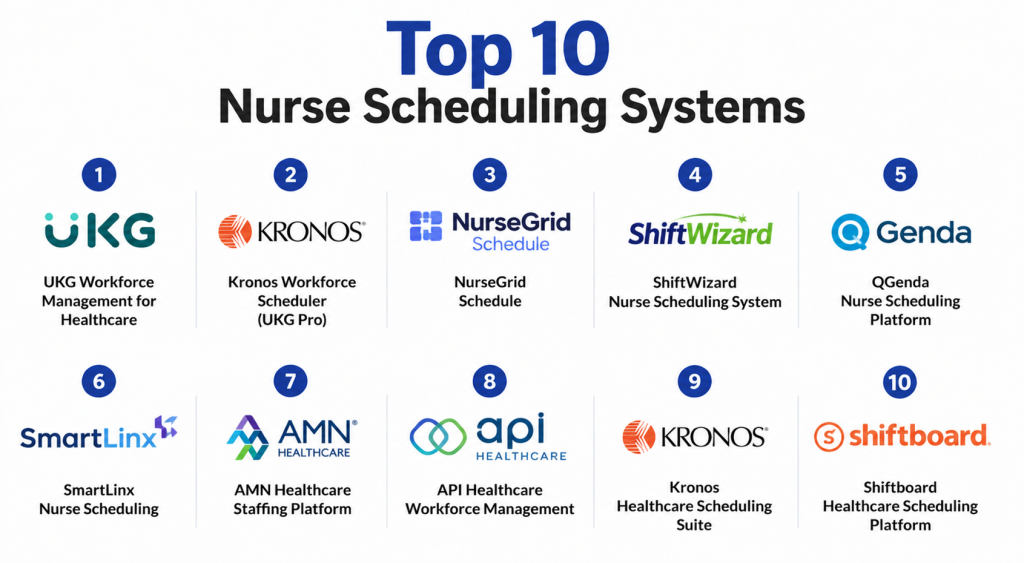
Top 10 Nurse Scheduling Systems
1 — UKG Workforce Management (Healthcare Scheduling)
Short description: UKG is one of the most widely used enterprise workforce management systems in healthcare, offering advanced nurse scheduling, labor optimization, and compliance-driven shift planning. It supports large hospital systems with complex staffing requirements.
Key Features
- AI-driven shift scheduling
- Skill-based nurse assignment
- Labor compliance automation
- Overtime control and forecasting
- Mobile scheduling app
- Shift swap management
- Workforce analytics dashboard
Pros
- Strong enterprise scalability
- Advanced automation and forecasting
- Excellent compliance support
- Reliable hospital-wide deployment
Cons
- Complex implementation
- High cost for smaller facilities
- Requires training for full usage
- Customization can be time-consuming
Platforms / Deployment
- Web / Mobile
- Cloud / Hybrid
Security & Compliance
- RBAC
- Encryption
- Audit logs
- HIPAA-aligned controls (varies by deployment)
Integrations & Ecosystem
UKG integrates deeply with hospital HR, payroll, and workforce systems.
- HRIS platforms
- Payroll systems
- EHR integrations
- APIs
- Analytics tools
Support & Community
Strong enterprise support with healthcare-focused implementation services.
2 — QGenda Nurse Scheduling
Short description: QGenda is a leading physician and nurse scheduling platform known for its automation, credential-based scheduling, and enterprise healthcare workforce optimization capabilities.
Key Features
- Credential-based scheduling
- Automated shift assignment
- Multi-department scheduling
- Real-time schedule updates
- Coverage gap detection
- Mobile nurse access
- Reporting dashboards
Pros
- Strong healthcare specialization
- Excellent credential management
- Scalable for large hospitals
- High automation accuracy
Cons
- Premium pricing
- Setup complexity
- Requires configuration effort
- Learning curve for administrators
Platforms / Deployment
- Web / Mobile
- Cloud
Security & Compliance
- RBAC
- Encryption
- Audit logging
Integrations & Ecosystem
Integrates with hospital systems for workforce and credential management.
- EHR systems
- HR systems
- Payroll platforms
- APIs
- Scheduling tools
Support & Community
Strong healthcare enterprise support and onboarding assistance.
3 — ShiftWizard (Healthcare Scheduling)
Short description: ShiftWizard is a hospital-focused scheduling system designed specifically for nursing units, offering shift planning, staffing optimization, and real-time communication tools.
Key Features
- Nurse shift scheduling
- Unit-based staffing management
- Real-time shift updates
- Overtime tracking
- Mobile scheduling access
- Staffing ratio monitoring
- Reporting tools
Pros
- Built specifically for nurses
- Easy-to-use interface
- Strong hospital adoption
- Good mobile experience
Cons
- Limited advanced AI features
- Primarily hospital-focused
- Integration limitations in some setups
- Less flexible for non-hospital use
Platforms / Deployment
- Web / Mobile
- Cloud
Security & Compliance
- RBAC
- Encryption
- Audit logs
Integrations & Ecosystem
Works with hospital operational systems and HR platforms.
- HR systems
- EHR systems
- Payroll tools
- APIs
Support & Community
Strong healthcare customer support.
4 — NurseGrid
Short description: NurseGrid is a nurse-centric scheduling app designed for shift management, self-scheduling, and shift swapping, widely used by individual nurses and care teams.
Key Features
- Self-scheduling tools
- Shift swap functionality
- Mobile-first interface
- Multi-job scheduling support
- Calendar synchronization
- License tracking reminders
- Notifications and alerts
Pros
- Very user-friendly
- Strong mobile experience
- Popular among nurses
- Flexible shift management
Cons
- Limited enterprise analytics
- Not full hospital workforce suite
- Less automation for large systems
- Basic reporting features
Platforms / Deployment
- Mobile / Web
- Cloud
Security & Compliance
- Encryption
- User authentication controls
- Basic audit logging
Integrations & Ecosystem
Integrates with healthcare scheduling environments and calendars.
- Hospital systems
- Calendar apps
- HR systems
- APIs
Support & Community
Strong nurse community adoption and support resources.
5 — Shiftboard Healthcare Scheduling
Short description: Shiftboard provides workforce scheduling with a focus on compliance-heavy environments like healthcare, offering automated shift planning and labor rule enforcement.
Key Features
- Automated nurse scheduling
- Labor rule compliance
- Shift optimization engine
- Real-time updates
- Mobile workforce access
- Coverage forecasting
- Reporting dashboards
Pros
- Strong compliance engine
- Good automation capabilities
- Scalable for healthcare systems
- Reliable scheduling logic
Cons
- UI can feel complex
- Setup requires planning
- Limited nurse-first UX
- Enterprise-oriented pricing
Platforms / Deployment
- Web / Mobile
- Cloud
Security & Compliance
- RBAC
- Encryption
- Audit logs
Integrations & Ecosystem
Integrates with HR and healthcare workforce systems.
- HR platforms
- Payroll systems
- APIs
- EHR integrations
Support & Community
Enterprise support with workforce optimization focus.
6 — OnShift
Short description: OnShift is a healthcare workforce management platform designed for senior care and nursing facilities, focusing on scheduling, staffing, and engagement tools.
Key Features
- Nurse shift scheduling
- Employee engagement tools
- Overtime management
- Labor forecasting
- Mobile access
- Shift filling automation
- Attendance tracking
Pros
- Strong long-term care focus
- Good engagement tools
- Easy shift management
- Mobile-friendly
Cons
- Less suited for large hospitals
- Limited advanced AI scheduling
- Narrow healthcare focus
- Reporting limitations
Platforms / Deployment
- Web / Mobile
- Cloud
Security & Compliance
- RBAC
- Encryption
- Audit logs
Integrations & Ecosystem
Integrates with healthcare workforce systems.
- Payroll systems
- HR systems
- APIs
- Time tracking tools
Support & Community
Strong support for long-term care providers.
7 — Smartlinx Healthcare Scheduling
Short description: Smartlinx provides workforce scheduling and labor management tools for healthcare organizations, especially long-term care and nursing facilities.
Key Features
- Predictive scheduling
- Nurse staffing optimization
- Compliance tracking
- Real-time scheduling updates
- Labor cost analytics
- Mobile access
- Reporting tools
Pros
- Strong predictive capabilities
- Good compliance support
- Designed for care facilities
- Reliable scheduling engine
Cons
- Limited hospital enterprise depth
- UI modernization needed
- Integration complexity
- Narrow ecosystem
Platforms / Deployment
- Web / Cloud
Security & Compliance
- RBAC
- Encryption
- Audit logs
Integrations & Ecosystem
Integrates with healthcare workforce and payroll systems.
- HR systems
- Payroll platforms
- APIs
- EHR tools
Support & Community
Standard enterprise healthcare support.
8 — Shiftboard Healthcare Suite (Enterprise Variant)
Short description: Enterprise-grade Shiftboard configuration designed for complex hospital systems requiring advanced scheduling automation and compliance enforcement.
Key Features
- Advanced shift automation
- Multi-site scheduling
- Skill-based assignment
- Compliance enforcement
- Real-time updates
- Workforce forecasting
- Analytics dashboards
Pros
- High scalability
- Strong enterprise control
- Reliable automation
- Good compliance support
Cons
- Complex setup
- Requires training
- Higher cost
- Less intuitive UI
Platforms / Deployment
- Web / Cloud
Security & Compliance
- RBAC
- Encryption
- Audit logs
Integrations & Ecosystem
- HR systems
- Hospital systems
- APIs
- Payroll systems
Support & Community
Enterprise-level support and onboarding.
9 — Nursegrid Manager (Enterprise Extension)
Short description: Nursegrid Manager is the enterprise extension of Nursegrid, helping hospitals manage nurse schedules, shift swaps, and workforce communication at scale.
Key Features
- Nurse scheduling management
- Shift swap approvals
- Workforce communication tools
- Multi-unit scheduling
- Mobile alerts
- Staffing visibility
- Calendar synchronization
Pros
- Nurse-friendly UX
- Strong communication features
- Easy adoption
- Good visibility tools
Cons
- Limited advanced analytics
- Not fully enterprise optimized
- Basic forecasting
- Integration constraints
Platforms / Deployment
- Mobile / Web
- Cloud
Security & Compliance
- Encryption
- Access controls
- Audit logs
Integrations & Ecosystem
- Hospital systems
- HR platforms
- APIs
- Calendar tools
Support & Community
Strong nurse community and healthcare adoption.
10 — API Healthcare (Symplr Scheduling)
Short description: Symplr (API Healthcare) provides enterprise nurse scheduling, workforce management, and compliance tools widely used in large hospital networks.
Key Features
- Enterprise nurse scheduling
- Compliance automation
- Labor optimization
- Staffing forecasts
- Mobile access
- Credential-based scheduling
- Reporting dashboards
Pros
- Strong enterprise healthcare focus
- Reliable compliance tools
- Scalable across hospitals
- Good workforce analytics
Cons
- Complex deployment
- High cost
- Requires training
- Customization needed
Platforms / Deployment
- Web / Cloud / Hybrid
Security & Compliance
- RBAC
- Encryption
- Audit logging
Integrations & Ecosystem
- EHR systems
- HR platforms
- Payroll systems
- APIs
- Analytics tools
Support & Community
Strong enterprise healthcare support infrastructure.
Comparison Table
| Tool | Best For | Platform | Deployment | Standout Feature | Public Rating |
|---|---|---|---|---|---|
| UKG | Large hospitals | Web/Mobile | Cloud/Hybrid | AI workforce optimization | N/A |
| QGenda | Credential-based scheduling | Web/Mobile | Cloud | Credential automation | N/A |
| ShiftWizard | Nursing units | Web/Mobile | Cloud | Nurse-focused design | N/A |
| NurseGrid | Individual nurses | Mobile/Web | Cloud | Self-scheduling | N/A |
| Shiftboard | Compliance scheduling | Web/Mobile | Cloud | Automation engine | N/A |
| OnShift | Long-term care | Web/Mobile | Cloud | Engagement tools | N/A |
| Smartlinx | Care facilities | Web | Cloud | Predictive scheduling | N/A |
| Shiftboard Enterprise | Multi-site hospitals | Web | Cloud | Enterprise automation | N/A |
| Nursegrid Manager | Nurse teams | Mobile/Web | Cloud | Shift collaboration | N/A |
| Symplr API Healthcare | Large health systems | Web | Cloud/Hybrid | Enterprise workforce control | N/A |
Evaluation & Scoring of Nurse Scheduling Systems
| Tool | Core | Ease | Integration | Security | Performance | Support | Value | Weighted Total |
|---|---|---|---|---|---|---|---|---|
| UKG | 9.6 | 7.5 | 9.4 | 9.3 | 9.4 | 9.2 | 7.8 | 8.92 |
| QGenda | 9.4 | 7.6 | 9.2 | 9.1 | 9.3 | 9.0 | 7.6 | 8.82 |
| ShiftWizard | 9.0 | 8.2 | 8.8 | 8.7 | 8.9 | 8.8 | 8.0 | 8.55 |
| NurseGrid | 8.7 | 9.0 | 8.2 | 8.4 | 8.5 | 8.6 | 8.5 | 8.44 |
| Shiftboard | 9.1 | 7.8 | 9.0 | 9.0 | 9.0 | 8.8 | 7.9 | 8.68 |
| OnShift | 8.6 | 8.4 | 8.5 | 8.6 | 8.6 | 8.5 | 8.3 | 8.41 |
| Smartlinx | 8.8 | 7.9 | 8.6 | 8.7 | 8.8 | 8.6 | 8.0 | 8.48 |
| Shiftboard Ent. | 9.2 | 7.6 | 9.1 | 9.1 | 9.2 | 8.9 | 7.7 | 8.70 |
| Nursegrid Manager | 8.5 | 8.8 | 8.3 | 8.5 | 8.4 | 8.6 | 8.4 | 8.36 |
| Symplr | 9.3 | 7.4 | 9.3 | 9.2 | 9.3 | 9.1 | 7.5 | 8.80 |
Which Nurse Scheduling System Is Right for You?
Solo / Freelancer
Best option: NurseGrid — simple mobile scheduling and shift management.
SMB Clinics
Best option: ShiftWizard or OnShift — balanced scheduling with ease of use.
Mid-Market Hospitals
Best option: QGenda or Shiftboard — automation + compliance + scalability.
Enterprise Hospitals
Best option: UKG or Symplr — full workforce optimization and integration depth.
Budget vs Premium
- Budget tools: NurseGrid, OnShift
- Premium enterprise tools: UKG, Symplr, QGenda
Feature Depth vs Ease of Use
- Easy use: NurseGrid, ShiftWizard
- Advanced systems: UKG, Shiftboard, Symplr
Integrations & Scalability
Enterprise systems win in EHR, HR, payroll, and analytics integration.
Security & Compliance Needs
All enterprise tools support RBAC, encryption, audit logs, and healthcare compliance standards.
Frequently Asked Questions
1. What is a nurse scheduling system?
It is software that automates and manages nurse shift planning, ensuring proper staffing, compliance, and workload distribution in healthcare environments.
2. Why are nurse scheduling systems important?
They reduce manual scheduling errors, ensure compliance with labor laws, and improve patient care by maintaining proper staffing levels.
3. Do these systems support mobile access?
Yes, most modern nurse scheduling tools include mobile apps for shift viewing, swaps, and notifications.
4. Can nurses swap shifts in these systems?
Yes, many platforms allow automated shift swaps with approval workflows or real-time updates.
5. Do these systems use AI?
Enterprise tools like UKG and Smartlinx use AI and predictive analytics for workforce optimization.
6. Are nurse scheduling tools cloud-based?
Most modern systems are cloud-based, offering real-time access and scalability across hospitals.
7. Can these tools integrate with EHR systems?
Yes, enterprise solutions integrate with EHR, HRIS, and payroll systems for full healthcare workflow alignment.
8. What is skill-based scheduling?
It assigns nurses to shifts based on qualifications, certifications, and clinical expertise.
9. How long does implementation take?
Depending on complexity, implementation can range from weeks (SMB tools) to several months (enterprise systems).
10. What is the ROI of nurse scheduling systems?
ROI includes reduced overtime costs, better staffing efficiency, improved nurse retention, and better patient outcomes.
Conclusion
Nurse Scheduling Systems are essential for modern healthcare operations where staffing efficiency, compliance, and patient care quality must work together. Tools like UKG, QGenda, and Symplr offer powerful enterprise-grade automation, while ShiftWizard and NurseGrid provide simpler, nurse-friendly scheduling experiences. The right platform depends on hospital size, staffing complexity, and integration needs. Organizations should prioritize automation, mobile usability, and EHR integration, and validate systems through pilot testing before full deployment.

Very informative and well-structured blog on nurse scheduling systems. The comparison of features, pros, and cons is clear and practical, making it easier to understand different healthcare workforce management solutions.
Really informative comparison of nurse scheduling systems—this makes it much easier to understand which tools help improve staff management and reduce scheduling stress in healthcare teams.
Effective nurse scheduling is not just about filling shifts—it also plays a key role in staff well-being and long-term retention. Repeated assignment of demanding shifts or limited flexibility can contribute to fatigue and burnout, ultimately affecting patient care. Exploring workload balancing, employee preference management, and wellness-focused scheduling strategies would provide readers with a more holistic understanding of how modern scheduling systems can support both healthcare organizations and their nursing teams.