Introduction
Trade Compliance Software helps global businesses manage import/export regulations, sanctions screening, customs documentation, licensing, tariff classification, and cross-border trade rules. These platforms ensure that organizations comply with complex international trade laws while reducing delays, penalties, and operational risks.
In a globalized economy where regulations constantly change and sanctions lists are updated frequently, trade compliance has become a mission-critical function. Modern platforms now use AI, automation, and real-time data integration to help enterprises maintain compliance while speeding up global trade operations.
Key real-world use cases include:
- Automated export/import compliance checks
- Restricted party screening and sanctions validation
- Customs documentation and clearance automation
- Tariff classification and duty calculation
- Trade license and permit management
Evaluation criteria for buyers:
- Regulatory coverage and global compliance support
- Automation of customs and trade workflows
- Screening accuracy (sanctions, denied parties)
- Integration with ERP, TMS, and SCM systems
- AI-driven risk detection capabilities
- Ease of configuration and deployment
- Audit readiness and reporting features
- Scalability for multi-country operations
- Security, encryption, and access controls
- Cost efficiency and ROI impact
Best for: Global enterprises, import/export-heavy companies, manufacturers, logistics providers, retail supply chains, and pharmaceutical or aerospace firms with strict compliance requirements.
Not ideal for: Small businesses with limited cross-border trade activity, local-only operations, or companies that do not deal with customs or international shipments.
Key Trends in Trade Compliance Software
- AI-driven sanctions screening is improving accuracy and reducing false positives
- Global sanctions and export control rules are becoming more complex and frequent
- Real-time compliance automation is replacing manual document review
- Integration with ERP and supply chain systems is becoming mandatory
- Cloud-native compliance platforms are replacing legacy on-premise systems
- Trade compliance is shifting from reactive checks to proactive risk prevention
- Automated classification (HS codes) is reducing manual tariff errors
- Continuous monitoring of denied party lists is becoming standard
- Geopolitical risk intelligence is being embedded into compliance workflows
- API-first architectures are enabling faster enterprise integration
How We Selected These Tools
The tools in this list were selected based on enterprise-grade trade compliance requirements:
- Global adoption across regulated industries
- Strength of sanctions screening and compliance automation
- Customs and trade documentation capabilities
- Integration depth with ERP, SCM, and logistics systems
- AI and automation maturity
- Scalability across multi-country operations
- Regulatory content coverage (export/import laws)
- Audit and reporting capabilities
- Vendor maturity in global trade ecosystems
- Security, governance, and compliance controls
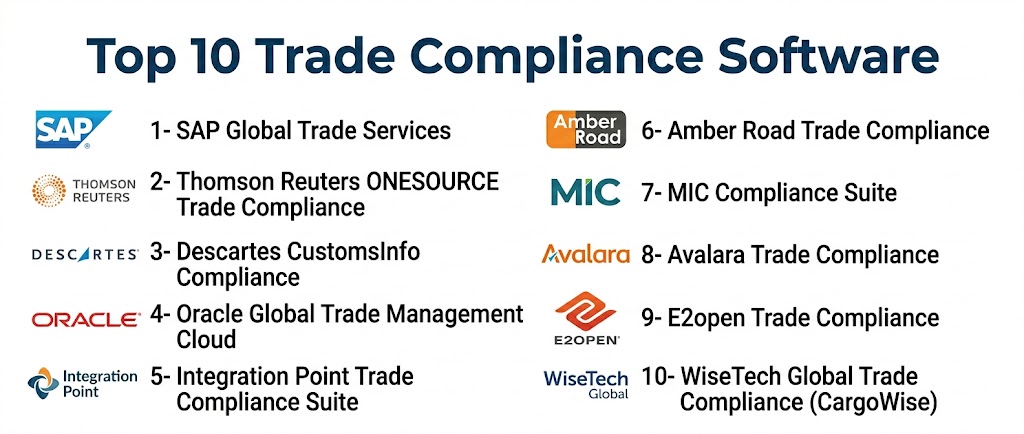
Top 10 Trade Compliance Software
1- SAP Global Trade Services (GTS)
Short description: SAP GTS is an enterprise trade compliance platform designed to automate global trade processes, including customs compliance, sanctions screening, export controls, and tariff management. It is widely used by large enterprises already operating within SAP ecosystems.
Key Features
- Export/import compliance automation
- Sanctions and denied party screening
- Customs declaration management
- Tariff classification and duty calculation
- License and permit management
- Trade document automation
- Real-time compliance monitoring
Pros
- Deep SAP ERP integration
- Strong global enterprise scalability
- High compliance accuracy
- Excellent audit and governance support
Cons
- Complex implementation
- High cost of ownership
- Requires SAP ecosystem alignment
- Steep learning curve
Platforms / Deployment
- Web
- Cloud / Hybrid
Security & Compliance
- RBAC
- Encryption
- SSO
- Audit logging
Integrations & Ecosystem
SAP GTS integrates trade compliance directly into enterprise ERP and supply chain workflows.
- SAP S/4HANA
- SAP ERP
- Logistics systems
- APIs
- Analytics platforms
Support & Community
Strong global SAP enterprise support with extensive consulting partner network.
2- Oracle Global Trade Management (GTM)
Short description: Oracle GTM is a cloud-based trade compliance solution that automates customs compliance, sanctions screening, trade documentation, and global logistics regulations within Oracle’s SCM ecosystem.
Key Features
- Trade compliance automation
- Restricted party screening
- Customs documentation management
- License tracking
- Global trade visibility
- Duty and tariff management
- Risk-based compliance workflows
Pros
- Strong Oracle SCM integration
- Cloud-native architecture
- Advanced analytics capabilities
- Suitable for global enterprises
Cons
- Complex implementation
- Requires Oracle ecosystem
- High enterprise cost
- Training required
Platforms / Deployment
- Web
- Cloud
Security & Compliance
- MFA
- RBAC
- Encryption
- Audit logs
Integrations & Ecosystem
Oracle GTM integrates seamlessly with Oracle ERP and supply chain systems.
- Oracle ERP Cloud
- SCM modules
- Logistics systems
- APIs
- Data platforms
Support & Community
Enterprise Oracle global support with strong implementation partners.
3- E2open Global Trade Management
Short description: E2open provides a unified global trade compliance platform that connects supply chain planning, logistics, and trade operations. It supports end-to-end trade compliance automation and global visibility.
Key Features
- Trade compliance automation
- Sanctions screening
- Customs compliance workflows
- Multi-country trade management
- Supply chain visibility
- Document automation
- Risk monitoring
Pros
- Strong multi-enterprise capabilities
- Good global trade visibility
- Integrated supply chain workflows
- Scalable cloud platform
Cons
- Complex onboarding
- Requires ecosystem integration
- Learning curve for users
- Enterprise-focused setup
Platforms / Deployment
- Web
- Cloud
Security & Compliance
- RBAC
- Encryption
- Audit controls
Integrations & Ecosystem
E2open connects global trade compliance with supply chain execution systems.
- ERP systems
- Logistics platforms
- Carrier systems
- APIs
- Data analytics tools
Support & Community
Enterprise support with global supply chain expertise.
4- Thomson Reuters ONESOURCE Global Trade
Short description: ONESOURCE Global Trade is a widely used compliance platform for managing customs, sanctions screening, export controls, and global trade documentation with strong regulatory content coverage.
Key Features
- Global trade compliance automation
- Denied party screening
- Customs declaration management
- License management
- Regulatory reporting
- Trade documentation workflows
- Audit readiness tools
Pros
- Strong regulatory intelligence
- Excellent compliance coverage
- Reliable enterprise adoption
- Good audit support
Cons
- Complex configuration
- Requires structured data
- Enterprise pricing model
- Implementation effort required
Platforms / Deployment
- Web
- Cloud
Security & Compliance
- RBAC
- Encryption
- Audit logs
Integrations & Ecosystem
ONESOURCE integrates compliance workflows with enterprise systems for regulatory control.
- ERP systems
- TMS platforms
- Logistics systems
- APIs
- Data platforms
Support & Community
Strong enterprise legal and compliance support ecosystem.
5- Descartes Visual Compliance
Short description: Descartes Visual Compliance is a specialized trade compliance platform focused on denied party screening, export compliance, and regulatory control across global supply chains.
Key Features
- Sanctions screening
- Export compliance checks
- Restricted party list monitoring
- Trade documentation management
- Compliance workflow automation
- Audit reporting
- Regulatory updates
Pros
- Strong sanctions screening accuracy
- Easy to deploy compliance modules
- Good regulatory content coverage
- Widely used in logistics
Cons
- Limited broader SCM features
- Focused primarily on compliance
- Requires integration for full value
- Enterprise customization needed
Platforms / Deployment
- Web
- Cloud
Security & Compliance
- RBAC
- Encryption
- Audit controls
Integrations & Ecosystem
Descartes integrates compliance workflows into logistics and supply chain environments.
- ERP systems
- Logistics platforms
- TMS systems
- APIs
- Data systems
Support & Community
Strong logistics compliance support and global adoption.
6- SAP AEB Global Trade Compliance
Short description: AEB provides trade compliance software focused on customs management, sanctions screening, and global trade automation with strong integration into enterprise systems.
Key Features
- Customs compliance automation
- Sanctions screening
- Export/import control
- Trade documentation
- License management
- Risk monitoring
- Workflow automation
Pros
- Strong customs compliance depth
- Good usability
- Flexible deployment options
- Reliable compliance automation
Cons
- Smaller ecosystem than SAP/Oracle
- Requires configuration effort
- Enterprise focus required
- Integration complexity
Platforms / Deployment
- Web
- Cloud / Hybrid
Security & Compliance
- RBAC
- Encryption
- Audit logging
Integrations & Ecosystem
AEB integrates trade compliance into enterprise ERP and logistics environments.
- ERP systems
- Logistics platforms
- APIs
- Customs systems
- Data tools
Support & Community
Strong European compliance support and global trade expertise.
7- MIC Customs Solutions
Short description: MIC provides specialized global trade compliance software focusing on customs management, denied party screening, and export/import automation for multinational companies.
Key Features
- Customs declaration automation
- Trade compliance screening
- Export/import controls
- HS classification
- Duty calculation
- Risk management
- Reporting dashboards
Pros
- Strong customs expertise
- High compliance accuracy
- Good global trade coverage
- Enterprise-ready solution
Cons
- Complex onboarding
- Limited modern UI experience
- Requires integration effort
- Enterprise-focused setup
Platforms / Deployment
- Web
- Cloud / Hybrid
Security & Compliance
- RBAC
- Encryption
- Audit logs
Integrations & Ecosystem
MIC integrates customs and compliance processes into enterprise systems.
- ERP systems
- Logistics platforms
- APIs
- Customs authorities
- Data systems
Support & Community
Strong enterprise customs compliance consulting and support.
8- BluJay Solutions (now part of E2open)
Short description: BluJay provides trade compliance and logistics solutions integrated into global supply chain management, focusing on customs compliance, documentation, and trade visibility.
Key Features
- Customs compliance automation
- Trade documentation management
- Logistics integration
- Shipment visibility
- Regulatory compliance workflows
- Reporting dashboards
- Risk monitoring
Pros
- Strong logistics integration
- Good compliance automation
- Scalable cloud platform
- Integrated supply chain visibility
Cons
- Requires ecosystem adoption
- Integration complexity
- Limited standalone use cases
- Enterprise-focused setup
Platforms / Deployment
- Web
- Cloud
Security & Compliance
- RBAC
- Encryption
- Audit logging
Integrations & Ecosystem
BluJay integrates trade compliance with logistics execution systems.
- ERP systems
- TMS platforms
- Logistics networks
- APIs
- Data systems
Support & Community
Strong enterprise logistics and trade compliance support.
9- Integration Point Trade Compliance Suite
Short description: Integration Point offers trade compliance automation focused on customs management, sanctions screening, and export/import workflows for global enterprises.
Key Features
- Customs compliance automation
- Sanctions screening
- Trade documentation management
- HS classification tools
- License tracking
- Risk monitoring
- Compliance reporting
Pros
- Strong compliance automation
- Good global coverage
- Reliable audit workflows
- Enterprise scalability
Cons
- Requires integration effort
- Smaller ecosystem
- Limited modern UI features
- Enterprise setup required
Platforms / Deployment
- Web
- Cloud
Security & Compliance
- RBAC
- Encryption
- Audit logs
Integrations & Ecosystem
Integration Point connects compliance workflows with enterprise logistics systems.
- ERP systems
- TMS systems
- APIs
- Logistics platforms
- Data systems
Support & Community
Enterprise support with trade compliance specialization.
10- QAD Global Trade Compliance
Short description: QAD Global Trade Compliance helps manufacturers and global enterprises manage export/import compliance, customs workflows, and regulatory control within supply chain operations.
Key Features
- Trade compliance automation
- Export/import controls
- Customs documentation
- Risk management
- Regulatory reporting
- License management
- Workflow automation
Pros
- Strong manufacturing fit
- Good compliance automation
- Reliable enterprise performance
- Integrated SCM capabilities
Cons
- Complex deployment
- Requires enterprise setup
- Limited standalone flexibility
- Integration needed
Platforms / Deployment
- Web
- Cloud
Security & Compliance
- RBAC
- Encryption
- Audit logging
Integrations & Ecosystem
QAD integrates trade compliance into manufacturing and supply chain ecosystems.
- ERP systems
- Manufacturing systems
- Logistics platforms
- APIs
- Data tools
Support & Community
Strong manufacturing-focused enterprise support and compliance expertise.
Comparison Table
| Tool Name | Best For | Platform(s) Supported | Deployment | Standout Feature | Public Rating |
|---|---|---|---|---|---|
| SAP GTS | Enterprise ERP users | Web | Cloud/Hybrid | Deep SAP integration | N/A |
| Oracle GTM | Global SCM | Web | Cloud | End-to-end SCM integration | N/A |
| E2open | Multi-enterprise trade | Web | Cloud | Unified trade network | N/A |
| ONESOURCE | Compliance-heavy firms | Web | Cloud | Regulatory intelligence | N/A |
| Descartes Visual Compliance | Screening-focused orgs | Web | Cloud | Sanctions screening accuracy | N/A |
| AEB | Customs automation | Web | Cloud/Hybrid | Customs compliance depth | N/A |
| MIC | Global manufacturers | Web | Cloud | HS classification tools | N/A |
| BluJay (E2open) | Logistics compliance | Web | Cloud | Logistics integration | N/A |
| Integration Point | Enterprise compliance | Web | Cloud | Workflow automation | N/A |
| QAD | Manufacturing trade compliance | Web | Cloud | SCM integration | N/A |
Evaluation & Scoring of Trade Compliance Software
| Tool Name | Core | Ease | Integrations | Security | Performance | Support | Value | Weighted Total |
|---|---|---|---|---|---|---|---|---|
| SAP GTS | 9.6 | 7.4 | 9.5 | 9.2 | 9.3 | 9.1 | 7.5 | 8.93 |
| Oracle GTM | 9.4 | 7.6 | 9.3 | 9.1 | 9.2 | 9.0 | 7.6 | 8.87 |
| E2open | 9.2 | 7.8 | 9.0 | 8.8 | 9.0 | 8.8 | 7.8 | 8.72 |
| ONESOURCE | 9.3 | 7.5 | 9.1 | 9.2 | 9.0 | 9.0 | 7.5 | 8.80 |
| Descartes | 8.9 | 8.0 | 8.8 | 8.7 | 8.8 | 8.7 | 8.1 | 8.55 |
| AEB | 8.7 | 8.1 | 8.5 | 8.6 | 8.6 | 8.5 | 8.2 | 8.44 |
| MIC | 8.8 | 7.8 | 8.6 | 8.7 | 8.7 | 8.6 | 7.9 | 8.40 |
| BluJay | 8.7 | 8.0 | 8.6 | 8.5 | 8.6 | 8.6 | 8.0 | 8.43 |
| Integration Point | 8.6 | 7.9 | 8.5 | 8.6 | 8.5 | 8.5 | 8.0 | 8.35 |
| QAD | 8.7 | 7.8 | 8.6 | 8.6 | 8.6 | 8.5 | 8.0 | 8.39 |
These scores reflect trade compliance depth, regulatory coverage, automation strength, and enterprise scalability. ERP-native platforms typically lead in integration depth, while specialized compliance vendors excel in screening accuracy and customs expertise.
Which Trade Compliance Software Is Right for You?
Solo / Freelancer
Not commonly used, but consultants may work with simplified compliance tools or advisory platforms.
SMB
Small and mid-sized businesses may benefit from Descartes Visual Compliance or AEB due to easier deployment and focused compliance capabilities.
Mid-Market
Mid-sized global traders should consider MIC, BluJay, or Integration Point for balanced compliance automation and scalability.
Enterprise
Large organizations should prioritize SAP GTS, Oracle GTM, E2open, or ONESOURCE for full global trade governance and integration.
Budget vs Premium
Budget solutions focus on screening and documentation, while premium platforms deliver full global trade automation, AI risk management, and ERP integration.
Feature Depth vs Ease of Use
Advanced platforms provide deeper compliance control but require complex setup. Simpler tools offer faster deployment but limited enterprise scalability.
Integrations & Scalability
Trade compliance platforms must integrate with ERP, SCM, logistics, and customs systems for full operational effectiveness.
Security & Compliance Needs
Enterprise tools require RBAC, encryption, audit logs, sanctions updates, and global regulatory content coverage.
Frequently Asked Questions
1. What is Trade Compliance Software?
Trade Compliance Software helps organizations manage global import/export regulations, sanctions screening, customs documentation, and regulatory reporting to ensure legal international trade operations.
2. Why is trade compliance important?
It prevents penalties, shipment delays, and legal risks by ensuring all cross-border transactions follow global trade laws and sanctions regulations.
3. What industries use trade compliance tools?
Industries include manufacturing, retail, logistics, pharmaceuticals, aerospace, automotive, and global import/export businesses.
4. What is sanctions screening?
Sanctions screening checks customers, suppliers, and transactions against government restricted party lists to ensure compliance with international regulations.
5. Do trade compliance tools integrate with ERP systems?
Yes, most modern platforms integrate with ERP systems like SAP, Oracle, and Microsoft Dynamics to ensure seamless trade and financial workflows.
6. What is customs compliance automation?
It is the automated generation and validation of customs documents required for import/export clearance across different countries.
7. Are trade compliance systems cloud-based?
Most modern systems are cloud-based or hybrid, offering scalability, real-time updates, and easier global access.
8. What are HS codes?
HS codes are standardized international classification codes used to categorize goods for customs duties and trade reporting.
9. How long does implementation take?
Implementation ranges from a few weeks for simpler systems to several months for large enterprise deployments with multiple integrations.
10. What are common challenges in trade compliance?
Challenges include changing regulations, complex documentation, data accuracy issues, sanctions updates, and integration across multiple global systems.
Conclusion
Trade Compliance Software is essential for organizations operating in global markets where regulations, sanctions, and customs requirements are constantly evolving. Platforms like SAP GTS, Oracle GTM, E2open, and ONESOURCE deliver enterprise-grade compliance automation and deep ERP integration, while solutions like Descartes, AEB, and MIC provide strong specialized capabilities for customs and sanctions screening. The right choice depends on trade volume, regulatory complexity, and system integration needs. Organizations should prioritize automation, regulatory coverage, and integration depth, then validate platforms through pilot deployments before scaling globally.

Clear and insightful breakdown of a complex topic—very well structured and easy to follow. The way features and comparisons are presented makes it genuinely useful for understanding real-world trade compliance needs.
A very informative comparison of trade compliance software—this article clearly explains how these tools help businesses manage regulations, reduce risks, and streamline international trade processes.