Introduction
Lab Safety Management Tools help laboratories manage chemical safety, incident reporting, inspections, training, audits, equipment checks, compliance tasks, and risk assessments in one organized system. These platforms are used by research labs, universities, pharmaceutical companies, biotech firms, manufacturing labs, clinical labs, and industrial testing environments.
Lab safety software matters because laboratories handle hazardous materials, regulated procedures, sensitive documentation, and high-risk workflows. Manual spreadsheets and paper-based processes often create gaps in inspection tracking, chemical inventory control, training records, and incident response. A good lab safety platform improves visibility, accountability, and compliance readiness.
Real-world use cases include:
- Chemical inventory and Safety Data Sheet management
- Lab inspection and audit tracking
- Incident and near-miss reporting
- Training and certification record management
- Equipment maintenance and safety checklist workflows
Evaluation criteria for buyers:
- Chemical inventory depth
- Safety Data Sheet management
- Inspection and audit workflows
- Incident reporting capabilities
- Training record management
- Mobile accessibility
- Compliance reporting
- Role-based access controls
- Integration with EHS and LIMS systems
- Ease of use for lab teams
Best for: Research laboratories, universities, biotech companies, pharmaceutical organizations, hospital labs, chemical labs, industrial testing labs, and EHS teams that need structured safety workflows.
Not ideal for: Very small labs with minimal hazards, teams needing only basic document storage, or organizations that already use a full enterprise EHS platform with mature lab-specific modules.
Key Trends in Lab Safety Management Tools
- Labs are moving from paper checklists to digital inspection and audit workflows.
- Chemical inventory systems are becoming more connected with Safety Data Sheet libraries.
- Mobile-first safety reporting is improving incident capture and response speed.
- AI-assisted risk flagging is starting to support hazard identification and compliance review.
- Enterprise EHS platforms are adding deeper lab-specific modules.
- Integration with LIMS, procurement, and asset systems is becoming more important.
- Training records and competency tracking are being centralized with safety workflows.
- Dashboards are helping EHS teams monitor risk across multiple labs and locations.
- Cloud-based systems are becoming preferred for distributed research environments.
- Automated reminders are reducing missed inspections, expired training, and overdue corrective actions.
How We Selected These Tools
The tools below were selected based on practical lab safety and EHS management needs:
- Recognition in lab safety, EHS, or chemical inventory workflows
- Suitability for research, biotech, pharma, education, and industrial labs
- Chemical inventory and Safety Data Sheet support
- Inspection, audit, and corrective action functionality
- Incident reporting and safety workflow capabilities
- Training and compliance tracking options
- Deployment flexibility and usability
- Integration potential with LIMS, ERP, HR, and EHS systems
- Security and administrative control signals
- Fit across small labs, mid-market organizations, and enterprise environments
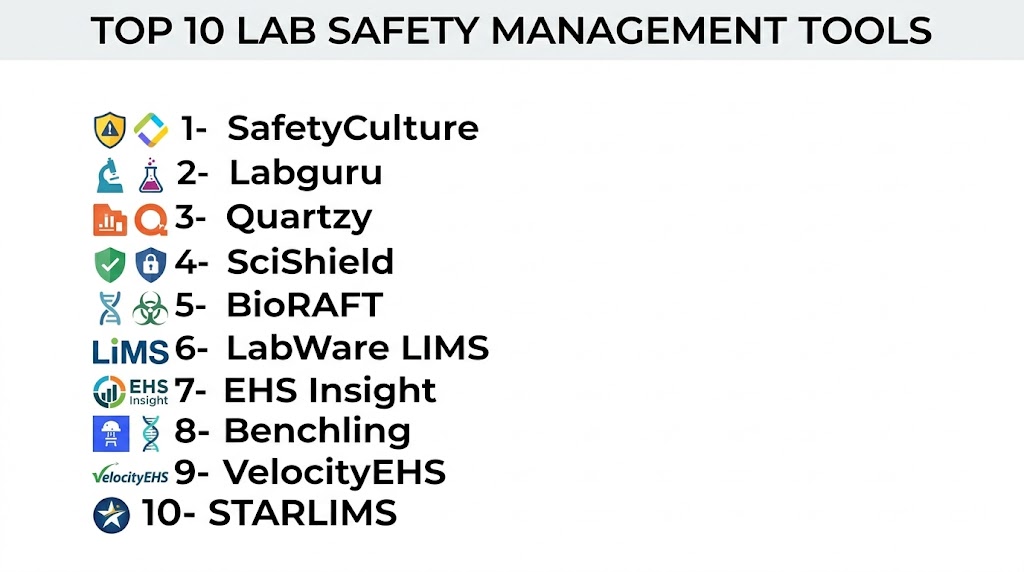
Top 10 Lab Safety Management Tools
1- Labguru
Short description: Labguru is a lab operations and informatics platform used by research, biotech, and pharmaceutical teams to manage experiments, inventory, equipment, and workflows. While it is not only a safety tool, it supports important safety-adjacent workflows such as inventory tracking, equipment management, documentation, and controlled lab processes. It is useful for labs that want operational visibility along with structured recordkeeping.
Key Features
- Lab inventory management
- Equipment and maintenance tracking
- Experiment documentation
- Workflow management
- Role-based collaboration
- Sample and materials tracking
- Reporting and dashboards
Pros
- Strong fit for research-heavy labs
- Combines lab operations and documentation
- Useful inventory visibility
- Good collaboration features
Cons
- Not a dedicated EHS-only platform
- Advanced safety workflows may require configuration
- May be more than small labs need
- Compliance features depend on setup
Platforms / Deployment
- Web
- Cloud
Security & Compliance
- RBAC
- Encryption
- Audit trails
- SSO support may vary by plan
- Additional certifications: Not publicly stated
Integrations & Ecosystem
Labguru connects lab documentation, inventory, and operational workflows into a central environment. It is useful for organizations that want lab management and safety-related recordkeeping together.
- LIMS-related workflows
- Inventory systems
- Equipment records
- API options
- Reporting tools
Support & Community
Labguru provides documentation, onboarding support, and customer success resources. Support depth may vary by package and organization size.
2- SciShield
Short description: SciShield is designed specifically for laboratory safety, compliance, and research oversight. It helps organizations manage lab profiles, inspections, training, hazards, personnel, and safety documentation. It is especially useful for universities, research institutions, and organizations with many labs and safety stakeholders.
Key Features
- Lab safety profiles
- Inspection management
- Training tracking
- Hazard and risk documentation
- Personnel safety records
- Compliance dashboards
- Corrective action tracking
Pros
- Strong lab safety specialization
- Good fit for research institutions
- Centralized lab profile management
- Useful compliance visibility
Cons
- May be too specialized for general business users
- Implementation requires accurate lab data
- Smaller labs may not need full feature depth
- Integrations may require planning
Platforms / Deployment
- Web
- Cloud
Security & Compliance
- RBAC
- Audit tracking
- Encryption
- SSO support may vary
- Additional certifications: Not publicly stated
Integrations & Ecosystem
SciShield supports safety, training, inspection, and lab profile workflows. It can help connect EHS staff, principal investigators, lab managers, and institutional safety teams.
- Training systems
- Institutional directories
- EHS workflows
- Lab profile databases
- Reporting tools
Support & Community
Support is focused on institutional and laboratory safety programs, with onboarding and configuration assistance available.
3- BioRAFT
Short description: BioRAFT is a laboratory safety, compliance, and research management platform commonly used by universities and research organizations. It supports lab safety profiles, inspections, training, hazards, equipment records, and compliance oversight. It is particularly strong for institutions managing many research labs with different risk categories.
Key Features
- Lab profile management
- Safety inspections
- Training compliance tracking
- Hazard assessment workflows
- Equipment and chemical tracking support
- Corrective action management
- Reporting dashboards
Pros
- Strong research institution fit
- Good lab safety workflow depth
- Useful training and compliance visibility
- Supports multi-lab environments
Cons
- Can require structured implementation
- May be complex for very small labs
- Customization may need admin effort
- Pricing transparency may vary
Platforms / Deployment
- Web
- Cloud
Security & Compliance
- RBAC
- Encryption
- Audit tracking
- SSO support may vary
- Additional certifications: Not publicly stated
Integrations & Ecosystem
BioRAFT supports institutional lab safety ecosystems by connecting personnel, hazards, training, and inspection workflows.
- HR or directory systems
- Training platforms
- EHS workflows
- Lab safety records
- Reporting systems
Support & Community
BioRAFT provides specialized support for research and institutional environments. Documentation and onboarding are generally focused on lab safety program adoption.
4- Quartzy
Short description: Quartzy is a lab management platform focused on inventory, purchasing, requests, and operational coordination. While it is not a full EHS platform, it helps improve lab safety by giving teams better visibility into supplies, chemicals, reagents, and stock levels. It is useful for labs that want simpler inventory control and procurement coordination.
Key Features
- Lab inventory management
- Order request workflows
- Procurement support
- Supply tracking
- Team collaboration
- Reagent and consumable records
- Notifications and approvals
Pros
- Easy to use for lab teams
- Good fit for small and mid-sized labs
- Helpful for reducing inventory confusion
- Simplifies ordering workflows
Cons
- Not a dedicated safety compliance platform
- Limited inspection and incident management
- Advanced EHS workflows require other tools
- Enterprise safety controls may be limited
Platforms / Deployment
- Web
- Cloud
Security & Compliance
- Encryption
- User access controls
- Additional certifications: Not publicly stated
Integrations & Ecosystem
Quartzy is strongest as a lab inventory and purchasing coordination tool. It can support safer lab operations by improving visibility into materials and ordering activity.
- Procurement workflows
- Inventory records
- Team request processes
- Reporting exports
- Vendor ordering workflows
Support & Community
Quartzy offers onboarding resources and support suited to laboratory teams. It has strong mindshare among academic and research labs.
5- ChemInventory
Short description: ChemInventory is a chemical inventory management platform designed to help labs track chemicals, containers, locations, quantities, and Safety Data Sheets. It is useful for academic, research, industrial, and chemical labs that need better control over hazardous materials and inventory records.
Key Features
- Chemical inventory tracking
- Container-level records
- Safety Data Sheet management
- Location and storage tracking
- Barcode support
- Search and reporting tools
- Expiration and quantity monitoring
Pros
- Strong chemical inventory focus
- Easier than spreadsheet-based tracking
- Useful for safety and compliance teams
- Good fit for labs with hazardous materials
Cons
- Not a complete EHS suite
- Limited broader incident workflows
- May need integration with training systems
- Advanced reporting needs may vary
Platforms / Deployment
- Web
- Cloud
Security & Compliance
- User access controls
- Encryption
- Additional certifications: Not publicly stated
Integrations & Ecosystem
ChemInventory focuses on chemical visibility and safety documentation. It can support EHS teams by improving chemical traceability and Safety Data Sheet access.
- SDS workflows
- Barcode systems
- Chemical databases
- Inventory exports
- Reporting tools
Support & Community
Support is specialized around chemical inventory use cases. Documentation and onboarding resources are generally practical for lab administrators.
6- VelocityEHS
Short description: VelocityEHS is an enterprise EHS platform with capabilities for chemical management, Safety Data Sheets, incident reporting, audits, inspections, risk management, and training. It is suitable for organizations that need lab safety as part of a broader workplace safety and compliance program.
Key Features
- Safety Data Sheet management
- Chemical management
- Incident reporting
- Audit and inspection workflows
- Corrective action tracking
- Training management
- Risk and compliance dashboards
Pros
- Broad EHS functionality
- Strong chemical safety capabilities
- Scalable for enterprise environments
- Useful compliance reporting
Cons
- May be more than small labs need
- Implementation can require planning
- Pricing may vary by module
- Lab-specific customization may be needed
Platforms / Deployment
- Web / iOS / Android
- Cloud
Security & Compliance
- RBAC
- SSO support
- Encryption
- Audit logging
- Additional certifications: Not publicly stated
Integrations & Ecosystem
VelocityEHS integrates safety, chemical management, and compliance workflows across organizations. It is useful when lab safety must align with enterprise EHS programs.
- HR systems
- Training platforms
- ERP workflows
- Chemical databases
- Reporting and analytics tools
- API options may vary
Support & Community
VelocityEHS provides enterprise support, onboarding resources, documentation, and customer success services. Support levels may vary by subscription.
7- SafetyCulture
Short description: SafetyCulture is a digital inspection, checklist, and operations platform used across many industries, including laboratories. It helps teams perform lab safety inspections, equipment checks, incident reporting, corrective actions, and recurring audit workflows. It is especially useful for teams moving away from paper checklists.
Key Features
- Digital safety inspections
- Checklist templates
- Corrective action management
- Mobile reporting
- Incident capture
- Analytics dashboards
- Team task tracking
Pros
- Very easy to use
- Strong mobile inspection workflows
- Good for audit consistency
- Useful for multi-site teams
Cons
- Not lab-specific by default
- Chemical inventory depth is limited
- Requires custom templates for lab workflows
- Enterprise integrations may require setup
Platforms / Deployment
- Web / iOS / Android
- Cloud
Security & Compliance
- SSO support
- RBAC
- Encryption
- Audit logs
- Additional certifications: Not publicly stated
Integrations & Ecosystem
SafetyCulture connects inspections, corrective actions, and reporting into a simple operational workflow. Labs can use it for routine inspections, audits, and equipment safety checks.
- Reporting tools
- Task management workflows
- API options
- Business intelligence tools
- Notification systems
Support & Community
SafetyCulture has strong documentation, template libraries, onboarding resources, and broad user adoption across operational safety teams.
8- EHS Insight
Short description: EHS Insight is an environmental, health, and safety management platform used for audits, inspections, incidents, compliance tasks, training, and risk management. It can support lab safety programs by giving EHS teams centralized visibility into incidents, corrective actions, and regulatory workflows.
Key Features
- Incident management
- Audit and inspection workflows
- Compliance task tracking
- Training management
- Risk assessments
- Corrective action tracking
- Analytics dashboards
Pros
- Broad EHS coverage
- Strong inspection and incident workflows
- Useful for multi-location organizations
- Good reporting capabilities
Cons
- Not exclusively lab-focused
- Chemical inventory depth may require additional tools
- Configuration effort may be needed
- Smaller labs may find it too broad
Platforms / Deployment
- Web / iOS / Android
- Cloud
Security & Compliance
- RBAC
- Encryption
- Audit logging
- SSO support may vary
- Additional certifications: Not publicly stated
Integrations & Ecosystem
EHS Insight supports integration with safety, HR, compliance, and operational systems. It is best for labs that need safety management within a broader EHS program.
- HR systems
- Training systems
- Reporting tools
- Compliance workflows
- API options
Support & Community
EHS Insight provides onboarding, support resources, documentation, and customer success services for EHS teams.
9- Chemical Safety EMS
Short description: Chemical Safety EMS is an environmental management and chemical safety platform designed for chemical inventory, waste management, regulatory reporting, and hazardous material tracking. It is useful for labs and organizations that need stronger chemical compliance and environmental safety workflows.
Key Features
- Chemical inventory management
- Hazardous waste tracking
- Safety Data Sheet management
- Regulatory reporting support
- Container tracking
- Environmental compliance workflows
- Reporting dashboards
Pros
- Strong chemical and environmental safety focus
- Useful for regulated lab environments
- Good hazardous waste tracking
- Supports compliance-oriented workflows
Cons
- Interface may feel technical
- Broader lab operations features may be limited
- Implementation may require EHS expertise
- Not ideal for simple checklist needs
Platforms / Deployment
- Web
- Cloud / Hybrid
Security & Compliance
- RBAC
- Encryption
- Audit tracking
- Additional certifications: Not publicly stated
Integrations & Ecosystem
Chemical Safety EMS is built around chemical safety, hazardous materials, and environmental compliance workflows. It supports labs that need structured tracking beyond basic inventory.
- Chemical databases
- SDS systems
- Waste management workflows
- Reporting systems
- Compliance documentation
Support & Community
Support is specialized for chemical and environmental compliance teams. Implementation guidance may be useful for regulated organizations.
10- LabCollector
Short description: LabCollector is a lab information and inventory management platform that helps labs manage samples, chemicals, equipment, storage, and documentation. It can support safety workflows through improved inventory visibility, equipment tracking, and structured lab data management. It is useful for labs that want a modular system with operational flexibility.
Key Features
- Chemical and sample inventory
- Equipment management
- Storage tracking
- Lab documentation
- Barcode support
- User permissions
- Modular lab workflows
Pros
- Flexible modular structure
- Useful inventory and sample tracking
- Good fit for research labs
- Supports lab organization and visibility
Cons
- Not a full EHS platform
- Safety workflows may require setup
- Interface may require training
- Enterprise compliance depth may vary
Platforms / Deployment
- Web
- Cloud / Self-hosted / Hybrid
Security & Compliance
- User permissions
- Encryption
- Audit features may vary
- Additional certifications: Not publicly stated
Integrations & Ecosystem
LabCollector supports modular lab workflows and can connect inventory, equipment, and sample management processes.
- Barcode systems
- Inventory workflows
- Sample management
- API options
- Reporting exports
Support & Community
LabCollector provides documentation, technical support, and implementation guidance. Community strength varies by region and deployment type.
Comparison Table
| Tool Name | Best For | Platform(s) Supported | Deployment | Standout Feature | Public Rating |
|---|---|---|---|---|---|
| Labguru | Research lab operations | Web | Cloud | Lab inventory and workflow management | N/A |
| SciShield | Institutional lab safety | Web | Cloud | Lab profiles and compliance tracking | N/A |
| BioRAFT | University and research safety | Web | Cloud | Training and hazard management | N/A |
| Quartzy | Lab inventory and purchasing | Web | Cloud | Simple supply and inventory workflows | N/A |
| ChemInventory | Chemical inventory control | Web | Cloud | Chemical and SDS tracking | N/A |
| VelocityEHS | Enterprise EHS programs | Web, iOS, Android | Cloud | Chemical safety and EHS workflows | N/A |
| SafetyCulture | Digital inspections | Web, iOS, Android | Cloud | Mobile checklist and audit workflows | N/A |
| EHS Insight | Safety and compliance teams | Web, iOS, Android | Cloud | Incident and audit management | N/A |
| Chemical Safety EMS | Hazardous materials compliance | Web | Cloud, Hybrid | Chemical and waste tracking | N/A |
| LabCollector | Modular lab management | Web | Cloud, Self-hosted, Hybrid | Inventory and equipment tracking | N/A |
Evaluation & Scoring of Lab Safety Management Tools
| Tool Name | Core | Ease | Integrations | Security | Performance | Support | Value | Weighted Total |
|---|---|---|---|---|---|---|---|---|
| Labguru | 8.5 | 8.3 | 8.0 | 8.2 | 8.5 | 8.3 | 8.0 | 8.28 |
| SciShield | 8.8 | 7.9 | 7.8 | 8.1 | 8.3 | 8.2 | 8.0 | 8.25 |
| BioRAFT | 8.7 | 7.8 | 7.9 | 8.1 | 8.2 | 8.3 | 7.9 | 8.22 |
| Quartzy | 7.6 | 9.0 | 7.1 | 7.5 | 8.1 | 8.0 | 8.7 | 8.02 |
| ChemInventory | 8.3 | 8.4 | 7.3 | 7.8 | 8.2 | 7.9 | 8.5 | 8.12 |
| VelocityEHS | 9.0 | 7.8 | 8.5 | 8.7 | 8.7 | 8.6 | 7.7 | 8.51 |
| SafetyCulture | 8.0 | 9.1 | 8.0 | 8.3 | 8.6 | 8.5 | 8.6 | 8.43 |
| EHS Insight | 8.6 | 8.0 | 8.1 | 8.4 | 8.5 | 8.4 | 8.0 | 8.34 |
| Chemical Safety EMS | 8.5 | 7.6 | 7.7 | 8.0 | 8.1 | 8.0 | 8.1 | 8.08 |
| LabCollector | 8.0 | 8.1 | 7.6 | 7.8 | 8.0 | 7.8 | 8.3 | 7.98 |
These scores are comparative and should be used as a starting point, not a final buying decision. Enterprise EHS platforms usually score higher in compliance, reporting, and scalability, while lab-focused tools may provide better usability for scientists and lab managers. Buyers should give more weight to the areas that matter most, such as chemical inventory, inspections, training, or incident reporting.
Which Lab Safety Management Tool Is Right for You?
Solo / Freelancer
Independent researchers, consultants, or very small labs usually do not need a large EHS platform. Quartzy, ChemInventory, or LabCollector can be practical options because they focus on inventory, organization, and easier day-to-day lab workflows.
SMB
Small and mid-sized labs should look for tools that are easy to deploy and do not require heavy administration. Labguru, ChemInventory, SafetyCulture, and LabCollector can provide strong value depending on whether the priority is inventory, inspections, or lab documentation.
Mid-Market
Mid-market organizations often need stronger safety oversight, audit tracking, and training visibility. SciShield, BioRAFT, EHS Insight, and VelocityEHS are better suited for structured safety programs across multiple teams or lab locations.
Enterprise
Large universities, pharmaceutical firms, biotech enterprises, and industrial lab networks should prioritize scalability, compliance reporting, access controls, and integrations. VelocityEHS, SciShield, BioRAFT, and EHS Insight are strong choices for enterprise-wide lab safety governance.
Budget vs Premium
Budget-focused teams should start with core workflows such as chemical inventory, inspection checklists, and training records. Premium systems make sense when the organization needs multi-site governance, analytics, automated compliance reporting, and deeper EHS integration.
Feature Depth vs Ease of Use
Lab teams often prefer simple tools that fit naturally into daily work. EHS leaders may prefer deeper platforms with stronger compliance controls. The best choice depends on whether adoption speed or governance depth is the bigger priority.
Integrations & Scalability
Labs using LIMS, procurement systems, HR systems, or enterprise EHS platforms should prioritize integration support. Without good integration planning, safety records can become fragmented across multiple systems.
Security & Compliance Needs
Organizations handling regulated research, hazardous materials, or sensitive lab records should prioritize RBAC, encryption, audit trails, SSO, and strong administrative controls. Compliance readiness is stronger when safety tasks, training, incidents, and corrective actions are documented in one place.
Frequently Asked Questions
1. What are Lab Safety Management Tools?
Lab Safety Management Tools are software platforms that help laboratories manage inspections, incidents, chemical inventories, training records, equipment checks, and compliance tasks. They replace manual spreadsheets and paper forms with structured digital workflows. These systems help lab managers and EHS teams improve visibility, accountability, and safety performance.
2. Why do labs need safety management software?
Labs need safety software because they often handle hazardous chemicals, biological materials, equipment risks, and regulated procedures. Manual tracking can lead to missed inspections, outdated training records, and incomplete incident documentation. Digital tools help standardize workflows and reduce safety management gaps.
3. What features should buyers look for first?
Buyers should first evaluate chemical inventory management, Safety Data Sheet access, inspection workflows, incident reporting, training tracking, and corrective action management. Mobile access and reporting dashboards are also important for busy lab environments. The best feature set depends on lab size, hazard level, and compliance needs.
4. Are these tools only for large laboratories?
No. Small labs can also benefit from simple tools for chemical inventory, purchasing, and safety checklists. However, large organizations usually need more advanced features such as multi-site reporting, role-based access, audit logs, and enterprise integrations. The right tool should match operational complexity.
5. How do Lab Safety Management Tools support compliance?
These tools support compliance by keeping inspection records, training completion, incident reports, chemical inventories, and corrective actions organized. They help teams prove that safety tasks were completed and documented. This improves audit readiness and reduces the risk of missing important requirements.
6. Can these tools manage chemical inventory?
Many lab safety tools include chemical inventory features, while some specialize almost entirely in chemical tracking. They can help manage container locations, quantities, Safety Data Sheets, expiration dates, and storage information. This is especially important for labs handling hazardous or regulated substances.
7. What is the difference between lab safety software and EHS software?
Lab safety software is usually more focused on laboratory-specific workflows such as chemical inventory, lab profiles, inspections, and research safety. EHS software is broader and may cover workplace safety, environmental compliance, audits, incidents, and training across the whole organization. Some companies use both together.
8. How long does implementation usually take?
Implementation depends on lab size, data quality, and workflow complexity. A simple inventory or checklist tool may be deployed quickly, while enterprise EHS or institutional lab safety platforms require more planning. Data migration, user training, role setup, and integration work can extend the rollout.
9. What are common mistakes when choosing lab safety software?
A common mistake is choosing software based only on feature count without considering usability. If researchers and lab staff find the tool difficult, adoption will suffer. Other mistakes include ignoring integration needs, underestimating data cleanup, and failing to define ownership for safety workflows.
10. What are alternatives to dedicated lab safety tools?
Alternatives include spreadsheets, shared document systems, general task management tools, LIMS modules, or broader EHS platforms. These may work for limited needs, but they often lack structured audit trails, chemical tracking, and safety-specific workflows. Dedicated tools are usually better for labs with recurring inspections, hazardous materials, or compliance requirements.
Conclusion
Lab Safety Management Tools help laboratories create safer, more organized, and more accountable working environments by digitizing inspections, chemical inventory, incident reporting, training records, and compliance workflows. The best platform depends on whether the lab needs chemical inventory depth, institutional safety oversight, enterprise EHS controls, or simple mobile inspection workflows. Tools such as SciShield and BioRAFT are strong for research institutions, VelocityEHS and EHS Insight fit broader EHS programs, while Quartzy, ChemInventory, and LabCollector are practical for inventory-focused teams. Buyers should avoid choosing based only on brand recognition and instead evaluate workflow fit, user adoption, data migration, integration needs, and security controls. A smart next step is to shortlist two or three tools, run a pilot with real lab users, validate chemical inventory and inspection workflows, and confirm reporting and access control requirements before full rollout.

Lab safety management tools are most effective when they help build a proactive safety culture rather than simply documenting compliance activities. Organizations benefit when safety observations, near-miss reporting, and corrective actions are analyzed to identify recurring patterns before incidents occur. Expanding the comparison to cover predictive risk analytics, anonymous safety reporting, integration with laboratory instruments, and continuous improvement metrics would provide readers with a more practical framework for selecting a platform that strengthens both compliance and day-to-day laboratory safety.
Lab safety management becomes much stronger when safety information is connected to the work happening in the laboratory rather than stored as a separate compliance record. Training status, chemical inventories, equipment inspections, incident reports, risk assessments, and corrective actions can provide a more complete picture of where operational risks are developing. It is also useful to track recurring near-misses and overdue corrective actions because these signals can reveal weaknesses before they result in a serious incident. Connecting safety workflows with laboratory systems can make responsibilities clearer and give managers better visibility into whether identified risks are actually being addressed rather than simply documented.