Introduction
Civic engagement platforms help governments, municipalities, nonprofits, educational institutions, and community organizations communicate with residents, gather public feedback, manage participation initiatives, and improve transparency. These platforms support digital town halls, surveys, citizen requests, participatory budgeting, policy discussions, public consultations, and community collaboration.
As governments continue modernizing digital services, civic engagement platforms are becoming essential for increasing public participation and strengthening trust between citizens and public institutions. Instead of relying only on in-person meetings and manual outreach, agencies can now collect community input through mobile apps, web portals, SMS communication, surveys, and interactive dashboards.
Real-world use cases:
- Public consultations and community feedback
- Participatory budgeting initiatives
- Citizen issue reporting and service requests
- Digital town halls and forums
- Community surveys and policy engagement
Evaluation Criteria for Buyers:
- Citizen communication and engagement tools
- Survey and feedback collection capabilities
- Mobile accessibility and usability
- Workflow automation and request management
- GIS and mapping integration
- Reporting and analytics dashboards
- Security and role-based access controls
- Integration with CRM, ERP, and municipal systems
- Scalability for large communities
- Vendor support and onboarding resources
Best for: Municipal governments, counties, universities, nonprofits, public agencies, smart city programs, and community engagement teams.
Not ideal for: Organizations that only need basic email newsletters or small-scale internal communication tools.
Key Trends in Civic Engagement Platforms
- Mobile-first citizen engagement experiences
- AI-assisted sentiment analysis and feedback categorization
- Participatory budgeting and voting workflows
- GIS-enabled issue reporting and mapping
- Omnichannel communication through web, SMS, and apps
- Real-time dashboards for public transparency
- Cloud-based digital government modernization
- Accessibility-focused citizen interfaces
- Integration with municipal CRM and 311 systems
- Community engagement analytics and trend monitoring
How We Selected These Tools
- Adoption across local governments and public agencies
- Citizen participation and communication capabilities
- Mobile and accessibility support
- Reporting, dashboards, and analytics strength
- Integration with municipal and CRM systems
- Workflow automation and service request management
- Security and public sector readiness
- Scalability for cities and large communities
- Vendor ecosystem maturity
- Training, onboarding, and support quality
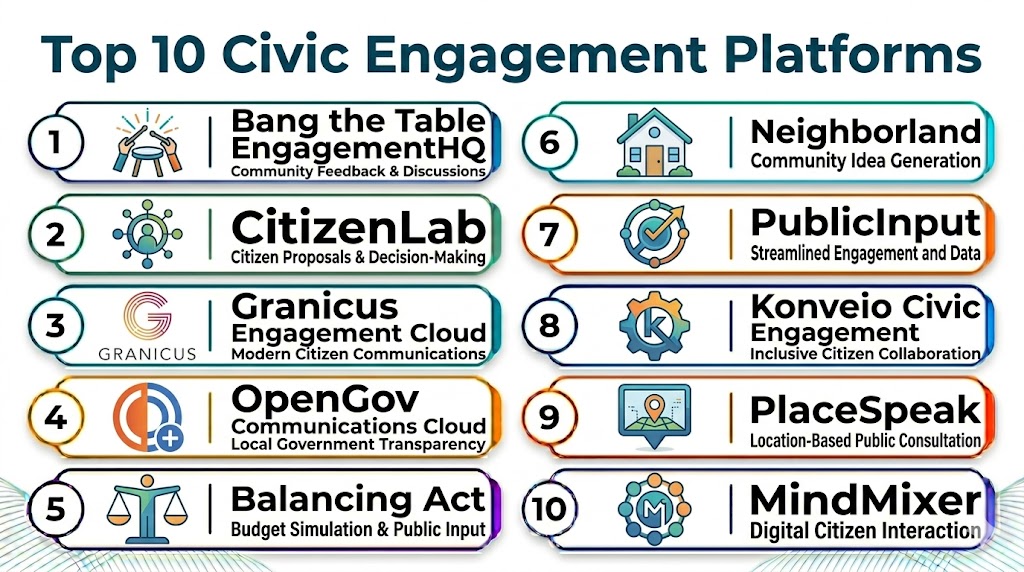
Top 10 Civic Engagement Platforms
#1 — Granicus EngagementHQ
Short description: Granicus EngagementHQ helps governments run public consultations, surveys, forums, participatory budgeting programs, and community engagement initiatives through a centralized digital platform.
Key Features
- Community surveys and consultations
- Participatory budgeting tools
- Interactive forums and discussions
- Citizen feedback dashboards
- Engagement analytics
- Mobile-friendly public portals
Pros
- Strong public sector adoption
- Broad engagement capabilities
- Good analytics and reporting
Cons
- Premium pricing for enterprise deployments
- Advanced customization may require services
- Setup can be complex for large agencies
Platforms / Deployment
- Web / Mobile
- Cloud
Security & Compliance
- Encryption and secure authentication
- Role-based access controls
Integrations & Ecosystem
EngagementHQ integrates with CRM systems, municipal websites, communication platforms, and analytics tools to support connected citizen engagement workflows.
- CRM platforms
- Municipal websites
- Analytics tools
- Communication systems
Support & Community
- Government-focused support services
- Training and onboarding resources
- Public sector implementation guidance
#2 — Bang the Table
Short description: Bang the Table provides digital community engagement and public participation tools for governments, planning teams, and public agencies managing consultations and policy feedback.
Key Features
- Online public consultations
- Community discussion forums
- Surveys and feedback collection
- Stakeholder engagement tools
- Reporting dashboards
- Accessibility-focused interfaces
Pros
- Strong public consultation workflows
- Easy citizen participation experience
- Good moderation capabilities
Cons
- Premium enterprise pricing
- Advanced integrations may require setup
- Best suited for structured engagement programs
Platforms / Deployment
- Web / Mobile
- Cloud
Security & Compliance
- Secure access controls
- Audit logging support
Integrations & Ecosystem
- Government websites
- Survey and reporting tools
- GIS integrations
Support & Community
- Training and onboarding assistance
- Public sector customer support
#3 — CitizenLab
Short description: CitizenLab helps governments collect community feedback, run digital participation initiatives, and improve transparency through citizen collaboration and engagement tools.
Key Features
- Citizen idea collection
- Participatory budgeting workflows
- Community surveys
- Project and policy feedback
- Analytics dashboards
- Multilingual engagement support
Pros
- Modern and user-friendly interface
- Strong participatory workflows
- Good transparency and reporting tools
Cons
- Enterprise modules may add cost
- Smaller ecosystem than largest vendors
- Some advanced workflows require configuration
Platforms / Deployment
- Web / Mobile
- Cloud
Security & Compliance
- Encryption and role-based access
- Audit logging support
Integrations & Ecosystem
- Municipal websites
- GIS tools
- CRM integrations
- Analytics systems
Support & Community
- Documentation and onboarding support
- Customer success resources
#4 — SeeClickFix
Short description: SeeClickFix helps municipalities manage citizen issue reporting, service requests, and community communication through mobile-friendly workflows and GIS-based reporting.
Key Features
- Citizen issue reporting
- GIS and location-based requests
- Mobile request submission
- Service request tracking
- Public transparency dashboards
- Department workflow routing
Pros
- Excellent issue reporting experience
- Strong mobile usability
- Good GIS integration
Cons
- Focused mainly on service requests
- Limited broader consultation features
- Enterprise customization may vary
Platforms / Deployment
- Web / iOS / Android
- Cloud
Security & Compliance
- Secure authentication and access controls
- Audit logging support
Integrations & Ecosystem
- GIS systems
- Municipal CRM tools
- Public works systems
- Citizen communication workflows
Support & Community
- Vendor onboarding and support
- Documentation and training resources
#5 — OpenGov Citizen Services
Short description: OpenGov Citizen Services supports digital government engagement with citizen requests, service workflows, forms, and community communication capabilities.
Key Features
- Citizen request management
- Digital forms and workflows
- Community communication tools
- Service request tracking
- Reporting dashboards
- Mobile-friendly interfaces
Pros
- Modern cloud-based experience
- Good workflow automation
- Useful municipal integrations
Cons
- Advanced custom workflows may require setup
- Enterprise pricing can increase with modules
- Some integrations require services
Platforms / Deployment
- Web / Mobile
- Cloud
Security & Compliance
- Encryption and access controls
- Audit logging support
Integrations & Ecosystem
- ERP and finance systems
- Municipal workflows
- GIS and reporting tools
Support & Community
- Onboarding and customer support
- Knowledge base and training materials
#6 — Neighborland
Short description: Neighborland helps governments and organizations gather community ideas, public feedback, and participation input through collaborative digital engagement tools.
Key Features
- Community idea collection
- Public discussion workflows
- Feedback and prioritization tools
- Engagement analytics
- Project collaboration support
- Public communication features
Pros
- Strong collaborative engagement design
- Easy-to-use citizen interface
- Good transparency workflows
Cons
- Less comprehensive for enterprise municipal operations
- Advanced integrations may be limited
- Workflow customization varies
Platforms / Deployment
- Web / Mobile
- Cloud
Security & Compliance
- Secure access controls
- Role-based permissions
Integrations & Ecosystem
- Municipal websites
- Communication tools
- Community outreach workflows
Support & Community
- Customer support and onboarding resources
#7 — Balancing Act
Short description: Balancing Act specializes in participatory budgeting and budget simulation tools that help governments engage residents in public finance decisions.
Key Features
- Budget simulation tools
- Participatory budgeting workflows
- Resident voting and feedback
- Financial visualization dashboards
- Scenario planning
- Public transparency support
Pros
- Excellent budget engagement workflows
- Strong financial transparency focus
- Interactive citizen participation experience
Cons
- Narrower focus than full engagement suites
- Limited broader civic engagement features
- Best suited for budgeting initiatives
Platforms / Deployment
- Web / Mobile
- Cloud
Security & Compliance
- Secure authentication and access controls
Integrations & Ecosystem
- Government budgeting systems
- Financial reporting tools
- Citizen portals
Support & Community
- Vendor onboarding and implementation assistance
#8 — Konveio
Short description: Konveio helps organizations collect comments and feedback directly on public documents, plans, policies, and proposals using collaborative review workflows.
Key Features
- Document commenting and markup
- Public review workflows
- Stakeholder collaboration
- Comment moderation tools
- Analytics dashboards
- Multilingual support
Pros
- Strong document collaboration experience
- Good planning and zoning workflows
- Useful for policy consultations
Cons
- Less broad than full civic engagement suites
- Advanced workflows may require integrations
- Limited service request functionality
Platforms / Deployment
- Web
- Cloud
Security & Compliance
- Role-based access controls
- Secure document workflows
Integrations & Ecosystem
- Planning and zoning systems
- Municipal websites
- Collaboration tools
Support & Community
- Support documentation and onboarding resources
#9 — PublicInput
Short description: PublicInput provides community engagement, surveys, SMS communication, public meetings, and multilingual participation tools for governments and public agencies.
Key Features
- Surveys and polling
- SMS engagement workflows
- Public meeting management
- Multilingual participation tools
- Analytics dashboards
- Citizen communication management
Pros
- Strong omnichannel communication support
- Good multilingual capabilities
- Useful public meeting workflows
Cons
- Enterprise pricing may increase with scale
- Some integrations require configuration
- Advanced analytics may require premium plans
Platforms / Deployment
- Web / Mobile
- Cloud
Security & Compliance
- Encryption and secure authentication
- Role-based access controls
Integrations & Ecosystem
- CRM systems
- Municipal websites
- Communication platforms
- Analytics tools
Support & Community
- Customer support and onboarding services
- Training and implementation guidance
#10 — Commonplace
Short description: Commonplace helps governments and planning teams gather public feedback on infrastructure, transportation, housing, and urban planning initiatives through digital engagement tools.
Key Features
- Community feedback collection
- Interactive maps and consultations
- Surveys and polls
- Public project engagement
- Reporting dashboards
- GIS visualization support
Pros
- Strong urban planning engagement workflows
- Good map-based participation tools
- User-friendly interfaces
Cons
- More specialized for planning initiatives
- Limited service request workflows
- Enterprise customization may vary
Platforms / Deployment
- Web / Mobile
- Cloud
Security & Compliance
- Secure access controls
- Audit logging support
Integrations & Ecosystem
- GIS systems
- Planning and zoning workflows
- Citizen communication tools
Support & Community
- Documentation and onboarding support
- Public sector customer resources
Comparison Table
| Tool Name | Best For | Platform(s) Supported | Deployment | Standout Feature | Public Rating |
|---|---|---|---|---|---|
| Granicus EngagementHQ | Enterprise government engagement | Web / Mobile | Cloud | Broad consultation workflows | N/A |
| Bang the Table | Public consultations | Web / Mobile | Cloud | Structured participation tools | N/A |
| CitizenLab | Participatory engagement | Web / Mobile | Cloud | Citizen idea collaboration | N/A |
| SeeClickFix | Citizen issue reporting | Web / iOS / Android | Cloud | GIS-based service requests | N/A |
| OpenGov Citizen Services | Digital government workflows | Web / Mobile | Cloud | Workflow automation | N/A |
| Neighborland | Community collaboration | Web / Mobile | Cloud | Idea-sharing workflows | N/A |
| Balancing Act | Participatory budgeting | Web / Mobile | Cloud | Budget simulation tools | N/A |
| Konveio | Document review engagement | Web | Cloud | Public document commenting | N/A |
| PublicInput | Multichannel engagement | Web / Mobile | Cloud | SMS and multilingual communication | N/A |
| Commonplace | Urban planning engagement | Web / Mobile | Cloud | Interactive map consultations | N/A |
Evaluation & Scoring of Civic Engagement Platforms
| Tool Name | Core (25%) | Ease (15%) | Integrations (15%) | Security (10%) | Performance (10%) | Support (10%) | Value (15%) | Weighted Total (0–10) |
|---|---|---|---|---|---|---|---|---|
| Granicus EngagementHQ | 9 | 8 | 8 | 8 | 8 | 8 | 7 | 8.1 |
| Bang the Table | 8 | 8 | 7 | 8 | 8 | 8 | 7 | 7.8 |
| CitizenLab | 8 | 9 | 7 | 8 | 8 | 8 | 8 | 8.0 |
| SeeClickFix | 8 | 9 | 8 | 8 | 8 | 8 | 8 | 8.2 |
| OpenGov Citizen Services | 8 | 8 | 8 | 8 | 8 | 8 | 8 | 8.0 |
| Neighborland | 7 | 8 | 6 | 7 | 7 | 7 | 8 | 7.2 |
| Balancing Act | 8 | 8 | 6 | 7 | 7 | 7 | 8 | 7.4 |
| Konveio | 7 | 8 | 6 | 7 | 7 | 7 | 7 | 7.0 |
| PublicInput | 8 | 8 | 8 | 8 | 8 | 8 | 7 | 7.9 |
| Commonplace | 8 | 8 | 7 | 7 | 8 | 7 | 7 | 7.5 |
Weighted scores compare engagement capabilities, usability, integrations, security, performance, support, and value across civic participation environments. Higher scores usually indicate broader engagement functionality and stronger government readiness. Agencies should still prioritize platform fit based on communication style, community size, and workflow requirements.
Which Civic Engagement Platform Is Right for You?
Solo / Small Community
- Neighborland, Konveio, or Balancing Act for focused engagement and community collaboration initiatives.
SMB
- CitizenLab, PublicInput, or Commonplace for participatory feedback, surveys, and planning engagement.
Mid-Market
- OpenGov Citizen Services, Bang the Table, or CitizenLab for configurable workflows and broader community participation.
Enterprise
- Granicus EngagementHQ, OpenGov, or PublicInput for large-scale citizen engagement, analytics, and multi-channel communication.
Budget vs Premium
- Budget: Neighborland, Konveio, Balancing Act
- Premium: Granicus EngagementHQ, OpenGov, Bang the Table
Feature Depth vs Ease of Use
- High feature depth: Granicus, OpenGov, Bang the Table
- High ease of use: SeeClickFix, CitizenLab, Neighborland
Integrations & Scalability
- Extensive: Granicus, OpenGov, PublicInput
- Limited: Konveio, Neighborland
Security & Compliance Needs
- Enterprise-grade: Granicus, OpenGov, PublicInput
- Community-focused: CitizenLab, Commonplace, Neighborland
Frequently Asked Questions
1. What is a civic engagement platform?
A civic engagement platform helps governments and organizations communicate with residents, gather feedback, manage consultations, and encourage public participation. These systems centralize surveys, discussions, service requests, and engagement workflows. They improve transparency and help agencies make more informed decisions.
2. How are civic engagement platforms different from social media?
Social media platforms are broad public communication channels, while civic engagement platforms are purpose-built for structured participation, feedback collection, surveys, consultations, and government workflows. Civic platforms also provide moderation, reporting, and audit capabilities. They are designed specifically for public sector engagement needs.
3. Can residents submit service requests through these systems?
Yes, platforms like SeeClickFix and OpenGov support service requests such as potholes, streetlight issues, sanitation complaints, and public works requests. These requests can be routed to departments and tracked publicly. GIS mapping is often included for location-based reporting.
4. What is participatory budgeting?
Participatory budgeting allows residents to vote on or provide feedback about how government funds should be spent on projects and community initiatives. Platforms like Balancing Act and CitizenLab support these workflows. This improves transparency and community involvement in budgeting decisions.
5. Do these systems support multilingual engagement?
Many modern civic engagement platforms support multilingual communication and accessibility-focused interfaces. This helps governments engage diverse communities more effectively. Buyers should confirm language support and accessibility compliance before deployment.
6. Can these platforms integrate with municipal systems?
Yes, many platforms integrate with CRM systems, GIS tools, 311 systems, finance platforms, and municipal websites. Integration helps centralize citizen communication and operational workflows. The depth of integration depends on vendor APIs and deployment configuration.
7. Are civic engagement platforms secure?
Most enterprise-grade platforms provide encryption, role-based access controls, audit logs, and secure authentication. Governments should review privacy controls, data retention policies, and public moderation tools before implementation. Security requirements may vary by region and agency.
8. What are common implementation challenges?
Common challenges include low community participation, unclear moderation policies, poor workflow planning, and lack of staff training. Agencies should create outreach strategies and engagement goals before launch. Pilot programs can help improve adoption and participation quality.
9. Which platform is best for public consultations?
Granicus EngagementHQ, Bang the Table, and CitizenLab are strong options for structured consultations and community participation. The best platform depends on community size, reporting requirements, and workflow complexity. Agencies should test survey, moderation, and analytics capabilities during evaluation.
10. Which platform is best for issue reporting?
SeeClickFix is one of the strongest options for citizen issue reporting and GIS-based service requests. It is especially useful for public works, infrastructure, and municipal operations. Agencies needing broader engagement features may combine issue reporting with consultation platforms.
Conclusion
Civic engagement platforms help governments improve transparency, strengthen community trust, modernize citizen communication, and increase public participation through digital collaboration tools. Smaller communities may benefit from Neighborland, Konveio, or Balancing Act for focused engagement workflows, while mid-sized governments can evaluate CitizenLab, PublicInput, or Commonplace for broader participation and planning initiatives. Enterprise agencies should consider Granicus EngagementHQ, OpenGov Citizen Services, or Bang the Table for scalable public consultation, service request management, and multi-channel communication capabilities. Start by identifying your primary engagement goals, shortlist 2–3 platforms, test participation workflows and reporting dashboards, validate integrations with municipal systems, then scale after community feedback and staff onboarding.
