Understanding the Daily Pressures of Service
Running an independent restaurant means balancing culinary creativity with strict operational discipline. Every shift brings a familiar challenge: greeting arriving guests, managing phone inquiries, updating table statuses, and keeping the kitchen on track without overwhelming the dining room. When front-of-house teams rely on traditional pen-and-paper booking books or disjointed messaging apps, miscommunication can happen quickly. Double-bookings, forgotten special requests, and long queues at the entrance create stress for staff and frustration for diners.
To keep service running smoothly, many operators look for digital tools to centralize reservations and coordinate seating. Using Restaurant Reservation Software helps teams organize incoming booking details, review upcoming arrivals, and plan table pacing before the dining room fills up. However, choosing the right tool requires understanding how each part of the workflow connects—from the moment a guest books a table online to the final goodbye at the exit.
The Journey From Online Discovery to Table Seating
The dining experience often begins long before a guest steps through the front door. Today’s diners expect a fast, convenient way to secure a table from a smartphone or computer. When a restaurant provides an intuitive Online Restaurant Booking System, guests can view open time slots, select party sizes, and confirm their visits at any hour of the day or night.
Once a booking is submitted, the digital workflow takes over. Automated confirmation codes or text notifications reduce confusion and help remind guests of their scheduled times. Behind the scenes, the front-of-house team receives immediate updates, allowing them to track covers, anticipate peak hours, and adjust staffing levels accordingly. This digital connectivity ensures that both the diner and the restaurant share a clear understanding of the reservation details long before service begins.
Coordinating Tables and Dining-Room Layouts
A full dining room is a sign of a thriving restaurant, but managing physical space efficiently requires careful planning. A basic calendar view showing available times is rarely enough for a busy host. Staff need a precise visual representation of the floor plan to ensure that party sizes match available seating without creating awkward gaps or overcrowding specific sections.
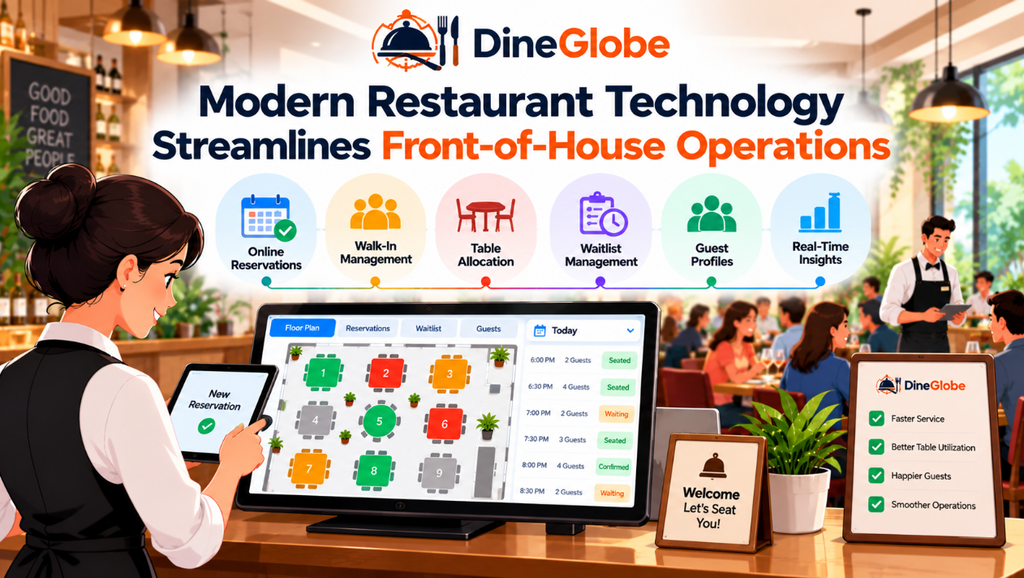
Implementing Restaurant Table Management Software allows hospitality teams to track table availability, review seating capacities, and prevent conflicting allocations. When paired with Restaurant Floor Plan Software, operators can digitally map their physical dining layout, designate combined tables for larger parties, assign reservation holds, and build necessary seating buffers between bookings. These buffers give servers time to clear and reset tables properly, helping maintain service rhythm throughout the shift.
Managing Busy Periods With Waitlist and Walk-In Workflows
Even with an organized booking schedule, popular restaurants frequently experience high demand where every table fills up quickly. When walk-in guests arrive or phone inquiries pour in during a rush, hosts need a reliable way to manage incoming traffic without turning people away prematurely or making unrealistic promises.
Using Restaurant Waitlist Management Software helps front-of-house teams record guest names, phone numbers, and party sizes during peak hours. Staff can provide estimated waiting times based on current table turnover and notify guests when their table is nearly ready. At the same time, integrating Restaurant Walk-In Management Software ensures that impromptu visitors are logged correctly alongside confirmed reservations, maintaining an accurate overview of total dining-room occupancy. It is important to remember that estimated waiting times are never guarantees; actual delays depend heavily on dining duration, party size, and unexpected service variations.
Equipping the Host Stand for Calm and Organized Service
The host stand is the nerve center of any restaurant during service. Hosts must greet guests warmly, verify reservations, check in walk-ins, and communicate table statuses to servers and managers in real time. Without an organized interface, hosts spend valuable time running back and forth across the dining room to check whether a table has been cleared.
Utilizing Restaurant Host Stand Software gives front-of-house staff a centralized view of upcoming reservations, arriving parties, seated guests, and open tables. This visibility allows hosts to seat guests efficiently, balance sections evenly among servers, and handle last-minute schedule changes calmly. While technology supports organization, it complements rather than replaces human judgment and warm hospitality.
Supporting Independent Restaurants and Growing Teams
For independent operators and small business owners, software selection involves practical considerations beyond feature lists. Limited staff resources, busy daily schedules, and the need for quick team training mean that technology must be intuitive and straightforward to adopt.
Finding suitable Restaurant Reservation Software for Small Restaurants involves looking for solutions that offer essential booking and table management features without unnecessary complexity or steep learning curves. Independent operators benefit from systems that adapt to their specific service style, whether they run a cozy neighborhood bistro, a busy café, or a growing culinary concept.
Building Direct Connections With Your Diners
Restaurants often rely on third-party dining marketplaces to attract new guests, but depending exclusively on external platforms can limit direct communication and increase operating costs. Building a Direct Restaurant Booking System allows restaurant owners to accept reservations directly through their own branded channels, maintaining full ownership of guest data and communication.
Managing bookings independently gives operators more control over cancellation policies, special requests, and pre-arrival messaging. While third-party marketplaces still play a useful role in discovery, a direct booking channel strengthens the relationship between the restaurant and its loyal guests, creating a more personalized and consistent experience from start to finish.
Exploring Trial Options and Free Tools
For restaurant operators exploring digital operations for the first time, evaluating cost and commitment is a crucial step. A Free Restaurant Reservation System or pilot program offers an accessible way to test digital booking workflows without upfront financial risk.
However, before adopting any complimentary or pilot-stage tool, operators should carefully review what is included. Key questions to ask include:
- Are there limits on the number of monthly bookings or active tables?
- How many staff accounts are supported?
- What level of customer support and onboarding assistance is available?
- Are multilingual options provided if needed?
- What are the terms of the pilot program, and will pricing change in the future?
Careful evaluation ensures that the chosen software aligns with the restaurant’s operational needs and long-term goals.
Practical Implementation Steps for Your Restaurant
Transitioning to a digital reservation and table management workflow goes smoothly when approached step by step. Consider the following practical implementation checklist:
- Map your current process: Document how phone bookings, walk-ins, and waitlists are currently handled during a typical shift.
- Record table layouts: Measure or list out all physical table sizes, shapes, and seating combinations.
- Define booking rules: Set clear guidelines for seating capacities, maximum party sizes, and reservation intervals.
- Establish policies: Outline clear rules for late arrivals, reservation holds, and cancellation windows.
- Train your team: Walk hosts and managers through the software interface using quiet periods or mock service scenarios before going live.
- Review performance: Analyze daily operational reports over time to understand peak hours, guest turnover, and booking trends.
Exploring DineGlobe for Your Operations
For restaurants seeking a streamlined approach to front-of-house management, DineGlobe.com offers a dedicated platform designed to simplify online reservations, table allocation, and host workflows. DineGlobe helps operators manage dedicated booking pages, physical floor plans, reservation holds, and waitlist tracking in one centralized place. With features designed to support direct guest bookings, role-based staff access, and multilingual interfaces in English, Japanese, and Arabic, the platform accommodates diverse operational needs. Restaurants interested in trying out digital booking tools can also explore available pilot-program opportunities to test feature limits and workflows firsthand.
Frequently Asked Questions
How does online reservation software reduce guest no-shows?
Digital reservation platforms typically send automated confirmation messages and reminder notifications via text or email. These reminders make it easy for guests to confirm, modify, or cancel their bookings in advance, giving restaurant teams valuable time to reallocate tables.
Can table management software handle combined tables for large parties?
Yes. Most modern table management systems allow operators to define flexible floor plans, group specific tables together digitally, and set rules for accommodating large parties without creating scheduling conflicts.
What is the difference between a waitlist and a walk-in management tool?
A waitlist tool focuses on tracking guests who are currently waiting for an available table during busy service, often providing estimated wait times. A walk-in tool specifically records impromptu arrivals who do not have prior reservations, ensuring they are logged accurately alongside booked parties.
Do I need special hardware to run restaurant reservation software?
Most modern reservation platforms operate via cloud-based web browsers or mobile apps, meaning they can run on standard tablets, smartphones, or existing computer terminals without requiring expensive proprietary hardware.
How do direct booking systems differ from dining marketplace apps?
Direct booking systems allow guests to reserve tables directly through the restaurant’s own website or social media channels. This keeps the guest relationship centered around the restaurant’s brand and reduces reliance on external third-party platforms.
What should independent operators look for in a reservation platform?
Independent operators should prioritize ease of use, quick staff training, transparent pricing or pilot terms, reliable customer support, and essential features like floor plan customization and mobile accessibility.
Can multiple staff members access the reservation system with different permission levels?
Many platforms offer role-based access control, allowing owners, managers, hosts, and servers to view or edit specific parts of the system according to their daily operational responsibilities.
Is it possible to test a reservation system before committing financially?
Yes. Platforms often provide free trials, pilot programs, or limited free tiers that allow restaurant owners to evaluate features, test workflows, and ensure the tool fits their service style before upgrading.
Conclusion
Organizing reservations, coordinating table allocations, and managing waitlists are foundational to delivering a seamless dining experience. By moving away from fragmented booking methods and adopting structured digital workflows, restaurant teams can reduce front-of-house stress, improve communication, and welcome guests with confidence. Whether you operate a cozy independent bistro or a growing dining establishment, selecting the right technology depends on your specific service style, team size, and operational goals. Exploring platforms like DineGlobe can provide the clarity and control needed to elevate your daily hospitality operations.
