Introduction
Operating Room (OR) Scheduling Software helps hospitals, surgical centers, and healthcare networks efficiently plan, schedule, and manage surgical procedures and related resources like surgical teams, anesthesia, equipment, and recovery space. These tools improve utilization of OR capacity, reduce delays, balance surgeon availability, and decrease patient wait time. In complex surgical ecosystems, manual spreadsheets and ad‑hoc communication often lead to scheduling conflicts, underutilized capacity, and costly delays—issues that OR scheduling platforms are designed to solve.
Such software typically includes calendar‑style surgery scheduling, conflict detection, automated rules for resource availability (rooms, staff, equipment), patient data integration, analytics for throughput improvement, and interoperability with EHR, HIS, and perioperative systems.
Real‑world use cases include:
- Coordinating multi‑discipline surgical teams
- Optimizing OR block allocation and utilization
- Managing emergency OR demands
- Reducing scheduling conflicts
- Improving patient throughput and OR turnover time
Key evaluation criteria buyers should consider:
- Real‑time schedule visibility
- Conflict detection and automated rules
- Integration with EHR and perioperative systems
- Surgeon preference and block scheduling
- OR and staff availability optimization
- Analytics and utilization reporting
- Mobile access for staff coordination
- Exception alerts and notifications
- Scalability across hospital networks
- Security and audit governance
Best for: hospitals, ambulatory surgery centers, multi‑hospital systems, perioperative administrators, and surgical team coordinators.
Not ideal for: small clinics without surgical operations or facilities that do not have complex OR coordination needs.
Key Trends in Operating Room Scheduling Software
- AI‑based scheduling optimization for improved capacity and OR utilization
- Real‑time conflict detection and alerts to prevent double booking
- EHR and perioperative system integration for patient and clinical data
- Mobile surgical dashboards for on‑floor OR teams
- Predictive analytics for OR turnover and demand forecasting
- Cloud‑native deployment for multi‑site coordination
- Automated block scheduling and surgeon preference support
- Integration with anesthesia and staff scheduling
- Compliance workflows for procedure types and safety checklists
- Dashboards for utilization, downtime, and throughput trends
How We Selected These Tools
- Evaluated adoption in hospitals and surgical centers
- Reviewed real‑time scheduling and conflict detection features
- Assessed integration support with EHR, HIS, and perioperative systems
- Considered OR utilization and forecasting analytics
- Evaluated block scheduling and surgeon preference models
- Reviewed mobile access and alerting mechanisms
- Assessed scalability across multi‑facility systems
- Considered data governance, audit logs, and secure access
- Reviewed vendor maturity in healthcare IT operations
- Evaluated reporting and decision support dashboards
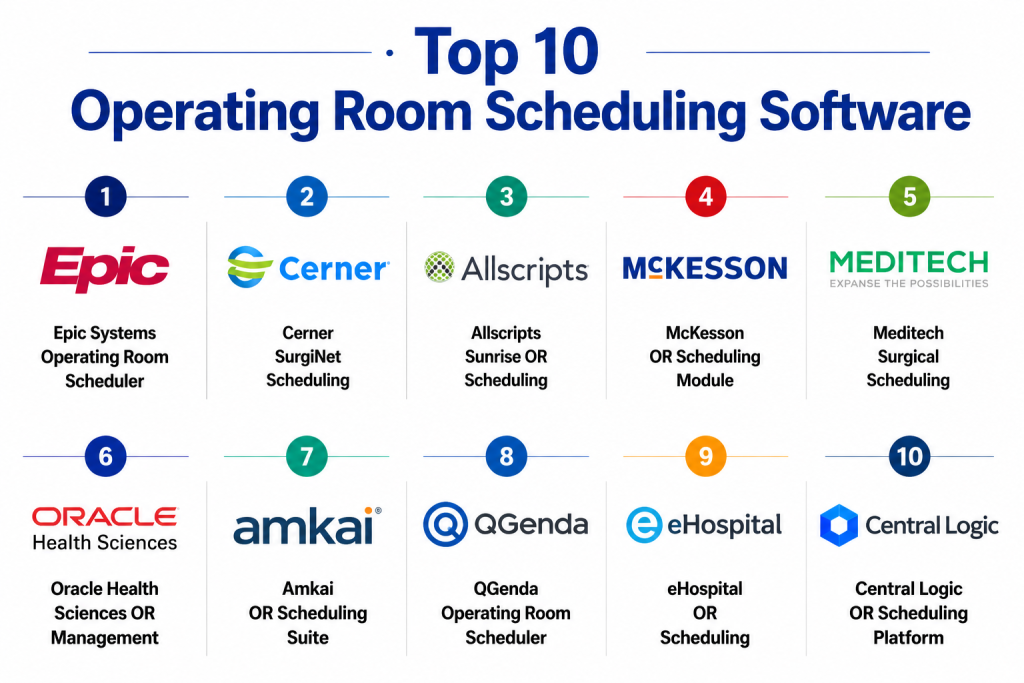
Top 10 Operating Room Scheduling Software
#1 — QGenda OR Management
Short description: QGenda OR Management is an enterprise scheduling platform for surgical suites that combines surgeon calendars, OR availability, and resource scheduling in one system. It provides conflict detection, automated rules, and real‑time OR utilization dashboards. The platform is widely used in hospitals and large surgical centers.
Key Features
- Real‑time OR schedule visibility
- Conflict detection and resolution
- Surgeon preference and block management
- Resource allocation tools
- Utilization reporting
- Mobile access
- Analytics dashboards
Pros
- Strong enterprise scalability
- Excellent scheduling automation
- Real‑time conflict alerts
- Deep analytics for utilization
Cons
- Training required for full adoption
- Higher cost for large deployments
- Integration planning needed
- Not ideal for small clinics
Platforms / Deployment
- Web
- Cloud
Security & Compliance
- RBAC
- MFA
- Encryption
- Audit logging
Integrations & Ecosystem
Integrates with EHR, perioperative, and hospital systems.
- EHR/EMR systems
- Perioperative systems
- Clinical calendars
- Analytics platforms
- API services
Support & Community
Strong vendor support and healthcare implementation specialists.
#2 — Epic OpTime (Epic Systems)
Short description: Epic OpTime is the OR scheduling and perioperative management module within the Epic healthcare ecosystem. It provides comprehensive tools for surgical scheduling, block allocation, patient tracking, and integration with the patient’s electronic health record.
Key Features
- Surgery scheduling and tracking
- Surgeon block management
- EHR integration
- Patient data linkage
- Real‑time dashboards
- Alerts and conflict detection
- Analytics tools
Pros
- Deep EHR integration
- Unified patient records
- Strong hospital adoption
- Reliable scheduling tools
Cons
- Best value within Epic ecosystem
- High enterprise cost
- Complex implementation
- Requires training
Platforms / Deployment
- Web
- Cloud
Security & Compliance
- RBAC
- MFA
- Encryption
- Audit logging
Integrations & Ecosystem
Integrated into Epic suite.
- Epic EHR
- Clinical modules
- Laboratory and imaging systems
- Analytics platforms
- API connectivity
Support & Community
Epic support ecosystem and healthcare IT community.
#3 — Cerner SurgiNet / Millennium OR Scheduling
Short description: Cerner’s OR scheduling module within the SurgiNet and Millennium platform enables hospitals to schedule surgeries, manage resources, and coordinate clinical teams. It links OR schedules with patient data and provides real‑time updates.
Key Features
- OR schedule management
- Resource allocation
- EHR integration
- Conflict alerts
- Patient tracking
- Utilization dashboards
- Reporting tools
Pros
- Strong EHR linkage
- Cohesive clinical workflows
- Scalable for large hospitals
- Real‑time insights
Cons
- Enterprise deployment effort
- Best within Cerner ecosystem
- Training required
- High cost
Platforms / Deployment
- Web
- Cloud
Security & Compliance
- RBAC
- MFA
- Encryption
- Audit logs
Integrations & Ecosystem
Part of Cerner healthcare systems.
- Cerner EHR
- Clinical modules
- Analytics tools
- APIs
Support & Community
Enterprise healthcare support services.
#4 — AmkaiSolutions ORManager
Short description: ORManager provides surgical suite scheduling that focuses on workflow efficiency, conflict resolution, and resource tracking. It helps perioperative teams coordinate OR schedules and surgical staff availability.
Key Features
- Operating room scheduling
- Surgeon calendars
- Resource tracking
- Conflict detection
- Reporting tools
- Block scheduling
- Alerts
Pros
- Focused surgical scheduling
- Good conflict avoidance
- Useful reporting
- Practical for mid‑sized hospitals
Cons
- Less integrated ecosystem
- Moderate analytics
- Requires data connection planning
- UI may vary
Platforms / Deployment
- Web
- Cloud
Security & Compliance
- RBAC
- Encryption
- Audit logging
Integrations & Ecosystem
Integrates with hospital and clinical systems.
- EHR systems
- Perioperative modules
- Analytics dashboards
- API frameworks
Support & Community
Vendor support with perioperative expertise.
#5 — Meditech Surgical Suite
Short description: Meditech’s Surgical Suite includes scheduling tools for operating rooms, coordinating patient procedures and tracking OR usage. The platform is part of Meditech’s broader hospital information system.
Key Features
- OR and procedure scheduling
- Patient tracking
- Resource allocation
- Reports and dashboards
- Alerts and conflict detection
- HIS integration
Pros
- Integrated with HIS
- Reliable workflow tools
- Good for Meditech hospitals
- Cost‑effective
Cons
- Best within Meditech ecosystem
- Moderate feature depth
- Limited advanced analytics
- Requires training
Platforms / Deployment
- Web
- Cloud
Security & Compliance
- RBAC
- Encryption
- Audit logs
Integrations & Ecosystem
Works within Meditech HIS.
- HIS platforms
- Patient systems
- Analytics tools
- APIs
Support & Community
Healthcare IT support from Meditech.
#6 — Surgical Information Systems (SIS)
Short description: SIS provides perioperative and surgical scheduling tools that help hospitals manage OR lists, resource allocation, and patient flow. It also includes modules for anesthesia and perioperative documentation.
Key Features
- Perioperative scheduling
- OR block management
- Resource and staff scheduling
- Conflict detection
- Integration with clinical modules
- Reporting tools
Pros
- Focused surgical workflows
- Perioperative coverage
- Reliable performance
- Good analytics
Cons
- Enterprise setup required
- Integration planning
- Moderate cost
- Workforce training needed
Platforms / Deployment
- Web
- Cloud
Security & Compliance
- RBAC
- MFA
- Encryption
- Audit logs
Integrations & Ecosystem
Integrates with hospital systems.
- EHR platforms
- HIS modules
- Analytics systems
- APIs
Support & Community
Strong perioperative support services.
#7 — ShiftWizard OR Scheduling
Short description: ShiftWizard is a scheduling solution focused on hospital staffing, including OR scheduling. While broader than OR alone, it helps coordinate surgical team assignments, shifts, and OR time.
Key Features
- Staff and OR scheduling
- Shift management
- Conflict alerts
- Reporting dashboards
- Scheduling rules
- Capacity planning
Pros
- Combines staffing with OR scheduling
- Useful for resource allocation
- Practical for large teams
- Reporting tools
Cons
- Not purely OR focused
- Moderate advanced analytics
- Integration planning required
- Training needed
Platforms / Deployment
- Web
- Cloud
Security & Compliance
- RBAC
- Encryption
- Audit logging
Integrations & Ecosystem
Integrates with hospital systems.
- HR and staffing systems
- EHR platforms
- Analytics tools
- API frameworks
Support & Community
Workforce scheduling support and documentation.
#8 — Opera (formerly by Hospedia)
Short description: Opera provides OR scheduling and related operational coordination tools to help hospitals plan surgical cases, manage resource conflicts, and track capacity. The platform is often used in conjunction with hospital operational systems.
Key Features
- Operating room calendars
- Resource tracking
- Conflict alerts
- Reporting dashboards
- OR utilization views
- Alerts and notifications
Pros
- Practical scheduling tools
- Good operational visibility
- Alerts for conflicts
- Scalable for hospital use
Cons
- Moderate integration scope
- Analytics depth limited
- Requires customization
- Mid‑market focus
Platforms / Deployment
- Web
- Cloud
Security & Compliance
- RBAC
- Encryption
- Audit logs
Integrations & Ecosystem
Integrates with hospital systems.
- EHR platforms
- Clinical workflows
- Analytics systems
- APIs
Support & Community
Hospital operational support services.
#9 — McKesson Surgical Scheduler
Short description: McKesson’s Surgical Scheduler helps hospitals coordinate OR schedules, manage conflicts, and track utilization metrics. It is closely tied to broader McKesson healthcare operations systems.
Key Features
- OR scheduling
- Conflict detection
- Resource planning
- Contact and staff data
- Reporting and dashboards
- Alerts and notifications
Pros
- Reliable scheduling tools
- Good integration in McKesson environments
- Useful reporting
- Scales in hospital settings
Cons
- Works best within McKesson ecosystem
- Moderate feature depth
- Integration planning needed
- Training required
Platforms / Deployment
- Web
- Cloud
Security & Compliance
- RBAC
- MFA
- Encryption
- Audit logs
Integrations & Ecosystem
Works with hospital systems.
- EHR platforms
- McKesson clinical modules
- Analytics tools
- APIs
Support & Community
Healthcare IT support ecosystem.
#10 — AmkaiSolutions ORScheduler Pro
Short description: ORScheduler Pro focuses on modern operating room scheduling with intuitive interfaces, capacity views, and conflict detection. It is suited for mid‑size surgical centers and hospital departments seeking efficient scheduling.
Key Features
- OR calendars
- Conflict detection
- Resource planning
- Alerts
- Utilization views
- Reporting
Pros
- Easy interface
- Practical for smaller OR environments
- Fast deployment
- Good visibility
Cons
- Limited advanced integration
- Analytics moderately featured
- Best for mid‑market
- Implementation effort
Platforms / Deployment
- Web
- Cloud
Security & Compliance
- RBAC
- Encryption
- Audit logging
Integrations & Ecosystem
Integrates with clinical and hospital systems.
- EHR platforms
- Scheduling modules
- Analytics systems
- APIs
Support & Community
Vendor support with scheduling expertise.
Comparison Table
| Tool Name | Best For | Platform(s) Supported | Deployment | Standout Feature | Public Rating |
|---|---|---|---|---|---|
| QGenda OR Management | Large hospitals | Web | Cloud | Real‑time conflict alerts | N/A |
| Epic OpTime | Epic healthcare | Web | Cloud | Unified hospital ecosystem | N/A |
| Cerner SurgiNet | Cerner environments | Web | Cloud | Integrated OR workflows | N/A |
| AmkaiSolutions ORManager | Mid‑sized hospitals | Web | Cloud | Practical scheduling tools | N/A |
| Meditech Surgical Suite | Meditech hospitals | Web | Cloud | HIS integration | N/A |
| SIS | Perioperative centers | Web | Cloud | Perioperative integration | N/A |
| ShiftWizard | Staffing + OR | Web | Cloud | Combined scheduling | N/A |
| Opera | Operational scheduling | Web | Cloud | Operational visibility | N/A |
| McKesson Surgical Scheduler | McKesson hospitals | Web | Cloud | Reliable scheduling | N/A |
| ORScheduler Pro | Mid‑market ORs | Web | Cloud | Intuitive interface | N/A |
Evaluation & Scoring of OR Scheduling Software
| Tool Name | Core 25% | Ease 15% | Integrations 15% | Security 10% | Performance 10% | Support 10% | Value 15% | Weighted Total |
|---|---|---|---|---|---|---|---|---|
| QGenda OR Management | 9 | 7 | 9 | 9 | 9 | 9 | 7 | 8.4 |
| Epic OpTime | 9 | 7 | 10 | 9 | 9 | 9 | 7 | 8.6 |
| Cerner SurgiNet | 9 | 7 | 9 | 9 | 9 | 9 | 7 | 8.4 |
| AmkaiSolutions ORManager | 8 | 8 | 8 | 8 | 8 | 8 | 7 | 8.0 |
| Meditech Surgical Suite | 8 | 8 | 9 | 9 | 8 | 8 | 8 | 8.2 |
| SIS | 8 | 7 | 8 | 9 | 8 | 8 | 7 | 7.9 |
| ShiftWizard | 7 | 8 | 8 | 8 | 8 | 8 | 7 | 7.8 |
| Opera | 7 | 8 | 8 | 8 | 8 | 8 | 7 | 7.8 |
| McKesson Surgical Scheduler | 8 | 7 | 8 | 8 | 8 | 8 | 7 | 7.8 |
| ORScheduler Pro | 7 | 8 | 7 | 8 | 7 | 8 | 8 | 7.7 |
These scores reflect integration depth, interoperability with hospital systems, scheduling robustness, and enterprise readiness. Enterprise EHR‑integrated systems generally score highest for hospitals with complex perioperative environments, while mid‑market tools emphasize usability and faster deployment.
Which Operating Room Scheduling Software Is Right for You?
Solo / Freelancer
Not typically applicable unless consulting in perioperative or healthcare software evaluation.
Small Surgical Centers
Smaller surgical departments without heavy EHR dependency may benefit from ORScheduler Pro or AmkaiSolutions ORManager for faster deployment.
Mid‑Market Hospitals
Mid‑sized hospitals with moderate surgical volumes should prioritize solid conflict detection and integration—AmkaiSolutions ORManager, Meditech Surgical Suite, or SIS provide a good balance.
Enterprise Hospitals
Large healthcare systems with extensive OR demand, physician block scheduling, and deep EHR integration benefit most from Epic OpTime, QGenda OR Management, or Cerner SurgiNet.
Budget vs Premium
Budget tools focus on ease of use and basic scheduling, while premium platforms offer deep EHR interoperability, real‑time conflict alerts, and analytics.
Feature Depth vs Ease of Use
Advanced enterprise platforms provide scheduling optimization and analytics but require training, whereas mid‑market systems offer more intuitive interfaces.
Integrations & Scalability
Ensure robust integration with EHR/HIS systems, perioperative modules, and clinical workflows for seamless hospital operations.
Security & Compliance Needs
OR scheduling systems handle patient and operational data; ensure RBAC, MFA, encryption, audit logging, and healthcare governance alignment.
Frequently Asked Questions
1- What is OR scheduling software?
It is a system that helps hospitals plan, schedule, and manage surgical procedures, operating rooms, and related resources.
2- Why is OR scheduling important?
It improves utilization, reduces conflicts, enhances throughput, and ensures coordinated surgical operations.
3- Does OR scheduling integrate with EHR?
Yes, modern systems integrate with EHR and perioperative modules for seamless patient data and resource coordination.
4- What features should hospitals prioritize?
Real‑time conflict detection, utilization dashboards, surgeon preference, mobile alerts, and analytics.
5- Can these systems predict OR demand?
Some platforms use AI and historical data to forecast demand and optimize capacity.
6- What workflows do these systems automate?
Admission, transfer, block scheduling, resource allocation, and conflict resolution.
7- Are mobile tools available?
Many modern tools provide mobile access for on‑floor OR coordination.
8- How do hospitals measure ROI?
ROI is measured via reduced OR idle time, increased throughput, and fewer scheduling conflicts.
9- What is block scheduling?
It allocates reserved OR time segments for specific surgeons or specialties.
10- How long does implementation take?
Implementation can vary from weeks for simpler systems to months for enterprise EHR‑integrated platforms.
Conclusion
Operating Room Scheduling Software is essential for modern surgical operations, enabling hospitals to better allocate OR capacity, reduce conflicts, and improve patient throughput. Enterprise solutions like Epic OpTime and QGenda OR Management provide real‑time conflict resolution and deep EHR integration, while mid‑market systems like AmkaiSolutions ORManager and ORScheduler Pro offer practical scheduling workflows. The right choice depends on surgical volume, integration needs, and operational complexity. Hospitals should start with workflow mapping, pilot deployments, and integration testing before full rollout.

Very informative and well-structured blog on operating room scheduling software. The comparison of features, pros, and cons is clear and practical, making it easier to understand different healthcare scheduling and workflow management solutions.
Operating room schedules are constantly affected by emergency cases, procedure overruns, and last-minute cancellations, making flexibility just as important as efficiency. A valuable addition would be a discussion on real-time schedule optimization, resource reallocation, and predictive scheduling techniques that help hospitals minimize idle OR time while maintaining high-quality patient care and staff coordination.