Introduction
Public Safety Dispatch CAD Systems, also known as Computer-Aided Dispatch systems, are mission-critical platforms used by police departments, fire services, EMS organizations, transportation authorities, and emergency communication centers to manage incidents, dispatch responders, track resources, and coordinate emergency operations in real time. These systems act as the operational backbone of modern emergency response environments where speed, situational awareness, and reliability are essential.
Modern CAD platforms now include GIS mapping, mobile responder communication, incident analytics, automated workflows, interoperability tools, and cloud-native infrastructure. They help dispatchers reduce response times, improve coordination, and maintain operational visibility during high-pressure emergency situations.
Real-world use cases:
- Emergency call intake and prioritization
- Police, fire, and EMS dispatch coordination
- Real-time responder and vehicle tracking
- Multi-agency emergency incident management
- Disaster response and mutual aid coordination
Evaluation Criteria for Buyers:
- Dispatch workflow and incident management capabilities
- GIS mapping and unit tracking accuracy
- Mobile responder communication support
- Integration with RMS, NG911, and radio systems
- Reliability and uptime performance
- Cloud-native scalability and resilience
- Security, audit logging, and CJIS readiness
- Automation and analytics capabilities
- Ease of dispatcher training and usability
- Vendor support and deployment flexibility
Best for: Police departments, emergency communication centers, fire departments, EMS agencies, transportation authorities, municipalities, and regional public safety organizations.
Not ideal for: Small non-emergency dispatch operations or organizations with simple radio-based coordination needs.
Key Trends in Public Safety Dispatch CAD Systems
- Cloud-native CAD deployments with high availability
- AI-assisted dispatch recommendations and automation
- NG911 multimedia integration for text, video, and sensor data
- Real-time GIS and AVL responder tracking
- Mobile CAD access for responders in the field
- CAD-to-CAD interoperability across jurisdictions
- Human-in-the-loop automated dispatch workflows
- Predictive analytics and operational modeling
- Integrated RMS, evidence, and reporting systems
- Enhanced cybersecurity and CJIS-focused security controls
How We Selected These Tools (Methodology)
- Market adoption among emergency communication agencies
- Dispatch reliability and scalability under high call volumes
- GIS mapping and responder tracking capabilities
- Integration with RMS, NG911, and communication systems
- Cloud readiness and operational resilience
- Security and compliance readiness
- Mobile support for field responders
- Workflow automation and analytics features
- Vendor reputation and public safety ecosystem strength
- Documentation, training, and long-term support quality
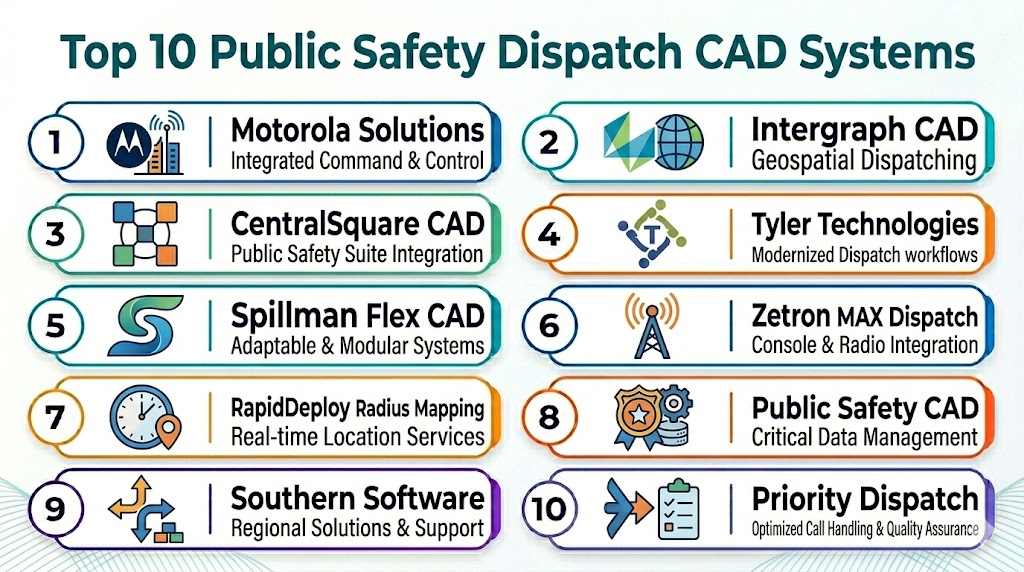
Top 10 Public Safety Dispatch CAD Systems
#1 — Motorola Solutions PremierOne CAD
Short description: Motorola Solutions PremierOne CAD is an enterprise-grade dispatch platform used by large police, fire, and EMS agencies for emergency response coordination, resource tracking, and NG911 integration.
Key Features
- Real-time incident and dispatch workflows
- GIS mapping and AVL tracking
- NG911 multimedia support
- Multi-agency interoperability
- Automated dispatch recommendations
- Mobile responder integration
Pros
- Proven reliability at enterprise scale
- Excellent GIS and communication integration
- Strong public safety ecosystem
Cons
- Premium enterprise pricing
- Complex implementation process
- Requires extensive onboarding
Platforms / Deployment
- Web / Windows / Mobile
- Cloud / Hybrid
Security & Compliance
- CJIS-ready deployments
- Encryption, audit logging, RBAC
Integrations & Ecosystem
Motorola integrates deeply with RMS, radios, mobile responders, and evidence systems to create unified emergency response workflows.
- Motorola radio systems
- NG911 platforms
- RMS integrations
- GIS systems
Support & Community
- Enterprise-grade support
- Large public safety partner ecosystem
- Extensive training resources
#2 — Hexagon HxGN OnCall Dispatch
Short description: HxGN OnCall Dispatch provides advanced CAD capabilities for police, fire, EMS, and emergency communication agencies with strong mapping and incident management tools.
Key Features
- Incident and call-taking management
- GIS mapping and responder tracking
- Flexible deployment models
- Multi-agency coordination tools
- Real-time dashboards
- Mobile dispatch support
Pros
- Strong GIS and mapping features
- Flexible cloud and on-prem deployment
- Reliable for large agencies
Cons
- Enterprise-focused pricing
- Training required for advanced workflows
- Customization complexity
Platforms / Deployment
- Web / Windows / Mobile
- Cloud / On-premise / Hybrid
Security & Compliance
- Encryption and role-based access
- CJIS-focused deployment controls
Integrations & Ecosystem
- GIS and mapping platforms
- RMS systems
- Mobile responder applications
Support & Community
- Enterprise support services
- Public safety implementation resources
#3 — Mark43 CAD
Short description: Mark43 CAD is a cloud-native dispatch system designed for police, fire, and EMS organizations seeking modern workflows, automation, and integrated situational awareness.
Key Features
- Cloud-native CAD architecture
- Automated response planning
- Integrated GIS mapping
- Mobile responder communication
- Predictive operational modeling
- Unified CAD and RMS workflows
Pros
- Modern user interface
- Strong cloud scalability
- Excellent automation capabilities
Cons
- Higher enterprise costs
- Best suited for modernized agencies
- Requires cloud readiness planning
Platforms / Deployment
- Web / Mobile
- Cloud
Security & Compliance
- CJIS-ready infrastructure
- Encryption and audit controls
Integrations & Ecosystem
- RMS and analytics tools
- Mapping platforms
- Mobile response systems
Support & Community
- Dedicated onboarding and support
- Modern documentation and training
#4 — Tyler Technologies Enterprise CAD
Short description: Tyler Technologies Enterprise CAD supports multi-jurisdiction emergency response coordination with integrated dispatch workflows for police, fire, and EMS agencies.
Key Features
- Multi-agency dispatch coordination
- GIS mapping and responder visibility
- Integrated RMS workflows
- Cloud-hosted CAD support
- Real-time operational dashboards
- Automated notifications
Pros
- Strong local government presence
- Integrated public safety suite
- Reliable dispatch operations
Cons
- Interface may feel traditional
- Enterprise implementation complexity
- Premium support tiers
Platforms / Deployment
- Web / Mobile
- Cloud / Hybrid
Security & Compliance
- Encryption and role-based access
- Audit logging support
Integrations & Ecosystem
- Tyler public safety suite
- RMS and records systems
- GIS platforms
Support & Community
- Enterprise support and onboarding
- Public sector implementation resources
#5 — CentralSquare CAD
Short description: CentralSquare CAD helps public safety agencies streamline call-taking, dispatch coordination, and incident management through integrated emergency workflows.
Key Features
- Call intake and dispatch workflows
- Real-time responder tracking
- GIS and mapping integration
- Mobile dispatch tools
- Reporting and analytics
- Multi-agency support
Pros
- Widely adopted by municipalities
- Strong operational workflows
- Integrated records systems
Cons
- Mixed user feedback on UI
- Training required for dispatchers
- Legacy deployments can be complex
Platforms / Deployment
- Web / Windows / Mobile
- Cloud / Hybrid
Security & Compliance
- Encryption and access controls
- Audit logging support
Integrations & Ecosystem
- GIS platforms
- RMS and analytics tools
- Communication systems
Support & Community
- Support center and onboarding services
#6 — Versaterm CAD
Short description: Versaterm CAD provides dispatch, mobile responder, and records management solutions designed for police and fire agencies needing integrated workflows.
Key Features
- CAD and RMS integration
- Mobile responder support
- GIS and EagleView mapping
- Real-time communication tools
- MDT integration
- Smartphone dispatch apps
Pros
- Strong mobile responder workflows
- Good interoperability with RMS
- Modern responder communication tools
Cons
- Smaller ecosystem than top enterprise vendors
- Advanced analytics limited
- Enterprise customization may require services
Platforms / Deployment
- Web / Windows / Mobile
- Cloud / Hybrid
Security & Compliance
- Encryption and secure responder access
- Role-based controls
Integrations & Ecosystem
- MDT platforms
- RMS systems
- GIS and mapping tools
Support & Community
- Support and implementation services
- Public safety documentation resources
#7 — SmartCOP CAD
Short description: SmartCOP CAD focuses on dispatch workflows, NCIC integration, and real-time operational visibility for law enforcement and emergency services.
Key Features
- Dispatch and incident management
- NCIC integration
- Real-time alerts
- Mobile access
- GIS mapping support
- Reporting tools
Pros
- Good operational visibility
- Mobile-friendly workflows
- Easy reporting capabilities
Cons
- Smaller vendor ecosystem
- Enterprise scalability limitations
- Advanced automation features limited
Platforms / Deployment
- Web / Windows / Mobile
- Cloud / Hybrid
Security & Compliance
- Secure authentication
- Access control management
Integrations & Ecosystem
- NCIC systems
- GIS mapping tools
- Reporting platforms
Support & Community
- Documentation and support resources
#8 — 10-8 Systems CAD
Short description: 10-8 Systems offers a cloud-native CAD platform designed for interoperability, real-time dispatch operations, and regional coordination.
Key Features
- Cloud-native dispatch architecture
- CAD-to-CAD interoperability
- Open APIs for integrations
- Real-time incident coordination
- Regional information sharing
- Mobile responder support
Pros
- Modern cloud-native design
- Excellent interoperability focus
- Strong regional coordination capabilities
Cons
- Smaller market footprint
- Fewer advanced analytics modules
- Enterprise ecosystem still growing
Platforms / Deployment
- Web / Mobile
- Cloud
Security & Compliance
- Secure interoperability architecture
- Encryption and access controls
Integrations & Ecosystem
- RMS and analytics platforms
- Open APIs
- Regional dispatch systems
Support & Community
- Vendor onboarding and support resources
#9 — Caliber CAD
Short description: Caliber CAD specializes in CAD-to-CAD data sharing and regional emergency coordination for 911 dispatch centers.
Key Features
- Bi-directional CAD data sharing
- Real-time resource coordination
- Embedded NCIC support
- Automated notifications
- Incident management tools
- Multi-center interoperability
Pros
- Excellent CAD interoperability
- Strong regional coordination support
- Easy deployment workflows
Cons
- Smaller ecosystem
- Analytics capabilities limited
- Enterprise customization options limited
Platforms / Deployment
- Web / Mobile
- Cloud
Security & Compliance
- Secure data exchange architecture
- Access controls and encryption
Integrations & Ecosystem
- CAD-to-CAD integrations
- NCIC connectivity
- Notification systems
Support & Community
- Support resources and deployment assistance
#10 — Axon Dispatch CAD
Short description: Axon Dispatch CAD focuses on connected law enforcement operations with integrated dispatch workflows and responder coordination.
Key Features
- Dispatch and responder coordination
- Incident management workflows
- Mobile communication support
- Integration with Axon ecosystem
- Real-time situational awareness
- Reporting and analytics
Pros
- Strong law enforcement ecosystem
- Good mobile responder tools
- Modern cloud-focused workflows
Cons
- Best within Axon ecosystem
- Less mature than long-established CAD vendors
- Enterprise customization still evolving
Platforms / Deployment
- Web / Mobile
- Cloud
Security & Compliance
- Encryption and secure authentication
- Audit logging support
Integrations & Ecosystem
- Axon ecosystem integrations
- Mobile response tools
- Evidence systems
Support & Community
- Customer onboarding and support resources
Comparison Table (Top 10)
| Tool Name | Best For | Platform(s) Supported | Deployment | Standout Feature | Public Rating |
|---|---|---|---|---|---|
| Motorola PremierOne CAD | Enterprise agencies | Web / Mobile | Cloud / Hybrid | NG911 and GIS integration | N/A |
| Hexagon HxGN OnCall | Large emergency agencies | Web / Mobile | Cloud / Hybrid | Incident management flexibility | N/A |
| Mark43 CAD | Modern cloud deployments | Web / Mobile | Cloud | Automated response planning | N/A |
| Tyler Enterprise CAD | Municipal agencies | Web / Mobile | Cloud / Hybrid | Integrated public safety suite | N/A |
| CentralSquare CAD | Regional dispatch centers | Web / Mobile | Cloud / Hybrid | Unified dispatch workflows | N/A |
| Versaterm CAD | Police and fire agencies | Web / Mobile | Cloud / Hybrid | Mobile responder support | N/A |
| SmartCOP CAD | Law enforcement dispatch | Web / Mobile | Cloud / Hybrid | NCIC integration | N/A |
| 10-8 Systems CAD | Regional interoperability | Web / Mobile | Cloud | Cloud-native CAD interoperability | N/A |
| Caliber CAD | Multi-center dispatch sharing | Web / Mobile | Cloud | CAD-to-CAD coordination | N/A |
| Axon Dispatch CAD | Connected law enforcement | Web / Mobile | Cloud | Integrated responder ecosystem | N/A |
Evaluation & Scoring of Public Safety Dispatch CAD Systems
| Tool Name | Core (25%) | Ease (15%) | Integrations (15%) | Security (10%) | Performance (10%) | Support (10%) | Value (15%) | Weighted Total (0–10) |
|---|---|---|---|---|---|---|---|---|
| Motorola PremierOne CAD | 9 | 7 | 9 | 9 | 9 | 8 | 7 | 8.5 |
| Hexagon HxGN OnCall | 9 | 7 | 8 | 9 | 8 | 8 | 7 | 8.2 |
| Mark43 CAD | 9 | 8 | 8 | 9 | 8 | 8 | 7 | 8.3 |
| Tyler Enterprise CAD | 8 | 7 | 8 | 8 | 8 | 8 | 7 | 7.9 |
| CentralSquare CAD | 8 | 7 | 8 | 8 | 8 | 7 | 8 | 7.9 |
| Versaterm CAD | 8 | 8 | 7 | 8 | 8 | 7 | 7 | 7.7 |
| SmartCOP CAD | 7 | 8 | 7 | 8 | 7 | 7 | 8 | 7.4 |
| 10-8 Systems CAD | 8 | 8 | 8 | 8 | 8 | 7 | 7 | 7.8 |
| Caliber CAD | 7 | 8 | 8 | 8 | 7 | 7 | 7 | 7.5 |
| Axon Dispatch CAD | 8 | 8 | 7 | 8 | 8 | 7 | 7 | 7.7 |
Weighted scores compare dispatch functionality, operational reliability, integration depth, scalability, and security readiness across public safety environments. Higher scores generally indicate stronger enterprise readiness and interoperability, though smaller agencies may prioritize usability and deployment simplicity over maximum feature depth.
Which Public Safety Dispatch CAD System Is Right for You?
Solo / Small Agency
- SmartCOP CAD or Caliber CAD for straightforward dispatch operations and manageable deployment complexity.
SMB
- Versaterm CAD, CentralSquare CAD, or 10-8 Systems CAD for balanced workflows and interoperability.
Mid-Market
- Tyler Enterprise CAD or Hexagon HxGN OnCall for integrated public safety operations and mapping capabilities.
Enterprise
- Motorola PremierOne CAD and Mark43 CAD for large-scale, mission-critical dispatch environments with advanced automation and NG911 support.
Budget vs Premium
- Budget: SmartCOP CAD, Caliber CAD
- Premium: Motorola PremierOne, Hexagon HxGN OnCall, Mark43 CAD
Feature Depth vs Ease of Use
- High feature depth: Motorola PremierOne, Hexagon, Mark43
- High ease of use: Versaterm, 10-8 Systems, SmartCOP
Integrations & Scalability
- Extensive: Motorola, Hexagon, Mark43
- Limited: SmartCOP, Caliber
Security & Compliance Needs
- Enterprise-grade: Motorola, Hexagon, Mark43
- SMB-focused: Versaterm, CentralSquare
Frequently Asked Questions (FAQs)
1. What is a Public Safety Dispatch CAD system?
A CAD system is software used by emergency communication centers to manage calls, dispatch responders, track incidents, and coordinate emergency operations in real time.
2. Do CAD systems support police, fire, and EMS together?
Yes, many modern CAD platforms support multi-discipline dispatch workflows across police, fire, EMS, and emergency management agencies.
3. What is NG911 support?
NG911 allows dispatch centers to receive multimedia inputs such as text messages, videos, and sensor data alongside traditional voice calls.
4. Can responders access CAD systems from mobile devices?
Yes, most modern CAD platforms provide mobile applications or MDT integrations for field responders.
5. Are GIS mapping tools included?
GIS mapping and AVL tracking are standard features in enterprise CAD systems for situational awareness and unit tracking.
6. Do these systems integrate with RMS platforms?
Yes, CAD systems commonly integrate with records management systems, analytics platforms, and communication tools.
7. What security standards are important for CAD systems?
Encryption, role-based access controls, audit logging, and CJIS-focused deployments are critical for public safety environments.
8. Which CAD platform is best for cloud deployments?
Mark43 CAD and 10-8 Systems are strongly focused on cloud-native dispatch infrastructure and scalability.
9. Are CAD-to-CAD integrations available?
Yes, platforms such as Caliber CAD and 10-8 Systems specialize in interoperability and regional coordination.
10. What should agencies prioritize when selecting a CAD platform?
Agencies should evaluate uptime reliability, interoperability, mobile access, GIS capabilities, scalability, security, and long-term vendor support.
Conclusion
Public Safety Dispatch CAD systems are foundational technologies for modern emergency response operations, helping agencies coordinate incidents, dispatch responders, and maintain situational awareness during mission-critical events. Smaller agencies may benefit from streamlined platforms like SmartCOP CAD or Caliber CAD, while mid-sized organizations can consider Versaterm or CentralSquare for integrated workflows and interoperability. Large enterprise agencies and regional communication centers should evaluate Motorola PremierOne CAD, Hexagon HxGN OnCall, or Mark43 CAD for advanced automation, NG911 readiness, cloud scalability, and high-reliability operations. Start by identifying operational priorities, shortlist 2–3 vendors aligned with your dispatch environment, test integrations with RMS and communication systems, and conduct workflow simulations before full deployment.

Great comparison of public safety dispatch CAD systems—this article does a great job explaining how these platforms improve emergency response coordination, dispatch efficiency, and real-time communication.
This article provides a clear and practical comparison of public safety dispatch CAD systems. The detailed feature overview makes it easier to understand which solutions are best suited for different operational needs.