Introduction
Customer Consent & Preferences Centers are platforms that help organizations collect, manage, store, and update customer communication permissions and privacy preferences across digital channels. These tools allow users to control how their personal data is used and what type of communication they receive through email, SMS, mobile apps, websites, and advertising platforms. They are critical for maintaining compliance with privacy regulations while improving customer trust and engagement.
Modern businesses use these platforms to manage GDPR and CCPA consent workflows, centralize subscription management, personalize communication preferences, automate opt-in and opt-out processes, maintain audit trails, and improve transparency around customer data usage. Buyers evaluating Customer Consent & Preferences Centers should consider compliance capabilities, preference management flexibility, API integrations, omnichannel support, scalability, automation, security controls, reporting, deployment models, and user experience customization.
Best for: Enterprises, SaaS companies, healthcare organizations, financial institutions, e-commerce brands, and marketing teams managing customer communications across multiple channels.
Not ideal for: Very small organizations with limited customer communication requirements or businesses operating entirely offline.
Key Trends in Customer Consent & Preferences Centers
- First-party data management is becoming central to digital marketing strategies
- AI-assisted preference recommendations are improving personalization
- Privacy regulations are increasing demand for centralized consent management
- Omnichannel consent synchronization across email, SMS, apps, and web platforms is growing
- Real-time consent updates and preference automation are becoming standard
- Zero-party data collection strategies are gaining popularity
- Identity and access management integrations are expanding
- Customer self-service preference portals are improving engagement and trust
- Consent audit trails and governance reporting are becoming mandatory for enterprises
- API-first architectures are improving scalability and interoperability
How We Selected These Tools
- Evaluated market adoption across enterprise and SMB organizations
- Assessed consent management and preference center flexibility
- Reviewed support for GDPR, CCPA, and other privacy regulations
- Analyzed omnichannel communication management capabilities
- Evaluated integration support with CRM, CDP, marketing automation, and analytics platforms
- Considered scalability for high-volume customer environments
- Assessed usability for marketing, compliance, and customer experience teams
- Reviewed security posture, governance, and audit logging capabilities
- Evaluated customization and branding flexibility
- Considered ecosystem maturity, support quality, and overall value
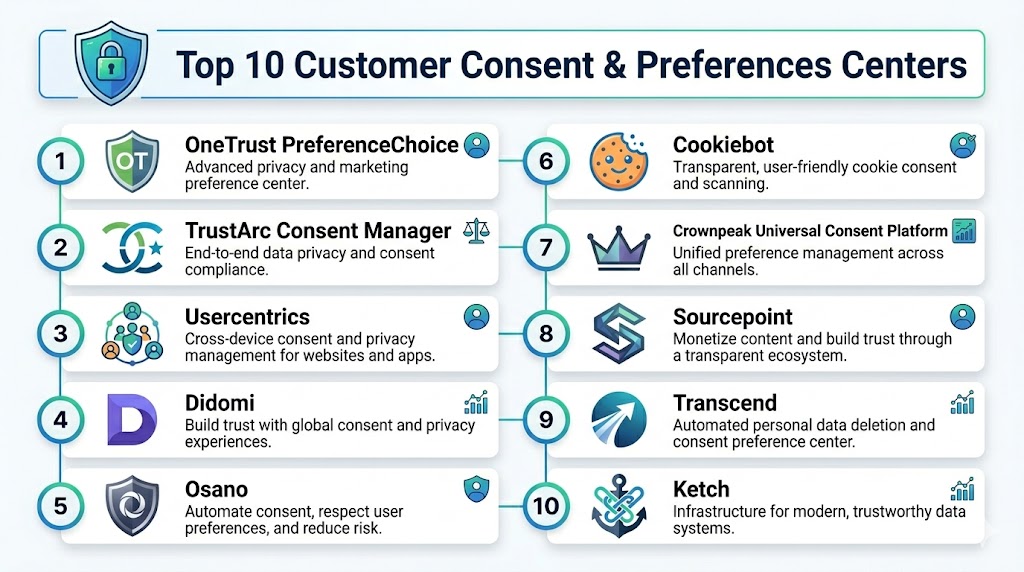
Top 10 Customer Consent & Preferences Centers
1 — OneTrust PreferenceChoice
Short description: OneTrust PreferenceChoice is an enterprise-grade consent and preference management platform designed to centralize customer consent across digital channels while maintaining compliance with global privacy regulations.
Key Features
- Centralized consent management
- Omnichannel preference centers
- GDPR and CCPA compliance workflows
- Real-time consent synchronization
- Audit logging and reporting
- Cookie consent management
- API-based integrations
Pros
- Strong enterprise compliance capabilities
- Comprehensive governance controls
- Flexible omnichannel preference management
Cons
- Premium pricing for enterprise features
- Complex implementation for smaller teams
- Learning curve for advanced configurations
Platforms / Deployment
- Web
- Cloud
Security & Compliance
- SSO, MFA
- GDPR, CCPA support
- Audit logging
Integrations & Ecosystem
OneTrust integrates with marketing, CRM, and governance ecosystems to centralize consent operations.
- Salesforce
- Adobe Experience Cloud
- HubSpot
- ServiceNow
- Google Tag Manager
Support & Community
Enterprise-grade support with extensive documentation and onboarding resources.
2 — TrustArc Consent Manager
Short description: TrustArc Consent Manager helps organizations automate consent collection and customer preference management while supporting enterprise privacy compliance programs.
Key Features
- Consent lifecycle management
- Preference management dashboards
- Cookie and tracking consent controls
- Compliance reporting
- Real-time consent updates
- API integrations
- Audit trail management
Pros
- Strong compliance automation
- Enterprise governance capabilities
- Flexible consent workflows
Cons
- Higher pricing tiers
- Complex deployment for SMBs
- Advanced customization may require support
Platforms / Deployment
- Web
- Cloud
Security & Compliance
- GDPR support
- Consent audit trails
- Role-based access controls
Integrations & Ecosystem
Supports integrations with customer data and marketing ecosystems.
- Salesforce
- Marketo
- HubSpot
- Oracle Marketing Cloud
Support & Community
Strong compliance-focused support with enterprise consulting services.
3 — Didomi
Short description: Didomi is a privacy and consent management platform focused on customer transparency, consent collection, and preference management for digital businesses.
Key Features
- Consent and preference centers
- Cross-device consent synchronization
- Customer privacy dashboards
- Real-time preference updates
- Consent analytics
- Mobile SDK support
- API-first architecture
Pros
- User-friendly consent interfaces
- Strong omnichannel support
- Developer-friendly APIs
Cons
- Enterprise customization may require technical support
- Premium features can increase costs
- Smaller ecosystem than legacy enterprise vendors
Platforms / Deployment
- Web, iOS, Android
- Cloud
Security & Compliance
- GDPR and privacy compliance support
- Consent logging
Integrations & Ecosystem
Integrates with customer engagement and analytics systems.
- Segment
- Salesforce
- Google Analytics
- Mobile SDKs
Support & Community
Responsive support with strong implementation documentation.
4 — Usercentrics
Short description: Usercentrics provides privacy-first consent and preference management for websites and applications with a strong focus on compliance and user transparency.
Key Features
- Consent collection management
- Preference center customization
- Cookie banner management
- Audit-ready compliance logs
- Mobile app consent support
- Real-time updates
- Multi-language support
Pros
- Strong European privacy compliance focus
- Flexible UI customization
- Good support for websites and mobile apps
Cons
- Advanced enterprise workflows may require additional configuration
- Some integrations require manual setup
- Premium plans can become expensive
Platforms / Deployment
- Web, iOS, Android
- Cloud
Security & Compliance
- GDPR support
- Consent logging
- Data governance controls
Integrations & Ecosystem
Supports marketing, analytics, and tag management integrations.
- Google Tag Manager
- HubSpot
- WordPress
- Shopify
Support & Community
Good onboarding resources with growing enterprise adoption.
5 — Osano
Short description: Osano delivers consent management and privacy compliance tools designed to simplify customer preference handling and regulatory governance.
Key Features
- Cookie consent management
- Customer preference tracking
- Vendor risk monitoring
- Consent audit logs
- Real-time compliance updates
- Privacy dashboards
- API support
Pros
- Easy-to-use interface
- Strong compliance monitoring capabilities
- Good SMB and mid-market fit
Cons
- Limited advanced enterprise customization
- Some reporting features are basic
- Smaller ecosystem than larger platforms
Platforms / Deployment
- Web
- Cloud
Security & Compliance
- GDPR support
- Privacy governance controls
- Audit logs
Integrations & Ecosystem
Works with marketing and website ecosystems for streamlined consent operations.
- HubSpot
- Shopify
- WordPress
- Google Tag Manager
Support & Community
Responsive customer support with simple onboarding resources.
6 — Transcend
Short description: Transcend is a privacy infrastructure platform that automates consent management, data governance, and customer preference workflows for modern enterprises.
Key Features
- Consent automation
- Privacy request orchestration
- Preference center management
- Data governance workflows
- API-based integrations
- Consent synchronization
- Audit reporting
Pros
- Advanced automation capabilities
- Strong enterprise governance support
- Scalable privacy infrastructure
Cons
- Complex implementation requirements
- Higher enterprise pricing
- Requires technical expertise
Platforms / Deployment
- Web
- Cloud
Security & Compliance
- Enterprise privacy governance
- Audit trails
- Role-based access controls
Integrations & Ecosystem
Supports integration with enterprise data and customer systems.
- Salesforce
- Snowflake
- Segment
- Zendesk
Support & Community
Enterprise-focused support and implementation guidance.
7 — Ketch
Short description: Ketch helps organizations manage customer consent, data rights, and privacy preferences with centralized governance and automation capabilities.
Key Features
- Consent and preference orchestration
- Real-time compliance updates
- Data rights management
- Customer preference portals
- API integrations
- Audit reporting
- Multi-region compliance support
Pros
- Strong governance and automation features
- Real-time preference synchronization
- Flexible deployment architecture
Cons
- Premium enterprise pricing
- Technical setup complexity
- Learning curve for non-technical users
Platforms / Deployment
- Web
- Cloud
Security & Compliance
- GDPR and CCPA support
- Audit trails
- Encryption controls
Integrations & Ecosystem
Integrates with enterprise data and analytics environments.
- Salesforce
- Segment
- Snowflake
- Google Cloud
Support & Community
Strong enterprise support with privacy-focused implementation services.
8 — Consentmanager
Short description: Consentmanager provides consent and preference management tools focused on websites, apps, and privacy compliance for businesses of all sizes.
Key Features
- Consent banner management
- Preference center tools
- Compliance reporting
- Multi-language support
- Mobile app consent support
- Real-time consent updates
- API integrations
Pros
- Flexible pricing for SMBs
- Broad compliance coverage
- Easy deployment options
Cons
- Enterprise reporting is less advanced
- Smaller ecosystem compared to major vendors
- UI customization options are limited
Platforms / Deployment
- Web, iOS, Android
- Cloud
Security & Compliance
- GDPR support
- Consent logging
- Privacy governance tools
Integrations & Ecosystem
Works with CMS, advertising, and analytics systems.
- WordPress
- Shopify
- Google Tag Manager
- HubSpot
Support & Community
Good SMB-focused onboarding and support resources.
9 — Crownpeak Universal Consent Platform
Short description: Crownpeak Universal Consent Platform centralizes customer consent and preference management across digital channels and regions.
Key Features
- Omnichannel consent orchestration
- Preference center customization
- Real-time synchronization
- Governance dashboards
- Audit logging
- Multi-region compliance management
- API integrations
Pros
- Enterprise-ready governance capabilities
- Strong global compliance support
- Scalable omnichannel architecture
Cons
- Enterprise-focused pricing
- Complex deployment workflows
- Requires implementation planning
Platforms / Deployment
- Web
- Cloud
Security & Compliance
- GDPR support
- Audit logs
- Governance controls
Integrations & Ecosystem
Supports enterprise marketing and governance ecosystems.
- Adobe Experience Cloud
- Salesforce
- Oracle Marketing Cloud
- Google Tag Manager
Support & Community
Enterprise-grade implementation and support services.
10 — Tealium Consent Management
Short description: Tealium Consent Management helps organizations synchronize customer preferences and consent data across marketing, analytics, and customer engagement systems.
Key Features
- Consent orchestration
- Customer preference management
- Real-time data synchronization
- Audience segmentation
- Governance reporting
- API integrations
- Event-based automation
Pros
- Strong integration ecosystem
- Real-time consent synchronization
- Enterprise scalability
Cons
- Requires technical expertise for implementation
- Premium pricing
- Complex setup for smaller organizations
Platforms / Deployment
- Web
- Cloud
Security & Compliance
- Governance controls
- Consent audit logging
- Role-based permissions
Integrations & Ecosystem
Deep integrations with enterprise customer data ecosystems.
- Salesforce
- Adobe Analytics
- Segment
- Snowflake
- Google Cloud
Support & Community
Strong enterprise support with large implementation ecosystem.
Comparison Table Top 10
| Tool Name | Best For | Platform Supported | Deployment | Standout Feature | Public Rating |
|---|---|---|---|---|---|
| OneTrust PreferenceChoice | Enterprise compliance management | Web | Cloud | Centralized consent orchestration | N/A |
| TrustArc Consent Manager | Enterprise governance | Web | Cloud | Automated compliance workflows | N/A |
| Didomi | Omnichannel consent management | Web, iOS, Android | Cloud | Cross-device synchronization | N/A |
| Usercentrics | Privacy-first website consent | Web, iOS, Android | Cloud | Flexible consent UI customization | N/A |
| Osano | SMB compliance management | Web | Cloud | Privacy governance monitoring | N/A |
| Transcend | Enterprise privacy automation | Web | Cloud | Automated privacy workflows | N/A |
| Ketch | Real-time consent orchestration | Web | Cloud | Data rights management | N/A |
| Consentmanager | SMB and mid-market compliance | Web, iOS, Android | Cloud | Flexible pricing and deployment | N/A |
| Crownpeak Universal Consent Platform | Global enterprise consent management | Web | Cloud | Multi-region governance | N/A |
| Tealium Consent Management | Enterprise customer data synchronization | Web | Cloud | Real-time preference synchronization | N/A |
Evaluation & Scoring
| Tool Name | Core 25% | Ease 15% | Integrations 15% | Security 10% | Performance 10% | Support 10% | Value 15% | Weighted Total |
|---|---|---|---|---|---|---|---|---|
| OneTrust PreferenceChoice | 9 | 7 | 9 | 9 | 9 | 8 | 7 | 8.40 |
| TrustArc Consent Manager | 8 | 7 | 8 | 9 | 8 | 8 | 7 | 7.95 |
| Didomi | 8 | 8 | 8 | 8 | 8 | 7 | 8 | 8.00 |
| Usercentrics | 8 | 8 | 7 | 8 | 8 | 7 | 8 | 7.85 |
| Osano | 7 | 9 | 7 | 8 | 8 | 8 | 8 | 7.85 |
| Transcend | 9 | 6 | 9 | 9 | 9 | 8 | 6 | 8.10 |
| Ketch | 9 | 6 | 8 | 9 | 9 | 8 | 6 | 7.95 |
| Consentmanager | 7 | 8 | 7 | 8 | 7 | 7 | 8 | 7.45 |
| Crownpeak Universal Consent Platform | 9 | 6 | 8 | 9 | 9 | 8 | 6 | 7.95 |
| Tealium Consent Management | 9 | 7 | 9 | 9 | 9 | 8 | 6 | 8.25 |
Higher weighted scores indicate stronger balance across governance, integrations, scalability, usability, and compliance capabilities. Enterprise organizations typically prioritize automation, audit trails, and omnichannel synchronization, while SMBs often value ease of deployment and affordability. Scores should be evaluated comparatively alongside organizational privacy requirements, technical resources, and communication complexity.
Which Tool Is Right for You
Solo / Freelancer
- Osano or Consentmanager for simple deployment and affordable privacy compliance management
SMB
- Usercentrics or Didomi for flexible omnichannel preference management and easy onboarding
Mid-Market
- TrustArc Consent Manager or Tealium Consent Management for stronger integrations and workflow automation
Enterprise
- OneTrust PreferenceChoice or Transcend for enterprise-scale governance, automation, and compliance orchestration
Budget vs Premium
- Budget-friendly: Consentmanager, Osano
- Premium: OneTrust PreferenceChoice, Transcend
Feature Depth vs Ease of Use
- Advanced governance and automation: OneTrust PreferenceChoice, Ketch
- Easier implementation: Osano, Usercentrics
Integrations & Scalability
- Strong enterprise integrations: Tealium Consent Management, OneTrust PreferenceChoice
- Flexible SMB integrations: Didomi, Consentmanager
Security & Compliance Needs
- Enterprise-grade governance: Transcend, OneTrust PreferenceChoice
- General privacy compliance: Osano, Usercentrics
Frequently Asked Questions
1. What is a customer consent and preferences center
A customer consent and preferences center allows users to control how organizations collect, store, and use their personal information and communication preferences across channels.
2. Why are consent management tools important
These tools help organizations comply with privacy regulations, improve customer trust, and centralize communication preference management.
3. What regulations do these platforms support
Most platforms support GDPR, CCPA, and other regional privacy frameworks through consent tracking, audit logs, and preference management workflows.
4. Can customers update their own preferences
Yes, most modern preference centers provide self-service portals where customers can manage communication and privacy preferences in real time.
5. Do these tools integrate with CRM systems
Yes, integrations with Salesforce, HubSpot, Segment, and other customer platforms are common for centralized customer data management.
6. Are these tools suitable for omnichannel communication
Yes, enterprise platforms can synchronize preferences across email, SMS, websites, mobile apps, and customer support systems.
7. How secure are customer preference platforms
Most enterprise-grade solutions provide encryption, audit logs, role-based access controls, and governance reporting to protect customer data.
8. Can these platforms automate compliance workflows
Yes, many tools automate consent collection, opt-in management, data retention workflows, and compliance reporting processes.
9. Which industries benefit most from these tools
Healthcare, finance, SaaS, retail, e-commerce, and regulated industries benefit the most because they manage large amounts of customer data and communications.
10. How should businesses choose the right consent management platform
Organizations should evaluate compliance support, integrations, scalability, deployment flexibility, automation capabilities, and ease of use before selecting a solution.
Conclusion
Customer Consent & Preferences Centers are becoming essential infrastructure for organizations that want to balance personalized customer engagement with strong privacy governance and regulatory compliance. SMBs often prioritize affordability and simple deployment, while enterprises require advanced automation, omnichannel synchronization, and audit-ready governance workflows. Features such as AI-assisted personalization, real-time consent updates, and centralized preference management are increasingly differentiating leading platforms. Businesses should evaluate integration depth, scalability, reporting capabilities, and compliance support before making a decision. The most effective approach is to shortlist a few platforms, run pilot deployments, validate workflow automation and governance controls, and ensure alignment with long-term customer data strategies before expanding adoption across teams and regions.

This comparison does a great job of explaining how different consent and preference management platforms fit various business needs. The pros, cons, and feature breakdown make it much easier to evaluate the right solution.