Introduction
Social commerce platforms are digital solutions that combine social media and e‑commerce to help brands sell products directly through social channels. These platforms enable businesses to drive discovery, engagement, and purchase behavior in one experience by turning social interactions into revenue. In 2026+, social commerce has become a mainstream buying channel as audiences increasingly shop within apps like Instagram, TikTok, and messaging platforms rather than navigating to standalone stores.
Real‑world use cases include:
- Selling products directly through shoppable posts and live streams
- Influencer‑driven storefronts and affiliate sales
- Integrated checkout experiences within social feeds
- Social ads with in‑platform checkout
- Community selling via groups, chats, and peer referrals
Key evaluation criteria for buyers:
- Seamless integration with social channels (Instagram, TikTok, Facebook, YouTube)
- In‑platform checkout and quick purchase paths
- Product catalog management and tagging
- Creator and influencer collaboration tools
- Analytics, attribution, and conversion tracking
- Global payments and multi‑currency support
- CRM and customer engagement features
- Automation of promotions and UGC‑driven commerce
- Security and fraud protection
- Scalability to large catalogs and audiences
Best for: E‑commerce brands, retailers, direct‑to‑consumer businesses, and creators seeking to monetize social audiences.
Not ideal for: Businesses without a strong social presence or audiences not engaged through social channels.
Key Trends in Social Commerce Platforms
- Native checkout within social feeds (no redirects)
- Short‑form video and live shopping integrations
- AI‑driven product tagging and personalization
- Influencer and affiliate driving in‑app conversion
- Seamless commerce experiences via messaging and chat
- Multi‑currency and global payment support
- User‑generated content (UGC) as a sales driver
- Integrated loyalty and referral programs
- Analytics dashboards tuned for social KPIs
- Platform APIs for commerce automation and custom UX
How We Selected These Tools (Methodology)
- Evaluated adoption across brands selling through social media
- Assessed integrations with major social networks and ad platforms
- Reviewed checkout and conversion flow capabilities
- Measured analytics, attribution, and sales reporting
- Examined influencer and creator partnership tools
- Considered global payments and multi‑currency support
- Analyzed customer engagement and CRM features
- Compared ease of setup and platform scalability
- Evaluated security, fraud protection, and compliance
- Reviewed support, training, and onboarding resources
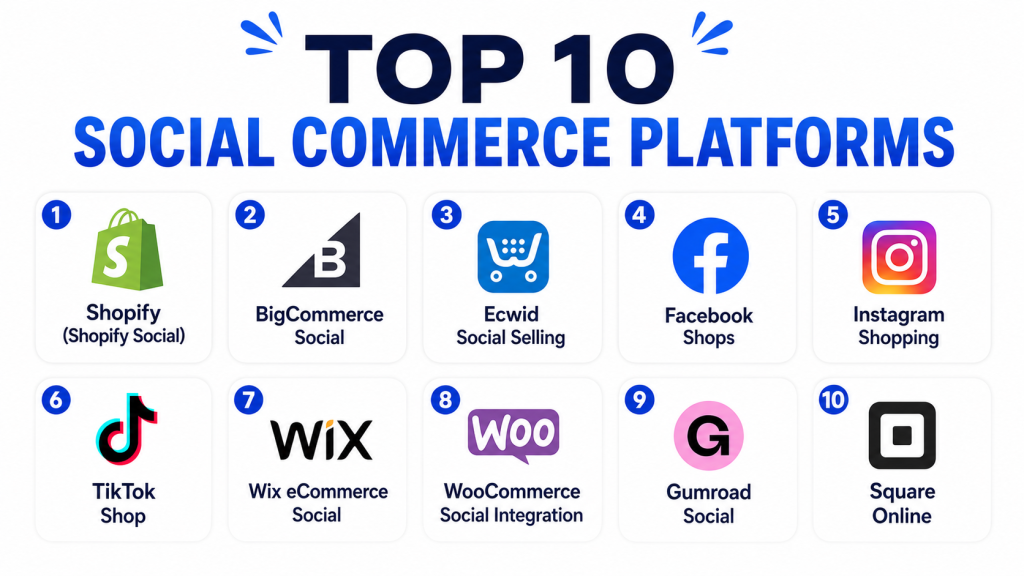
Top 10 Social Commerce Platforms
#1 — TikTok Shop
Short description (4–5 lines):
TikTok Shop transforms short‑form video into commerce by letting merchants sell directly within the TikTok app. It’s ideal for brands with strong video content and social engagement looking to sell products natively.
Key Features
- In‑app checkout and conversion
- Live shopping events with real‑time buying
- Product tagging in videos and profiles
- Creator partnerships and affiliate tools
- Analytics on views, engagement, and sales
Pros
- High engagement and discovery from native social audiences
- Live commerce accelerates conversions
Cons
- Platform dependency on TikTok audience
- Selling experience tied to social metrics (views/likes)
Platforms / Deployment
- Web interface for merchants; mobile app for consumers; Cloud
Security & Compliance
- PCI‑compliant checkout and risk monitoring
Integrations & Ecosystem
- Creator/influencer tool integration
- Merchant dashboard for sales tracking
- Product catalog sync
Support & Community
Documentation, seller support, and merchant forums.
#2 — Instagram Shopping
Short description (4–5 lines):
Instagram Shopping enables brands to tag products in feed posts, Reels, and Stories with native product pages and checkout experiences. Perfect for visual brands with highly curated content.
Key Features
- Shoppable tags in photos, videos, Reels
- Native checkout in app
- Product catalogs linked to business accounts
- Promotions and dynamic ads
- Shop tabs on profiles
Pros
- Deep integration with Instagram audience
- Seamless discovery to purchase path
Cons
- Heavily reliant on strong visual content strategy
- Competitive marketplace
Platforms / Deployment
- Web business interface; mobile app consumer experience; Cloud
Security & Compliance
- PCI‑compliant checkout and account security tools
Integrations & Ecosystem
- Catalog sync with merchant websites
- Ad platform integration
- Analytics dashboard
Support & Community
Help center, business support, and tutorials.
#3 — Facebook Shops
Short description (4–5 lines):
Facebook Shops provides customizable storefronts that appear across Facebook and Instagram. Ideal for businesses with existing social audiences and multi‑channel engagement.
Key Features
- Custom storefront builder
- Social tagging and shoppable posts
- Unified catalog across Facebook and Instagram
- Messaging commerce via chat
- Insights and sales reporting
Pros
- Centralized presence across major social apps
- Messaging commerce boosts conversions
Cons
- Revenue attribution can be murky
- Setup may require technical support
Platforms / Deployment
- Web business dashboard; mobile app consumer experience; Cloud
Security & Compliance
- PCI‑compliance, fraud detection
Integrations & Ecosystem
- E‑commerce CMS and CRM sync
- Ad platform integration
- Unified analytics
Support & Community
Documentation, business support, and community groups.
#4 — Pinterest Shopping
Short description (4–5 lines):
Pinterest Shopping combines inspiration with purchase, enabling shoppable pins and catalogs. Great for lifestyle, fashion, and home brands targeting discovery‑based shoppers.
Key Features
- Shoppable pins and catalogs
- Visual product tagging
- Ads with direct product links
- Shopping insights
- Collections and inspiration boards
Pros
- High‑intent discovery audience
- Visual catalog browsing
Cons
- Purchase funnel may require external checkout
- Limited integration beyond visuals
Platforms / Deployment
- Web and mobile browsing; Cloud
Security & Compliance
- Not publicly stated; typical platform safeguards
Integrations & Ecosystem
- E‑commerce store sync
- Ad hub integration
- Analytics dashboards
Support & Community
Business support, guides, and best practices.
#5 — Shopify “Sell on Social”
Short description (4–5 lines):
Shopify enables merchants to sell products via social channels using integrated commerce tools and unified inventory. Ideal for online stores wanting coordination between social and direct channels.
Key Features
- One catalog for social and web
- In‑platform checkout integration
- Multi‑channel analytics
- Social feed and ad sync
- Embedded buy buttons
Pros
- Unified commerce and order management
- Works across multiple social channels
Cons
- Platform costs and transaction fees
- Requires Shopify subscription
Platforms / Deployment
- Web + integrations; Cloud
Security & Compliance
- PCI‑compliant checkout, fraud tools
Integrations & Ecosystem
- Facebook, Instagram, TikTok, Pinterest
- CRM and analytics tools
- Plugin ecosystem
Support & Community
24/7 support, documentation, developer community.
#6 — Beacons Social Commerce
Short description (4–5 lines):
Beacons offers shoppable landing pages, bio links, and content‑first commerce tools that connect audiences to products without a store. Best for creators and micro‑brands.
Key Features
- Bio link with product listings
- Embedded product purchase flows
- Affiliate and creator tools
- Analytics and traffic insights
- Custom minisites
Pros
- Extremely easy to set up
- Focused on performance links
Cons
- Not a full commerce engine
- Limited native checkout
Platforms / Deployment
- Web; Cloud
Security & Compliance
- Not publicly stated
Integrations & Ecosystem
- Social links, payment gateways
- Analytics tools
Support & Community
Documentation and tutorials.
#7 — TikTok Pulse & Commerce
Short description (4–5 lines):
TikTok Pulse (Commerce combined) empowers brands to monetize top content via product links and affiliate commerce, pairing trending videos with shoppable experiences.
Key Features
- Shoppable overlays in trending content
- Creator‑linked commerce
- Deep analytics on conversion
- Dynamic product placements
- Sponsored commerce features
Pros
- Drives commerce with viral content
- Strong analytics
Cons
- Requires performance marketing know‑how
- Competitive space
Platforms / Deployment
- Web; Mobile App; Cloud
Security & Compliance
- PCI‑compliant payment flows
Integrations & Ecosystem
- Creator tools and analytics
- Ad tracking and catalog sync
Support & Community
Business support and creator resources.
#8 — LiveScale Social Commerce
Short description (4–5 lines):
LiveScale focuses on social livestream commerce, enabling real‑time buying experiences tied to live shopping events. Suitable for brands leveraging live presentations.
Key Features
- Live commerce with real‑time buy buttons
- Audience engagement tools
- Analytics for conversion and engagement
- Multi‑stream support
- Integrated checkout
Pros
- Real‑time engagement boosts conversion
- Works across platforms
Cons
- Requires live content production
- Special setup for streams
Platforms / Deployment
- Web; Cloud
Security & Compliance
- PCI‑compliant
Integrations & Ecosystem
- CMS and CRM
- Social channels
- Analytics dashboard
Support & Community
Documentation and live support.
#9 — CommentSold
Short description (4–5 lines):
CommentSold enables social selling via automated checkout triggered by comments and chat, especially on Facebook and Instagram. Perfect for small shops and community sellers.
Key Features
- Comment‑to‑buy functionality
- Live sales triggers
- Social carts and order tracking
- Automated notifications
- Integrated CRM
Pros
- Fun, interactive buying experiences
- Boosts engagement and sales
Cons
- Works best in active communities
- Limited product catalog features
Platforms / Deployment
- Web; Cloud
Security & Compliance
- PCI‑compliant
Integrations & Ecosystem
- Social platforms
- Shipping and payment tools
Support & Community
Support team, tutorials, and guides.
#10 — Shoploop‑style Commerce Tools
Short description (4–5 lines):
Shoploop‑style tools (shoppable video commerce), combine short video with product links that drive immediate purchase actions. Best for brands seeking high‑engagement formats.
Key Features
- Shoppable video players
- Influencer‑driven showcases
- Performance tracking
- Catalog tagging in video
- Conversion metrics
Pros
- High viewer engagement
- Seamless video‑to‑purchase flow
Cons
- Newer technologies still evolving
- Requires video content investment
Platforms / Deployment
- Web; Cloud
Security & Compliance
- PCI‑compliant flows
Integrations & Ecosystem
- Video platforms
- Analytics tools
- Payment integrations
Support & Community
Docs and support resources.
Comparison Table (Top 10)
| Tool Name | Best For | Platforms Supported | Deployment | Standout Feature | Public Rating |
|---|---|---|---|---|---|
| TikTok Shop | Viral social commerce | Web, App | Cloud | In‑app native checkout | N/A |
| Instagram Shopping | Visual discovery commerce | Web, App | Cloud | Shoppable Reels & tags | N/A |
| Facebook Shops | Unified cross‑app storefront | Web, App | Cloud | Unified shop across apps | N/A |
| Pinterest Shopping | Discovery‑driven brands | Web, App | Cloud | Shoppable pins & boards | N/A |
| Shopify “Sell on Social” | Omni‑channel commerce | Web | Cloud | Unified commerce & catalog | N/A |
| Beacons | Creator‑centric commerce | Web | Cloud | Bio link with commerce | N/A |
| TikTok Pulse & Commerce | Viral commerce + analytics | Web, App | Cloud | Performance + creator links | N/A |
| LiveScale | Livestream commerce | Web | Cloud | Real‑time buy buttons | N/A |
| CommentSold | Interactive community selling | Web | Cloud | Comment‑to‑buy | N/A |
| Shoploop‑style tools | Shoppable video experiences | Web | Cloud | Short video commerce | N/A |
Evaluation & Scoring of Social Commerce Platforms
| Tool Name | Core (25%) | Ease (15%) | Integrations (15%) | Security (10%) | Performance (10%) | Support (10%) | Value (15%) | Weighted Total |
|---|---|---|---|---|---|---|---|---|
| TikTok Shop | 9 | 8 | 9 | 8 | 9 | 7 | 7 | 8.45 |
| Instagram Shopping | 9 | 8 | 8 | 8 | 8 | 7 | 7 | 8.25 |
| Facebook Shops | 8 | 8 | 8 | 8 | 8 | 7 | 7 | 8.15 |
| Pinterest Shopping | 7 | 7 | 7 | 8 | 7 | 7 | 7 | 7.25 |
| Shopify “Sell on Social” | 9 | 7 | 9 | 8 | 8 | 7 | 7 | 8.25 |
| Beacons | 7 | 9 | 7 | 8 | 7 | 7 | 7 | 7.45 |
| TikTok Pulse & Commerce | 9 | 7 | 9 | 8 | 8 | 7 | 7 | 8.30 |
| LiveScale | 8 | 7 | 8 | 8 | 8 | 7 | 7 | 7.90 |
| CommentSold | 7 | 8 | 7 | 8 | 7 | 7 | 7 | 7.40 |
| Shoploop‑style tools | 7 | 8 | 7 | 8 | 7 | 7 | 7 | 7.40 |
Which Social Commerce Platform Is Right for You?
Solo / Small Businesses
Beacons, CommentSold, or Pinterest Shopping provide easy entry points for smaller brands and creators.
SMB / Growing Retailers
Instagram Shopping, Facebook Shops, and Shopify “Sell on Social” offer robust commerce features with broad channel reach.
Enterprise / Large Brands
TikTok Shop and TikTok Pulse & Commerce deliver high engagement, analytics, and native conversion with social virality.
Budget vs Premium
Beacons and CommentSold are cost‑effective for solopreneurs. TikTok Shop and Shopify “Sell on Social” deliver premium commerce at scale.
Feature Depth vs Ease of Use
Enterprise social commerce platforms provide deep analytics and multi‑channel integration. Lightweight tools focus on simplicity and speed.
Integrations & Scalability
Platforms with strong e‑commerce, CRM, and API support scale better as audience and product catalogs grow.
Security & Compliance Needs
Ensure checkout, payment, and data privacy compliance with PCI and platform safeguards before launch.
Frequently Asked Questions (FAQs)
1. What is a social commerce platform?
A platform that enables direct selling via social channels, combining discovery, engagement, and checkout within social or integrated experiences.
2. Do social commerce platforms support native checkout?
Many platforms support in‑app checkout so customers don’t leave the social app to complete purchases.
3. Can I run social ads tied to commerce?
Yes, platforms like Instagram and TikTok support shoppable ads that lead directly to purchase flows.
4. Is influencer commerce included?
Most social commerce tools include creator and influencer tagging or affiliate tracking to link sales to personalities.
5. Can social commerce integrate with my store?
Yes, unified platforms like Shopify “Sell on Social” sync catalogs and orders across web and social channels.
6. Are global payments supported?
Top platforms provide multi‑currency and international payment options, though specifics vary.
7. Do they provide analytics?
Yes, dashboards track views, conversions, average order value, and attribution across social channels.
8. Can social commerce work on multiple platforms?
Yes, many platforms enable commerce across Instagram, TikTok, Facebook, Pinterest, and custom video tools.
9. Is live commerce different?
Live commerce blends real‑time video with shoppable links, providing an interactive sales experience.
10. How do I choose the right platform?
Consider audience size, social channels used, product catalog, integration needs, and budget when evaluating tools.
Conclusion
Social commerce platforms are transforming how brands sell online by merging social engagement with seamless purchasing. Smaller creators and shops may begin with Beacons, CommentSold, or Pinterest Shopping for easy setup and discovery‑driven traffic. Growing brands benefit from Instagram Shopping, Facebook Shops, or Shopify’s unified commerce tools to scale across channels with deep integrations. Large brands looking for viral reach and analytics should consider TikTok Shop or TikTok Pulse & Commerce for native in‑app buying and performance insights. Evaluate your audience base, commerce goals, and integration requirements before selecting a platform. Start by shortlisting 2–3 solutions, testing social engagement and conversion flows, and validating analytics and checkout performance to build a high‑impact social commerce strategy.

This article provides a helpful overview of social commerce platforms and how they help businesses connect with customers through social channels. The feature comparisons and pros-and-cons breakdown make it easy to evaluate the available options.