Introduction
Email deliverability tools help businesses ensure that emails reach the recipient’s inbox instead of getting lost in spam folders or being blocked entirely. These platforms analyze sender reputation, monitor authentication settings, test inbox placement, and provide insights into how email providers evaluate messages. For SaaS companies, ecommerce businesses, agencies, and product teams, email deliverability plays a direct role in customer engagement, revenue, onboarding success, and communication reliability. Poor deliverability can result in lost leads, reduced trust, and missed opportunities, making these tools critical for modern digital operations.
Real-world use cases:
- Testing inbox placement before campaigns
- Monitoring domain reputation and sender score
- Ensuring transactional email delivery
- Fixing spam filtering issues
- Tracking engagement and bounce rates
Buyer evaluation criteria:
- Inbox placement accuracy
- Authentication support SPF DKIM DMARC
- Reputation monitoring
- API and automation support
- Reporting and analytics
- Integration ecosystem
- Ease of use
- Scalability
- Security controls
- Pricing clarity
Best for: SaaS companies, marketers, developers, ecommerce brands, and agencies that depend on reliable email delivery.
Not ideal for: Small businesses with minimal email usage or teams not relying on email as a core communication channel.
Key Trends in Email Deliverability Tools
- Increased reliance on domain authentication standards
- AI-driven spam detection and recommendations
- Focus on engagement-based filtering signals
- Growth of inbox placement testing tools
- Real-time reputation monitoring dashboards
- API-first platforms for developers
- Integration with CRM and marketing automation
- Stronger compliance and privacy requirements
- Rise of email warmup and domain reputation tools
- Unified platforms combining sending and analytics
How We Selected These Tools Methodology
- High adoption across SaaS, ecommerce, and marketing teams
- Strong deliverability and inbox testing capabilities
- Balanced mix of infrastructure and testing tools
- Reliable performance and scalability
- Security and authentication support
- Integration with modern tech stacks
- Developer and marketer usability
- Reporting depth and actionable insights
- Fit across small, mid, and enterprise users
- Proven real-world performance
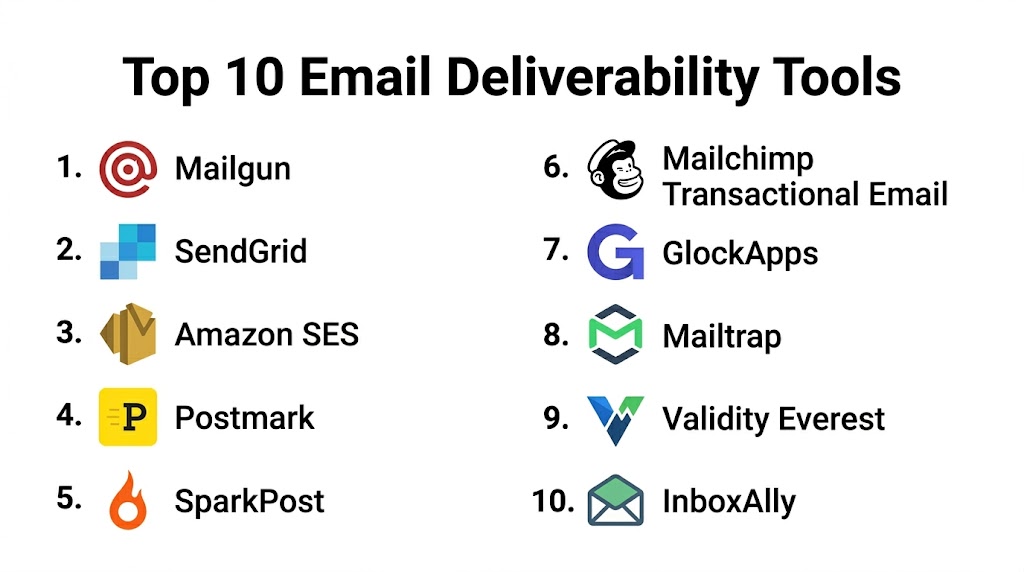
Top 10 Email Deliverability Tools
#1 — Mailgun
Short description: Mailgun is a developer-focused email platform that provides powerful APIs, SMTP services, and deliverability tools to send, receive, and track emails at scale. It is widely used by SaaS companies and product teams for transactional email workflows, offering flexible infrastructure, analytics, and email validation capabilities for modern applications.
Key Features
- Email API and SMTP
- Email validation
- Deliverability analytics
- Event tracking
- Domain management
Pros
- Strong API support
- Scalable infrastructure
- Detailed analytics
- Flexible integrations
Cons
- Technical setup required
- Not beginner-friendly
- Pricing varies
- Needs monitoring
Platforms / Deployment
Web / Cloud
Security & Compliance
Supports authentication, encryption, and access control.
Integrations & Ecosystem
- REST API
- SMTP
- Webhooks
- CRM tools
- Backend apps
Support & Community
Strong documentation and developer community.
#2 — SendGrid
Short description: SendGrid is a cloud-based email delivery platform that supports both transactional and marketing emails, providing scalable infrastructure, detailed analytics, and flexible APIs. It is commonly used by developers and marketing teams to manage large-scale email operations and optimize deliverability performance.
Key Features
- Email API
- SMTP relay
- Analytics dashboard
- Templates
- Webhooks
Pros
- Scalable solution
- Good for marketing and dev teams
- Reliable infrastructure
- Strong analytics
Cons
- Complex interface
- Requires setup
- Cost increases with scale
- Needs monitoring
Platforms / Deployment
Web / Cloud
Security & Compliance
Supports authentication and encryption controls.
Integrations & Ecosystem
- API integrations
- CRM tools
- Marketing tools
- Backend systems
Support & Community
Large ecosystem with strong support.
#3 — Amazon SES
Short description: Amazon SES is a scalable email sending service designed for developers who need cost-efficient email delivery at scale. It integrates deeply with AWS services and supports transactional and bulk email workflows, making it suitable for high-volume applications.
Key Features
- API and SMTP
- Domain authentication
- Bounce tracking
- Event notifications
- AWS integration
Pros
- Cost-effective
- Highly scalable
- Flexible setup
- AWS ecosystem
Cons
- Technical setup required
- Limited UI tools
- Requires monitoring
- Not beginner-friendly
Platforms / Deployment
Web / Cloud
Security & Compliance
Supports IAM and encryption controls.
Integrations & Ecosystem
- AWS services
- API workflows
- Monitoring tools
Support & Community
Backed by AWS documentation and support.
#4 — Postmark
Short description: Postmark is a transactional email service focused on delivering fast and reliable application emails such as notifications, receipts, and alerts. It is ideal for product teams that prioritize delivery speed and message reliability.
Key Features
- Transactional email
- API and SMTP
- Message tracking
- Templates
- Bounce handling
Pros
- Reliable delivery
- Easy setup
- Clean interface
- Strong logs
Cons
- Limited marketing features
- Not for bulk campaigns
- Smaller ecosystem
- Pricing may vary
Platforms / Deployment
Web / Cloud
Security & Compliance
Supports secure email delivery and authentication.
Integrations & Ecosystem
- API
- SMTP
- Webhooks
Support & Community
Good support and documentation.
#5 — SparkPost
Short description: SparkPost is a high-performance email platform designed for large-scale email sending and analytics. It provides detailed insights into email performance and is widely used by enterprises and high-volume senders.
Key Features
- Email API
- Analytics
- Event tracking
- Templates
- IP management
Pros
- Advanced analytics
- High scalability
- Developer tools
- Flexible workflows
Cons
- Requires setup
- Not beginner-friendly
- Pricing varies
- Complex features
Platforms / Deployment
Web / Cloud
Security & Compliance
Supports authentication and encryption.
Integrations & Ecosystem
- API
- Data tools
- Backend systems
Support & Community
Enterprise support available.
#6 — Mailchimp Transactional Email
Short description: Mailchimp Transactional Email supports one-to-one email sending triggered by user actions and is ideal for teams already using Mailchimp. It helps businesses manage transactional communication alongside marketing workflows.
Key Features
- API and SMTP
- Templates
- Tracking
- Mailchimp integration
Pros
- Easy to use
- Integrated ecosystem
- Reliable sending
- Good templates
Cons
- Limited flexibility
- Depends on Mailchimp
- Not developer-first
- Pricing varies
Platforms / Deployment
Web / Cloud
Security & Compliance
Supports authentication and access controls.
Integrations & Ecosystem
- Mailchimp
- API
- CRM tools
Support & Community
Mailchimp support ecosystem available.
#7 — GlockApps
Short description: GlockApps is an email testing tool that helps analyze inbox placement and spam issues across different providers. It is widely used for campaign testing and deliverability diagnostics.
Key Features
- Inbox testing
- Spam analysis
- Blocklist monitoring
- Reports
Pros
- Easy testing
- Good diagnostics
- Useful insights
- Simple interface
Cons
- Not a sending platform
- Limited automation
- Requires interpretation
- Testing variance
Platforms / Deployment
Web / Cloud
Security & Compliance
Not publicly stated
Integrations & Ecosystem
- ESP tools
- Reporting tools
Support & Community
Basic support available.
#8 — Mailtrap
Short description: Mailtrap is a testing platform that allows developers to safely test emails in staging environments without sending them to real users. It is widely used in development and QA workflows.
Key Features
- Email sandbox
- API
- Template preview
- Logs
Pros
- Safe testing
- Developer-friendly
- Easy setup
- Useful debugging
Cons
- Limited marketing features
- Not full deliverability tool
- Testing-focused
- Limited analytics
Platforms / Deployment
Web / Cloud
Security & Compliance
Supports secure testing environments.
Integrations & Ecosystem
- API
- Dev tools
- CI/CD
Support & Community
Strong documentation.
#9 — Validity Everest
Short description: Validity Everest is an enterprise deliverability platform offering deep insights into inbox placement, reputation, and email performance. It is designed for large organizations with advanced email programs.
Key Features
- Inbox monitoring
- Reputation tracking
- Analytics
- List validation
Pros
- Enterprise features
- Strong analytics
- Reliable insights
- Advanced monitoring
Cons
- Expensive
- Complex setup
- Requires expertise
- Not for small teams
Platforms / Deployment
Web / Cloud
Security & Compliance
Enterprise-level controls available.
Integrations & Ecosystem
- CRM
- Marketing tools
- Analytics
Support & Community
Enterprise support available.
#10 — InboxAlly
Short description: InboxAlly helps improve email deliverability by increasing engagement signals and sender reputation. It is commonly used by marketers to enhance inbox placement performance.
Key Features
- Engagement tools
- Reputation support
- Reporting
- Campaign tracking
Pros
- Improves inbox placement
- Easy to use
- Useful insights
- Marketing-friendly
Cons
- Not full platform
- Limited technical features
- Requires strategy
- Smaller ecosystem
Platforms / Deployment
Web / Cloud
Security & Compliance
Not publicly stated
Integrations & Ecosystem
- Email platforms
- Campaign tools
Support & Community
Basic onboarding support available.
Comparison Table
| Tool | Best For | Platform | Deployment | Feature | Rating |
|---|---|---|---|---|---|
| Mailgun | Developers | Web | Cloud | API delivery | N/A |
| SendGrid | Marketing | Web | Cloud | Scalable email | N/A |
| Amazon SES | AWS users | Web | Cloud | Cost efficiency | N/A |
| Postmark | Transactional | Web | Cloud | Reliability | N/A |
| SparkPost | Enterprise | Web | Cloud | Analytics | N/A |
| Mailchimp | CRM users | Web | Cloud | Integration | N/A |
| GlockApps | Testing | Web | Cloud | Inbox testing | N/A |
| Mailtrap | Dev testing | Web | Cloud | Sandbox | N/A |
| Everest | Enterprise | Web | Cloud | Monitoring | N/A |
| InboxAlly | Marketing | Web | Cloud | Engagement | N/A |
Evaluation & Scoring
| Tool | Core | Ease | Integrations | Security | Performance | Support | Value | Total |
|---|---|---|---|---|---|---|---|---|
| Mailgun | 8.6 | 7.8 | 8.7 | 8.1 | 8.6 | 8.0 | 8.1 | 8.30 |
| SendGrid | 8.7 | 8.1 | 8.8 | 8.0 | 8.5 | 8.1 | 8.0 | 8.36 |
| Amazon SES | 8.3 | 6.9 | 8.9 | 8.4 | 8.8 | 7.8 | 8.7 | 8.23 |
| Postmark | 8.4 | 8.8 | 8.0 | 7.9 | 8.7 | 8.4 | 7.8 | 8.30 |
| SparkPost | 8.3 | 7.6 | 8.3 | 7.9 | 8.4 | 7.8 | 7.7 | 8.02 |
| Mailchimp | 7.7 | 8.2 | 7.8 | 7.5 | 7.9 | 7.8 | 7.5 | 7.76 |
| GlockApps | 8.0 | 8.0 | 7.3 | 7.0 | 7.6 | 7.6 | 7.8 | 7.68 |
| Mailtrap | 8.1 | 8.7 | 7.8 | 7.6 | 7.8 | 8.0 | 8.0 | 8.03 |
| Everest | 8.9 | 7.2 | 8.1 | 8.0 | 8.3 | 8.2 | 7.1 | 8.09 |
| InboxAlly | 7.3 | 8.2 | 6.9 | 6.8 | 7.2 | 7.2 | 7.6 | 7.35 |
Frequently Asked Questions
1. What are email deliverability tools?
Email deliverability tools help ensure that emails reach inboxes instead of spam folders by monitoring sender reputation, authentication, and email quality. They provide insights into how mailbox providers treat your emails and help improve performance over time. These tools are essential for businesses that rely on email communication for marketing, transactions, or customer engagement. Without them, it becomes difficult to identify and fix delivery issues.
2. Why is email deliverability important?
Email deliverability directly affects whether your audience receives important messages such as promotions, alerts, and notifications. Poor deliverability can reduce open rates, engagement, and revenue while damaging brand trust. It also impacts customer onboarding and retention in SaaS products. Ensuring strong deliverability helps maintain consistent communication and improves business performance.
3. What is the difference between delivery and deliverability?
Delivery means the email was accepted by the receiving server, while deliverability refers to whether the email lands in the inbox instead of spam. An email can be delivered but still not be visible to the user if it goes to spam. Deliverability tools focus on improving inbox placement, not just sending success. This distinction is important for understanding real email performance.
4. Do I need a deliverability tool if I use an email service provider?
Yes, because email service providers mainly focus on sending emails, not always on analyzing inbox placement or reputation deeply. Deliverability tools provide insights into spam filtering, engagement, and domain health. They help identify issues before they impact campaigns or transactional emails. Using both together gives better control and visibility.
5. What factors affect email deliverability?
Sender reputation, authentication setup, email content, engagement rates, and sending patterns all affect deliverability. High bounce rates, spam complaints, and poor list quality can harm reputation. Consistent sending behavior and proper authentication improve trust with mailbox providers. Monitoring these factors regularly is essential for long-term success.
6. Can email deliverability tools guarantee inbox placement?
No, no tool can guarantee inbox placement because mailbox providers use complex and changing algorithms. Deliverability tools help improve the chances by identifying risks and recommending fixes. They provide visibility into issues that affect inbox placement. Final results depend on sender practices and recipient engagement.
7. What is SPF DKIM DMARC?
SPF, DKIM, and DMARC are authentication methods that verify the legitimacy of emails. They help mailbox providers confirm that emails are coming from authorized sources. Proper configuration improves deliverability and reduces spoofing risks. These are essential for any serious email program.
8. Are deliverability tools useful for transactional emails?
Yes, transactional emails like password resets and order confirmations are critical for user experience. Deliverability tools ensure these emails reach users quickly and reliably. They help monitor failures, delays, and spam issues. This is especially important for SaaS and ecommerce platforms.
9. How do I choose the right tool?
Choose based on your use case, such as sending infrastructure, testing, or monitoring. Developers may prefer API-based tools, while marketers may prefer testing platforms. Consider scalability, integrations, pricing, and ease of use. Running a pilot before full adoption is recommended.
10. Can I switch deliverability tools easily?
Yes, but it requires planning and gradual migration to avoid reputation issues. You should test new tools with small volumes first and monitor performance. Proper authentication setup and domain management are important during the switch. A careful transition ensures stable deliverability.
Conclusion
Email deliverability tools play a critical role in ensuring that business communication reaches the intended audience reliably. The best tool depends on whether you need sending infrastructure, testing capabilities, or advanced monitoring features. Platforms like Mailgun, SendGrid, and Amazon SES are ideal for developers, while tools like GlockApps and Validity Everest are better suited for testing and analytics. Businesses should shortlist tools based on their needs, run pilot tests with real campaigns, validate integrations and authentication, and then scale gradually while monitoring performance and maintaining strong email practices.

I enjoyed reading this article. The comparison is straightforward and well organized, making it easy to understand the strengths of each email deliverability tool and choose the right one based on specific requirements.