Introduciton
Social media has become one of the most powerful growth channels for modern businesses. Whether you run a local retail store, a fast-growing startup, or an established enterprise, your customers are active on social platforms every single day. According to DataReportal’s Global Digital Overview (October 2026), there are now 5.81 billion active social media user identities worldwide—representing nearly 70% of the global population—with the average user spending over 19 hours per week browsing social networks and watching online video.
Despite this massive opportunity, many businesses struggle to turn likes, views, and follows into consistent leads or revenue. Teams often spend hours designing graphics and writing captions, only to see flat engagement and unpredictable results. Most of the time, the problem is not the social media algorithms; it is a series of avoidable social media marketing mistakes in planning, execution, and management.
In this guide, you will learn why businesses fall into common social media traps, how poor management affects your bottom line, and the 15 specific common social media mistakes you need to fix. We will also share practical comparison tables, an actionable audit checklist, and best practices to help you streamline your workflows and grow your brand consistently.
What Is Social Media Marketing?
Social media marketing is the strategic use of social networking platforms—such as LinkedIn, Instagram, Facebook, YouTube, and X—to connect with your target audience, build brand awareness, drive website traffic, and generate sales.
It goes far beyond simply posting status updates or product photos. Effective social media marketing combines content creation, community management, paid advertising, and performance analytics into a cohesive system that supports your broader business goals.
Why Social Media Marketing Matters for Businesses
For small businesses, startups, and large brands alike, social media levels the playing field. You do not need a massive television advertising budget to reach thousands of potential buyers.
- Direct Customer Access: Social channels allow you to speak directly with buyers, answer questions in real time, and build genuine relationships.
- Cost-Effective Brand Visibility: Consistent organic content paired with targeted paid campaigns helps build strong brand awareness on social media without wasteful spending.
- Qualified Traffic and Leads: Sharing helpful guides, product demos, and landing pages drives high-intent visitors directly to your website.
- Market and Competitor Insights: Monitoring comments, industry discussions, and competitor profiles gives you free, real-time market research.
How Social Media Influences Customer Decisions
Modern buyers rarely purchase a product the first time they hear about it. Instead, they use social platforms as search engines and validation tools before spending money.
According to Sprout Social’s 2026 Social Media Statistics report, 81% of consumers say social media compels them to make spontaneous purchases multiple times a year, while 73% of social users state that if a brand fails to respond on social media, they will buy from a competitor instead. Prospects check your recent posts, read customer comments, and evaluate your responsiveness to decide whether your business is trustworthy.
Sprout Social
Common Challenges in Social Media Marketing
Even experienced marketing teams run into roadblocks when managing multiple social accounts. Understanding these hurdles is the first step toward overcoming them:
- Declining Organic Reach: Crowded feeds mean platforms prioritize highly engaging, relevant posts over generic brand updates.
- Content Creation Fatigue: Producing fresh graphics, short-form videos, and copy every week requires significant time and creative energy.
- Fragmented Workflows: When copywriters, designers, and managers work across disconnected spreadsheets and chat apps, deadlines slip and messaging becomes inconsistent.
- Proving Return on Investment (ROI): Connecting social media likes and shares to actual website conversions and revenue remains difficult without proper tracking.
Why Businesses Make Social Media Marketing Mistakes
Most social media marketing mistakes happen because businesses treat social media as an afterthought rather than a core business function. Founders and busy managers often rush to publish posts just to “stay active,” skipping audience research and goal setting.
Additionally, many teams copy tactics from viral consumer brands without considering whether those tactics fit their own industry, budget, or customer base. Without documented guidelines or centralized tools, small errors quickly compound into wasted effort.
The Impact of Poor Social Media Management
Weak social media management does more than just limit your follower count—it actively harms your brand reputation and marketing budget.
- Wasted Ad Spend: Running paid promotions on poorly targeted audiences or weak landing pages drains budgets with minimal return.
- Eroded Brand Trust: Outdated profile information, unanswered customer complaints, and irregular posting make a business look inactive or unreliable.
- Low Team Productivity: Without clear approvals and content calendars, marketing teams spend more time fixing last-minute mistakes than executing growth strategies.
Importance of a Well-Planned Social Media Strategy
A documented social media marketing strategy turns random posting into a predictable growth engine. When you define your goals, audience personas, content pillars, and key metrics upfront, every post serves a clear purpose.
A structured plan also aligns your social channels with your search engine optimization (SEO), email marketing, and sales funnels. Instead of guessing what to post each morning, your team operates from a clear roadmap that builds momentum over time.
Social Media Marketing Trends Businesses Should Understand
To avoid falling behind, marketers must align their strategies with how users actually consume content today:
- Short-Form Video Dominance: Short-form video continues to drive the highest interaction rates across major networks, with Facebook users most likely to interact with short-form videos (48%) and Reels making up over half of all ads shared on Instagram.
- Social Platforms as Search Engines: Younger demographics increasingly search for product reviews, tutorials, and local recommendations directly inside social networks—41% of Gen Z turn to social media first when searching for information online.
- Authentic Engagement Over Vanity Metrics: Sprout Social’s 2026 data shows that marketing teams now prioritize engagement (68%), conversions (65%), and revenue impact (57%) far above raw follower counts when measuring ROI.
- Human-Led Authenticity: According to HubSpot’s 2026 State of Marketing Report, while 80% of marketers use AI for content creation, audiences increasingly tune out generic automated posts and reward human-led, authentic brand voices. HubSpot
- Rising Paid Social Investment: Around 87% of marketing leaders expect their paid social advertising spend to increase as brands combine organic community building with targeted amplification.
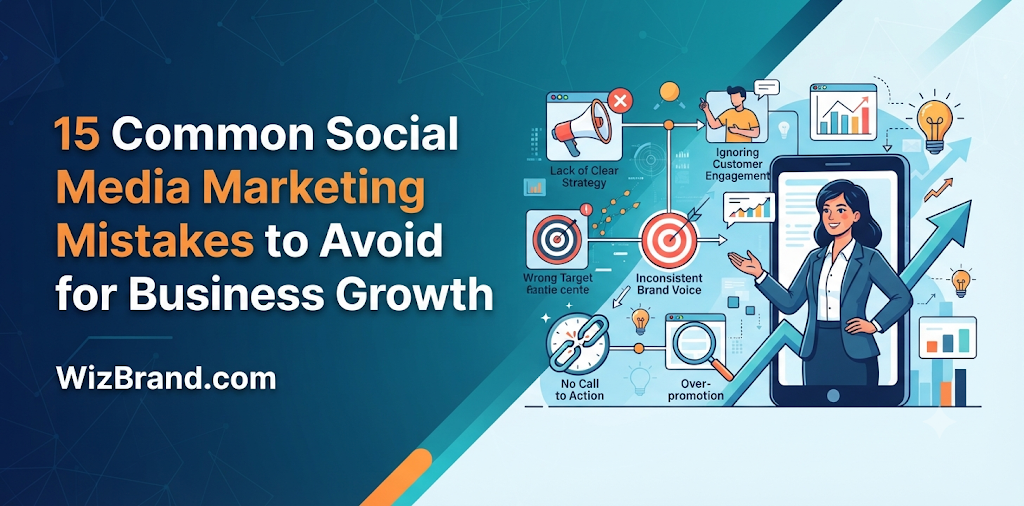
15 Common Social Media Marketing Mistakes to Avoid
Avoiding the following 15 common social media marketing mistakes will immediately improve your content performance, audience trust, and marketing efficiency.
1. Not Having a Clear Social Media Marketing Strategy
- The Mistake: Posting random updates without defined business objectives, target metrics, or a documented plan.
- The Impact: Your team wastes hours creating content that fails to generate leads, traffic, or brand recall.
- How to Fix It: Set 2 to 3 specific quarterly goals—such as generating 50 qualified leads per month or increasing website referral traffic by 25%—and map every post to one of those goals.
2. Targeting the Wrong Audience
- The Mistake: Trying to appeal to everyone with broad, generic messaging instead of speaking to a specific buyer persona.
- The Impact: Your content fails to resonate with high-intent buyers, resulting in low click-through rates and wasted ad spend.
- How to Fix It: Build detailed audience profiles based on demographics, job roles, pain points, and buying habits, then tailor your language to solve their exact problems.
3. Posting Without a Consistent Schedule
- The Mistake: Publishing five posts in one week and then disappearing for a month when business gets busy.
- The Impact: Algorithms reduce your organic visibility, and followers forget about your brand.
- How to Fix It: Commit to a realistic posting cadence—such as three high-quality posts per week—and batch-create your content in advance using a shared editorial calendar.
4. Ignoring Audience Engagement
- The Mistake: Treating social media like a one-way billboard by posting links and never replying to comments or mentions.
- The Impact: Engagement drops because algorithms reward two-way conversations, and potential customers feel ignored.
- How to Fix It: Dedicate 15 to 20 minutes daily to replying thoughtfully to comments, thanking users who share your posts, and asking open-ended questions in your captions.
5. Focusing Only on Promotional Content
- The Mistake: Turning every post into a hard sales pitch, discount announcement, or product catalog listing.
- The Impact: Followers experience ad fatigue and quickly unfollow or mute your account.
- How to Fix It: Follow the 80/20 rule—dedicate 80% of your content to educating, entertaining, or solving problems for your audience, and reserve 20% for direct promotional offers.
6. Using the Same Content Across Every Platform
- The Mistake: Copying and pasting the exact same text, image size, and hashtags across LinkedIn, Instagram, Facebook, and X.
- The Impact: Posts look unpolished, get cropped awkwardly, and fail to match what users expect on each network.
- How to Fix It: Repurpose the core idea, but adapt the format—turn a blog post into a professional carousel on LinkedIn, a 45-second vertical video on Instagram, and a concise insight thread on X.
7. Ignoring Analytics and Performance Metrics
- The Mistake: Never checking platform insights or focusing solely on vanity metrics like total followers and post likes.
- The Impact: You keep repeating underperforming tactics while missing opportunities to scale content that actually drives conversions.
- How to Fix It: Review your social media analytics monthly to track saves, shares, link clicks, conversion rates, and audience retention, then double down on your top-performing formats.
8. Choosing the Wrong Social Media Platforms
- The Mistake: Creating accounts on every single social network just because competitors are there.
- The Impact: Your team spreads its energy too thin, resulting in mediocre profiles everywhere and mastery nowhere.
- How to Fix It: Focus on the two or three platforms where your ideal customers actively spend time—such as LinkedIn and YouTube for B2B companies, or Instagram and Facebook for local and e-commerce brands.
9. Neglecting Video and Visual Content
- The Mistake: Relying heavily on plain text updates or low-resolution stock photos in visual-first feeds.
- The Impact: Users scroll right past your posts without stopping, hurting your reach and brand perception.
- How to Fix It: Incorporate clean graphics, product demonstrations, customer testimonials, and short educational videos under 60 seconds to capture attention quickly.
10. Using Irrelevant or Excessive Hashtags
- The Mistake: Stuffing captions with 25 unrelated trending hashtags like
#loveor#instagoodto chase views. - The Impact: Your posts attract spam bots instead of real buyers, and platform algorithms struggle to categorize your content accurately.
- How to Fix It: Use 3 to 5 specific, niche-relevant hashtags that accurately describe your industry, topic, and target audience.
11. Ignoring Customer Feedback and Messages
- The Mistake: Leaving direct messages unanswered for days or deleting negative customer comments instead of addressing them.
- The Impact: Unresolved complaints escalate publicly and permanently damage your brand credibility.
- How to Fix It: Set up clear response-time targets for direct messages, acknowledge negative feedback politely in public, and move complex troubleshooting to private support channels.
12. Following Trends Without Understanding the Audience
- The Mistake: Jumping on every viral dance, meme, or slang trend even when it clashes with your brand identity.
- The Impact: Your brand comes across as inauthentic or confusing to serious buyers.
- How to Fix It: Before joining a trend, ask whether it aligns with your brand values and adds genuine value or humor for your specific target customers.
13. Buying Followers or Fake Engagement
- The Mistake: Purchasing bulk followers, likes, or automated comments to inflate account numbers quickly.
- The Impact: Fake accounts never buy your products, destroy your engagement rate, and can trigger platform penalties or account suspension.
- How to Fix It: Build your audience organically through valuable content, strategic collaborations, employee advocacy, and targeted paid ads.
14. Failing to Optimize Social Media Profiles
- The Mistake: Leaving bios incomplete, using blurry logos, forgetting contact details, or linking to a broken homepage.
- The Impact: Visitors who discover your posts cannot tell what your business does or how to buy from you.
- How to Fix It: Write a clear, keyword-rich bio explaining who you help and how, use high-resolution brand visuals, add updated contact buttons, and link to a dedicated landing page.
15. Not Reviewing and Improving Marketing Campaigns
- The Mistake: Launching social campaigns and letting them run untouched without testing variations or updating creatives.
- The Impact: Ad fatigue sets in, cost-per-click rises, and overall campaign performance declines steadily.
- How to Fix It: Run regular A/B tests on headlines, visuals, and calls to action, and refine your campaigns based on real performance data.
Key Social Media Marketing Comparisons
Understanding the difference between strategic execution and common pitfalls becomes much clearer when you compare them side by side.
Effective vs. Ineffective Social Media Marketing
| Factor | Effective Social Media Marketing | Ineffective Social Media Marketing |
|---|---|---|
| Planning | Driven by documented goals and a structured content calendar | Reactive, last-minute posting with no clear direction |
| Audience Focus | Tailored to specific buyer pain points and interests | Generic messages aimed at everyone |
| Content Mix | Balanced blend of educational, visual, and promotional posts | Constant hard selling and repetitive product links |
| Engagement | Active two-way conversations and timely replies | Ignoring comments, mentions, and direct messages |
| Measurement | Tracks leads, conversions, clicks, and meaningful engagement | Focuses only on vanity metrics like raw follower count |
Organic Social Media Marketing vs. Paid Social Media Marketing
| Criteria | Organic Social Media Marketing | Paid Social Media Marketing |
|---|---|---|
| Primary Goal | Build long-term trust, community, and brand authority | Drive immediate reach, targeted traffic, and conversions |
| Cost Structure | Free to publish, requires time and creative resources | Requires direct ad budget and ongoing bid optimization |
| Reach Speed | Gradual growth powered by algorithms and shares | Instant visibility among precisely targeted audiences |
| Best Use Case | Brand storytelling, customer support, and nurturing loyalty | Product launches, lead generation, and retargeting visitors |
Consistent Posting vs. Irregular Posting
| Aspect | Consistent Posting | Irregular Posting |
|---|---|---|
| Algorithm Visibility | Signals account reliability, improving feed distribution | Causes sharp drops in organic reach after long gaps |
| Audience Trust | Keeps your brand top-of-mind and signals active business | Makes the brand appear inactive or poorly managed |
| Team Workflow | Smooth, predictable content production and review cycles | Stressful, rushed content creation with higher error rates |
Audience-Focused Content vs. Promotional-Only Content
| Dimension | Audience-Focused Content | Promotional-Only Content |
|---|---|---|
| Core Message | “Here is how to solve your problem or achieve your goal” | “Buy our product or service right now” |
| User Reaction | Saves, shares, thoughtful comments, and brand affinity | Scrolling past, muting notifications, or unfollowing |
| Long-Term ROI | Attracts warm prospects who trust your expertise before buying | High customer acquisition costs and low repeat engagement |
Social Media Marketing Mistakes vs. Recommended Solutions
| Common Mistake | Negative Business Impact | Recommended Solution |
|---|---|---|
| Cross-posting identical content | Poor formatting and low platform engagement | Customize visuals, copy length, and tone for each channel |
| Buying fake followers | Ruined engagement metrics and zero sales conversions | Grow organically via quality content and targeted ads |
| Neglecting short-form video | Lower reach in video-prioritized social feeds | Publish concise, value-packed videos and tutorials weekly |
| Incomplete social profiles | Lost referral traffic and confused visitors | Optimize bios, profile images, contact info, and landing links |
| Skipping analytics reviews | Repeating ineffective campaigns and wasting budget | Audit performance metrics monthly and optimize top content |
How to Avoid Common Social Media Marketing Mistakes
Eliminating common social media mistakes requires building repeatable habits and clear systems across your marketing team. Follow these practical steps to strengthen your daily execution:
- Set Measurable Marketing Goals: Tie every social initiative to clear business outcomes using the SMART framework (Specific, Measurable, Achievable, Relevant, Time-bound).
- Understand Audience Behavior: Use customer surveys, sales team feedback, and platform demographics to identify when your audience is online and what formats they prefer.
- Create a Content Calendar: Plan your themes, campaigns, and publishing dates at least two to four weeks ahead so you never scramble for ideas.
- Choose Suitable Platforms: Evaluate each social network based on your target audience and content strengths rather than trying to maintain every channel.
- Develop Engaging Content: Focus on practical tips, behind-the-scenes stories, step-by-step tutorials, and customer success highlights that spark genuine discussion.
- Maintain a Consistent Brand Voice: Document your tone, visual guidelines, and core messaging so every post feels unmistakably like your brand.
- Respond to Audience Interactions: Treat comments and messages as valuable sales and support touchpoints by replying promptly and helpfully.
- Monitor Campaign Performance: Track key indicators such as click-through rate (CTR), engagement rate, and lead conversions across both organic and paid posts.
- Improve Strategies Using Analytics: Treat every campaign as a learning experiment—keep what works, refine what underperforms, and reallocate resources accordingly.
Best Practices for Successful Social Media Marketing
Once you eliminate major errors, applying proven social media marketing best practices will help you scale your results sustainably:
- Build a Clear Social Media Strategy: Document your audience personas, content pillars, posting frequency, and escalation procedures for customer feedback in one accessible place.
- Create Valuable and Relevant Content: Solve real problems your customers face before asking them to buy from you.
- Maintain Consistent Branding: Use cohesive colors, typography, logos, and messaging across all social profiles and website landing pages.
- Use Platform-Specific Content Formats: Leverage native formats—such as LinkedIn document carousels, Instagram Reels, and YouTube tutorials—which platforms naturally reward with higher reach.
- Encourage Meaningful Engagement: Ask specific questions, run interactive polls, and invite followers to share their own experiences in the comments.
- Balance Educational and Promotional Posts: Pair helpful, non-promotional insights with clear, low-friction calls to action when introducing your products or services.
- Test Different Content Approaches: Experiment with different hooks, video lengths, posting times, and visual styles to discover what resonates best with your audience.
- Track Meaningful Performance Indicators: Align your reporting with business growth metrics—such as qualified leads, website sign-ups, and customer retention—rather than surface-level impressions.
How WizBrand Helps Businesses Manage Social Media Marketing More Effectively
Many social media marketing mistakes—such as missed posting deadlines, inconsistent messaging, and unreviewed campaigns—stem from disorganized workflows and scattered tools. When teams juggle spreadsheets, chat threads, and separate apps, critical details slip through the cracks.
WizBrand solves this operational challenge by providing an all-in-one digital marketing management platform built to organize marketing activities and keep teams aligned. Rather than treating social media in isolation, WizBrand helps businesses connect their social efforts with their broader SEO, content, and campaign workflows.
Here is how WizBrand supports smoother, more effective social media management and digital marketing operations:
- Centralized Digital Marketing Management: Manage your social media activities, SEO initiatives, digital assets, and marketing campaigns from one unified workspace instead of switching between disconnected tools.
- Marketing Campaign Organization: Plan, structure, and coordinate multi-channel campaigns with clear goals, timelines, and unified oversight.
- Content Planning and Coordination: Organize your editorial calendar, plan content distribution across channels, and keep creative assets structured and easy to find.
- Team Collaboration: Bring copywriters, designers, social media managers, and stakeholders together with shared workspaces, role-based access, and streamlined review workflows.
- Task and Workflow Management: Assign specific marketing tasks, set deadlines, and track execution stages so content moves smoothly from draft to approval and publication.
- Marketing Performance Tracking: Monitor campaign progress, search visibility, and engagement metrics through centralized reporting dashboards to support data-driven decisions.
- Better Campaign Visibility: Give business owners, agency leads, and managers complete visibility into active tasks, upcoming schedules, and project milestones.
- Improved Marketing Productivity: Eliminate repetitive administrative overhead and miscommunication so your team can spend more time creating high-impact content.
Why Businesses Need Better Digital Marketing Management
Social media does not exist in a vacuum. A potential customer might discover your brand through a short video on Instagram, search for your company on Google, read a blog post on your website, and finally convert through an email offer.
When businesses lack structured digital marketing management, each channel operates in a silo. Your social media posts might promote one message while your website and SEO campaigns focus on something completely different.
By adopting a centralized approach to digital marketing management, businesses can:
- Manage Multiple Marketing Activities: Coordinate social media, SEO, content marketing, and paid campaigns under one cohesive strategy.
- Improve Team Coordination: Ensure internal team members, freelancers, and agency partners stay aligned on priorities and deadlines.
- Maintain Campaign Consistency: Deliver a unified brand voice and visual identity across every customer touchpoint.
- Organize Content Workflows: Standardize how content is briefed, created, approved, and published.
- Monitor Marketing Performance: Evaluate how different channels work together to drive traffic, leads, and revenue.
- Make Informed Marketing Decisions: Replace guesswork with clear performance insights across all active campaigns.
- Support Long-Term Business Growth: Build scalable marketing systems that grow smoothly alongside your customer base and team size.
Social Media Marketing Audit Checklist
Use this practical checklist every quarter to spot and fix potential gaps in your social media operations:
- Marketing Goals
- [ ] Are your social media goals clearly documented and tied to specific business outcomes?
- [ ] Have you defined key performance indicators (KPIs) for each active platform?
- Target Audience
- [ ] Do you have updated buyer personas detailing your audience’s pain points and preferences?
- [ ] Are your content topics directly aligned with what your target customers care about?
- Profile Optimization
- [ ] Do all profiles feature high-resolution logos, clear bios, and updated contact information?
- [ ] Are your bio links working properly and pointing to relevant, mobile-friendly landing pages?
- Content Quality
- [ ] Does your content mix balance educational, engaging, and promotional posts (e.g., the 80/20 rule)?
- [ ] Are you incorporating high-performing visual formats such as short-form videos and clean graphics?
- Posting Consistency
- [ ] Are you maintaining a steady, sustainable publishing schedule across your chosen platforms?
- [ ] Is your upcoming content organized in a shared calendar at least two weeks in advance?
- Audience Engagement
- [ ] Are comments, mentions, and customer questions answered within 24 hours?
- [ ] Do your captions include clear calls to action or questions that invite conversation?
- Hashtag Relevance
- [ ] Are you using 3 to 5 targeted, industry-relevant hashtags rather than broad, spammy tags?
- Analytics Tracking
- [ ] Are you tracking website clicks, conversions, and engagement rates using UTM parameters and platform insights?
- Campaign Performance
- [ ] Have you reviewed recent organic and paid campaigns to identify top-performing creatives and audiences?
- [ ] Are you pausing or refreshing underperforming ads to prevent ad fatigue?
- Brand Consistency
- [ ] Do your tone of voice, visual colors, and core messaging match across all social channels and your website?
Frequently Asked Questions (FAQs)
What are the most common social media marketing mistakes businesses make? The most common mistakes include posting without a clear strategy, targeting the wrong audience, maintaining an inconsistent schedule, ignoring audience comments, focusing exclusively on promotional sales pitches, and failing to track performance analytics.
How often should a business post on social media? Quality and consistency matter far more than daily volume. Most small and medium businesses see strong results posting 3 to 5 times per week on their primary platforms, provided every post delivers genuine value and follows a reliable schedule.
Why is focusing only on promotional content a mistake on social media? Social media users log in to connect, learn, and be entertained—not to watch nonstop advertisements. If every post is a sales pitch, followers will tune out or unfollow your brand. Balancing helpful, educational content with occasional promotions builds the trust needed to drive sales.
Which social media platforms are best for business marketing? The best platforms depend on your target audience. B2B companies typically achieve the strongest results on LinkedIn and YouTube, while e-commerce, retail, and local service businesses often thrive on Instagram, Facebook, and YouTube.
How can businesses improve social media engagement organically? You can boost organic engagement by creating short-form educational videos, asking open-ended questions in captions, replying promptly to every comment, sharing behind-the-scenes content, and tailoring post formats to each specific platform.
Is buying social media followers ever a good idea? No. Purchased followers are usually inactive bots or fake accounts that never engage with your posts or buy your products. Buying followers lowers your engagement rate, confuses platform algorithms, and harms your brand credibility.
What metrics matter most when measuring social media success? Instead of focusing solely on follower counts or likes, prioritize meaningful business metrics such as engagement rate, shares, saves, website click-through rate (CTR), lead conversions, and customer acquisition cost.
How do you create an effective social media content calendar? Start by defining your core content pillars (such as educational tips, product highlights, and customer stories), map out key industry dates or promotions, assign creation tasks to team members, and schedule posts at least two weeks ahead.
Why do businesses struggle to manage multiple social media channels? Managing multiple platforms becomes overwhelming when teams lack centralized workflows, clear approval processes, and a unified calendar. Without proper coordination, posting schedules slip and brand messaging becomes inconsistent.
How does WizBrand help businesses improve their digital marketing management? WizBrand provides a unified digital marketing management platform where businesses and agencies can organize campaigns, coordinate content workflows, assign team tasks, manage digital assets, and track SEO and marketing performance from one centralized dashboard.
Conclusion
Social media remains one of the highest-impact channels for building brand trust, reaching new customers, and driving sustainable business growth. However, real results rarely come from random posting or chasing vanity metrics. By avoiding common social media marketing mistakes—such as operating without a strategy, neglecting audience engagement, over-promoting, and ignoring analytics—you can transform your social channels into reliable engines for leads and revenue.
Success on social media comes down to three fundamentals: delivering consistent value to the right audience, maintaining a disciplined publishing and engagement routine, and continuously refining your campaigns based on real performance data.
To keep these moving parts running smoothly without overwhelming your team, consider centralizing your marketing workflows. Exploring a dedicated digital marketing management solution like WizBrand can help your business organize campaigns, streamline team collaboration, manage content schedules, and track marketing performance in one place—giving you the clarity and structure needed for long-term digital growth.
