Introduction
Personalization Engines are software platforms that use data, AI, and machine learning to deliver tailored experiences to individual users across websites, apps, and digital channels. Instead of showing the same content to everyone, these tools dynamically adjust content, recommendations, and offers based on user behavior, preferences, and context.
In simple terms, personalization engines help businesses show the right content to the right user at the right time.
Why it matters now
- Users expect personalized digital experiences
- AI enables real-time decision-making
- Competition demands better engagement and retention
- First-party data strategies are becoming critical
Common use cases
- Product recommendations in ecommerce
- Personalized website content and landing pages
- Email and marketing personalization
- In-app user experiences
- Customer journey optimization
What buyers should evaluate
- Data collection and segmentation capabilities
- Real-time personalization and decisioning
- AI/ML capabilities and recommendation quality
- Omnichannel personalization (web, app, email)
- Integration with CDPs, CRM, and analytics tools
- Ease of implementation and usability
- Experimentation (A/B testing support)
- Scalability and performance
- Privacy and compliance features
Best for: Marketing teams, ecommerce businesses, SaaS companies, and enterprises focused on improving engagement, conversions, and customer experience.
Not ideal for: Small websites with minimal traffic or businesses that don’t rely on user-level personalization.
Key Trends in Personalization Engines
- AI-driven personalization: Predictive recommendations using machine learning
- Real-time personalization: Instant content adaptation based on behavior
- First-party data strategies: Reduced reliance on third-party cookies
- Omnichannel personalization: Web, mobile, email, and ads unified
- Composable architecture: Integration with headless CMS and CDPs
- Experimentation-first platforms: Built-in A/B testing and optimization
- Privacy-first personalization: GDPR-friendly and consent-based systems
- Hyper-segmentation: Micro-audiences and dynamic targeting
- Edge personalization: Faster delivery via CDN and edge computing
How We Selected These Tools (Methodology)
- Market adoption and industry recognition
- Feature depth (AI, targeting, omnichannel delivery)
- Real-time performance and scalability
- Integration ecosystem (CRM, CDP, analytics)
- Ease of use for marketers and developers
- Security and compliance capabilities
- Flexibility (enterprise vs SMB suitability)
- Innovation in AI and personalization techniques
- Customer support and community
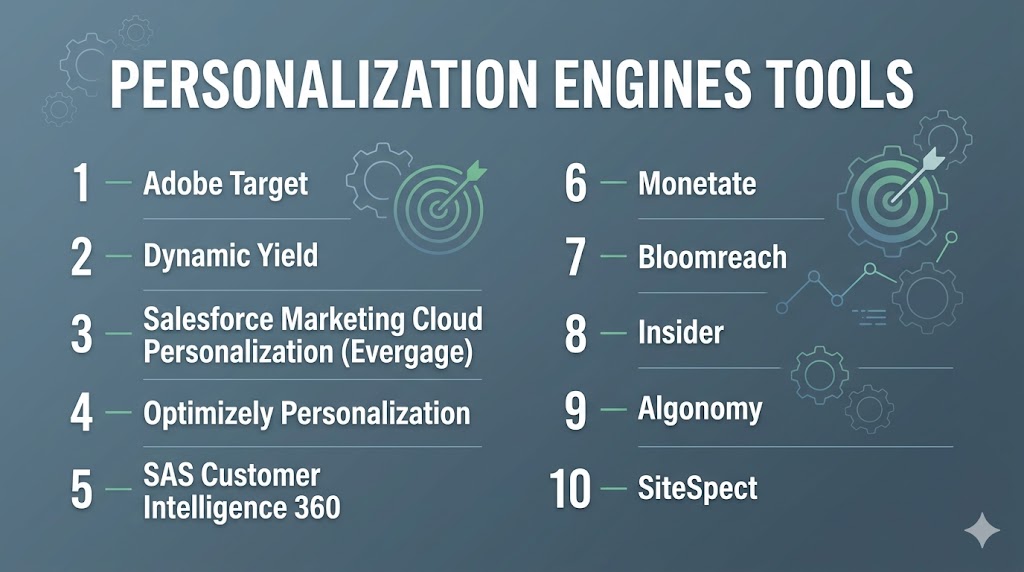
Top 10 Personalization Engines Tools
#1 — Adobe Target
Short description: An enterprise-grade personalization and experimentation platform designed for large-scale digital experiences.
Key Features
- AI-driven personalization
- A/B and multivariate testing
- Omnichannel experience delivery
- Advanced audience segmentation
- Real-time decisioning
- Integration with Adobe ecosystem
Pros
- Extremely powerful AI capabilities
- Enterprise-ready scalability
- Deep integrations
Cons
- Expensive
- Complex setup
Platforms / Deployment
Web / Mobile
Cloud
Security & Compliance
SOC 2, GDPR, enterprise SSO (commonly associated)
Integrations & Ecosystem
Deep integration with marketing and experience platforms.
- CRM systems
- Analytics tools
- APIs
- Adobe Experience Cloud
Support & Community
Strong enterprise support and documentation.
#2 — Dynamic Yield
Short description: A leading personalization platform focused on ecommerce and digital experience optimization.
Key Features
- Product recommendations
- Real-time personalization
- Behavioral targeting
- A/B testing
- Customer segmentation
- Omnichannel personalization
Pros
- Strong ecommerce capabilities
- Easy-to-use interface
- Real-time decisioning
Cons
- Pricing varies
- Requires data maturity
Platforms / Deployment
Web / Mobile
Cloud
Security & Compliance
Varies / Not publicly stated
Integrations & Ecosystem
- Ecommerce platforms
- APIs
- Marketing tools
Support & Community
Good enterprise support.
#3 — Salesforce Marketing Cloud Personalization (Evergage)
Short description: A personalization engine focused on real-time customer engagement and journey orchestration.
Key Features
- Real-time personalization
- Behavioral tracking
- AI recommendations
- Journey orchestration
- Segmentation
- Omnichannel delivery
Pros
- Strong CRM integration
- Real-time capabilities
- Scalable
Cons
- Complex setup
- Expensive
Platforms / Deployment
Web / Mobile
Cloud
Security & Compliance
Varies / Not publicly stated
Integrations & Ecosystem
- Salesforce ecosystem
- APIs
- Marketing tools
Support & Community
Enterprise-level support.
#4 — Optimizely Personalization
Short description: A personalization platform combining experimentation and content targeting.
Key Features
- Experimentation-first approach
- Personalization rules
- Feature flags
- Audience targeting
- AI optimization
- Analytics
Pros
- Strong experimentation capabilities
- Flexible platform
- Developer-friendly
Cons
- Learning curve
- Pricing varies
Platforms / Deployment
Web
Cloud
Security & Compliance
Varies / Not publicly stated
Integrations & Ecosystem
- Analytics tools
- CMS platforms
- APIs
Support & Community
Strong documentation.
#5 — SAS Customer Intelligence 360
Short description: A data-driven personalization platform focused on advanced analytics and customer insights.
Key Features
- Advanced analytics
- Customer journey mapping
- Real-time personalization
- AI-driven insights
- Omnichannel engagement
- Predictive modeling
Pros
- Powerful analytics
- Enterprise-grade
- Strong data capabilities
Cons
- Complex implementation
- Expensive
Platforms / Deployment
Web
Cloud
Security & Compliance
Varies / Not publicly stated
Integrations & Ecosystem
- Data platforms
- APIs
- Marketing tools
Support & Community
Enterprise support.
#6 — Monetate
Short description: A personalization engine focused on ecommerce and customer experience optimization.
Key Features
- Product recommendations
- AI personalization
- A/B testing
- Segmentation
- Real-time targeting
- Omnichannel delivery
Pros
- Strong retail focus
- Easy integration
- Good performance
Cons
- Limited outside ecommerce
- Pricing varies
Platforms / Deployment
Web
Cloud
Security & Compliance
Varies / Not publicly stated
Integrations & Ecosystem
- Ecommerce platforms
- APIs
- Marketing tools
Support & Community
Good support.
#7 — Bloomreach
Short description: A digital experience platform with strong personalization and AI-driven search capabilities.
Key Features
- AI-driven search and recommendations
- Customer segmentation
- Content personalization
- Omnichannel delivery
- Analytics
- Headless CMS integration
Pros
- Strong search + personalization combo
- Good for ecommerce
- Scalable
Cons
- Complex setup
- Pricing varies
Platforms / Deployment
Web
Cloud
Security & Compliance
Varies / Not publicly stated
Integrations & Ecosystem
- CMS platforms
- Ecommerce tools
- APIs
Support & Community
Good enterprise support.
#8 — Insider
Short description: A growth management platform with personalization, engagement, and marketing automation features.
Key Features
- AI personalization
- Customer journey orchestration
- Behavioral targeting
- Cross-channel messaging
- Predictive segmentation
- Real-time insights
Pros
- All-in-one platform
- Strong marketing automation
- Easy UI
Cons
- Limited developer flexibility
- Pricing varies
Platforms / Deployment
Web / Mobile
Cloud
Security & Compliance
Varies / Not publicly stated
Integrations & Ecosystem
- Marketing tools
- APIs
- CRM systems
Support & Community
Good support resources.
#9 — Algonomy
Short description: A retail-focused personalization platform specializing in recommendations and customer insights.
Key Features
- Product recommendations
- AI-driven insights
- Personalization
- Customer segmentation
- Retail analytics
- Omnichannel delivery
Pros
- Strong retail focus
- Good recommendation engine
- Scalable
Cons
- Limited non-retail use
- Pricing varies
Platforms / Deployment
Web
Cloud
Security & Compliance
Varies / Not publicly stated
Integrations & Ecosystem
- Ecommerce platforms
- APIs
Support & Community
Moderate support.
#10 — SiteSpect
Short description: A testing and personalization platform focused on performance and server-side experimentation.
Key Features
- Server-side personalization
- A/B testing
- Traffic segmentation
- Real-time analytics
- Omnichannel testing
- Experimentation tools
Pros
- No client-side performance issues
- Strong testing capabilities
- Reliable
Cons
- Requires technical expertise
- Higher cost
Platforms / Deployment
Web
Cloud
Security & Compliance
Varies / Not publicly stated
Integrations & Ecosystem
- Analytics tools
- APIs
- Marketing platforms
Support & Community
Enterprise support.
Comparison Table (Top 10)
| Tool Name | Best For | Platform(s) Supported | Deployment | Standout Feature | Public Rating |
|---|---|---|---|---|---|
| Adobe Target | Enterprise | Web/Mobile | Cloud | AI personalization | N/A |
| Dynamic Yield | Ecommerce | Web/Mobile | Cloud | Real-time recommendations | N/A |
| Salesforce Personalization | CRM-driven | Web/Mobile | Cloud | Journey orchestration | N/A |
| Optimizely | Experimentation | Web | Cloud | Testing + personalization | N/A |
| SAS CI 360 | Data-driven teams | Web | Cloud | Advanced analytics | N/A |
| Monetate | Retail | Web | Cloud | Product recommendations | N/A |
| Bloomreach | Commerce | Web | Cloud | Search + personalization | N/A |
| Insider | Growth teams | Web/Mobile | Cloud | Omnichannel engagement | N/A |
| Algonomy | Retail | Web | Cloud | AI recommendations | N/A |
| SiteSpect | Performance-focused | Web | Cloud | Server-side testing | N/A |
Evaluation & Scoring of Personalization Engines
| Tool Name | Core (25%) | Ease (15%) | Integrations (15%) | Security (10%) | Performance (10%) | Support (10%) | Value (15%) | Weighted Total |
|---|---|---|---|---|---|---|---|---|
| Adobe Target | 10 | 6 | 10 | 9 | 9 | 9 | 6 | 8.9 |
| Dynamic Yield | 9 | 8 | 8 | 8 | 9 | 8 | 7 | 8.4 |
| Salesforce | 9 | 7 | 10 | 8 | 9 | 9 | 6 | 8.6 |
| Optimizely | 9 | 7 | 9 | 8 | 8 | 8 | 7 | 8.3 |
| SAS CI 360 | 9 | 6 | 9 | 9 | 8 | 8 | 6 | 8.2 |
| Monetate | 8 | 8 | 7 | 7 | 8 | 7 | 8 | 7.9 |
| Bloomreach | 9 | 7 | 8 | 8 | 8 | 8 | 7 | 8.2 |
| Insider | 8 | 9 | 7 | 7 | 8 | 7 | 8 | 8.0 |
| Algonomy | 8 | 7 | 7 | 7 | 8 | 7 | 8 | 7.8 |
| SiteSpect | 9 | 6 | 7 | 9 | 9 | 8 | 6 | 8.1 |
How to interpret scores:
- Scores are relative comparisons across tools
- Enterprise tools rank higher in features and scalability
- Simpler tools rank higher in ease of use
- Value scores reflect cost vs capabilities
Which Personalization Engine Is Right for You?
Solo / Freelancer
- Best: Insider (simple UI), basic personalization tools
- Focus on ease and affordability
SMB
- Best: Dynamic Yield, Monetate
- Balance between usability and features
Mid-Market
- Best: Bloomreach, Optimizely
- Focus on experimentation + personalization
Enterprise
- Best: Adobe Target, Salesforce Personalization, SAS
- Advanced AI, scalability, and integrations
Budget vs Premium
- Budget: Insider, Monetate
- Premium: Adobe Target, Salesforce
Feature Depth vs Ease of Use
- Advanced: Adobe, SAS
- Easy: Insider, Dynamic Yield
Integrations & Scalability
- Best: Salesforce, Adobe, Optimizely
Security & Compliance Needs
- High: Enterprise platforms
- Standard: SMB-focused tools
Frequently Asked Questions (FAQs)
What is a personalization engine?
It is software that delivers customized user experiences using data and AI.
How does personalization work?
It analyzes user behavior and delivers relevant content in real time.
Is personalization important?
Yes, it improves engagement, conversions, and retention.
Do personalization tools use AI?
Most modern tools use AI and machine learning.
Are these tools expensive?
Pricing varies widely depending on features and scale.
Can personalization improve sales?
Yes, by showing relevant products and offers.
Is coding required?
Some tools are no-code, others require developer support.
Can I use personalization across channels?
Yes, most tools support web, mobile, and email.
Are these tools secure?
Most include security features, but varies by vendor.
What is the biggest challenge?
Data integration and maintaining accurate user profiles.
Conclusion
Personalization Engines have become essential for delivering modern digital experiences. They help businesses move from generic interactions to highly relevant, user-specific journeys that drive engagement and revenue.
