Introduction
Pathology Laboratory Information Systems are specialized software platforms used to manage laboratory workflows, sample tracking, diagnostics reporting, and data management across pathology labs. These systems act as the digital backbone of laboratories, ensuring accurate handling of specimens, efficient processing, and timely reporting of results.
As diagnostic volumes increase and laboratories move toward automation, these systems are becoming essential for improving operational efficiency and reducing errors. They integrate with hospital systems, diagnostic devices, and reporting tools to enable seamless workflows across departments.
Real-world use cases include:
- Sample tracking and test management in pathology labs
- Diagnostic reporting and result distribution
- Integration with lab instruments and analyzers
- Billing and lab operations management
- Multi-location laboratory coordination
What buyers should evaluate:
- Sample tracking accuracy and workflow automation
- Integration with lab instruments and healthcare systems
- Reporting and analytics capabilities
- Ease of use for lab technicians
- Security and compliance readiness
- Scalability for high sample volumes
- Deployment flexibility
- Cost and support services
Best for: Hospitals, diagnostic laboratories, pathology labs, and healthcare networks managing high volumes of lab tests.
Not ideal for: Small clinics with minimal lab operations or organizations without laboratory infrastructure.
Key Trends in Pathology Laboratory Information Systems
- Growth of cloud-based LIS and LIMS platforms
- Integration with AI-assisted diagnostic tools
- Automation of lab workflows and reporting
- Increased interoperability with healthcare systems
- Real-time data tracking and analytics
- Adoption of mobile access for lab staff
- Stronger focus on data security and compliance
- Integration with laboratory instruments and IoT devices
- Expansion of multi-location lab management
- Demand for scalable and flexible architectures
How We Selected These Tools
- Evaluated adoption across laboratories and healthcare providers
- Assessed feature completeness and workflow capabilities
- Considered reliability and performance
- Reviewed security and compliance readiness
- Analyzed integration with lab instruments and EHR systems
- Compared usability for lab technicians
- Evaluated scalability for large lab operations
- Considered vendor ecosystem and support quality
- Assessed suitability across SMB, mid-market, and enterprise
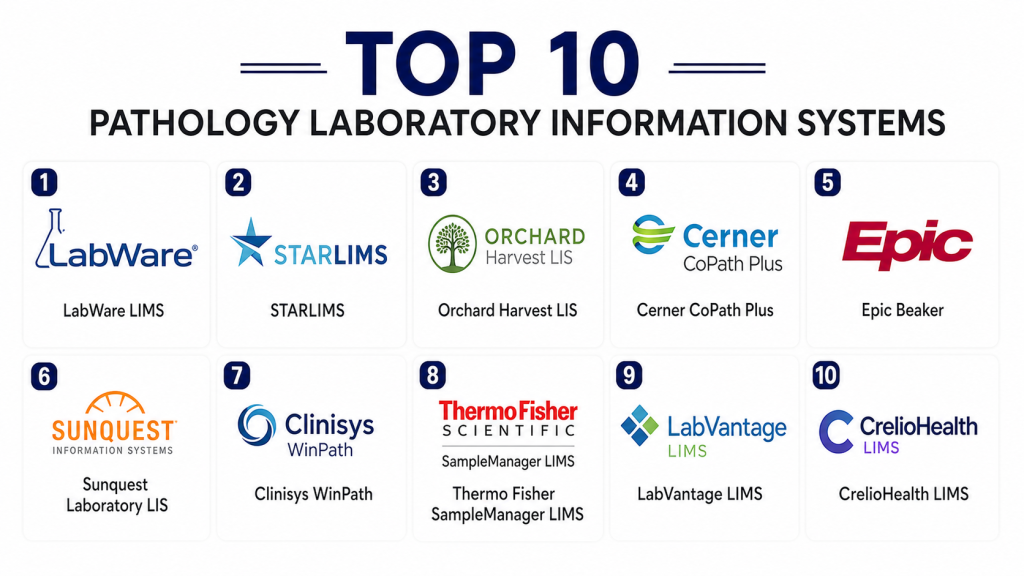
Top 10 Pathology Laboratory Information Systems Tools
#1 — LabWare LIMS
Short description: A widely used laboratory information management system designed for complex lab environments. It supports advanced workflows, sample tracking, and data management. Suitable for large laboratories and enterprises.
Key Features
- Sample tracking
- Workflow automation
- Data management
- Reporting tools
- Integration support
Pros
- Highly customizable
- Scalable
- Reliable
- Strong functionality
Cons
- Complex setup
- Requires training
- Expensive
Platforms / Deployment
- Web / Cloud / On-premise
Security & Compliance
- Not publicly stated
Integrations & Ecosystem
Supports integration with laboratory instruments and healthcare systems for efficient workflows.
- Lab instruments
- EHR systems
- APIs
Support & Community
Strong enterprise support and documentation.
#2 — STARLIMS
Short description: A comprehensive LIMS platform designed for laboratories requiring workflow automation and regulatory compliance. It is widely used across industries including healthcare.
Key Features
- Workflow automation
- Sample management
- Reporting
- Compliance tools
- Data analytics
Pros
- Strong compliance features
- Scalable
- Reliable
- Flexible
Cons
- Complex implementation
- Cost considerations
- Requires expertise
Platforms / Deployment
- Cloud / Web
Security & Compliance
- Not publicly stated
Integrations & Ecosystem
Integrates with lab systems and enterprise tools for streamlined workflows.
- Lab instruments
- EHR systems
- APIs
Support & Community
Enterprise-level support.
#3 — Orchard Harvest LIS
Short description: A user-friendly LIS designed for laboratories seeking ease of use and efficient workflow management. Suitable for small to mid-sized labs.
Key Features
- Sample tracking
- Reporting tools
- Workflow management
- Integration support
- Billing
Pros
- Easy to use
- Good for smaller labs
- Reliable
- Affordable
Cons
- Limited scalability
- Basic features
- Fewer integrations
Platforms / Deployment
- Web / Cloud
Security & Compliance
- Not publicly stated
Integrations & Ecosystem
Supports integration with healthcare systems and lab tools.
- Lab instruments
- Billing systems
Support & Community
Responsive support for smaller organizations.
#4 — Cerner CoPath Plus
Short description: A pathology-focused LIS designed for hospitals and healthcare systems. It integrates with Cerner ecosystem and supports pathology workflows.
Key Features
- Pathology workflow management
- Reporting
- Integration
- Data management
- Scheduling
Pros
- Strong integration
- Reliable
- Scalable
- Enterprise-ready
Cons
- Expensive
- Complex setup
- Limited flexibility
Platforms / Deployment
- Web / Cloud
Security & Compliance
- Not publicly stated
Integrations & Ecosystem
Integrates with healthcare systems and lab tools.
- EHR systems
- Lab instruments
Support & Community
Strong enterprise support.
#5 — Epic Beaker
Short description: A comprehensive LIS integrated with Epic EHR systems. It supports lab workflows, reporting, and data management for large healthcare organizations.
Key Features
- Lab workflow management
- Reporting
- Integration with EHR
- Data analytics
- Scheduling
Pros
- Deep integration
- Scalable
- Reliable
- Comprehensive
Cons
- High cost
- Complex implementation
- Requires training
Platforms / Deployment
- Web / Cloud
Security & Compliance
- Not publicly stated
Integrations & Ecosystem
Provides seamless integration within healthcare ecosystems.
- EHR systems
- Lab instruments
Support & Community
Enterprise-level support.
#6 — Sunquest Laboratory LIS
Short description: A widely used LIS platform designed for hospitals and diagnostic labs. It offers workflow automation and integration capabilities.
Key Features
- Workflow automation
- Sample tracking
- Reporting
- Integration
- Data management
Pros
- Reliable
- Scalable
- Strong integration
- Trusted
Cons
- Cost considerations
- Complex setup
- Requires training
Platforms / Deployment
- Cloud / On-premise
Security & Compliance
- Not publicly stated
Integrations & Ecosystem
Supports integration with lab systems and healthcare tools.
- Lab instruments
- EHR systems
Support & Community
Strong enterprise support.
#7 — Clinisys WinPath
Short description: A laboratory information system designed for pathology labs. It focuses on workflow efficiency and sample tracking.
Key Features
- Sample tracking
- Workflow tools
- Reporting
- Integration
- Data management
Pros
- Reliable
- Good workflow management
- Scalable
- Efficient
Cons
- Limited advanced features
- Integration complexity
- Cost considerations
Platforms / Deployment
- Web / Cloud
Security & Compliance
- Not publicly stated
Integrations & Ecosystem
Integrates with lab systems and healthcare platforms.
- Lab instruments
- EHR systems
Support & Community
Reliable support services.
#8 — Thermo Fisher SampleManager LIMS
Short description: A powerful LIMS platform designed for complex laboratory environments. It offers advanced data management and workflow automation.
Key Features
- Sample management
- Workflow automation
- Data analytics
- Integration
- Reporting
Pros
- Advanced capabilities
- Scalable
- Reliable
- Flexible
Cons
- Complex implementation
- Expensive
- Requires expertise
Platforms / Deployment
- Cloud / On-premise
Security & Compliance
- Not publicly stated
Integrations & Ecosystem
Supports integration with lab systems and enterprise tools.
- Lab instruments
- APIs
Support & Community
Strong enterprise support.
#9 — LabVantage LIMS
Short description: A flexible LIMS platform designed for laboratory automation and data management. Suitable for various lab environments including pathology.
Key Features
- Workflow automation
- Sample tracking
- Reporting
- Integration
- Data management
Pros
- Flexible
- Scalable
- Reliable
- Good customization
Cons
- Requires expertise
- Complex setup
- Cost considerations
Platforms / Deployment
- Cloud / On-premise
Security & Compliance
- Not publicly stated
Integrations & Ecosystem
Integrates with lab systems and enterprise tools.
- Lab instruments
- APIs
Support & Community
Enterprise support.
#10 — CrelioHealth LIMS
Short description: A modern cloud-based LIMS designed for diagnostic labs and pathology centers. It focuses on automation, reporting, and ease of use.
Key Features
- Sample tracking
- Reporting
- Workflow automation
- Billing
- Cloud access
Pros
- Easy to use
- Affordable
- Cloud-based
- Quick deployment
Cons
- Limited advanced features
- Smaller ecosystem
- Integration limitations
Platforms / Deployment
- Web / Cloud
Security & Compliance
- Not publicly stated
Integrations & Ecosystem
Supports integration with lab systems and billing tools.
- Lab instruments
- Billing systems
Support & Community
Good support for smaller labs.
Comparison Table Top 10
| Tool Name | Best For | Platform Supported | Deployment | Standout Feature | Public Rating |
|---|---|---|---|---|---|
| LabWare | Enterprise labs | Web | Hybrid | Custom workflows | N/A |
| STARLIMS | Compliance-heavy labs | Web | Cloud | Regulatory features | N/A |
| Orchard | SMB labs | Web | Cloud | Ease of use | N/A |
| Cerner CoPath | Hospitals | Web | Cloud | Integration | N/A |
| Epic Beaker | Enterprise healthcare | Web | Cloud | Deep EHR integration | N/A |
| Sunquest | Hospitals | Web | Hybrid | Reliability | N/A |
| Clinisys | Pathology labs | Web | Cloud | Workflow efficiency | N/A |
| SampleManager | Advanced labs | Web | Hybrid | Data management | N/A |
| LabVantage | Flexible labs | Web | Hybrid | Customization | N/A |
| CrelioHealth | SMB labs | Web | Cloud | Affordability | N/A |
Evaluation and Scoring of Pathology Laboratory Information Systems
| Tool Name | Core | Ease | Integrations | Security | Performance | Support | Value | Weighted Total |
|---|---|---|---|---|---|---|---|---|
| LabWare | 9 | 7 | 8 | 8 | 9 | 9 | 6 | 8.1 |
| STARLIMS | 8 | 7 | 8 | 8 | 8 | 8 | 6 | 7.9 |
| Orchard | 7 | 8 | 6 | 7 | 7 | 7 | 8 | 7.4 |
| Cerner | 8 | 7 | 8 | 8 | 8 | 8 | 6 | 7.9 |
| Epic | 9 | 7 | 9 | 8 | 9 | 9 | 6 | 8.3 |
| Sunquest | 8 | 7 | 8 | 7 | 8 | 8 | 6 | 7.8 |
| Clinisys | 7 | 7 | 7 | 7 | 7 | 7 | 7 | 7.2 |
| SampleManager | 9 | 6 | 8 | 7 | 9 | 8 | 6 | 7.9 |
| LabVantage | 8 | 7 | 8 | 7 | 8 | 8 | 6 | 7.8 |
| CrelioHealth | 7 | 8 | 6 | 7 | 7 | 7 | 8 | 7.4 |
These scores provide a comparative view of LIS platforms across features, usability, and scalability. Enterprise tools score higher in performance and integration, while SMB-focused tools offer better ease of use and value. Buyers should align scoring priorities with their lab requirements.
Which Pathology Laboratory Information Systems Tool Is Right for You
Solo / Freelancer
Not applicable as LIS systems are designed for laboratory environments.
SMB
CrelioHealth and Orchard Harvest LIS are suitable for smaller labs.
Mid-Market
LabVantage and Clinisys provide balanced features and scalability.
Enterprise
LabWare, Epic Beaker, and STARLIMS are ideal for large-scale deployments.
Budget vs Premium
Budget tools offer core lab management features, while premium platforms provide advanced analytics and integrations.
Feature Depth vs Ease of Use
Advanced systems require training but offer more capabilities, while simpler systems prioritize usability.
Integrations and Scalability
Choose systems with strong integration with lab instruments and healthcare platforms.
Security and Compliance Needs
Healthcare organizations should prioritize strong data protection and compliance readiness.
Frequently Asked Questions FAQs
1. What is a Laboratory Information System
A LIS is software used to manage lab workflows such as sample tracking, reporting, and data management. It helps improve efficiency and accuracy in labs. Healthcare providers rely on it for handling diagnostic data. It is essential for modern laboratories.
2. How much do LIS systems cost
Costs vary depending on features and organization size. Enterprise systems are more expensive, while smaller solutions are affordable. Pricing may include setup and maintenance. Evaluating total cost is important.
3. Are LIS systems secure
LIS platforms include security features like encryption and access controls. Security varies by vendor. Organizations should verify compliance. Data protection is critical.
4. Can LIS integrate with lab instruments
Yes, LIS systems are designed to integrate with lab instruments. This allows automated data collection and workflow efficiency. Integration is a key feature. It improves lab performance.
5. What devices are supported
LIS systems support integration with various lab instruments. Compatibility depends on system design. Most follow standard protocols. This ensures broad support.
6. How long does implementation take
Implementation can take weeks to months depending on complexity. Larger systems require more time. Training also impacts timelines. Planning is important.
7. Who uses LIS systems
Hospitals, diagnostic labs, and pathology centers use LIS platforms. They manage lab operations efficiently. Adoption is widespread. They are essential tools.
8. Can LIS be cloud-based
Yes, many LIS platforms offer cloud deployment. Cloud solutions provide scalability and remote access. They reduce infrastructure costs. Adoption is increasing.
9. What are common challenges
Challenges include integration complexity, cost, and training. Managing large data volumes is also difficult. Proper planning helps. Addressing issues improves outcomes.
10. Can small labs use LIS systems
Yes, smaller labs can use lightweight LIS platforms. These systems are designed for affordability and ease of use. They provide essential features. This makes them accessible.
Conclusion
Pathology Laboratory Information Systems play a crucial role in modern healthcare by enabling efficient management of lab workflows and diagnostic data. From enterprise platforms like LabWare and Epic Beaker to flexible solutions like CrelioHealth and Orchard, organizations have multiple options based on their needs. Advanced systems offer scalability and integration, while simpler tools focus on ease of use and affordability. Security, workflow efficiency, and integration remain key factors when selecting a platform. The best approach is to evaluate a few tools, run pilot implementations, and ensure the system aligns with operational and clinical requirements before making a final decision

A useful and well-organized comparison that clearly explains the key features of pathology laboratory information systems, making it easier to evaluate the right solution for laboratory workflows.