Introduction
Merchant Acquiring Platforms are the backbone of digital payments, enabling businesses to accept card payments, digital wallets, and online transactions securely. These platforms connect merchants with card networks, issuing banks, and payment processors to authorize and settle transactions.
In simple terms, when a customer pays using a card or digital method, the acquiring platform ensures the money is transferred safely to the merchant’s account. These systems manage authorization, settlement, reconciliation, and fraud prevention at scale.
Today, as commerce becomes global and digital-first, acquiring platforms play a critical role in ensuring high transaction success rates, compliance, and seamless payment experiences across channels.
Common use cases include:
- Online and in-store payment acceptance
- Cross-border transaction processing
- Merchant onboarding and management
- Fraud detection and chargeback handling
- Settlement and reconciliation automation
Key evaluation criteria:
- Transaction success rates and uptime
- Multi-channel payment support
- Global coverage and multi-currency support
- Security and compliance features
- Settlement speed and reporting
- Integration capabilities
- Scalability and performance
- Merchant onboarding efficiency
Best for: Banks, fintech companies, marketplaces, and enterprises handling large payment volumes.
Not ideal for: Small merchants using basic payment gateways with minimal complexity.
Key Trends in Merchant Acquiring Platforms
- Cloud-based acquiring replacing legacy infrastructure
- AI-driven fraud detection and risk scoring
- Real-time settlements and faster payouts
- Multi-channel payment support POS, mobile, and web
- API-first acquiring platforms for fintech integration
- Growth of embedded finance and platform banking
- Expansion of cross-border acquiring
- Tokenization and advanced payment security
- Automated merchant onboarding and compliance
- Integration with orchestration and gateway layers
How We Selected These Tools
- Global adoption across financial institutions
- Strong acquiring and processing capabilities
- Proven scalability and reliability
- Security and compliance readiness
- Integration ecosystem strength
- Multi-channel payment support
- Vendor reputation and innovation
- Performance in high-volume environments
- Flexibility across industries
- Merchant lifecycle management features
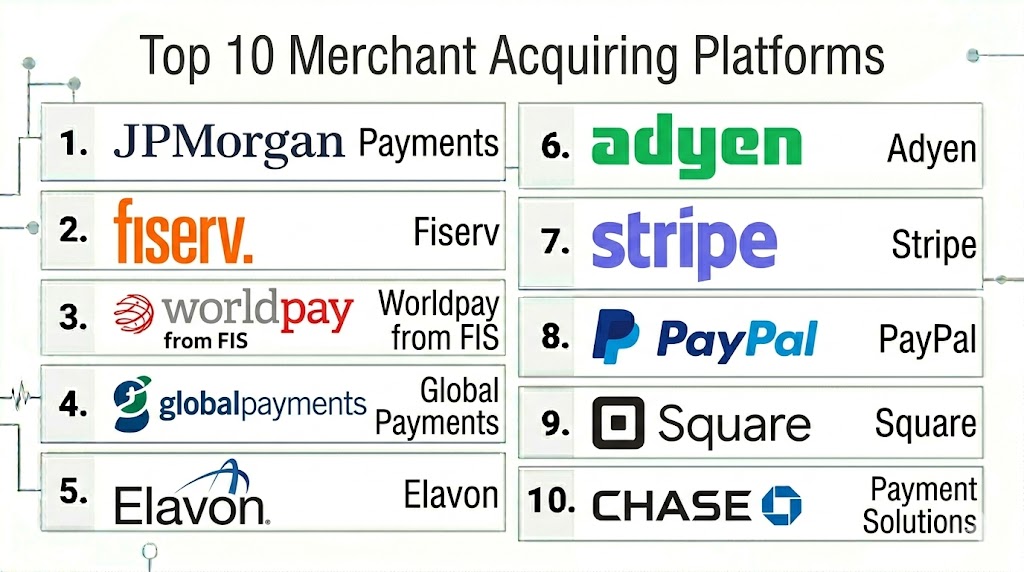
Top 10 Merchant Acquiring Platforms Tools
#1 — JPMorgan Payments
Short description:
A global acquiring platform offering enterprise-grade payment processing and treasury services. It supports multi-currency transactions and large-scale merchant operations.
Key Features
- Global acquiring network
- Multi-currency processing
- Fraud detection tools
- Settlement automation
- Analytics dashboards
- API integrations
Pros
- Strong global reach
- Enterprise-grade reliability
- Comprehensive services
- High scalability
Cons
- Complex onboarding
- High cost
- Enterprise-focused
- Limited SMB flexibility
Platforms / Deployment
Cloud / Hybrid
Security & Compliance
Encryption, RBAC. Compliance not publicly stated.
Integrations & Ecosystem
Supports enterprise integrations including banking systems, payment gateways, and APIs.
Support & Community
Enterprise-level support with dedicated teams.
#2 — Fiserv
Short description:
A widely used acquiring platform that provides payment processing, merchant management, and settlement capabilities.
Key Features
- Payment processing
- Merchant onboarding
- Settlement management
- Risk monitoring
- Reporting tools
Pros
- Reliable platform
- Strong adoption
- Scalable
- Good compliance support
Cons
- Complex implementation
- Customization effort
- Learning curve
- Pricing not transparent
Platforms / Deployment
Cloud / Hybrid
Security & Compliance
Encryption, RBAC. Compliance not publicly stated.
Integrations & Ecosystem
Integrates with banking systems, CRM tools, and payment networks.
Support & Community
Strong enterprise support.
#3 — Worldpay
Short description:
A global acquiring platform offering omni-channel payment acceptance and advanced analytics for enterprises.
Key Features
- Omni-channel payments
- Global acquiring
- Fraud management
- Analytics tools
- Payment routing
Pros
- Global coverage
- High reliability
- Scalable
- Strong analytics
Cons
- Complex setup
- High cost
- Integration effort
- Enterprise focus
Platforms / Deployment
Cloud
Security & Compliance
Encryption, RBAC. Compliance not publicly stated.
Integrations & Ecosystem
Supports integrations with payment gateways, banking systems, and APIs.
Support & Community
Enterprise-level support.
#4 — Global Payments
Short description:
A comprehensive acquiring platform supporting merchant services, payment processing, and analytics.
Key Features
- Payment processing
- Merchant management
- Fraud detection
- Reporting tools
- Integration capabilities
Pros
- Strong global presence
- Reliable
- Scalable
- Good analytics
Cons
- Pricing not transparent
- Integration complexity
- Customization effort
- Learning curve
Platforms / Deployment
Cloud
Security & Compliance
Encryption, RBAC. Compliance not publicly stated.
Integrations & Ecosystem
Supports integrations with CRM systems, payment tools, and APIs.
Support & Community
Global support network.
#5 — Elavon
Short description:
A merchant acquiring platform offering secure payment processing and global acquiring services.
Key Features
- Multi-channel payments
- Merchant onboarding
- Fraud detection
- Reporting tools
- Settlement management
Pros
- Strong banking integration
- Reliable
- Scalable
- Good support
Cons
- Limited flexibility
- Pricing not transparent
- Integration effort
- Customization limits
Platforms / Deployment
Cloud
Security & Compliance
Encryption, RBAC. Compliance not publicly stated.
Integrations & Ecosystem
Supports integrations with banking systems and APIs.
Support & Community
Enterprise support.
#6 — Adyen
Short description:
A unified platform combining acquiring, gateway, and processing capabilities for global businesses.
Key Features
- Global acquiring
- Payment processing
- Fraud prevention
- Analytics dashboards
- Multi-channel payments
Pros
- Unified platform
- Global reach
- High reliability
- Advanced analytics
Cons
- Enterprise-focused
- Complex onboarding
- High cost
- Integration effort
Platforms / Deployment
Cloud
Security & Compliance
Encryption, PCI compliance.
Integrations & Ecosystem
Supports integrations with e-commerce platforms and APIs.
Support & Community
Enterprise support.
#7 — Stripe
Short description:
A developer-first platform offering acquiring capabilities with powerful APIs and global payment support.
Key Features
- Payment processing
- API-first architecture
- Subscription billing
- Fraud detection
- Analytics
Pros
- Developer-friendly
- Flexible APIs
- Scalable
- Global reach
Cons
- Requires technical expertise
- Fees can add up
- Limited offline support
- Complex setup
Platforms / Deployment
Cloud
Security & Compliance
PCI compliance, encryption.
Integrations & Ecosystem
Supports integrations with SaaS platforms, APIs, and mobile apps.
Support & Community
Strong developer ecosystem.
#8 — PayPal Commerce Platform
Short description:
A global platform enabling easy payment acceptance with strong consumer trust.
Key Features
- Online payments
- One-click checkout
- Fraud protection
- Multi-currency support
- Analytics
Pros
- Easy setup
- High trust
- Global acceptance
- Fast onboarding
Cons
- Higher fees
- Limited customization
- Account restrictions
- Dispute delays
Platforms / Deployment
Cloud
Security & Compliance
Encryption, fraud monitoring.
Integrations & Ecosystem
Supports integrations with e-commerce and SaaS platforms.
Support & Community
Large global support network.
#9 — Square
Short description:
A payment platform designed for SMBs with integrated POS and acquiring capabilities.
Key Features
- POS payments
- Online checkout
- Reporting tools
- Mobile payments
- Analytics
Pros
- Easy to use
- Quick setup
- Good for SMBs
- Integrated system
Cons
- Limited enterprise features
- Regional limitations
- Less customization
- Higher fees
Platforms / Deployment
Cloud
Security & Compliance
Encryption, PCI compliance.
Integrations & Ecosystem
Supports retail systems, APIs, and accounting tools.
Support & Community
Strong SMB support.
#10 — Finaro
Short description:
A global acquiring bank offering payment processing and cross-border transaction capabilities.
Key Features
- Payment processing
- Cross-border acquiring
- Fraud detection
- Merchant management
- Analytics
Pros
- Strong global reach
- Scalable
- Reliable
- Good risk management
Cons
- Complex onboarding
- Pricing not transparent
- Integration effort
- Enterprise focus
Platforms / Deployment
Cloud
Security & Compliance
Encryption, RBAC. Compliance not publicly stated.
Integrations & Ecosystem
Supports integrations with payment systems and APIs.
Support & Community
Enterprise support.
Comparison Table
| Tool | Best For | Deployment | Standout Feature |
|---|---|---|---|
| JPMorgan | Enterprise | Hybrid | Global acquiring |
| Fiserv | Banks | Hybrid | Processing scale |
| Worldpay | Global commerce | Cloud | Omni-channel |
| Global Payments | Enterprises | Cloud | Merchant services |
| Elavon | Banking | Cloud | Integration |
| Adyen | Unified commerce | Cloud | All-in-one |
| Stripe | Developers | Cloud | API-first |
| PayPal | SMB | Cloud | Easy checkout |
| Square | Retail | Cloud | POS integration |
| Finaro | Cross-border | Cloud | Global acquiring |
Evaluation & Scoring
| Tool | Core | Ease | Integration | Security | Performance | Support | Value | Total |
|---|---|---|---|---|---|---|---|---|
| JPMorgan | 9 | 6 | 9 | 9 | 9 | 9 | 6 | 8.3 |
| Fiserv | 9 | 6 | 9 | 9 | 9 | 9 | 6 | 8.3 |
| Worldpay | 9 | 6 | 9 | 9 | 9 | 9 | 6 | 8.3 |
| Adyen | 9 | 7 | 9 | 9 | 9 | 9 | 6 | 8.4 |
| Stripe | 8 | 7 | 9 | 9 | 8 | 8 | 7 | 8.0 |
Scores are comparative and help evaluate strengths across platforms. The best choice depends on business size, geography, and transaction volume.
Which Merchant Acquiring Platform Is Right for You
Solo / Freelancer
Basic gateways are enough.
SMB
Square and PayPal are ideal.
Mid-Market
Stripe and Global Payments fit well.
Enterprise
Adyen, JPMorgan, and Worldpay are best.
Budget vs Premium
Budget tools are simple, premium tools offer global scale.
Feature Depth vs Ease
Enterprise tools offer depth, SMB tools offer simplicity.
Integrations & Scalability
API-first platforms scale better.
Security Needs
Enterprise tools provide stronger compliance.
Frequently Asked Questions
1. What is merchant acquiring
Merchant acquiring is the process of enabling businesses to accept card payments and receive funds from customers through banks and payment networks.
It involves authorization, settlement, and reconciliation processes handled by acquiring platforms.
These systems ensure that payments are processed securely and efficiently across multiple channels.
They are essential for both online and offline payment acceptance.
Without acquiring infrastructure, digital commerce cannot function at scale.
2. How does acquiring work
When a customer makes a payment, the acquiring platform sends the transaction to the card network and issuing bank for approval.
Once approved, the transaction is processed and funds are transferred to the merchant account.
Settlement happens after reconciliation and batching processes.
This entire flow is completed within seconds for authorization and a few days for settlement.
The platform ensures accuracy, security, and compliance at each step.
3. What is the difference between gateway and acquirer
A payment gateway captures and encrypts payment data from customers.
An acquirer processes the transaction and ensures funds are transferred.
Both work together but serve different roles in the payment flow.
Gateways are customer-facing, while acquirers handle backend financial processing.
Many modern platforms combine both functionalities.
4. Are merchant acquiring platforms secure
Yes, they use advanced encryption, tokenization, and compliance standards such as PCI.
They also include fraud detection systems and risk monitoring tools.
Security depends on the vendor and implementation quality.
Enterprises should evaluate compliance requirements carefully.
Regular audits and monitoring are critical for maintaining security.
5. Who needs merchant acquiring platforms
Banks, fintech companies, and large merchants require these platforms to handle payments at scale.
They are essential for businesses operating globally or across multiple channels.
SMBs may rely on simpler payment gateways instead.
High-volume businesses benefit the most from acquiring systems.
They enable efficient and scalable payment operations.
6. Can small businesses use acquiring platforms
Small businesses typically do not need full acquiring platforms due to complexity.
They usually rely on payment gateways or aggregators instead.
However, growing businesses may adopt acquiring solutions as they scale.
Cost and implementation effort are key considerations.
Choosing the right solution depends on transaction volume and growth plans.
7. How long does implementation take
Implementation depends on complexity and integration requirements.
Enterprise platforms can take several months to deploy fully.
Cloud-based systems reduce deployment time significantly.
Customization and compliance checks can extend timelines.
Proper planning ensures smoother implementation.
8. Do these platforms support global payments
Yes, most acquiring platforms support multi-currency and cross-border payments.
They connect with global card networks and local payment systems.
This enables businesses to expand internationally.
Global coverage varies by provider.
Enterprises should verify regional capabilities before choosing.
9. What are common mistakes
Choosing a platform without considering scalability is a common mistake.
Ignoring integration complexity can also create challenges.
Not evaluating compliance requirements can lead to risks.
Businesses often underestimate implementation effort.
A structured evaluation process helps avoid these issues.
10. Can acquiring platforms reduce costs
Yes, they optimize transaction routing and reduce processing fees.
They also improve success rates and reduce failed transactions.
Automation reduces operational costs.
Better analytics help optimize payment strategies.
Overall, they improve efficiency and profitability.
Conclusion
Merchant Acquiring Platforms are essential for enabling secure, scalable, and efficient payment processing in today’s digital economy. They connect merchants, banks, and payment networks to ensure seamless transaction flow across channels and geographies. From enterprise-grade platforms like JPMorgan Payments and Adyen to flexible solutions like Stripe and Square, businesses have a wide range of options depending on their scale and requirements. The right platform depends on transaction volume, global reach, and integration needs. Organizations should prioritize reliability, compliance, and scalability while evaluating solutions. A practical approach is to shortlist a few platforms, test performance in real-world scenarios, and validate integration capabilities before making a final decision.
