Introduction
Algorithmic Trading Platforms are software systems that allow traders and institutions to design, test, and execute trading strategies automatically using predefined rules, mathematical models, and market data. Instead of manual trading, these platforms enable high-speed, data-driven decision-making with minimal human intervention.
In modern financial markets, speed, accuracy, and scalability are critical. Algorithmic trading helps eliminate emotional bias, optimize execution timing, and process large volumes of market data in real time. With the rise of APIs, cloud computing, and AI-driven strategies, algorithmic trading is now accessible not only to hedge funds and institutions but also to independent traders and developers.
Common use cases include:
- Automated trade execution
- Quantitative strategy development
- Backtesting and simulation
- High-frequency trading
- Portfolio rebalancing
Key evaluation criteria:
- Strategy development tools and flexibility
- Backtesting accuracy and historical data access
- Execution speed and latency
- Integration with brokers and exchanges
- Programming language support
- Risk management features
- Ease of use
- Scalability
- Cost and pricing model
Best for: Quant traders, hedge funds, developers, financial institutions, and advanced retail traders looking to automate trading strategies.
Not ideal for: Beginners with no trading or programming knowledge, or users who prefer manual discretionary trading.
Key Trends in Algorithmic Trading Platforms
- AI and machine learning-based trading strategies
- Cloud-based algorithm deployment
- Low-latency execution infrastructure
- API-first trading ecosystems
- Integration with real-time market data platforms
- Democratization of algo trading for retail users
- Advanced backtesting and simulation engines
- Increased regulatory oversight and compliance features
- Multi-asset and multi-exchange trading capabilities
- No-code and low-code strategy builders
How We Selected These Tools
- Industry adoption and credibility
- Strategy development and backtesting capabilities
- Execution performance and reliability
- Integration with brokers and exchanges
- Developer ecosystem and API support
- Scalability across user segments
- Platform usability and learning curve
- Security and compliance features
- Overall value for traders and institutions
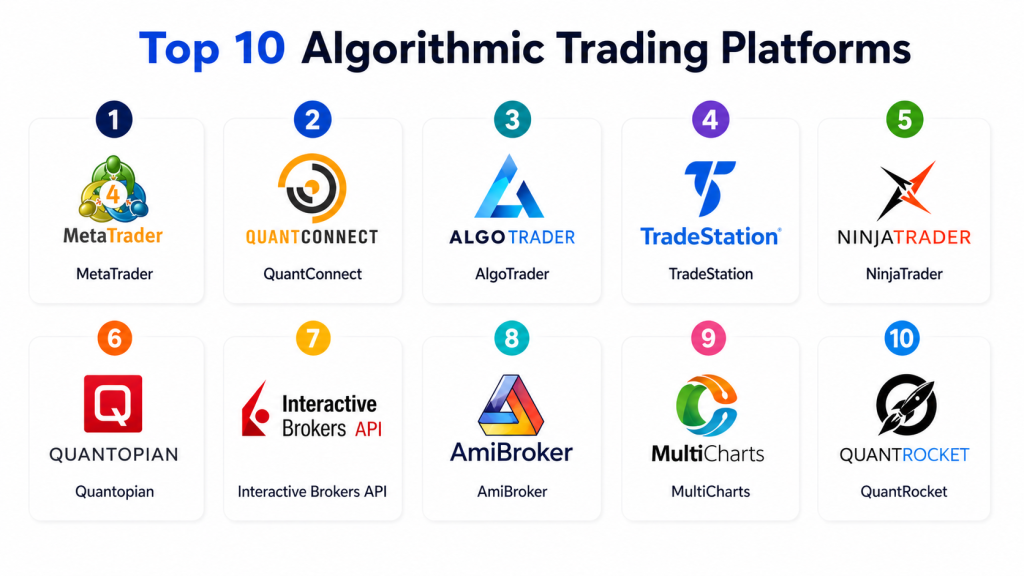
Top 10 Algorithmic Trading Platforms
#1 — MetaTrader 5
Short description: A widely used trading platform offering algorithmic trading through Expert Advisors, supporting multiple asset classes and advanced charting tools.
Key Features
- Automated trading bots
- Strategy backtesting
- Multi-asset trading
- Advanced charting
- Custom indicators
Pros
- Large user base
- Extensive community
- Strong automation features
Cons
- Learning curve
- Limited institutional features
- Broker dependency
Platforms / Deployment
- Windows / macOS / Web / Mobile
- Cloud
Security & Compliance
- MFA
- Encryption
- Audit logs
Integrations & Ecosystem
- Broker integrations
- APIs
- Plugins
Support & Community
Very large global community.
#2 — QuantConnect
Short description: A cloud-based algorithmic trading platform designed for quantitative developers, offering powerful backtesting and live trading capabilities.
Key Features
- Cloud-based backtesting
- Multi-language support
- Data libraries
- Live trading
- Strategy deployment
Pros
- Developer-friendly
- Strong backtesting engine
- Scalable
Cons
- Requires coding skills
- Limited beginner support
- Pricing varies
Platforms / Deployment
- Web
- Cloud
Security & Compliance
- Not publicly stated
Integrations & Ecosystem
- APIs
- Broker integrations
- Data feeds
Support & Community
Active developer community.
#3 — AlgoTrader
Short description: An institutional-grade algorithmic trading platform offering strategy automation, execution, and risk management.
Key Features
- Strategy automation
- Multi-asset trading
- Risk management
- Backtesting
- Execution tools
Pros
- Enterprise capabilities
- Strong execution tools
- Flexible
Cons
- Expensive
- Complex setup
- Enterprise-focused
Platforms / Deployment
- Web / Linux
- Cloud / Self-hosted
Security & Compliance
- Enterprise-grade controls
Integrations & Ecosystem
- APIs
- Broker systems
- Data feeds
Support & Community
Enterprise support.
#4 — TradeStation
Short description: A trading platform with built-in algorithmic trading capabilities and strong charting tools for active traders.
Key Features
- Strategy automation
- Backtesting
- Charting tools
- Real-time data
- Order execution
Pros
- Strong charting
- Reliable execution
- Good for active traders
Cons
- Limited flexibility for developers
- Broker-specific
- Pricing varies
Platforms / Deployment
- Windows / Web / Mobile
- Cloud
Security & Compliance
- Not publicly stated
Integrations & Ecosystem
- Broker ecosystem
- APIs
Support & Community
Good support.
#5 — NinjaTrader
Short description: A popular platform for futures and forex trading with strong algorithmic capabilities and customizable strategies.
Key Features
- Automated strategies
- Backtesting
- Charting tools
- Market analysis
- Strategy builder
Pros
- Flexible
- Strong community
- Good for futures trading
Cons
- Learning curve
- Limited asset classes
- Desktop focus
Platforms / Deployment
- Windows
- Cloud
Security & Compliance
- Not publicly stated
Integrations & Ecosystem
- Broker integrations
- APIs
Support & Community
Large user base.
#6 — Interactive Brokers API
Short description: A powerful API-based trading platform enabling developers to build custom algorithmic trading systems.
Key Features
- API trading
- Multi-asset support
- Global market access
- Risk controls
- Data integration
Pros
- Highly flexible
- Global reach
- Strong infrastructure
Cons
- Requires programming
- Complex setup
- No UI focus
Platforms / Deployment
- Web / Desktop
- Cloud
Security & Compliance
- Enterprise-grade controls
Integrations & Ecosystem
- APIs
- Trading systems
- Data platforms
Support & Community
Strong developer community.
#7 — Alpaca
Short description: A commission-free API-first trading platform designed for developers building algorithmic trading systems.
Key Features
- API trading
- Commission-free trading
- Paper trading
- Data access
- Automation tools
Pros
- Developer-friendly
- Easy to start
- Modern platform
Cons
- Limited asset coverage
- Not enterprise-grade
- API dependency
Platforms / Deployment
- Web
- Cloud
Security & Compliance
- Not publicly stated
Integrations & Ecosystem
- APIs
- Broker integrations
- Data feeds
Support & Community
Growing developer community.
#8 — Tradetron
Short description: A no-code algorithmic trading platform allowing users to create and deploy strategies without programming.
Key Features
- No-code strategy builder
- Automation tools
- Backtesting
- Marketplace
- Multi-broker support
Pros
- Beginner-friendly
- No coding required
- Fast deployment
Cons
- Limited advanced customization
- Strategy limitations
- Subscription pricing
Platforms / Deployment
- Web
- Cloud
Security & Compliance
- Not publicly stated
Integrations & Ecosystem
- Broker integrations
- APIs
Support & Community
Active user base.
#9 — Quantower
Short description: A multi-asset trading platform with algorithmic capabilities, advanced charting, and broker integrations.
Key Features
- Multi-asset trading
- Strategy automation
- Charting tools
- Market data
- Order execution
Pros
- Flexible
- Good UI
- Broker integrations
Cons
- Smaller ecosystem
- Limited enterprise features
- Learning curve
Platforms / Deployment
- Windows
- Cloud
Security & Compliance
- Not publicly stated
Integrations & Ecosystem
- APIs
- Broker systems
Support & Community
Growing support.
#10 — cTrader Automate
Short description: An algorithmic trading solution within cTrader that allows users to create automated trading strategies using code.
Key Features
- Algorithmic trading
- Strategy coding
- Backtesting
- Charting
- Execution tools
Pros
- Strong trading tools
- Flexible
- Good performance
Cons
- Requires coding
- Smaller community
- Limited integrations
Platforms / Deployment
- Windows / Web
- Cloud
Security & Compliance
- Not publicly stated
Integrations & Ecosystem
- Broker integrations
- APIs
Support & Community
Moderate community.
Comparison Table
| Tool Name | Best For | Platform Supported | Deployment | Standout Feature | Public Rating |
|---|---|---|---|---|---|
| MetaTrader 5 | Retail traders | Multi-platform | Cloud | Expert Advisors | N/A |
| QuantConnect | Developers | Web | Cloud | Backtesting engine | N/A |
| AlgoTrader | Enterprise | Web/Linux | Hybrid | Institutional trading | N/A |
| TradeStation | Active traders | Multi-platform | Cloud | Charting tools | N/A |
| NinjaTrader | Futures traders | Windows | Cloud | Strategy builder | N/A |
| Interactive Brokers API | Developers | Web/Desktop | Cloud | API trading | N/A |
| Alpaca | Startups | Web | Cloud | Commission-free API | N/A |
| Tradetron | Beginners | Web | Cloud | No-code trading | N/A |
| Quantower | Multi-asset | Windows | Cloud | Flexibility | N/A |
| cTrader Automate | Developers | Multi-platform | Cloud | Strategy coding | N/A |
Evaluation & Scoring of Algorithmic Trading Platforms
| Tool Name | Core 25% | Ease 15% | Integrations 15% | Security 10% | Performance 10% | Support 10% | Value 15% | Weighted Total |
|---|---|---|---|---|---|---|---|---|
| MetaTrader 5 | 9 | 8 | 8 | 7 | 9 | 9 | 8 | 8.4 |
| QuantConnect | 9 | 6 | 9 | 7 | 9 | 8 | 7 | 8.1 |
| AlgoTrader | 9 | 5 | 9 | 8 | 9 | 7 | 6 | 7.9 |
| TradeStation | 8 | 7 | 7 | 7 | 8 | 7 | 7 | 7.5 |
| NinjaTrader | 8 | 7 | 7 | 7 | 8 | 7 | 7 | 7.5 |
| Interactive Brokers API | 9 | 5 | 9 | 8 | 9 | 7 | 7 | 8.0 |
| Alpaca | 8 | 8 | 8 | 7 | 8 | 7 | 8 | 7.9 |
| Tradetron | 7 | 9 | 6 | 6 | 7 | 7 | 9 | 7.5 |
| Quantower | 8 | 7 | 7 | 6 | 8 | 7 | 7 | 7.4 |
| cTrader Automate | 8 | 6 | 7 | 7 | 8 | 7 | 7 | 7.4 |
How to interpret scores:
- Higher scores indicate stronger trading capabilities
- Developer platforms score higher in flexibility
- Beginner tools score higher in ease of use
- Enterprise tools prioritize performance and scalability
- Choose based on skill level and trading goals
Which Algorithmic Trading Platform Is Right for You
Solo / Freelancer
Tradetron and MetaTrader 5 are ideal for beginners and independent traders.
SMB
Alpaca and NinjaTrader offer a balance between flexibility and usability.
Mid-Market
QuantConnect and TradeStation provide strong analytics and automation.
Enterprise
AlgoTrader and Interactive Brokers API are best for large-scale trading.
Budget vs Premium
- Budget tools include Tradetron and Alpaca
- Premium tools include AlgoTrader
Feature Depth vs Ease of Use
- Advanced tools include QuantConnect and AlgoTrader
- Easy tools include Tradetron
Integrations & Scalability
- Strong integrations in developer platforms
- Simpler tools for quick deployment
Security & Compliance Needs
- Enterprise platforms for high compliance environments
Frequently Asked Questions
1. What is algorithmic trading
Algorithmic trading uses software to execute trades automatically based on predefined rules. It removes manual intervention. It improves speed and efficiency.
2. Do I need coding skills
Some platforms require coding, while others offer no-code options. Choose based on your skill level. Beginners can start with simple tools.
3. Is algorithmic trading profitable
Profitability depends on strategy and market conditions. The platform is just a tool. Proper testing and risk management are essential.
4. Can beginners use these platforms
Yes, some platforms are beginner-friendly. Others are designed for advanced users. Start with simple tools if new.
5. What is backtesting
Backtesting tests a strategy using historical data. It helps evaluate performance. It reduces risk before live trading.
6. Are these platforms secure
Most platforms provide security features like encryption and access control. Security varies by provider. Enterprise tools offer stronger protection.
7. Can I trade multiple assets
Many platforms support multiple asset classes. Coverage depends on the platform. Enterprise tools offer broader access.
8. How fast are these platforms
Execution speed depends on infrastructure and connectivity. Some platforms offer low-latency trading. Performance is critical for high-frequency trading.
9. Are these tools expensive
Pricing varies widely. Some tools are affordable or free. Enterprise platforms are expensive.
10. How to choose the right platform
Evaluate your trading strategy, technical skills, and budget. Test platforms before committing. Choose based on your goals.
Conclusion
Algorithmic Trading Platforms have transformed the way trading is executed in modern financial markets. They enable automation, speed, and data-driven decision-making.
One of the biggest advantages is efficiency. Traders can execute strategies without manual intervention. This reduces emotional bias.
Choosing the right platform depends on your skill level and trading needs. Beginners should focus on simplicity, while advanced users need flexibility.
It is important to evaluate backtesting capabilities, execution speed, and integrations. These factors directly impact performance.
