Introduction
Market Data Platforms are specialized software solutions that provide real-time and historical financial data, analytics, and insights across asset classes such as equities, fixed income, commodities, derivatives, and foreign exchange. These platforms are essential for traders, analysts, portfolio managers, and financial institutions that rely on accurate, timely data to make informed decisions.
In fast-moving financial markets, access to high-quality data is critical. Manual data collection or fragmented sources can lead to delays, inaccuracies, and missed opportunities. Modern market data platforms aggregate information from exchanges, news sources, and analytics engines, delivering unified dashboards and advanced tools for analysis, forecasting, and trading strategies.
Common use cases include:
- Real-time market monitoring
- Investment research and analysis
- Algorithmic and quantitative trading
- Portfolio performance tracking
- Risk assessment and forecasting
Key evaluation criteria:
- Data coverage across asset classes
- Real-time vs delayed data availability
- Analytics and visualization tools
- Integration with trading and risk systems
- Reliability and latency
- Customization and API access
- Ease of use
- Scalability
- Cost and licensing flexibility
Best for: Traders, hedge funds, financial analysts, asset managers, and enterprises that require reliable market intelligence and analytics.
Not ideal for: Small businesses or individuals who only need basic stock tracking or limited financial data.
Key Trends in Market Data Platforms
- Real-time streaming data with low latency
- AI-driven analytics and predictive insights
- Integration with trading and risk management systems
- Cloud-native data delivery models
- Alternative data sources such as ESG and sentiment data
- API-first architecture for developers
- Custom dashboards and visualization tools
- Increased focus on data accuracy and governance
- Subscription-based and usage-based pricing models
- Integration with algorithmic trading platforms
How We Selected These Tools
- Industry reputation and adoption
- Breadth and quality of data coverage
- Real-time performance and reliability
- Analytics and visualization capabilities
- Integration ecosystem strength
- Scalability for different user segments
- Vendor support and onboarding experience
- Security and compliance considerations
- Balance between cost and value
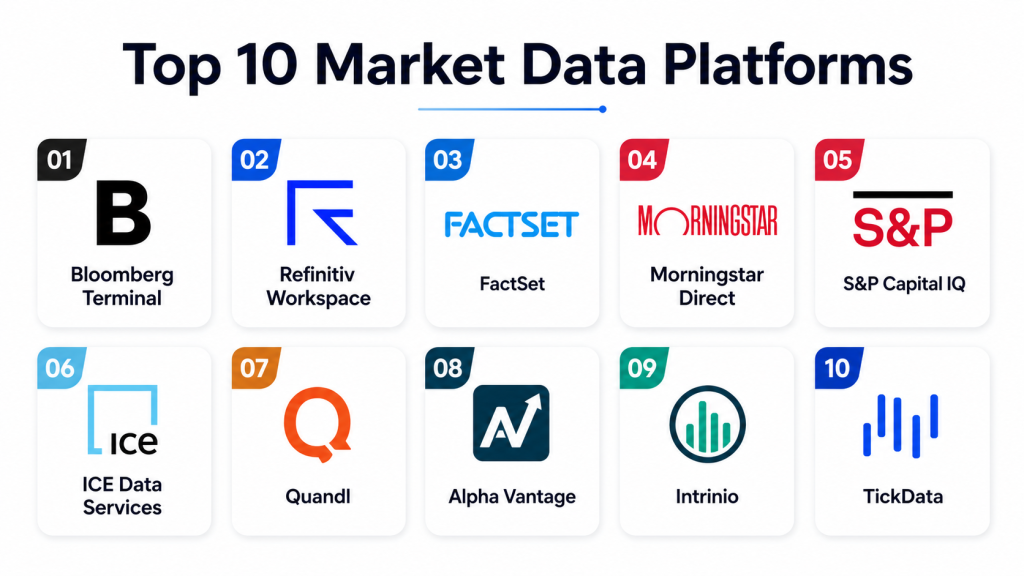
Top 10 Market Data Platforms
#1 — Bloomberg Terminal
Short description: A leading market data platform offering real-time financial data, analytics, news, and trading tools widely used by financial professionals.
Key Features
- Real-time market data
- Advanced analytics
- Financial news integration
- Portfolio tracking
- Trading tools
Pros
- Industry standard platform
- Comprehensive data coverage
- Powerful analytics
Cons
- Very expensive
- Steep learning curve
- Requires training
Platforms / Deployment
- Windows / Web
- Cloud
Security & Compliance
- RBAC
- Audit logs
- Encryption
- Additional certifications vary / N/A
Integrations & Ecosystem
Extensive ecosystem with trading systems and financial tools.
- APIs
- Trading platforms
- Data feeds
- Analytics tools
Support & Community
Strong global support and professional user community.
#2 — Refinitiv Eikon
Short description: A comprehensive financial data platform providing real-time market data, analytics, and news for global financial markets.
Key Features
- Market data feeds
- Analytics tools
- News integration
- Risk data
- Portfolio analysis
Pros
- Strong data coverage
- Reliable platform
- Competitive alternative
Cons
- Expensive
- Complex interface
- Requires onboarding
Platforms / Deployment
- Web / Desktop
- Cloud
Security & Compliance
- Enterprise-grade controls
- Auditability features
Integrations & Ecosystem
- APIs
- Trading systems
- Data platforms
Support & Community
Enterprise-level support.
#3 — FactSet
Short description: A financial data and analytics platform focused on investment research, portfolio analytics, and financial modeling.
Key Features
- Financial data
- Portfolio analytics
- Risk modeling
- Data visualization
- Reporting tools
Pros
- Strong analytics
- Research capabilities
- Reliable data
Cons
- Premium pricing
- Learning curve
- Enterprise focus
Platforms / Deployment
- Web / Desktop
- Cloud
Security & Compliance
- RBAC
- Audit logs
Integrations & Ecosystem
- APIs
- Data feeds
- Analytics tools
Support & Community
Strong support.
#4 — S&P Capital IQ
Short description: A market intelligence platform offering financial data, company insights, and analytics for investment professionals.
Key Features
- Company financial data
- Market analytics
- Research tools
- Screening tools
- Reporting
Pros
- Strong company data
- Reliable insights
- Good research tools
Cons
- Expensive
- Limited trading tools
- UI complexity
Platforms / Deployment
- Web
- Cloud
Security & Compliance
- Enterprise controls
Integrations & Ecosystem
- APIs
- Data platforms
Support & Community
Good support.
#5 — Morningstar Direct
Short description: A data and analytics platform focused on investment research, portfolio management, and asset allocation.
Key Features
- Investment data
- Portfolio analysis
- Risk analytics
- Reporting
- Asset allocation tools
Pros
- Strong investment research
- Reliable data
- Easy reporting
Cons
- Limited trading tools
- Pricing varies
- Mid-market focus
Platforms / Deployment
- Web / Desktop
- Cloud
Security & Compliance
- Not publicly stated
Integrations & Ecosystem
- APIs
- Investment tools
Support & Community
Good support.
#6 — TradingView
Short description: A popular charting and market data platform used by traders and analysts for technical analysis and community-driven insights.
Key Features
- Advanced charting
- Technical indicators
- Real-time data
- Social trading features
- Custom scripts
Pros
- Easy to use
- Strong charting
- Active community
Cons
- Limited enterprise features
- Data limitations in free tier
Platforms / Deployment
- Web / Mobile
- Cloud
Security & Compliance
- Not publicly stated
Integrations & Ecosystem
- APIs
- Broker integrations
Support & Community
Large global user community.
#7 — Koyfin
Short description: A modern financial data platform providing analytics, dashboards, and visualization tools for investors.
Key Features
- Market dashboards
- Financial analytics
- Data visualization
- Screening tools
- Reporting
Pros
- User-friendly
- Modern interface
- Affordable
Cons
- Limited enterprise depth
- Smaller dataset compared to competitors
Platforms / Deployment
- Web
- Cloud
Security & Compliance
- Not publicly stated
Integrations & Ecosystem
- APIs
- Financial tools
Support & Community
Growing support base.
#8 — AlphaSense
Short description: A market intelligence platform that combines financial data with AI-driven search and insights from documents and earnings calls.
Key Features
- AI search
- Document analysis
- Market data
- Insights extraction
- Alerts
Pros
- Strong AI capabilities
- Research efficiency
- Unique insights
Cons
- Premium pricing
- Not a full trading platform
Platforms / Deployment
- Web
- Cloud
Security & Compliance
- Not publicly stated
Integrations & Ecosystem
- APIs
- Data sources
- Analytics tools
Support & Community
Good support.
#9 — Quandl
Short description: A data platform offering financial, economic, and alternative datasets for quantitative analysis.
Key Features
- Financial datasets
- API access
- Alternative data
- Analytics
- Data feeds
Pros
- Strong for quant analysis
- Developer-friendly
- Flexible
Cons
- Requires technical skills
- Limited UI tools
Platforms / Deployment
- Web
- Cloud
Security & Compliance
- Not publicly stated
Integrations & Ecosystem
- APIs
- Data platforms
- Analytics tools
Support & Community
Developer-focused support.
#10 — ICE Data Services
Short description: A global provider of market data, pricing, and analytics for financial institutions.
Key Features
- Real-time data feeds
- Pricing services
- Analytics
- Market coverage
- Reporting
Pros
- Reliable data
- Global coverage
- Enterprise-grade
Cons
- Expensive
- Complex integration
Platforms / Deployment
- Web
- Cloud
Security & Compliance
- Enterprise-grade controls
Integrations & Ecosystem
- APIs
- Trading systems
- Data feeds
Support & Community
Enterprise support.
Comparison Table
| Tool Name | Best For | Platform Supported | Deployment | Standout Feature | Public Rating |
|---|---|---|---|---|---|
| Bloomberg Terminal | Enterprise traders | Windows/Web | Cloud | Full market ecosystem | N/A |
| Refinitiv Eikon | Financial institutions | Web/Desktop | Cloud | Global data coverage | N/A |
| FactSet | Investment research | Web/Desktop | Cloud | Analytics tools | N/A |
| S&P Capital IQ | Company data | Web | Cloud | Company insights | N/A |
| Morningstar Direct | Asset management | Web/Desktop | Cloud | Portfolio analytics | N/A |
| TradingView | Traders | Web/Mobile | Cloud | Charting tools | N/A |
| Koyfin | Investors | Web | Cloud | Modern dashboards | N/A |
| AlphaSense | Research teams | Web | Cloud | AI insights | N/A |
| Quandl | Quant teams | Web | Cloud | Data APIs | N/A |
| ICE Data | Enterprise | Web | Cloud | Pricing services | N/A |
Evaluation & Scoring of Market Data Platforms
| Tool Name | Core 25% | Ease 15% | Integrations 15% | Security 10% | Performance 10% | Support 10% | Value 15% | Weighted Total |
|---|---|---|---|---|---|---|---|---|
| Bloomberg | 10 | 6 | 9 | 9 | 10 | 9 | 5 | 8.5 |
| Refinitiv | 9 | 6 | 9 | 9 | 9 | 8 | 6 | 8.2 |
| FactSet | 9 | 7 | 8 | 8 | 9 | 8 | 6 | 8.0 |
| S&P Capital IQ | 8 | 7 | 8 | 8 | 8 | 7 | 7 | 7.8 |
| Morningstar | 8 | 8 | 7 | 7 | 8 | 7 | 8 | 7.8 |
| TradingView | 7 | 9 | 7 | 6 | 8 | 7 | 9 | 7.8 |
| Koyfin | 7 | 9 | 6 | 6 | 7 | 7 | 9 | 7.6 |
| AlphaSense | 8 | 8 | 7 | 7 | 8 | 7 | 7 | 7.7 |
| Quandl | 8 | 6 | 9 | 7 | 8 | 7 | 7 | 7.7 |
| ICE Data | 9 | 6 | 9 | 9 | 9 | 8 | 6 | 8.1 |
How to interpret scores:
- Higher scores indicate stronger enterprise capabilities
- Premium tools excel in data coverage and performance
- User-friendly tools score higher in ease and value
- Scores are comparative benchmarks
- Choose based on your data needs and budget
Which Market Data Platform Is Right for You
Solo / Freelancer
TradingView or Koyfin provide affordable and easy-to-use tools.
SMB
Morningstar Direct or AlphaSense offer good balance between features and cost.
Mid-Market
FactSet and S&P Capital IQ provide strong analytics and scalability.
Enterprise
Bloomberg, Refinitiv, and ICE Data are ideal for large-scale operations.
Budget vs Premium
- Budget tools include TradingView and Koyfin
- Premium tools include Bloomberg and Refinitiv
Feature Depth vs Ease of Use
- Advanced tools include Bloomberg and FactSet
- Easy tools include TradingView and Koyfin
Integrations & Scalability
- Enterprise tools offer strong integrations
- Smaller tools provide simpler deployment
Security & Compliance Needs
- Enterprise platforms for high compliance requirements
Frequently Asked Questions
1. What is a market data platform
A market data platform provides financial data, analytics, and insights for investment and trading decisions. It aggregates data from multiple sources. It helps users analyze markets.
2. Who uses these platforms
Traders, analysts, asset managers, and financial institutions use them. They rely on accurate data for decision-making. Usage depends on complexity.
3. Are these platforms real-time
Many platforms provide real-time data feeds. Some offer delayed data based on subscription. It depends on the plan.
4. Are they expensive
Pricing varies widely. Enterprise tools are expensive. Some platforms offer affordable plans.
5. Can they integrate with trading systems
Yes, most platforms support integrations with trading and risk systems. APIs enable connectivity. Integration improves workflows.
6. Do they support multiple asset classes
Yes, most platforms cover equities, bonds, commodities, and more. Coverage varies by provider. Enterprise tools offer broader data.
7. Are these tools secure
Enterprise platforms include strong security features. Smaller tools may have basic controls. Security varies.
8. Can beginners use these tools
Some platforms are beginner-friendly. Others require training. Choose based on skill level.
9. What is the difference between free and paid tools
Free tools offer limited data and features. Paid tools provide advanced analytics and real-time data. Pricing reflects capability.
10. How to choose the right platform
Evaluate data needs, budget, and integration requirements. Test a few tools. Choose based on workflow fit.
Conclusion
Market Data Platforms are essential tools for anyone working in financial markets. They provide the data, analytics, and insights needed to make informed decisions.
The biggest advantage is access to real-time and reliable information. This helps users react quickly to market changes. It also improves accuracy in analysis.
Choosing the right platform depends on your needs, budget, and expertise. Some tools focus on simplicity, while others offer deep analytics.
