Introduction
Building Energy Management Systems BEMS are software and hardware platforms that monitor, control, and optimize energy usage across buildings. They connect systems like HVAC, lighting, power distribution, and IoT sensors to deliver real-time insights and automated control. In a world focused on sustainability, rising energy costs, and regulatory pressure, BEMS has become a critical investment for organizations of all sizes.
Modern BEMS platforms go beyond basic monitoring. They leverage AI, predictive analytics, and automation to reduce energy waste and improve operational efficiency. Common use cases include optimizing HVAC schedules, reducing peak energy demand, managing multi-building portfolios, and supporting sustainability reporting.
When evaluating BEMS tools, buyers should consider:
- Real-time monitoring capabilities
- Automation and control features
- AI-driven analytics
- Integration with IoT and legacy systems
- Scalability across buildings
- Security and compliance
- Ease of use and dashboards
- Cost and ROI potential
Best for: Facility managers, energy consultants, smart building operators, real estate portfolios, industrial plants, and enterprises aiming to reduce operational costs and carbon footprint.
Not ideal for: Small standalone buildings with minimal energy complexity or organizations without IoT infrastructure. Simpler monitoring tools or utility dashboards may be sufficient.
Key Trends in Building Energy Management Systems BEMS for the Future
- AI-driven energy optimization enabling predictive load balancing and anomaly detection
- Cloud-first platforms replacing on-premise systems for scalability and remote access
- Integration with IoT ecosystems including smart sensors and meters
- Sustainability reporting and ESG compliance becoming built-in capabilities
- Digital twins of buildings for simulation and performance modeling
- Edge computing adoption for faster real-time decision-making
- Interoperability standards improving integration
- Subscription-based pricing models replacing large upfront investments
- Cybersecurity focus due to increased connectivity of building systems
- Mobile-first dashboards for on-the-go monitoring and control
How We Selected These Tools Methodology
We evaluated the top BEMS platforms based on:
- Strong market presence and adoption across industries
- Comprehensive feature sets covering monitoring, analytics, and control
- Reliability and performance in real-world deployments
- Security posture and enterprise readiness
- Integration with IoT devices, APIs, and enterprise systems
- Scalability from single buildings to global portfolios
- Vendor support quality and ecosystem maturity
- Flexibility across industries and building types
- Innovation in AI, automation, and sustainability capabilities
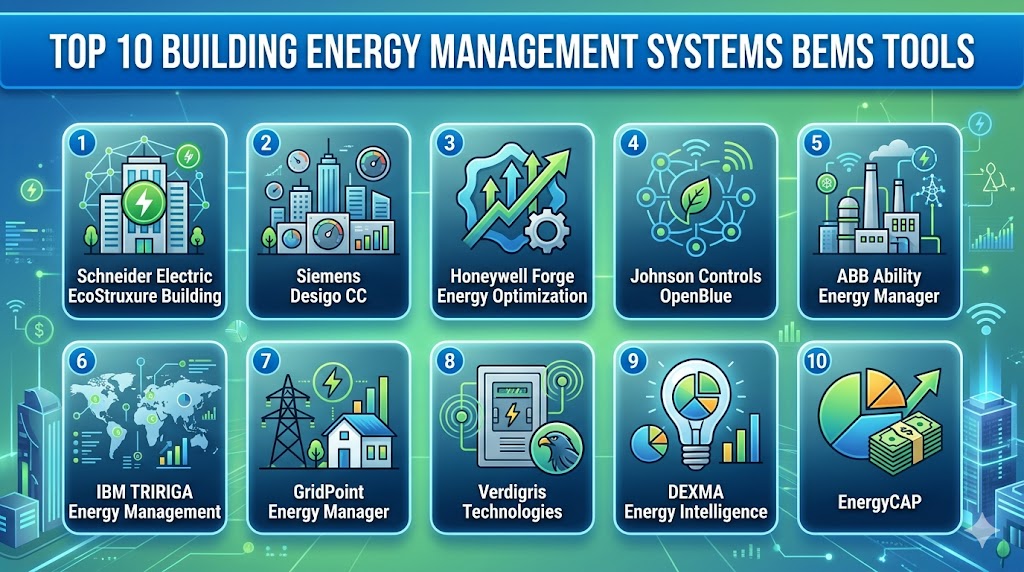
Top 10 Building Energy Management Systems BEMS Tools
#1 — Schneider Electric EcoStruxure Building
Short description: A comprehensive smart building platform designed for large enterprises and infrastructure projects. It combines energy monitoring, automation, and IoT connectivity to optimize building performance and sustainability goals.
Key Features
- Real-time energy monitoring and control
- AI-driven predictive maintenance
- Integration with IoT devices and sensors
- Advanced analytics dashboards
- Building automation system support
- Energy forecasting and optimization
- Multi-site management
Pros
- Strong enterprise-grade capabilities
- Scalable across large building portfolios
Cons
- Complex implementation
- Higher cost compared to SMB tools
Platforms / Deployment
Cloud / Hybrid
Security & Compliance
SSO, RBAC, encryption; compliance details vary
Integrations & Ecosystem
Works with IoT devices, HVAC systems, and enterprise platforms
- BACnet and Modbus support
- API integrations
- Smart sensors ecosystem
Support & Community
Strong enterprise support and global presence
#2 — Siemens Desigo CC
Short description: An integrated building management platform that centralizes control of energy, HVAC, security, and lighting systems. Suitable for large facilities and smart cities.
Key Features
- Unified building control platform
- Advanced visualization dashboards
- Energy optimization tools
- IoT integration capabilities
- Alarm and event management
- Scalability across facilities
Pros
- Highly customizable
- Strong integration capabilities
Cons
- Steep learning curve
- Requires specialized setup
Platforms / Deployment
Hybrid
Security & Compliance
Not publicly stated
Integrations & Ecosystem
Supports multiple building protocols and devices
- BACnet integration
- IoT device connectivity
- API support
Support & Community
Enterprise-grade support with global coverage
#3 — Honeywell Forge Energy Optimization
Short description: A cloud-based energy management platform focused on operational efficiency and sustainability. Ideal for enterprises managing large building portfolios.
Key Features
- AI-powered energy analytics
- Real-time monitoring dashboards
- Sustainability reporting
- Predictive maintenance
- Portfolio-wide optimization
- Automated alerts
Pros
- Strong analytics capabilities
- Cloud-native platform
Cons
- Premium pricing
- Requires integration setup
Platforms / Deployment
Cloud
Security & Compliance
Encryption, RBAC; details vary
Integrations & Ecosystem
Integrates with enterprise systems and IoT devices
- API integrations
- Sensor connectivity
- Data analytics tools
Support & Community
Strong enterprise support
#4 — Johnson Controls OpenBlue
Short description: A smart building platform combining IoT, AI, and sustainability tools to improve energy efficiency and occupant experience.
Key Features
- AI-driven building optimization
- IoT sensor integration
- Energy analytics and reporting
- Smart automation workflows
- Digital twin capabilities
- Sustainability tracking
Pros
- Innovative AI features
- Strong ecosystem
Cons
- Complex deployment
- Costly for smaller businesses
Platforms / Deployment
Cloud / Hybrid
Security & Compliance
Not publicly stated
Integrations & Ecosystem
Supports wide IoT integrations
- API connectivity
- Building systems integration
- Cloud platform integration
Support & Community
Enterprise support with strong vendor backing
#5 — ABB Ability Energy Manager
Short description: A digital platform focused on energy monitoring, optimization, and sustainability reporting across industrial and commercial buildings.
Key Features
- Real-time energy insights
- Predictive analytics
- Remote monitoring
- Sustainability dashboards
- Industrial integration
- Multi-site management
Pros
- Strong industrial use cases
- Scalable solution
Cons
- Interface may feel complex
- Limited SMB focus
Platforms / Deployment
Cloud
Security & Compliance
Not publicly stated
Integrations & Ecosystem
Integrates with industrial systems and IoT
- API access
- Device connectivity
- Data analytics tools
Support & Community
Enterprise support available
#6 — IBM TRIRIGA Energy Management
Short description: Part of IBM’s facility management suite, this tool focuses on energy optimization and operational efficiency for enterprise real estate portfolios.
Key Features
- Energy usage tracking
- Sustainability reporting
- Predictive analytics
- Facility management integration
- Portfolio management
- Workflow automation
Pros
- Strong integration with enterprise systems
- Comprehensive feature set
Cons
- Requires customization
- Higher implementation cost
Platforms / Deployment
Cloud / Hybrid
Security & Compliance
Not publicly stated
Integrations & Ecosystem
Integrates with enterprise software and IoT
- API support
- ERP integrations
- Facility systems
Support & Community
Enterprise-level support
#7 — GridPoint Energy Manager
Short description: A cloud-based platform designed for multi-site businesses like retail chains, offering energy monitoring and cost optimization.
Key Features
- Real-time energy monitoring
- Automated energy control
- Cost optimization tools
- Multi-site visibility
- Alerts and anomaly detection
- Data analytics
Pros
- Easy to deploy
- Strong retail use case
Cons
- Limited advanced customization
- Less suited for large industrial setups
Platforms / Deployment
Cloud
Security & Compliance
Not publicly stated
Integrations & Ecosystem
Works with sensors and building systems
- API integration
- IoT connectivity
- Energy data tools
Support & Community
Good customer support
#8 — Verdigris Technologies
Short description: An AI-powered energy monitoring solution focused on real-time analytics and anomaly detection for commercial buildings.
Key Features
- AI-based energy insights
- Real-time monitoring
- Equipment-level analytics
- Predictive maintenance
- Alerts and reporting
- Cloud dashboards
Pros
- Strong AI capabilities
- Fast deployment
Cons
- Limited control automation
- Focused primarily on analytics
Platforms / Deployment
Cloud
Security & Compliance
Not publicly stated
Integrations & Ecosystem
Integrates with building sensors and systems
- API support
- IoT device compatibility
- Data export capabilities
Support & Community
Varies / Not publicly stated
#9 — DEXMA Energy Intelligence
Short description: A cloud-based energy analytics platform designed for energy consultants and facility managers focusing on efficiency and reporting.
Key Features
- Energy monitoring dashboards
- Benchmarking tools
- Reporting and analytics
- Multi-building support
- Alerts and notifications
- Data visualization
Pros
- Easy to use
- Strong reporting features
Cons
- Limited automation features
- Less enterprise-grade functionality
Platforms / Deployment
Cloud
Security & Compliance
Not publicly stated
Integrations & Ecosystem
Supports IoT and API integrations
- Meter integration
- Data APIs
- Analytics tools
Support & Community
Good documentation and support
#10 — EnergyCAP
Short description: A utility bill and energy management platform focused on tracking consumption, cost allocation, and sustainability metrics.
Key Features
- Utility bill management
- Energy cost tracking
- Sustainability reporting
- Data analytics
- Budgeting tools
- Reporting dashboards
Pros
- Strong financial tracking
- Easy implementation
Cons
- Limited real-time control
- Not a full automation platform
Platforms / Deployment
Cloud
Security & Compliance
Not publicly stated
Integrations & Ecosystem
Integrates with utility systems and data tools
- API access
- Data import and export
- Reporting integrations
Support & Community
Reliable support
Comparison Table
| Tool Name | Best For | Platform Supported | Deployment | Standout Feature | Public Rating |
|---|---|---|---|---|---|
| EcoStruxure | Enterprises | Web | Hybrid | Full automation | N/A |
| Desigo CC | Smart cities | Windows Web | Hybrid | Unified control | N/A |
| Honeywell Forge | Enterprises | Web | Cloud | AI analytics | N/A |
| OpenBlue | Smart buildings | Web | Hybrid | Digital twin | N/A |
| ABB Ability | Industrial | Web | Cloud | Industrial focus | N/A |
| IBM TRIRIGA | Real estate | Web | Hybrid | Facility integration | N/A |
| GridPoint | Retail | Web | Cloud | Multi-site control | N/A |
| Verdigris | Analytics | Web | Cloud | AI detection | N/A |
| DEXMA | Consultants | Web | Cloud | Reporting | N/A |
| EnergyCAP | Finance | Web | Cloud | Cost tracking | N/A |
Evaluation & Scoring of Building Energy Management Systems BEMS
| Tool Name | Core | Ease | Integrations | Security | Performance | Support | Value | Weighted Total |
|---|---|---|---|---|---|---|---|---|
| EcoStruxure | 9 | 7 | 9 | 8 | 9 | 8 | 7 | 8.3 |
| Desigo CC | 9 | 6 | 9 | 7 | 9 | 8 | 7 | 8.1 |
| Honeywell Forge | 8 | 8 | 8 | 8 | 8 | 8 | 7 | 8.0 |
| OpenBlue | 8 | 7 | 8 | 7 | 8 | 8 | 7 | 7.8 |
| ABB Ability | 8 | 7 | 8 | 7 | 8 | 7 | 7 | 7.7 |
| IBM TRIRIGA | 8 | 6 | 9 | 7 | 8 | 8 | 7 | 7.8 |
| GridPoint | 7 | 8 | 7 | 7 | 7 | 7 | 8 | 7.5 |
| Verdigris | 7 | 8 | 7 | 7 | 7 | 7 | 7 | 7.3 |
| DEXMA | 6 | 9 | 7 | 6 | 7 | 7 | 8 | 7.2 |
| EnergyCAP | 6 | 9 | 6 | 6 | 7 | 7 | 8 | 7.1 |
These scores are comparative and based on typical use cases, not absolute benchmarks. Higher scores indicate stronger overall capabilities, while lower scores may reflect specialization or trade-offs. Always align scoring with your business requirements.
Which Building Energy Management Systems BEMS Tool Is Right for You
Solo / Freelancer
DEXMA and EnergyCAP are simple, cost-effective solutions for monitoring and reporting without complex infrastructure.
SMB
GridPoint and Verdigris provide a balance of affordability, analytics, and ease of deployment.
Mid-Market
ABB Ability and Honeywell Forge offer scalability and advanced analytics for growing organizations.
Enterprise
EcoStruxure, Siemens Desigo CC, and IBM TRIRIGA are ideal for large-scale operations with complex requirements.
Budget vs Premium
Budget tools focus on monitoring and reporting, while premium platforms deliver automation, AI, and deep integrations.
Feature Depth vs Ease of Use
Enterprise solutions offer powerful capabilities but require training, whereas simpler tools prioritize usability.
Integrations & Scalability
Choose tools with strong API and IoT support for long-term scalability.
Security & Compliance Needs
Larger organizations should prioritize platforms with robust access control and compliance capabilities.
Frequently Asked Questions FAQs
1. What is a BEMS system
A BEMS system monitors and controls building energy usage across systems like HVAC and lighting. It helps optimize energy efficiency and reduce costs. Advanced tools also provide analytics and automation.
2. How much does BEMS cost
Costs vary depending on building size, features, and deployment. Many tools use subscription models, while enterprise systems may involve higher upfront costs.
3. Is BEMS suitable for small buildings
It depends on complexity. Small buildings may use simpler monitoring tools, while BEMS is more useful for larger or multi-site operations.
4. How long does implementation take
Implementation can take weeks to months depending on system complexity and integration requirements.
5. Does BEMS require IoT devices
Most systems rely on sensors and smart devices to collect data. Some can integrate with existing infrastructure.
6. Can BEMS reduce energy costs
Yes, it identifies inefficiencies and automates optimization, leading to significant savings.
7. Is cloud deployment secure
Cloud platforms provide strong security features, but organizations should review vendor practices carefully.
8. Can BEMS integrate with existing systems
Most tools support integration via APIs and industry protocols. Compatibility should be verified before adoption.
9. What industries use BEMS
Industries include real estate, manufacturing, healthcare, and retail. Any energy-intensive building can benefit.
10. Can I switch BEMS platforms later
Switching is possible but may require migration effort. Choosing a scalable platform early reduces complexity.
Conclusion
Building Energy Management Systems have become essential for organizations looking to control energy costs and improve operational efficiency. Modern platforms go beyond monitoring by enabling automation, AI-driven insights, and sustainability tracking. The right choice depends on your building complexity, budget, and integration requirements. Enterprise platforms deliver deep functionality, while simpler tools provide faster deployment and ease of use. Evaluating tools based on real-world needs is critical for long-term success. Start by shortlisting a few solutions that align with your goals and infrastructure. Run a pilot to validate usability, integrations, and performance. This approach ensures you select a solution that delivers measurable value and supports future scalability.
